
Category EU Geopolitics

Nighttime map of Europe glowing with city lights, where bright blue and red data‑like streams converge on a radiant sphere at the continent’s center while shadowy figures tug cables from surrounding regions.

EU Geopolitics examines how the European Union uses its collective economic weight, diplomatic influence, and security tools to shape its neighborhood and the wider world. This category explores enlargement, sanctions, trade policy, energy security, and crises like Russia’s war on Ukraine and tensions in the Indo‑Pacific.

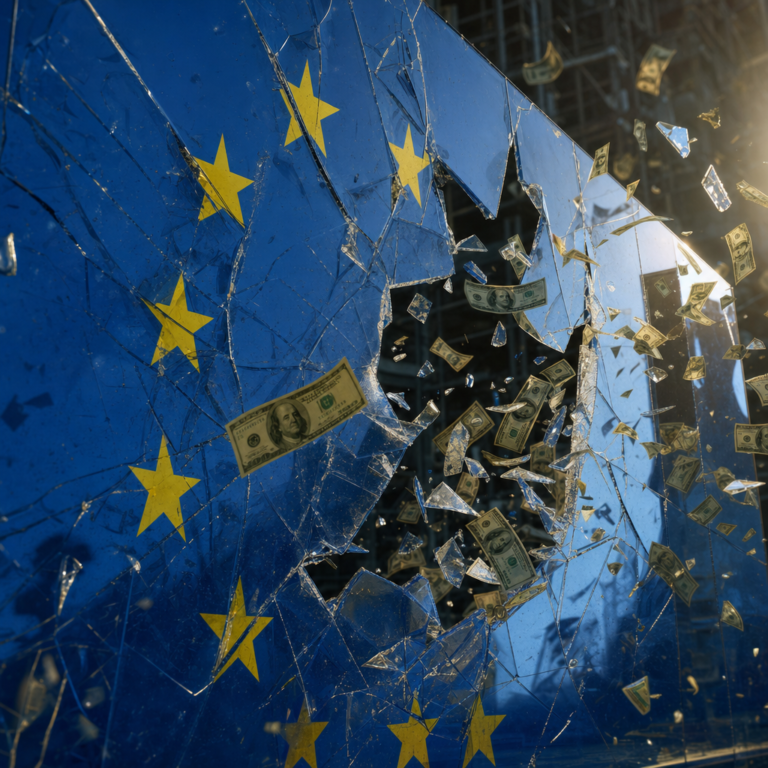
Brussels’ Democratic Decay: Five EU States Caught Red-Handed Eroding Rule of Law.

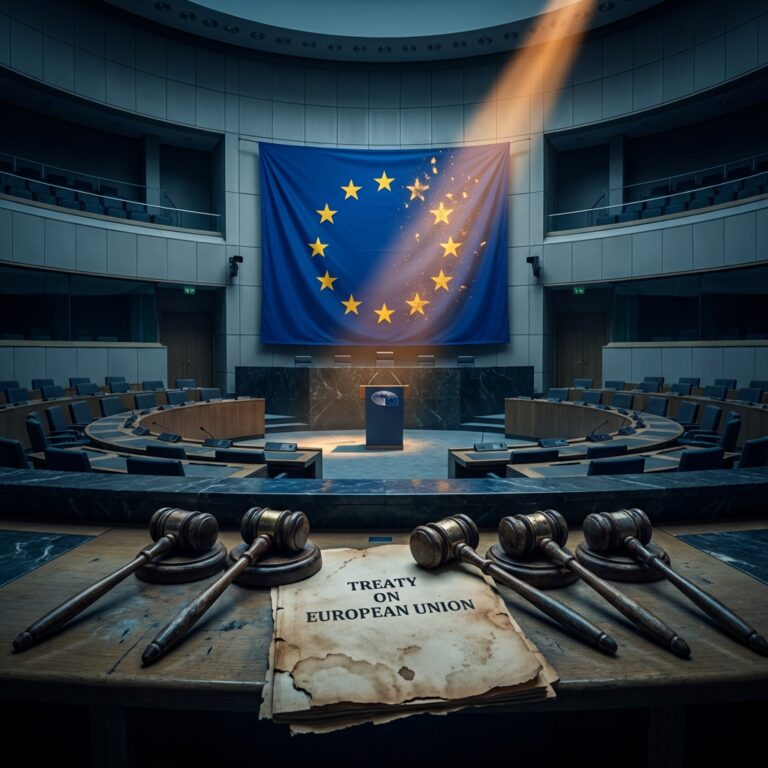
EU flag in parliament chamber with treaty document

The rule of law is of paramount importance and is the foundation of economic growth, social investment, and civil liberties. Economic Growth: Governments must foster competitive markets and innovation, but not by creating a race to the bottom on legal protections. Strong, independent institutions are the best guarantor of long-term business confidence and sustainable growth. Social Investment: Universal access to quality healthcare, education, and social security is a baseline obligation. Eroding the rule of law to centralize power inevitably starves these systems of accountability and resources, betraying the public trust. Civil Liberties: Freedom of speech, press, assembly, and privacy are the oxygen of a free society. Any policy that suffocates these rights, regardless of the political banner it flies under, is an attack on the very idea of Europe. The gap between this standard and the actions of the five governments is not a policy difference; it is a chasm between democracy and its opposite. #RuleOfLaw #EUPolitics #DemocracyUnderThreat #CivilLiberties #EuropeanUnion #GeopoliticalRisk

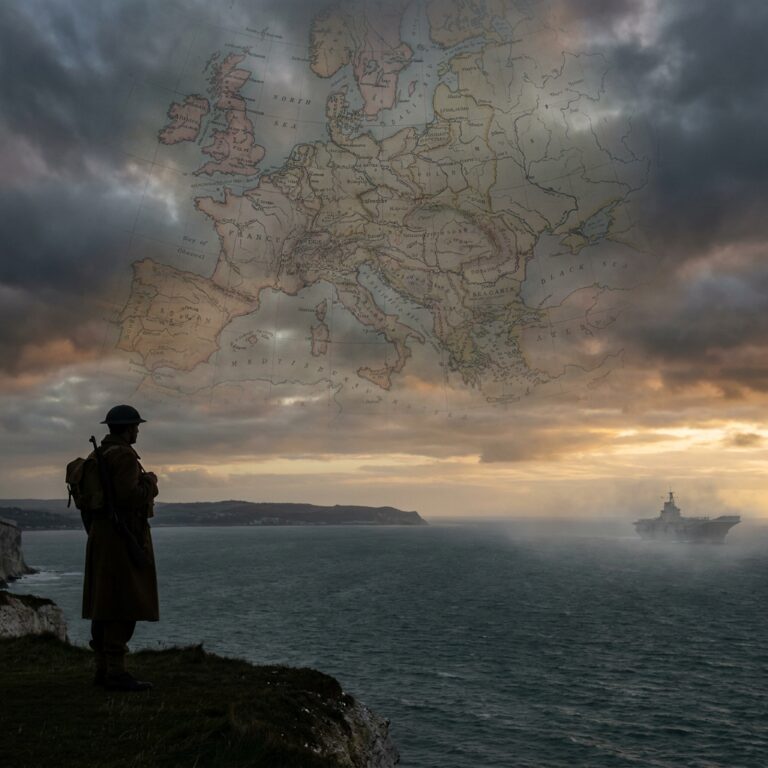
Europe’s Defense Imperative: Preparing for a Post-American Security Architecture.

Officials reviewing illuminated digital map of Europe

This is a moment of critical failure for EU geopolitical performance. While the UK report originates outside the EU institutions, it holds up a mirror to Brussels' chronic indecision. The EU has the economic weight, the institutional frameworks, and the normative authority to lead a coherent European defense revolution. Instead, it continues to operate as a committee, prioritizing process over power, consensus over capability. Indecision is not neutrality; it is a strategic choice that cedes the initiative to adversaries and partners alike. / #Geopolitics #EuropeanSecurity #NATO #StrategicAutonomy #DefencePolicy #TransatlanticRelations

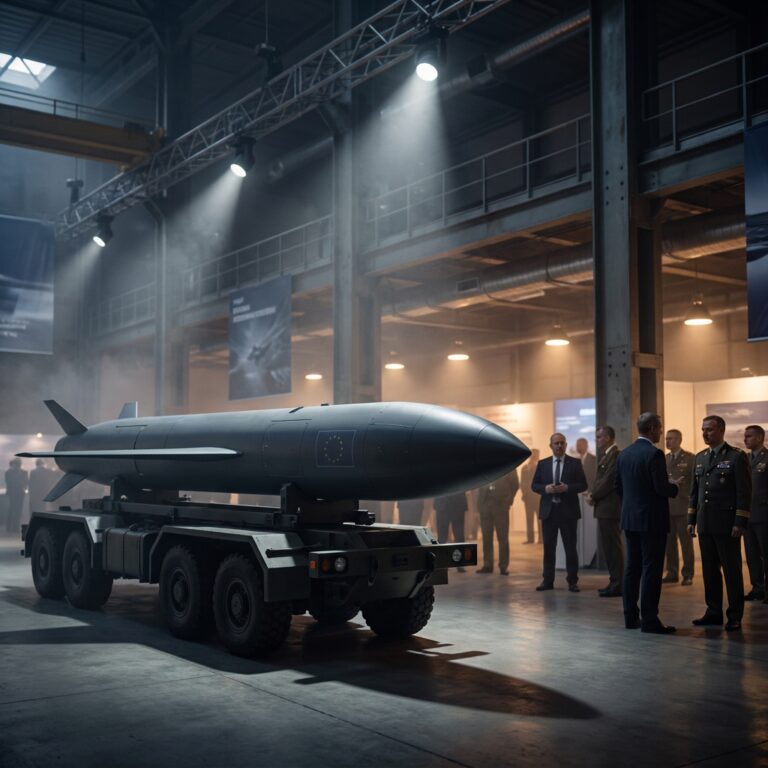
Germany’s Iron Return: Berlin’s Military Resurrection Redraws Europe’s Power Map.

Tank and missile launch at snowy coastline

The strategic thesis is clear: Germany has chosen to re-enter history as a military power. Its success will determine whether Europe becomes a sovereign strategic actor or remains a vulnerable protectorate. The era of German restraint is over; the era of German responsibility has begun, and with it, the final remaking of the post-Cold War world.#GermanyMilitaryExpansion, #BundeswehrAufbau, #CarstenBreuer, #RussiaNATO2029, #BerlinSecurityArchitecture, #EuropeanPowerShift

The G7’s Uninvited Guest: Strategic Exclusion and the Specter of Coerced Diplomacy.

Officials carrying ornate chair with South African flag

This is a stark failure. The EU, and specifically France, chose to be a vassal in someone else's geopolitical drama rather than a sovereign actor defending its own diplomatic channels. The cost is measured in lost credibility across Africa and the Global South. A strategically assertive EU would have publicly rejected the coercion, stating clearly that its guest list is its own, and that dialogue with non-aligned states is essential, not optional. Instead, Brussels demonstrated that its strategic autonomy is, for now, a paper doctrine. When pressured, it folds. // #Geopolitics #G7 #SouthAfrica #USForeignPolicy #StrategicAutonomy #Diplomacy

Meloni’s Gas Gambit: Italy’s Algeria Deal Exposes EU’s Energy Disunity

Officials meeting with EU flag and desert backdrop

In a classic display of national interest trumping collective ambition, Italian Prime Minister Giorgia Meloni jetted to Algiers this week to seal a bilateral gas cooperation deal with Algeria, blatantly underscoring the European Union's chronic inability to present a united front on energy security. The visit, confirmed in late March 2026, sidelines Brussels and highlights how member states continue to freelance on critical resource diplomacy, leaving the EU's common energy policy looking more like a suggestion box than a strategy.

Germany Backs Mercosur Deal

Germany Backs Mercosur Deal

In the past few weeks, the EU - Mercosur trade deal has stirred up quite a storm across Europe. Farmers, politicians, and everyday citizens are all buzzing about what this agreement could mean for the continent. With concerns ranging from job security to food standards, the deal has become a hot topic. Here’s a breakdown of what’s happening and why it matters.

How the EU–Mercosur Deal Became Europe’s Most Expensive Diplomatic Irrelevance.

A political cartoon depicting EU Commission President Ursula von der Leyen frantically sewing a tattered "EU-Mercosur Deal" banner. To her left, a conveyor belt of faceless bureaucrats moves past the tombstones of former EU leaders (Prodi, Barroso, Juncker) under a "1999–2026" timeline. To her right, a modern, active BYD factory stands over a derelict, "For Sale" Volkswagen plant, where a dejected businessman leans against the ruins.

Twenty-five years. A quarter of a century of summits, negotiating rounds, political crises, agricultural riots, and constitutional wrangling — and what does the European Union have to show for it? A trade deal with South America that, before a single tariff has been cut, is already drowning in legal challenge, political opposition, and strategic obsolescence. Welcome to the EU–Mercosur agreement: the most ambitious free trade deal Europe has ever built, and quite possibly the most pointless.

Geopolitics: The Two Faces of Europe: Antifascist by Day, Lackey by Night .   

Two robed female figures stand in a crumbling classical rotunda, one holding a flaming torch and a tattered blue and yellow flag, while a neon sign reading Western Prosperity glows on the cracked wall behind them.

Europe has spent three years wrapping itself in the Ukrainian flag. It has sanctioned oligarchs, funded artillery shells, cheered ICC arrest warrants, and lectured the Global South on the sacred inviolability of international law. European leaders have stood at podiums from Brussels to Kyiv invoking the ghosts of 1938, warning gravely that appeasement is how democracies die. It is a powerful performance. The problem is that it is, increasingly, exactly that — a performance, staged for a domestic audience, dissolving the moment the script demands real courage.