



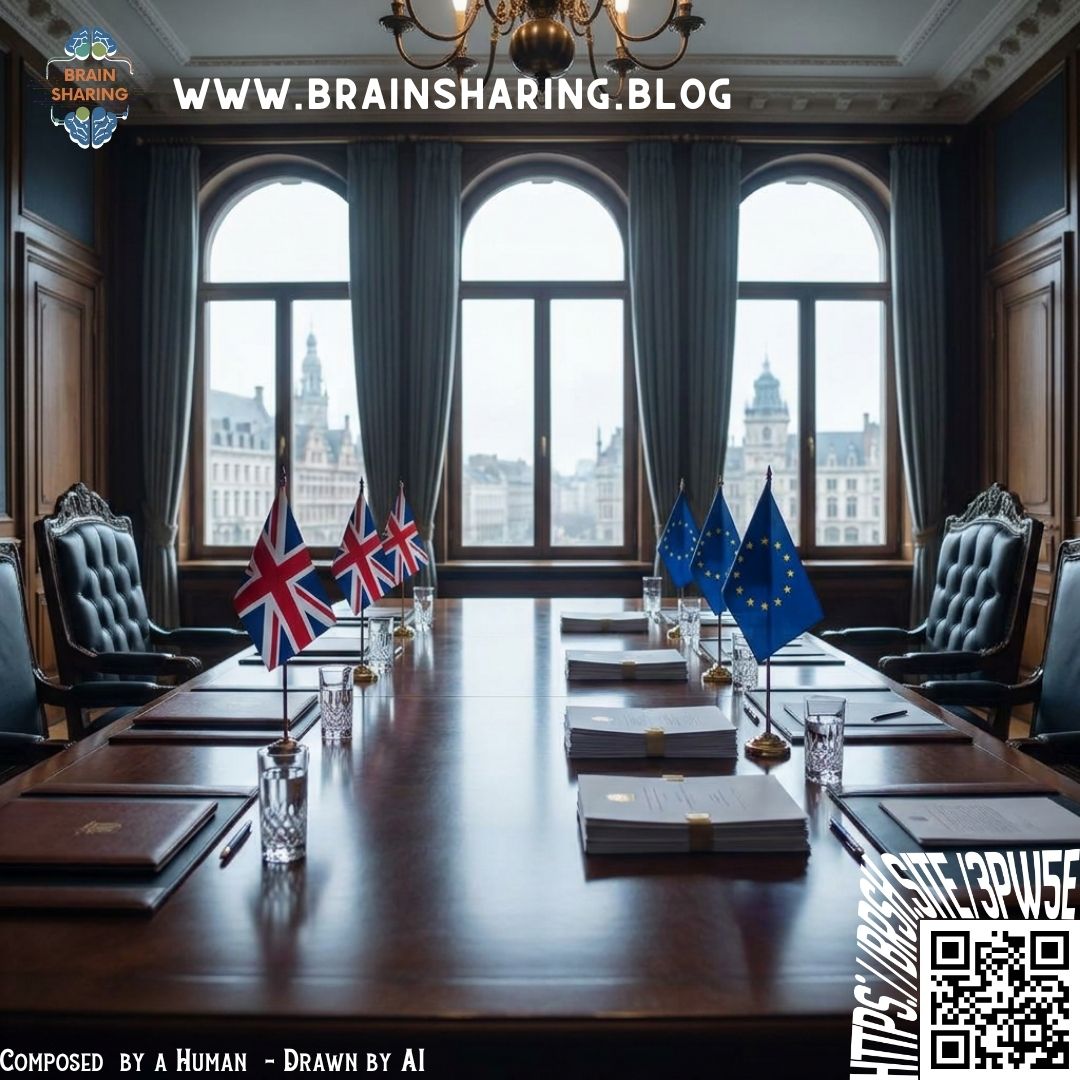


You were told, nearly a decade ago, that Britain had taken back control. You were promised sovereignty, independence, a nation unshackled from Brussels. So why does it feel, in the spring of 2026, like London is quietly knocking on the door it slammed shut — not to re-enter, but to ask for a room next door at a discounted rate? UK minister for EU relations Nick Thomas-Symonds told the BBC his government is pursuing a “ruthlessly pragmatic” approach to rebuilding ties with European neighbours [1].
Ruthless pragmatism. Sit with those words. They are not the language of conviction. They are the language of a government that knows it has no better option.
What Is Actually Happening Behind the Summits
Strip away the diplomatic choreography and what you find is a British economy that spent nine years discovering what economists warned before the vote: friction with your largest export market is not sovereignty — it is self-harm [2].
Starmer’s government is now racing toward a summer deadline to conclude a food and agricultural safety agreement, a carbon emissions trading deal, and a youth mobility programme with Brussels [1]. On top of that, the UK has rejoined Erasmus+ at a cost of £570 million in the first year alone, and continues to pay £2.2 billion annually for Horizon Europe participation [1][3]. These are not abstract policy gestures. These are invoices. And the real negotiation is not happening at Lancaster House press conferences — it is happening in the quiet arithmetic of what Britain can afford to lose versus what it can afford to pay to regain [4]. The Commission issued welcoming statements. The real leverage was exercised elsewhere entirely.
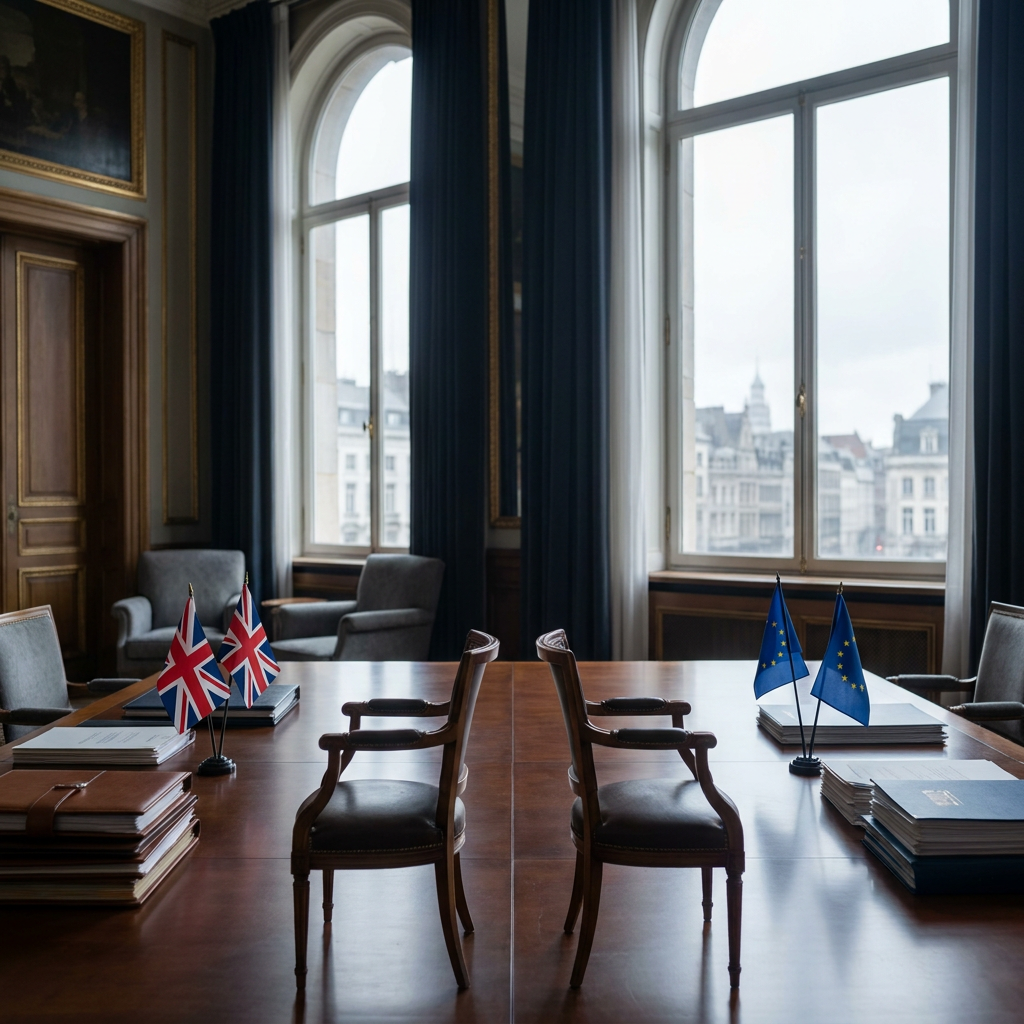
The Strongest Case for Pragmatic Realignment
The argument for Starmer’s approach is this: the world has changed catastrophically since 2016, and a Britain that isolates itself from its continental neighbours during the worst European conflict since World War Two, rising energy prices driven by the Iran war’s disruption of the Strait of Hormuz, and an increasingly hostile United States under President Trump is a Britain that will be crushed by events [1][5].
Thomas-Symonds himself framed it plainly: “We find ourselves in a dangerous situation in the world” [1]. The defence cooperation alone — joint procurement of armaments, a unified position on Ukraine, the UK stepping into a leadership role on European security — represents tangible strategic value that no amount of Brexit nostalgia can replicate [6]. The food deal and carbon emissions agreement are projected to be worth £9 billion to the UK economy by 2040 [1]. And yet — and here is where the argument buckles — £9 billion by 2040 is a rounding error for an economy that has lost an estimated £36 billion annually in trade friction since Brexit [7]. You do not celebrate a bandage when the wound is still open.
The Case Against: Rule-Taker in All but Name
Nigel Farage called Starmer’s planned alignment legislation “a backdoor attempt to drag Britain back under EU control” [1]. Kemi Badenoch demanded ministers admit openly if they want to rejoin the EU [1]. You may dismiss these voices as partisan, but their core objection carries real weight: the more Britain aligns with EU standards through fast-track legislation, the less independent its regulatory environment becomes [8]. French MEP Natalie Loiseau, a close Macron ally, stated it with brutal clarity — EU terms and conditions have not changed in ten years. The closer you get to the single market, the more rules you must follow. And if you get close enough, Brussels will eventually demand freedom of movement — a red line no British government has dared cross since 2016 [1].
We are watching, in real time, a government attempt to enjoy the economic benefits of proximity to the EU while pretending the political costs do not exist. That is not pragmatism. That is denial wearing a suit.
Real People, Real Consequences
Let us talk about you — not the ministers, not the MEPs, not the lobbyists at Lancaster House. You are a British exporter of agricultural products. For nine years, you have navigated phytosanitary certificates, border checks, and regulatory duplication that did not exist before Brexit. The food deal, if it materialises, will reduce some of that burden [1]. But you are also a taxpayer. Erasmus+ costs you. Horizon costs you. And the question nobody in government wants to answer is whether these costs are investments or ransoms — payments to access what Britain once had for free [3][4]. Meanwhile, your energy bills remain elevated because Britain sits outside the EU’s internal electricity market, and Brussels has signalled it will demand cohesion fund contributions for access [1]. That is a pot of money designed to help poorer EU regions. You are being asked to subsidise European development to access energy security your own government promised Brexit would deliver [5]. The policy was negotiated in Brussels. The bill arrived in your household.
Where This Leads?
Here is what nobody in Westminster will say aloud: Britain’s “ruthless pragmatism” is not a strategy. It is an admission that the original Brexit promise — sovereignty that pays for itself — has failed [7].
The UK is not choosing between independence and EU membership. It is choosing between economic decline and a slow, partial, expensive reintegration into a system it formally left [2][8]. The second post-Brexit summit approaches. New alignment legislation is expected. And President Trump, who once promised Britain a magnificent trade deal, is now threatening to tear up the modest agreement he signed — because London refused to join his war on Iran [1][9]. The special relationship, as Thomas-Symonds dutifully reminded the BBC, is “deep and enduring” [1]. Perhaps. But enduring relationships built on asymmetric power are not partnerships. They are dependencies. And a Britain that depends on both Brussels and Washington, while pretending to depend on neither, is a country that has lost its compass [10].
— REFERENCES —
[1] Katya Adler, “UK seeks closer EU ties in volatile times — but at what cost?”, BBC News, April 2026
[2] John Springford, “The Cost of Brexit”, Centre for European Reform, 2024
[3] House of Commons Library, “UK participation in EU programmes: Horizon Europe”, Research Briefing CBP-9925, updated 2026
[4] Jonathan Portes, “The Economics of the UK-EU Summit”, UK in a Changing Europe, 2025
[5] Ian Bond, “Power Losses: What’s Holding Back European Electricity Trade?”, Centre for European Reform, 2025
[6] Luigi Scazzieri, “UK-EU Relations: Time to Raise the Level of Ambition”, Centre for European Reform, 2025
[7] Josh De Lyon and Swati Dhingra, “UK Trade After Brexit: The Evidence”, London School of Economics Centre for Economic Performance, 2025
[8] Anand Menon and Jonathan Portes, “The Politics of UK-EU Realignment”, UK in a Changing Europe, 2025
[9] Georgina Wright, “Low Trust: Navigating Transatlantic Relations Under Trump 2.0”, European Union Institute for Security Studies, 2026
[10] Jeremy Shapiro, “Low Trust: Navigating Transatlantic Relations Under Trump 2.0”, European Union Institute for Security Studies, 2026
——————
AI Disclosure: This post was created with the assistance of artificial intelligence. The ideas, analysis, and opinions expressed are my own — AI was used to help compose, structure, and refine my personal notes and thoughts into the final written content. Images, videos and music featured in this post were also generated using AI tools, based on my own creative prompts and direction.
