Category Thinking Society EN

Thinking Society is a dynamic blog dedicated to shedding light on the pressing social issues shaping our world today. Our mission is to provide a thoughtful space where topics including politics, education, inequality, health, and culture are explored in depth. Through insightful articles and diverse perspectives, we aim to challenge assumptions, foster critical thinking, and inspire constructive dialogue. The blog isn’t just about reporting problems—it’s about understanding the root causes, raising awareness, and bringing communities together to imagine real solutions. We believe that by encouraging open conversations and sharing knowledge, we can drive positive change and promote a more equitable, just society. Visitors are invited to engage with our content, share their own insights, and become active participants in a community committed to progress. Whether you’re curious about current events or passionate about social justice, Thinking Society is your go-to platform for informed, impactful discussion.

EU Parliament Clears Path for Offshore Migrant Detention Centres: A Continental Crossroads.

eu parliament clears path for offshore migrant detention centres a continental crossroads.jpg

Social investment is a baseline obligation. Every euro spent on externalizing borders is a euro not spent on integrating newcomers who could fill labour shortages, or on strengthening public services for all citizens. Governments must demonstrate how this policy enhances, rather than detracts from, universal healthcare, education, and housing.

Civil liberties are non-negotiable. Any policy that risks creating legal black holes, where due process and human dignity are suspended, must be rigorously challenged. The standard is clear: security must be achieved within the bounds of the rule of law and fundamental rights, not by circumventing them.

Germany Backs Mercosur Deal

Germany Backs Mercosur Deal

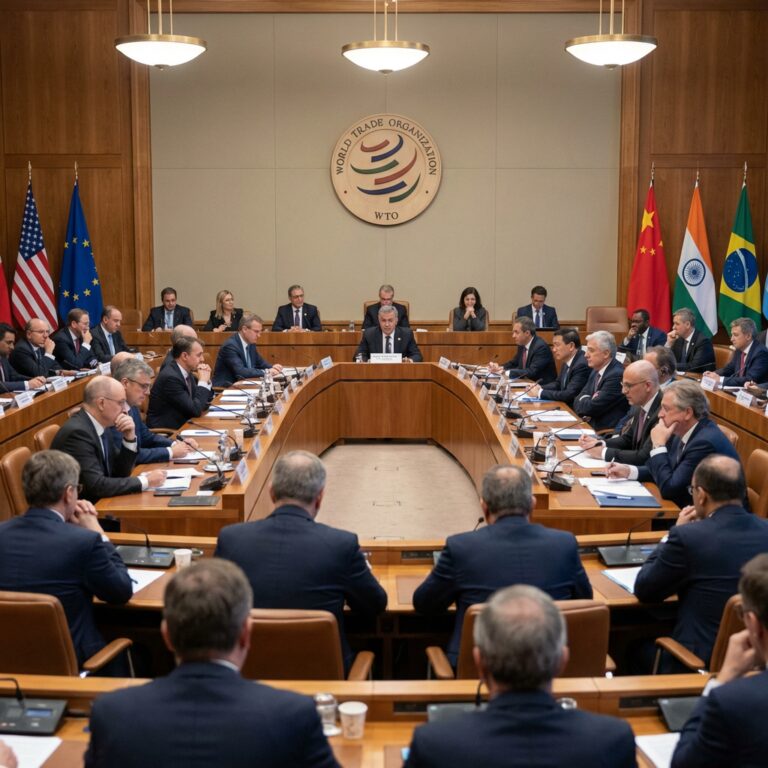
In the past few weeks, the EU - Mercosur trade deal has stirred up quite a storm across Europe. Farmers, politicians, and everyday citizens are all buzzing about what this agreement could mean for the continent. With concerns ranging from job security to food standards, the deal has become a hot topic. Here’s a breakdown of what’s happening and why it matters.

Kemi Badenoch Calls Donald Trumps Repeated Attacks on Keir Starmer Childish

Caricature of Donald Trump shouting at Keir Starmer while Kemi Badenoch looks on calling his attacks childish.

Public rifts between London and Washington over the Iran conflict risk signaling disunity to adversaries and complicating coordinated policy. - UK domestic opinion is shaping leaders’ positions, limiting London’s willingness to expand its military role. - Trump’s pressure and rhetoric, including trade-linked expectations, test the resilience of the UK-US relationship. - Operational caution in the Strait of Hormuz shows London prioritizing risk management over rapid deployments. - Badenoch’s shift from alignment with Trump to criticizing the White House suggests the UK’s political landscape is moving away from overt support for deeper involvement in the war.

How the EU–Mercosur Deal Became Europe’s Most Expensive Diplomatic Irrelevance.

A political cartoon depicting EU Commission President Ursula von der Leyen frantically sewing a tattered "EU-Mercosur Deal" banner. To her left, a conveyor belt of faceless bureaucrats moves past the tombstones of former EU leaders (Prodi, Barroso, Juncker) under a "1999–2026" timeline. To her right, a modern, active BYD factory stands over a derelict, "For Sale" Volkswagen plant, where a dejected businessman leans against the ruins.

Twenty-five years. A quarter of a century of summits, negotiating rounds, political crises, agricultural riots, and constitutional wrangling — and what does the European Union have to show for it? A trade deal with South America that, before a single tariff has been cut, is already drowning in legal challenge, political opposition, and strategic obsolescence. Welcome to the EU–Mercosur agreement: the most ambitious free trade deal Europe has ever built, and quite possibly the most pointless.

Geopolitics: The Two Faces of Europe: Antifascist by Day, Lackey by Night .   

Two robed female figures stand in a crumbling classical rotunda, one holding a flaming torch and a tattered blue and yellow flag, while a neon sign reading Western Prosperity glows on the cracked wall behind them.

Europe has spent three years wrapping itself in the Ukrainian flag. It has sanctioned oligarchs, funded artillery shells, cheered ICC arrest warrants, and lectured the Global South on the sacred inviolability of international law. European leaders have stood at podiums from Brussels to Kyiv invoking the ghosts of 1938, warning gravely that appeasement is how democracies die. It is a powerful performance. The problem is that it is, increasingly, exactly that — a performance, staged for a domestic audience, dissolving the moment the script demands real courage.

The Trump Administration’s Venezuelan Intervention: Legal Justifications, Resource Interests, and MAGA Politics

Nighttime street raid in Caracas showing Nicolás Maduro and Cilia Flores being escorted by armed soldiers between police cars with flashing lights, helicopters overhead, Trump observing from an oil-field command tent, and a toppled Lady Justice statue sinking into an oil spill.

On January 3, 2026, in a military operation code-named "Absolute Resolve," the United States conducted a dramatic raid on Caracas, Venezuela, resulting in the forcible abduction of President Nicolás Maduro and his wife, Cilia Flores. The operation, involving 150 aircraft deployed from approximately 20 bases and conducted by U.S. special forces, marked the most aggressive military action of President Donald Trump's tenure.

 United States Economic Report January 2026

A stormy political illustration of the Statue of Liberty standing on a cracked pedestal marked “125%,” holding chains of dollar bills as waves of US banknotes pour into a dark pit labeled “INTEREST PAYMENTS,” surrounded by tattered American flags.

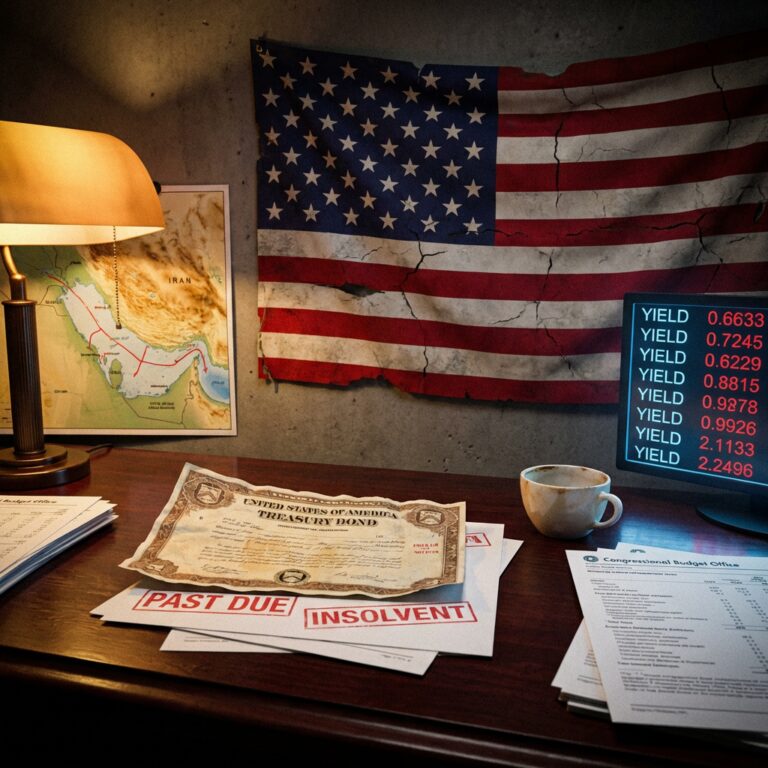
The United States economy enters 2026 with remarkably resilient momentum, expanding at an estimated 4.3% annualized rate in Q4 2025—the strongest quarterly performance in two years—yet faces a complex macroeconomic crossroads as multiple forces converge to shape the trajectory ahead.