
Category Thinking Society EN

Thinking Society is a dynamic blog dedicated to shedding light on the pressing social issues shaping our world today. Our mission is to provide a thoughtful space where topics including politics, education, inequality, health, and culture are explored in depth. Through insightful articles and diverse perspectives, we aim to challenge assumptions, foster critical thinking, and inspire constructive dialogue. The blog isn’t just about reporting problems—it’s about understanding the root causes, raising awareness, and bringing communities together to imagine real solutions. We believe that by encouraging open conversations and sharing knowledge, we can drive positive change and promote a more equitable, just society. Visitors are invited to engage with our content, share their own insights, and become active participants in a community committed to progress. Whether you’re curious about current events or passionate about social justice, Thinking Society is your go-to platform for informed, impactful discussion.

Germany’s Iron Return: Berlin’s Military Resurrection Redraws Europe’s Power Map.

Tank and missile launch at snowy coastline

The strategic thesis is clear: Germany has chosen to re-enter history as a military power. Its success will determine whether Europe becomes a sovereign strategic actor or remains a vulnerable protectorate. The era of German restraint is over; the era of German responsibility has begun, and with it, the final remaking of the post-Cold War world.#GermanyMilitaryExpansion, #BundeswehrAufbau, #CarstenBreuer, #RussiaNATO2029, #BerlinSecurityArchitecture, #EuropeanPowerShift

The G7’s Uninvited Guest: Strategic Exclusion and the Specter of Coerced Diplomacy.

Officials carrying ornate chair with South African flag

This is a stark failure. The EU, and specifically France, chose to be a vassal in someone else's geopolitical drama rather than a sovereign actor defending its own diplomatic channels. The cost is measured in lost credibility across Africa and the Global South. A strategically assertive EU would have publicly rejected the coercion, stating clearly that its guest list is its own, and that dialogue with non-aligned states is essential, not optional. Instead, Brussels demonstrated that its strategic autonomy is, for now, a paper doctrine. When pressured, it folds. // #Geopolitics #G7 #SouthAfrica #USForeignPolicy #StrategicAutonomy #Diplomacy

Strategic Distraction: How US-Iran Tensions Hand China a Geopolitical Gift

Businessmen discussing Middle East map at night office

#Geopolitics #USElection2024 #IranCrisis #ChinaRising #MiddleEast #EnergySecurity / The escalating confrontation between the United States and Iran is not merely a regional crisis; it is a strategic accelerant for China's global ambitions. As Washington's attention, diplomatic capital, and military assets are drawn into a volatile standoff with Tehran, Beijing is capitalizing on the distraction to consolidate its position, secure economic interests, and advance its narrative as a stable alternative to a conflict-prone West. This dynamic represents a classic geopolitical diversion, weakening America's capacity to focus on its stated priority: strategic competition in the Indo-Pacific.

The Digital Agora: Streaming’s Triple Revolution in Consumption, Politics, and Mental Health

the digital agora streamings triple revolution in consumption politics and mental health.jpg

#Live #Twitch #Streamer #Streaming #Livestream #Livestreaming. /// Briefly, streaming platforms like Twitch, YouTube Live, and Kick have democratized content creation, enabling individuals to broadcast live to global audiences. This has led to a decline in traditional media consumption, with viewers favoring interactive, authentic experiences. However, this revolution extends beyond entertainment, as streamers amass significant influence, hinting at future political roles, while simultaneously facing toxic environments that impact mental health. Understanding this context is crucial for grasping the deeper implications.

Meloni’s Gas Gambit: Italy’s Algeria Deal Exposes EU’s Energy Disunity

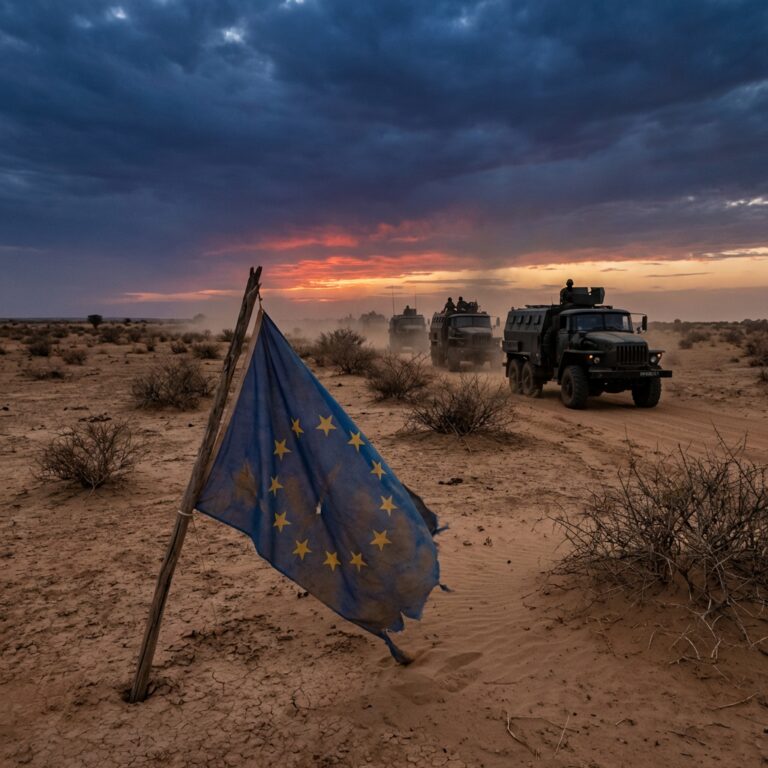
Officials meeting with EU flag and desert backdrop

In a classic display of national interest trumping collective ambition, Italian Prime Minister Giorgia Meloni jetted to Algiers this week to seal a bilateral gas cooperation deal with Algeria, blatantly underscoring the European Union's chronic inability to present a united front on energy security. The visit, confirmed in late March 2026, sidelines Brussels and highlights how member states continue to freelance on critical resource diplomacy, leaving the EU's common energy policy looking more like a suggestion box than a strategy.