










This article is part of the series: “The Mecca Pact” — How Turkey, Saudi Arabia, and Pakistan are reshaping Middle East security (Part 5 of 5)
Part 1: The Mecca Pact: A Tectonic Shift in Middle East Security → Part 2: The Sunni Axis: Mecca as the Third Pole → Part 3: Turkey’s Triple Circle: Breaking the Western Chain, Building New Ones → Part 4: The Abraham Axis: A Counter-Bloc Under Stress → Part 5 (this article)
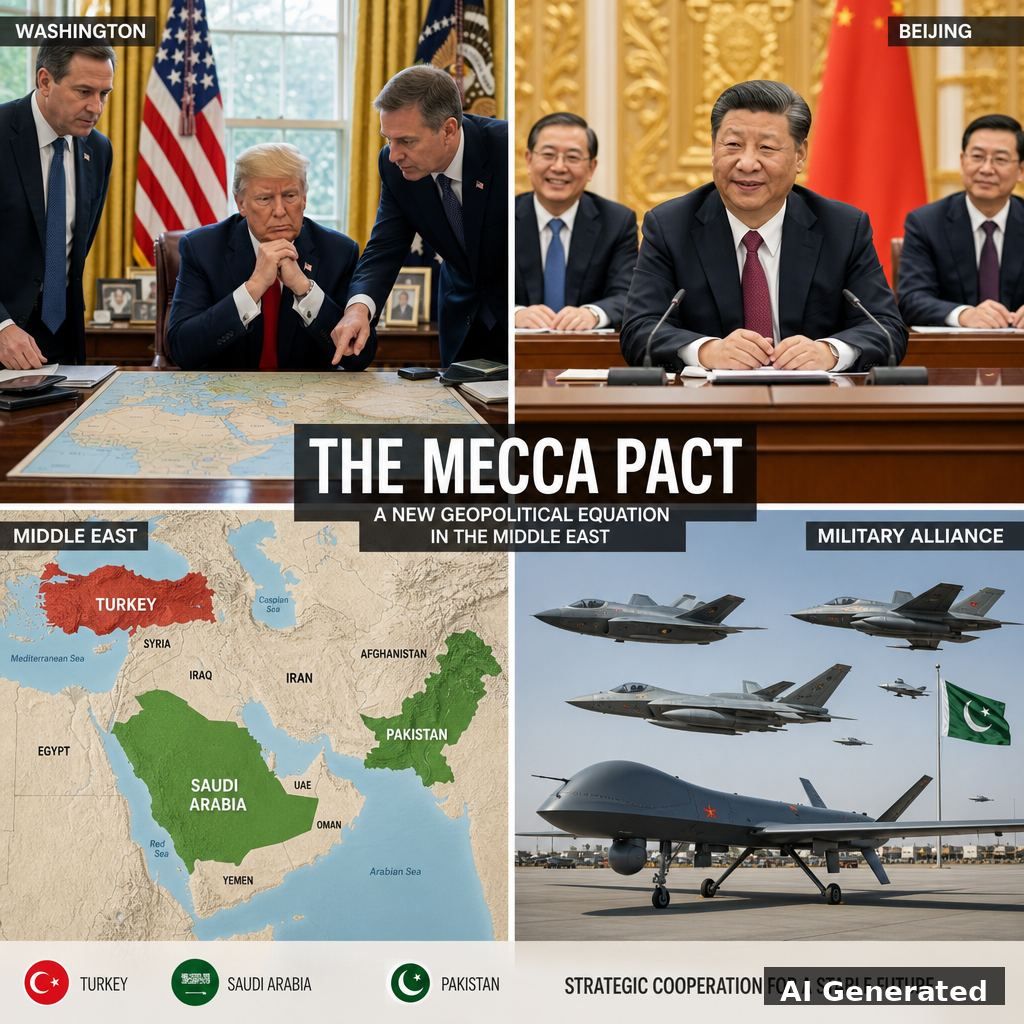
The Mecca Pact was signed by three regional powers, but its meaning is being decoded in two distant capitals: Washington and Beijing. One is anxious about what it portends. The other is quietly pleased. Both are wrong about what it means — but in opposite directions.
Washington: Muted Anxiety
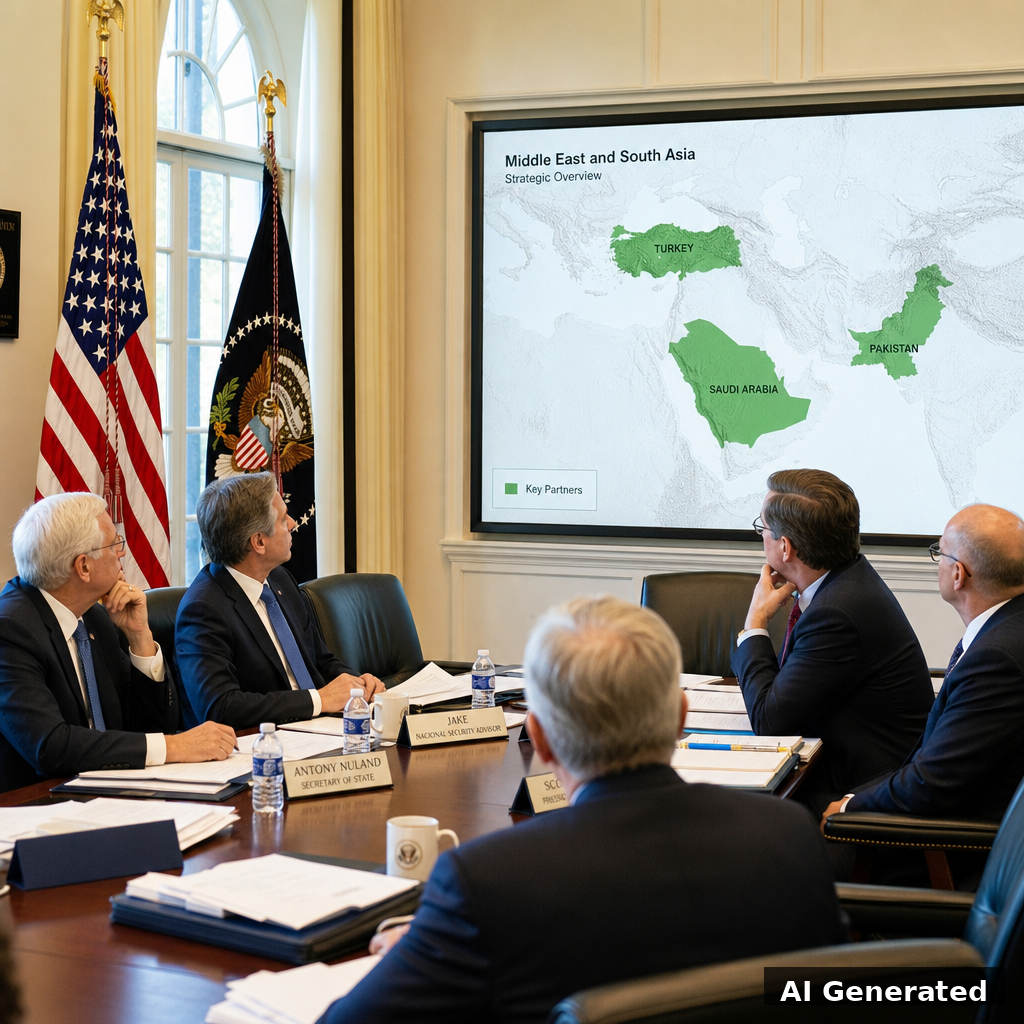
The US reaction to the Mecca Pact has been conspicuously muted [9][10]. Neither the United States nor Israel issued an official position on it despite its sensitivity [10]. This silence speaks volumes. The pact was signed by three US allies — Saudi Arabia is a newly designated major non-NATO ally, Turkey is a NATO member, and Pakistan is a longstanding non-NATO ally [9]. An American security architecture built on these three partnerships is now being repurposed into something Washington did not design and cannot fully control.
The Council on Foreign Relations’ Steven Cook traces the erosion across two decades of US policy whiplash — from the 2003 Iraq invasion through Trump’s 2019 non-response to Iranian attacks on Saudi oil facilities, to the Gaza war and the ongoing Iran conflict [1]. “Regional leaders could once count on continuity in U.S. foreign policy,” Cook writes, “but over the last few decades they have been forced to contend with policy based on ‘anything but what the previous President did’” [1].
The Iran war deepened the problem. US military installations came under repeated Iranian missile and drone attacks, exposing the vulnerabilities of the American footprint [7]. The war has prompted debate in Washington about whether the US military presence needs reconfiguration [7]. Gulf states watched and drew their own conclusions.
Trump’s transactional style compounds the problem. In the ongoing conflict with Iran, the US has “toggled between force, threats of force, and negotiation” [1]. “Washington’s regional partners often have no advance warning of Trump’s twists and turns and have paid a high price in the form of Iran’s willingness to target them in response to U.S. actions” [1]. Trump’s apparent impulsiveness has left some in the region wondering whether they will be “left in the lurch to face an empowered Iran on their own” [1].
Some in Washington see the pact positively. Saudi analyst Aziz Alghashian told Fox News the agreement “complements” US interests by increasing burden-sharing rather than challenging the Abraham Accords [9]. The Trump administration “will likely look favorably on a pact meant to advance collective regional deterrence with an eye toward Iran” [2]. A Saudi source insisted: “The United States remains to be our primary strategic partner” [9].
But FDD’s Sinan Ciddi is skeptical: the agreement reflects “serious reservations” among regional countries about US security guarantees [9]. His greater concern is that even a militarily weak pact could “encourage opposing alignments to harden” [9]. “Security pacts beget more security pacts,” Ciddi warns [9].
Previous in this series: The Corridors of Power: Infrastructure and Influence — How IMEC, drones, and energy shape the pact’s future.
Beijing: The Quiet Beneficiary
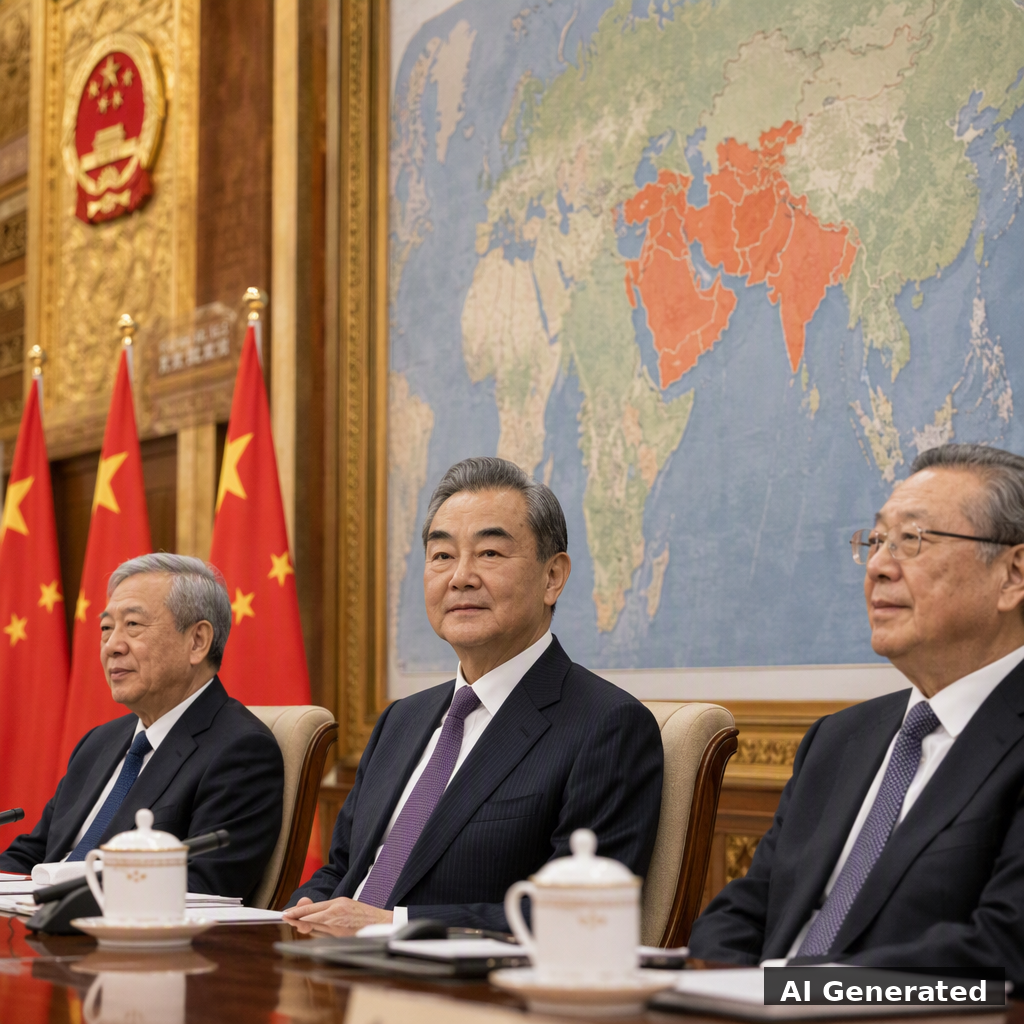
China has not officially endorsed the pact [7]. But its state-run Xinhua news agency highlighted the agreement as a response to rising regional security concerns [7]. More broadly, the pact fits Beijing’s long-running argument that Middle Eastern states should play a leading role in shaping regional security, rather than relying on an external power [7].
China has promoted what it calls “common, comprehensive, cooperative and sustainable security” while arguing for a regional security architecture less dominated by outside actors [7]. In 2022, during President Xi Jinping’s visit to Saudi Arabia, China said it would support Gulf states in building a “new and comprehensive” security architecture for the Gulf [7].
Yun Sun, senior fellow and director of the China Program at the Stimson Center, told Al-Monitor: “So far, the pact has been viewed positively by China because it represents a diversification of security arrangement in the Middle East, which diminishes the central role of US as the security provider” [7]. Sun added that China “has been calling for a regional organic security arrangement that is more independent from US influence” [7].
There are three specific ways Beijing benefits [7]:
First, diversification away from the United States. A region in which Gulf states diversify their defense partnerships can be more receptive to Chinese diplomacy, arms sales, technology, and investment without requiring Beijing to provide the kind of alliance guarantee that Washington has long supplied [7]. China lacks both the regional military presence and the appetite to replace Washington as the region’s security guarantor [7]. But a more diversified security landscape gives Beijing more room to deepen relationships that are already expanding [7].
Second, the Pakistan card. Pakistan is one of Beijing’s closest defense partners and a major recipient of Chinese arms [7]. The two countries have developed extensive cooperation ranging from fighter aircraft and submarines to joint drone production [7]. Pakistan’s JF-17 fighter aircraft, the backbone of its air force, was jointly developed by the Pakistan Aeronautical Complex and China’s Chengdu Aircraft Industry Group [7]. “Given China’s overwhelming influence over Pakistan, this indirectly contributes to the increase of Chinese influence,” Sun said [7]. During a May 2026 meeting, Xi hailed China’s relationship with Pakistan as “unbreakable” [7].
Third, expanded defense sales. The Iran war has highlighted the centrality of drones, missiles, and air defense in Gulf security [7]. China is well positioned to compete because it can offer relatively affordable armed drones, air-defense systems, and increasingly local production and technology partnerships [7]. The reported $5 billion agreement to establish a production line for Chinese Wing Loong-3 combat drones in Jeddah illustrates the appeal [7]. Rather than simply selling a finished platform, China could become embedded in Saudi Arabia’s training, maintenance, supply chain, and industrial infrastructure [7]. The reported Jeddah facility would produce roughly 48 drones a year [7].
The Irony of Strategic Autonomy
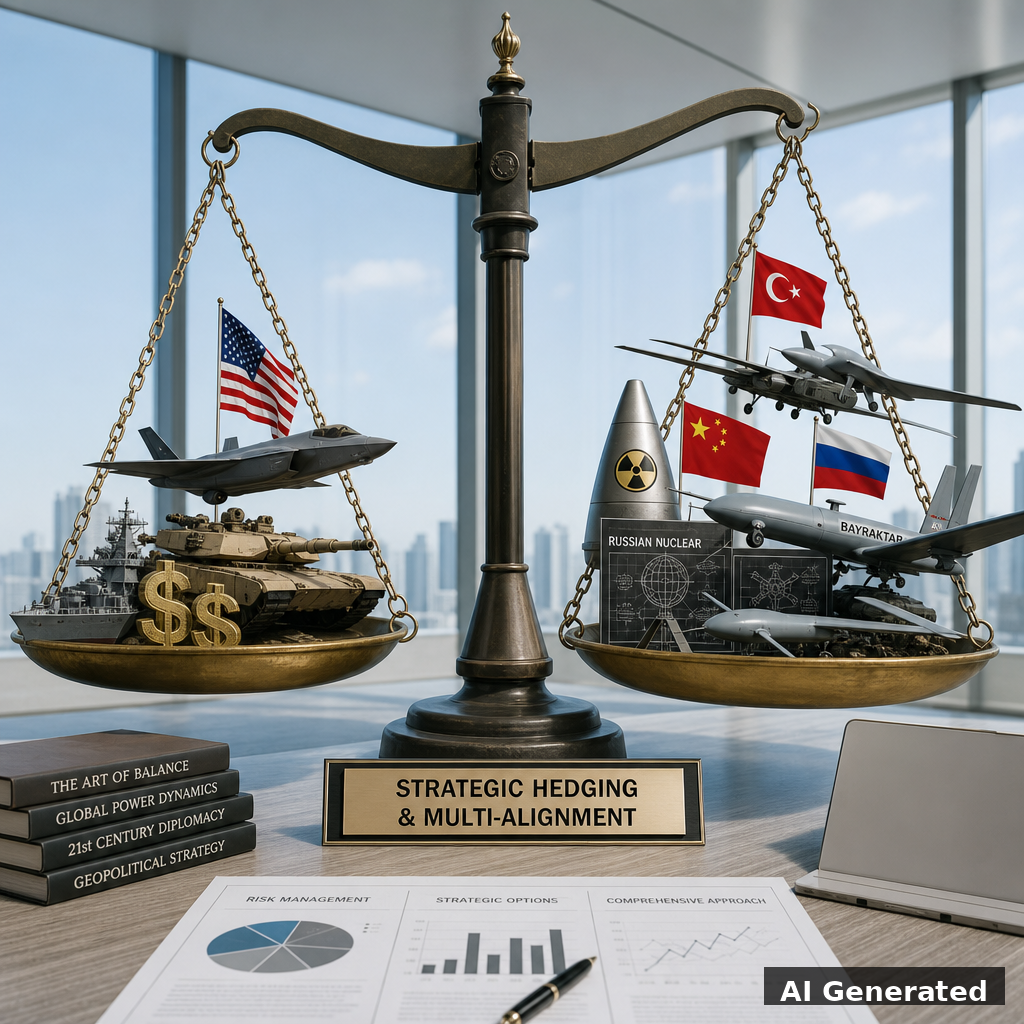
Here is the paradox at the heart of the Mecca Pact: three countries seeking independence from American influence are simultaneously deepening their dependence on other external powers.
Pakistan is already 80% dependent on Chinese weapons systems [6]. The Mecca Pact gives Pakistan alternative suppliers through Turkey’s defense industry, but it does not break the Chinese dependency — it adds layers [6]. Saudi Arabia’s reported drone production deal with China deepens Beijing’s industrial footprint in the kingdom [7]. Turkey is building its first nuclear power plant with Russia’s Rosatom — a $20 billion investment that embeds Russian presence on NATO’s southeastern flank [14].
As the Roosevelt Institute’s Raza Rumi told Fox News: “These states are hedging, not choosing permanent blocs” [9]. But hedging is not independence. It is multi-alignment — diversifying dependencies rather than eliminating them.
The Mecca Pact does not mark “a defection from the American camp to the Chinese, Russian, or Turkish one” [4]. It is, as Khalid Al-Jaber writes, “an attempt to move past the logic of camps altogether” [4]. But the practical effect is that China gains influence without assuming responsibility, while the US loses influence without relinquishing its commitments. Beijing gets the benefits of a more multipolar region without paying the costs of being a security guarantor [7]. Washington keeps the costs while watching its influence erode.
The Post-American Middle East
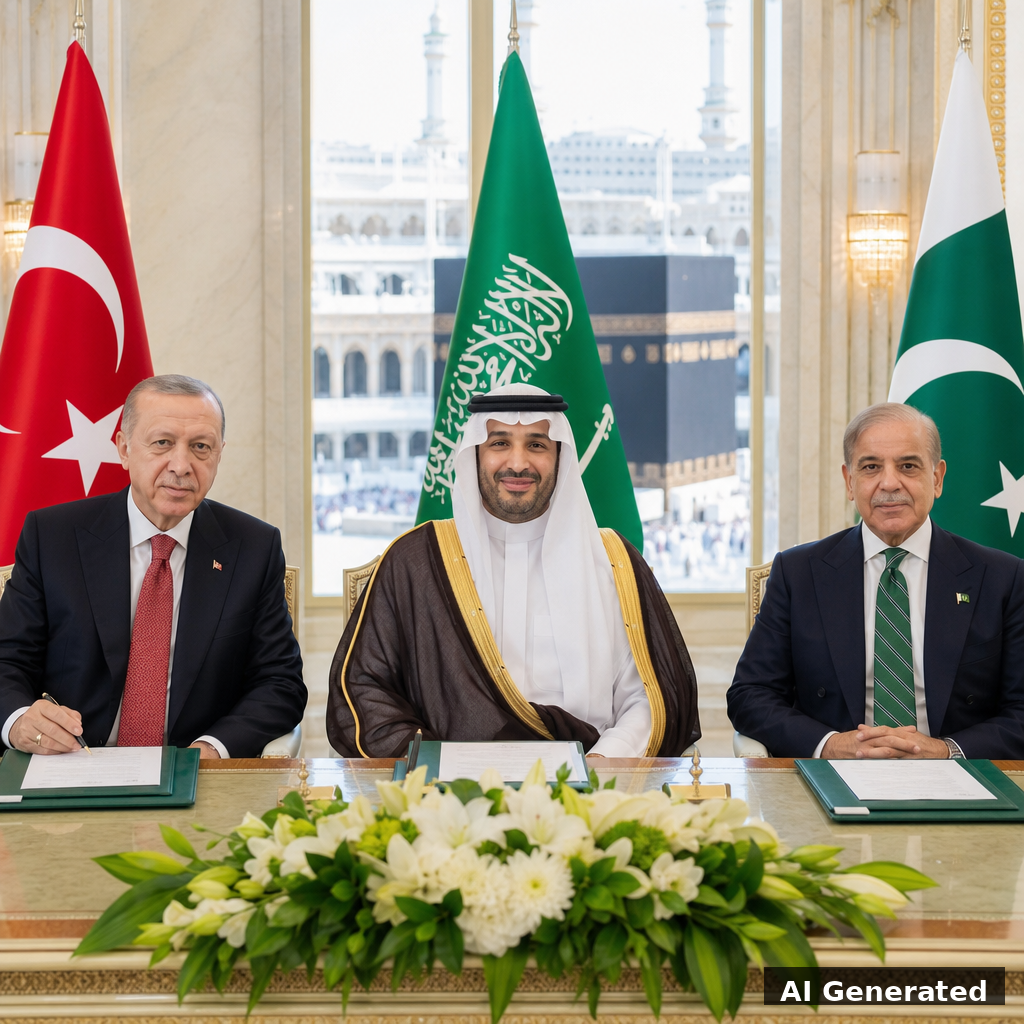
The Mecca Pact does not mark the end of the US-led order [4]. It marks “the start of preparation for a more pluralistic one — a system in which regional powers produce security rather than import it” [4]. It is, in effect, “an insurance policy against a world where the US is less present and less predictable” [4].
For China, this shift is as political as it is military. A region in which Gulf states diversify their defense partnerships can be more receptive to Chinese diplomacy, arms sales, technology, and investment without requiring Beijing to provide the kind of alliance guarantee that Washington has long supplied [7]. China can expand its political influence, arms exports, and defense-industrial ties while regional states assume more responsibility for their own security [7].
For the US, the question is whether the Mecca Pact represents burden-sharing or defection. The answer depends on whether Washington can accept a Middle East where it is no longer the unquestioned center — where it is one player among several, and where its allies have options [1][4][7].
The Trump administration may not have that patience. But the alternative — trying to force regional states back into a unipolar framework they no longer trust — would only accelerate the hedging it seeks to prevent.
This four-part series explores the Mecca Pact from its genesis to its far-reaching implications. Thank you for reading.
References
[1] Cook, S. A. (2026). The U.S.-Led Middle East Order Is Over. The Mecca Agreement Proves It. Council on Foreign Relations. Link
[2] Minor, A., Kugelman, M., & Outzen, R. (2026). Why Saudi Arabia, Pakistan, and Turkey just signed a defense pact. Atlantic Council. Link
[3] Berman, L. (2026). Mecca defense pact isn’t meant to challenge Israel, at least not on the battlefield. The Times of Israel. Link
[4] Al-Jaber, K. (2026). The Mecca pact is not just another regional alliance. Al Jazeera. Link
[5] Motamedi, M. (2026). Where does Iran stand on Saudi-Pakistan-Turkiye pact? Al Jazeera. Link
[6] Cheema, Q., & Murtiza, M. A. (2026). Should India Worry About the Mecca Pact? The Diplomat. Link
[7] Carroll, R., & Karam, J. (2026). Three ways China benefits from Saudi-Turkey-Pakistan pact: What to know. Al-Monitor. Link
[8] Carnelos, M. (2026). How a pragmatic axis could reshape the Middle East. Middle East Eye. Link
[9] Lachter, E. (2026). Saudi Arabia, Turkey and Pakistan defense pact worries regional experts. Fox News. Link
[10] El-Husseini, S. F. (2026). The Saudi–Turkish–Pakistani Security Agreement: A preliminary assessment. Middle East Monitor. Link
[11] MEPEI. (2026). The Mecca Joint Defense Agreement and the Limits of Gulf Strategic Autonomy. MEPEI. Link
[12] The Hill. (2026). The Mecca agreement’s message to Washington. The Hill. Link
[13] Akhtar, R. (2025). Beyond the Hype: Pakistan-Saudi Defense Pact Is Not a Saudi Nuclear Umbrella. Belfer Center, Harvard University. Link
[14] Harrod, K. (2026). Strategic Dependence and Regional Risk: Türkiye’s Akkuyu Nuclear Project. Geopolitical Monitor. Link
[15] Guzansky, Y. (2026). The Looming Nuclear Crisis in the Gulf: Overcoming the Enrichment Dilemma in the Saudi Deal. Foreign Affairs. Link
[16] Reuters. (2026). Saudi Arabia, Turkey, Pakistan pledge mutual defence as Middle East turmoil escalates. Reuters. Link
AI Disclosure: This post was created with the assistance of artificial intelligence. The ideas, analysis, and opinions expressed are my own — AI was used to help compose, structure, and refine my personal notes and thoughts into the final written content. Images and video featured in this post were also generated using AI tools, based on my own creative prompts and direction.
