




This article is part of the series: “The Mecca Pact” — How Turkey, Saudi Arabia, and Pakistan are reshaping Middle East security (Part 4 of 5)
Part 1: The Mecca Pact: A Tectonic Shift in Middle East Security → Part 2: The Sunni Axis: Mecca as the Third Pole → Part 3: Turkey’s Triple Circle: Breaking the Western Chain, Building New Ones → Part 4 (this article) → Part 5: The Remote Players: How China and the US Are Betting on the Mecca Pact
Two Competing Visions
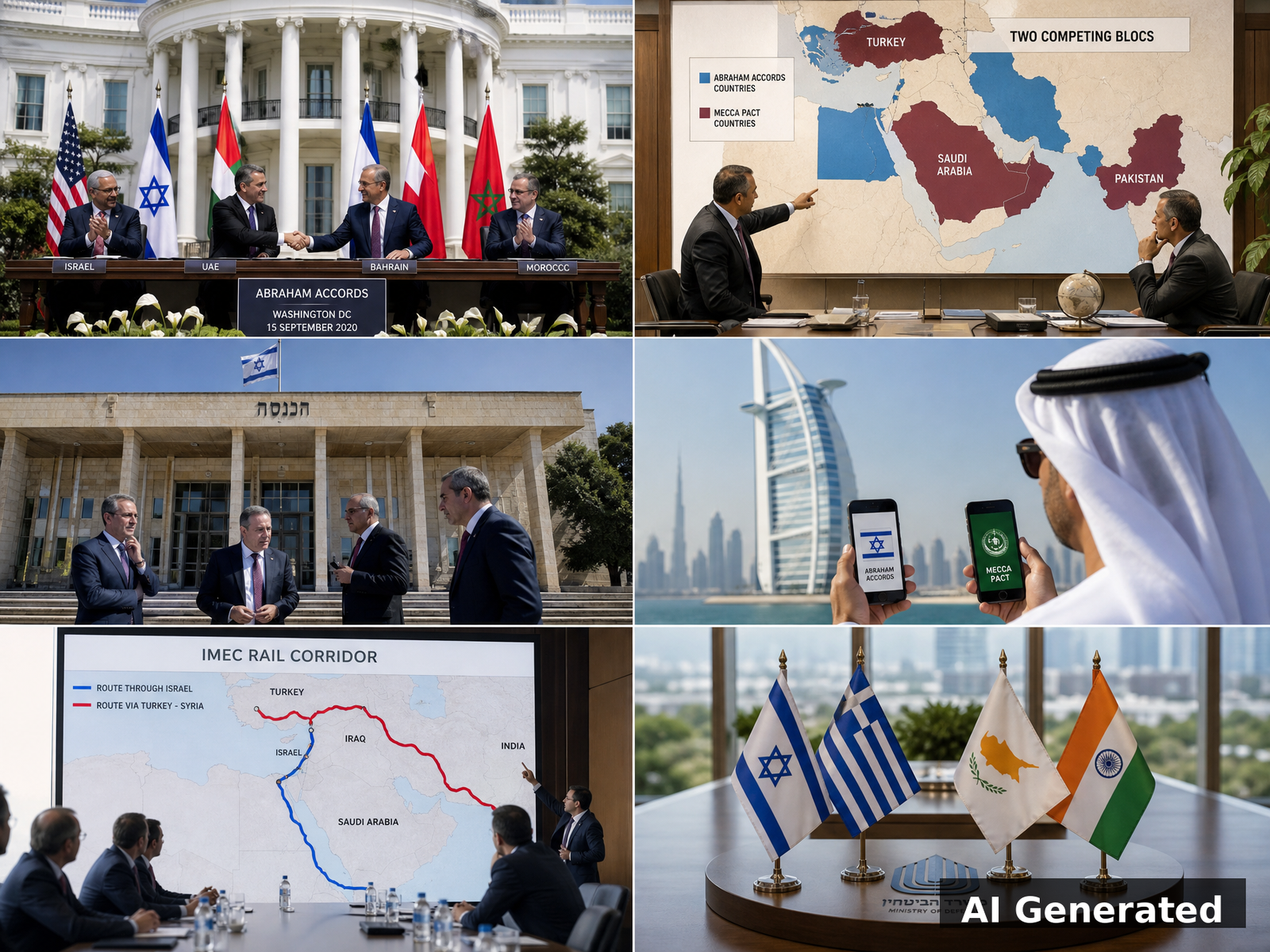
The Abraham Accords were supposed to be the future of the Middle East. Signed in 2020, they normalized relations between Israel and Bahrain, Morocco, and the UAE under American sponsorship [1]. They spawned the idea for the India–Middle East–Europe Economic Corridor (IMEC) and held out the prospect of Saudi-Israeli normalization [1]. Together, this framework would institutionalize decades of US-led regional architecture — binding Israel, the Gulf, and India into a single economic and security web.
Then October 7 happened. Then the Iran war. Then the Mecca Pact. The Abraham Accords are not dead, but they are under stress as never before.
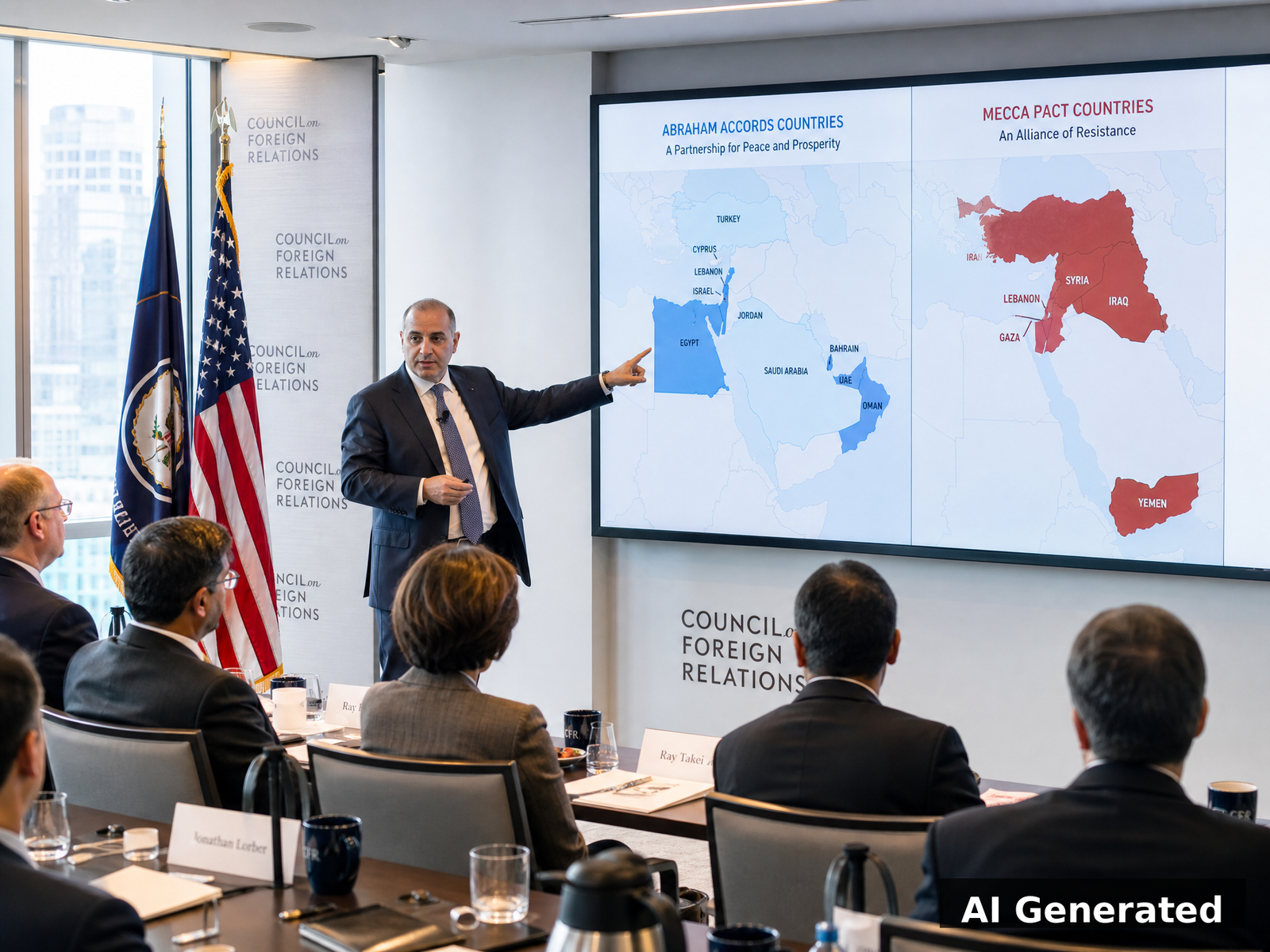
The Council on Foreign Relations’ Steven Cook frames the stakes bluntly: “The U.S.-aligned regional order could now become a Middle East with two blocs: the countries that remained committed to the Abraham Accords and its alternative, the Mecca Agreement” [1]. Previously, regional rivalries were contained because leaders prioritized their relationship with the United States, which was “the tie that bound the regional order” [1]. Now, with Pakistan, Saudi Arabia, and Turkey moving forward with a vision that competes directly with the Abraham Accords, “that no longer seems to be the case” [1].
This is, in Cook’s words, “a major change, and it is hard to overstate its significance” [1]. After five decades, “it is no longer possible to talk about a U.S.-led order in the Middle East” [1].
The competition is not yet a direct confrontation. Saudi Arabia has not abandoned the Abraham Accords framework — it never formally joined [10]. A Saudi source told Fox News the Mecca Pact is “not related in any way” to normalization with Israel [9]. Saudi analyst Aziz Alghashian argued the pact “complements” rather than counterweights the Abraham Accords, representing burden-sharing rather than defection [9].
But the actions tell a different story. The Saudis and Turks have proposed redirecting the IMEC rail link — bypassing Israel and routing from Saudi Arabia through Jordan, Syria, and Turkey to Europe [1]. This directly challenges the US-backed corridor that was supposed to be the economic spine of the Abraham Accords framework [1].
Israel’s Anxiety
Israel has not issued an official response to the Mecca Pact [3][5]. The silence is telling. A senior Israeli official told Ynet: “The agreement worries us. It is a pact aimed at Israel” [3]. Pakistan’s Defense Minister Khawaja Asif called Israel “a threat to the entire Muslim world” and called for “a united military front” against it [3].
Israel Hayom reports the pact is “accelerating the regional arms race” and pushing normalization efforts [3]. The Times of Israel’s Lazar Berman argues the pact is “diplomatic, not military” — “It has goals, but not necessarily military ones” [3]. INSS fellow Guzansky agrees: “I wouldn’t call it an alliance… I’d call it an alignment, perhaps” [3].
But even a diplomatic alignment poses a strategic challenge. With Iran and its network weakened, Israel is seen regionally as an aggressive actor causing instability [3]. The Mecca Agreement creates an Islamic alliance that hopes to balance against Israel if needed [3]. The UAE, a close Israeli partner, was not invited to join and isn’t expected to [3].
The deeper Israeli concern is about US reliability. Trump’s transactional approach to the region — alternating between dialogue and threats of force against Iran “without an evident strategy” [8] — has left Jerusalem uncertain about what American security guarantees actually mean. The Center for American Progress tracks what it calls “Trump Global Weakness Watch,” documenting how Trump’s policies undermine US reliability and push allies toward hedging [1].
The UAE: Caught Between Two Orders
The UAE occupies the most uncomfortable position in this emerging two-bloc dynamic. It is an Abraham Accords signatory with deep ties to Israel [3][8]. But it is also a Gulf state that shares the broader Arab anxiety about US reliability [8]. It was not invited to the Mecca Pact [3].
The UAE is “locked in a growing rivalry with Saudi Arabia, and is furious with Pakistan over its neutral stance while Iran was hammering the Emirates” [3]. It “lingers at a careful distance, still competing with Riyadh for post-oil economic primacy and Israeli security cooperation” [8]. For the UAE, there are good reasons to join the Mecca format, but also good ones to stay out and watch [8].
This ambivalence reflects the broader dilemma facing all Abraham Accords states: they normalized with Israel under American sponsorship, but the American sponsor has become unpredictable. The Abraham Accords framework assumed a stable US security umbrella. That assumption no longer holds.
The Counter-Alignment Hypothesis
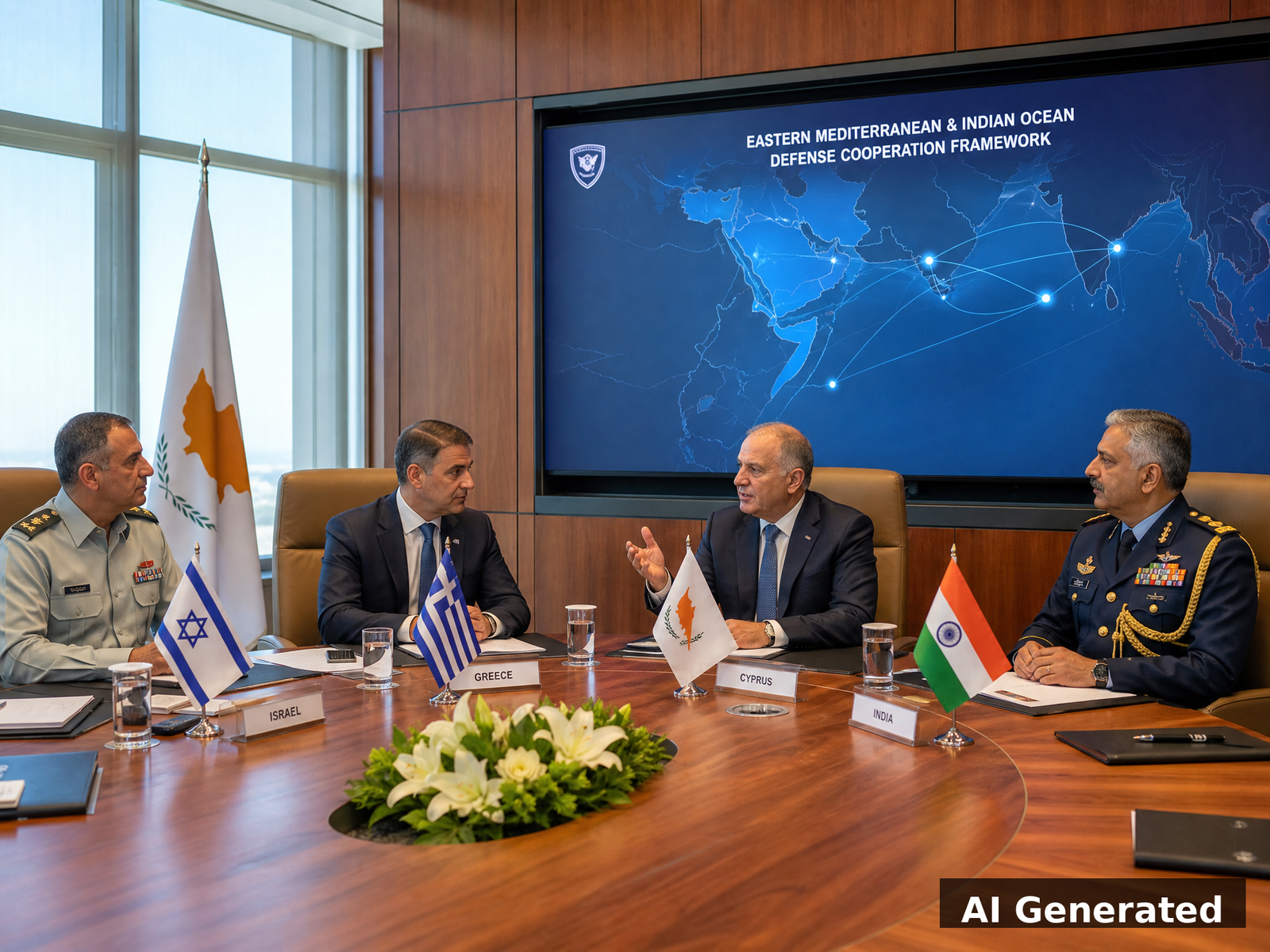
FDD’s Sinan Ciddi offers a warning that cuts to the heart of the two-bloc dynamic: “Security pacts beget more security pacts” [9]. Israel, Greece, Cyprus, and potentially India could deepen their own cooperation in response to the Mecca Pact [9]. “You’re buying security, but you’re also creating tension,” Ciddi argues. “That’s where I think the harm comes in” [9].
This counter-alignment is already visible. Israel and Greece have been deepening energy and security cooperation in the Eastern Mediterranean [14]. India is watching the Mecca Pact closely — its Ministry of External Affairs said it was “assessing the implications” for national security [6]. The combination of Saudi money, Turkish defense manufacturing, and a nuclear-armed Pakistan is “causing just as much alarm in New Delhi” as in Tel Aviv [6].
The geopolitical logic is clear. If the Mecca bloc consolidates, the natural response is an Israel-Greece-Cyprus-India axis, potentially with US backing. This would formalize the two-bloc structure that Cook describes [1].
What the Abraham Accords Got Wrong
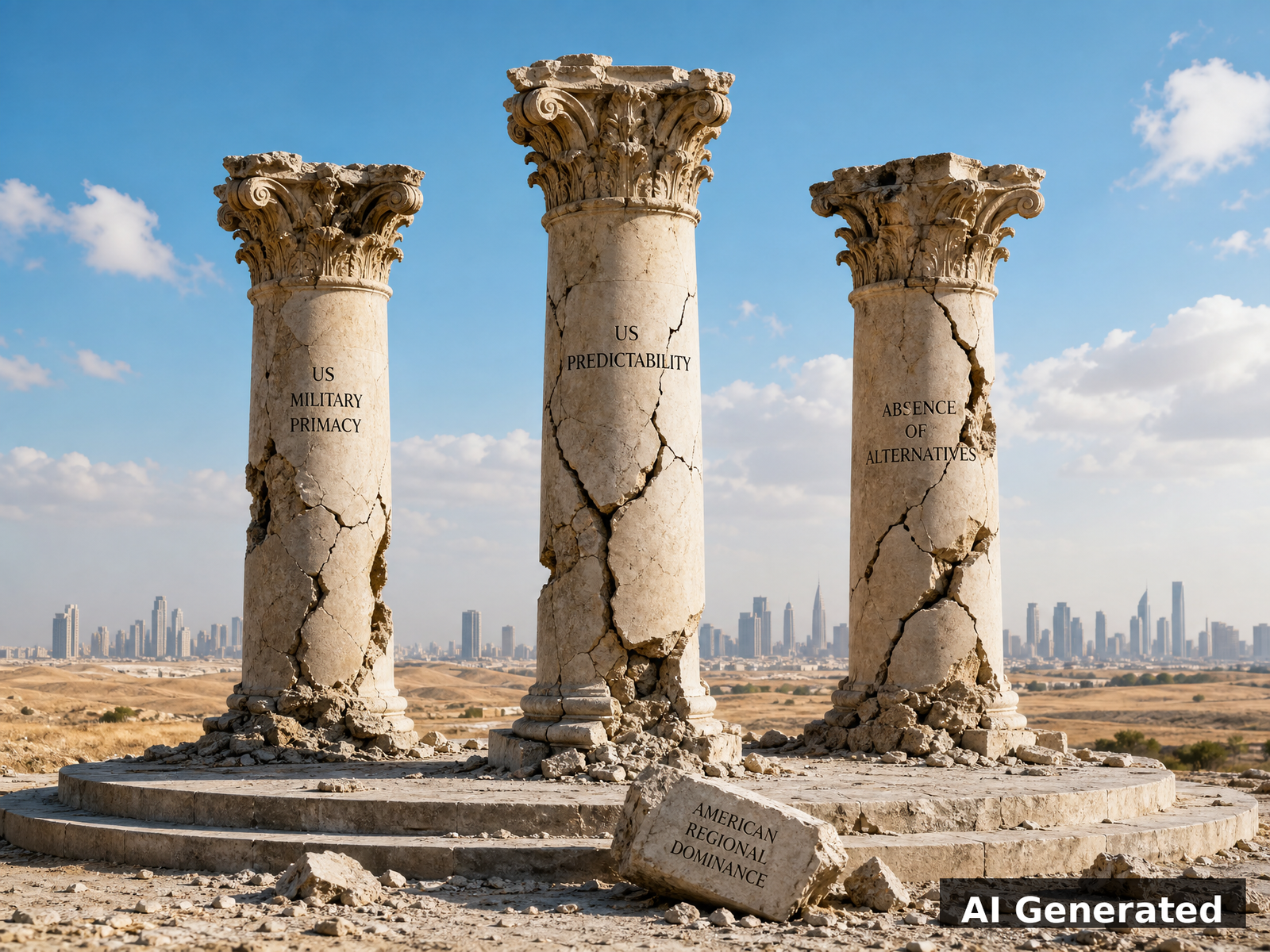
The Abraham Accords were built on a specific assumption: that regional states would accept a US-designed framework in which Israel’s security was central and American power was the guarantor [1][8]. That assumption rested on three pillars: US military primacy, US predictability, and the absence of alternatives.
All three pillars have eroded. US military primacy was exposed as vulnerable during the Iran war [7]. US predictability collapsed under the Obama-Trump-Biden-Trump whiplash [1]. And the absence of alternatives ended on August 7, 2026, in Mecca [1][4].
The Abraham Accords are not finished. The UAE, Bahrain, and Morocco maintain their normalization with Israel. IMEC, while stressed, has not been abandoned [10]. But the Accords can no longer claim to be the region’s organizing framework. They are now one of two — and the other one does not include Israel.
The IMEC Bypass
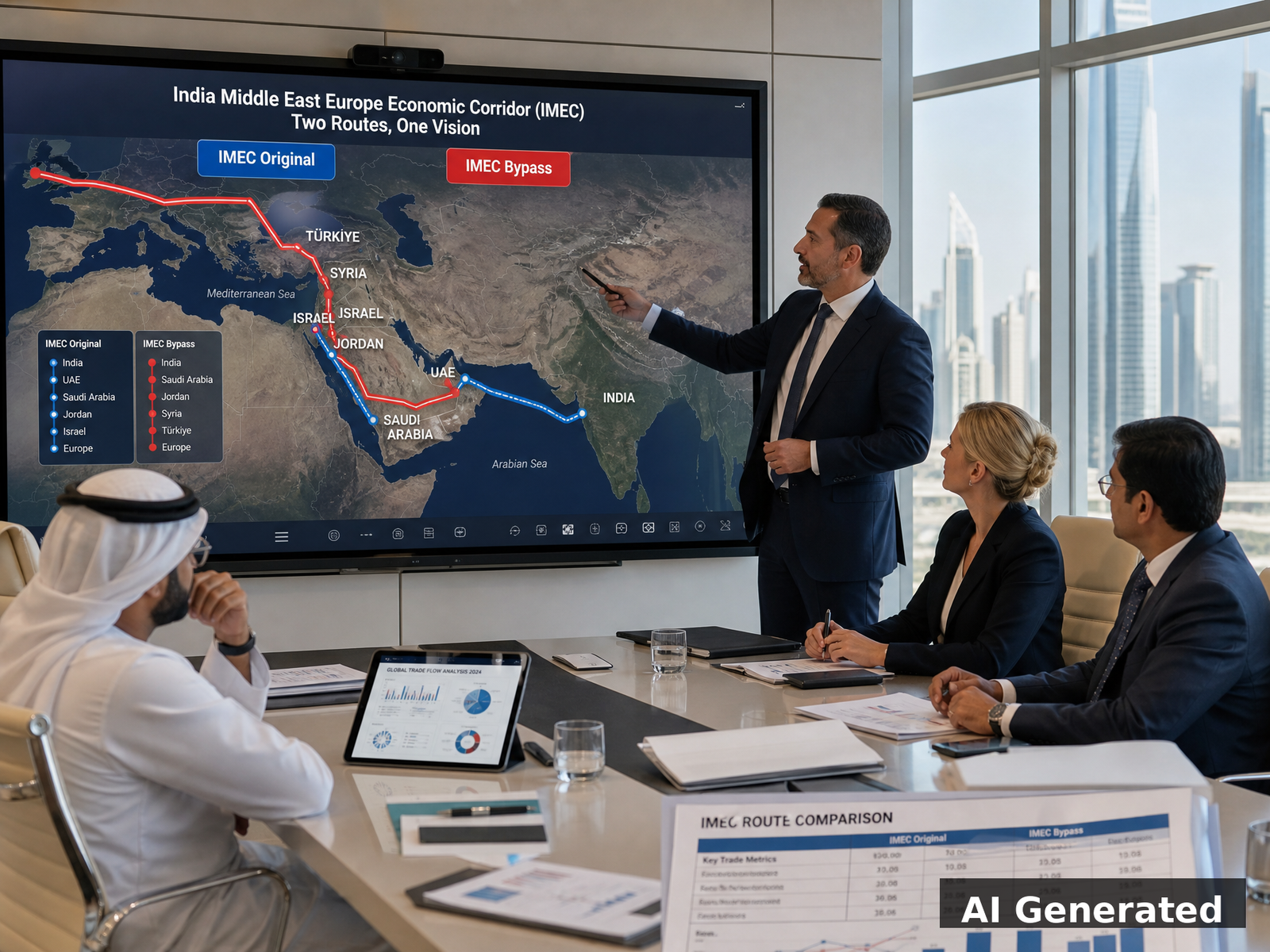
The most concrete evidence of the Abraham Accords’ erosion is the proposed IMEC redirect. The original corridor was designed to run from India through the UAE, Saudi Arabia, Jordan, Israel, and onward to Europe via Cyprus and Greece [1]. It was the economic backbone of the Abraham Accords vision — binding Israel into a regional trade network.
The Saudi-Turkish proposal would bypass Israel entirely, routing from Saudi Arabia through Jordan and north to Syria and Turkey before reaching Europe [1]. This is not just a logistics adjustment. It is a political statement: the region’s trade routes can function without Israel, and the countries controlling them need not include the Jewish state.
If implemented, this bypass would transform the Abraham Accords from a regional integration framework into a bilateral normalization track — Israel keeps its embassies in Abu Dhabi and Manama, but the grand architecture dissolves.
The Abraham Accords promised a new Middle East. The Mecca Pact may have delivered a different one.
References
[1] Cook, S. A. (2026). The U.S.-Led Middle East Order Is Over. The Mecca Agreement Proves It. Council on Foreign Relations.
[2] Minor, A., Kugelman, M., & Outzen, R. (2026). Why Saudi Arabia, Pakistan, and Turkey just signed a defense pact. Atlantic Council.
[3] Berman, L. (2026). Mecca defense pact isn’t meant to challenge Israel, at least not on the battlefield. The Times of Israel.
[4] Al-Jaber, K. (2026). The Mecca pact is not just another regional alliance. Al Jazeera.
[5] Motamedi, M. (2026). Where does Iran stand on Saudi-Pakistan-Turkiye pact? Al Jazeera.
[6] Cheema, Q., & Murtiza, M. A. (2026). Should India Worry About the Mecca Pact? The Diplomat.
[7] Carroll, R., & Karam, J. (2026). Three ways China benefits from Saudi-Turkey-Pakistan pact: What to know. Al-Monitor.
[8] Carnelos, M. (2026). How a pragmatic axis could reshape the Middle East. Middle East Eye.
[9] Lachter, E. (2026). Saudi Arabia, Turkey and Pakistan defense pact worries regional experts. Fox News.
[10] El-Husseini, S. F. (2026). The Saudi–Turkish–Pakistani Security Agreement: A preliminary assessment. Middle East Monitor.
[11] MEPEI. (2026). The Mecca Joint Defense Agreement and the Limits of Gulf Strategic Autonomy. MEPEI.
[12] The Hill. (2026). The Mecca agreement’s message to Washington. The Hill.
[13] Chatham House. (2026). Should Egypt join the Mecca Pact? Chatham House.
[14] Harrod, K. (2026). Strategic Dependence and Regional Risk: Türkiye’s Akkuyu Nuclear Project. Geopolitical Monitor.
[15] Breaking Defense. (2026). Saudi Arabia, Turkey, Pakistan ink ‘joint defense’ agreement. Breaking Defense.
[16] Reuters. (2026). Saudi Arabia, Turkey, Pakistan pledge mutual defence as Middle East turmoil escalates. Reuters.
AI Disclosure: This post was created with the assistance of artificial intelligence. The ideas, analysis, and opinions expressed are my own — AI was used to help compose, structure, and refine my personal notes and thoughts into the final written content. Images and video featured in this post were also generated using AI tools, based on my own creative prompts and direction.
