





You are being told that Europe has finally built its own missile. A missile that can strike targets over 2,000 kilometers away. A missile that represents, according to its makers, a quantum leap in European defense capability. And yet, ask yourself this: when was the last time a European weapon system actually deterred anyone?
When did European technology, rather than American guarantees, keep the peace on this continent? We have watched European defense ministers celebrate milestones before—Eurofighter, FREMM, Leopard 2—only to see each program dissolve into cost overruns, national vetoes, and operational failures that would be comedic if the stakes weren’t so lethal. Now we are told that a container-launched cruise missile, backed by a European engine production line, changes everything. Does it? Or are we watching another expensive performance designed to make European taxpayers feel secure while their governments remain strategically dependent on a transatlantic partner whose commitment grows more uncertain with every tweet?
The context here matters more than the technology. European defense fragmentation did not emerge from nowhere—it was designed into the system after 1945, when the architects of what became the European Union decided that national militaries were preferable to a unified European force. The logic was simple: separate armies meant no single European power could dominate the continent again. What they created, however, was twenty-seven defense ecosystems competing for the same budget scraps, producing duplicate capabilities, and maintaining interoperability standards that exist only on paper. The International Institute for Strategic Studies estimates that European NATO members collectively field over 2.5 million active military personnel—more than the United States—yet produce a fraction of the strategic effect. We have built an army of nations, not a nation of armies. And that distinction is not semantic. It is the difference between deterrence that works and deterrence that merely looks good in parade formations.
The strongest case for European missile development is deceptively simple: we need it because the world has changed, and our security assumptions have not. Russia, whatever your view of its current trajectory, has demonstrated both the will and the capability to project force beyond its borders. American extended deterrence, the backbone of European security since 1949, now comes with conditions, caveats, and a president who has openly questioned whether NATO allies are worth defending. Add to this the industrial logic: a European defense industrial base that does not produce precision-strike weapons is a European defense industrial base that depends on American exports for its most critical capabilities. The logic, as laid out by RAND Corporation analysts, is straightforward: strategic autonomy requires industrial autonomy, and industrial autonomy requires programs like the new cruise missile and its domestic engine production. You cannot have one without the other. And yet, here is what that argument cannot explain: why, after seventy years of European integration, do we still need to make this case? Why is European defense industrial policy still being written as if we were starting from scratch?
The counterargument is not that European missile technology is bad. It is that European political will is absent. You can build the most sophisticated cruise missile in the world, but if you do not have the command structures, intelligence capabilities, targeting networks, and political consensus to deploy it, you have built an expensive paperweight. Look at the record: the European Union’s Permanent Structured Cooperation initiative, launched with great fanfare in 2017, has produced coordination documents, not capabilities. The European Defence Fund, meant to pool research and development spending, still accounts for less than 2 percent of total European defense expenditure. The European Defence Agency’s attempts to create joint procurement frameworks have been blocked, repeatedly, by national governments protecting domestic contractors. The Chatham House analysis of European defense integration is blunt: we are paying for the theater of unity while maintaining the reality of fragmentation. And here is what that reality means in practical terms: European militaries cannot agree on a single drone platform, a single tank ammunition standard, or a single command language. You expect these same institutions to coordinate a cruise missile strike campaign?
Here is where the abstract becomes personal, because it always does. That new European missile program? The one promising strategic autonomy? European taxpayers will fund it through defense budgets that compete directly with healthcare, infrastructure, and social services. The European Defence Agency estimates that full implementation of European defense integration would require additional spending of €100 billion annually over the next decade. That figure comes from Brussels. Now consider what €100 billion could do in a Europe where energy costs are crushing small businesses, where hospital waiting lists stretch for months, where pension systems are crumbling under demographic pressure. You are being asked to pay more—for weapons that may not work together, operated by militaries that cannot agree on whose orders to follow. And you are being told this is strategic autonomy. The SIPRI Arms Transfers Database shows that European weapons imports have increased 94 percent over the past five years—much of it from American suppliers, with European taxpayers funding American defense contractors while celebrating domestic production milestones. Ask yourself: whose strategic autonomy is this, really?
The trajectory is not encouraging, and we should be honest about where it leads. European defense planners are building weapons systems for a strategic environment that no longer exists—one where American leadership was guaranteed, where NATO was unified, where the threat was clearly defined. That world ended, if it ever truly existed, somewhere between Crimea and January 6th. What replaces it is unclear, and the missile programs currently under development will not clarify it. They will, however, consume resources that could go toward building the political infrastructure Europe actually needs: a unified command structure, a credible rapid deployment force, a defense industrial policy that prioritizes interoperability over national champion protection. Without those foundations, a European cruise missile is not a deterrent. It is a statement of intent that adversaries can dismiss and allies can ignore. Brookings Institution analysts have noted that European strategic autonomy remains a aspiration, not a capability—and that aspirations without resources, without political will, and without institutional frameworks are simply wishes. We have been wishing for seventy years. When do we start building?
So what comes next? The missile will be tested. The engines will roll off production lines. Defense ministers will pose for photographs beside prototypes and issue press releases about European sovereignty. And then what? The uncomfortable answer is that nothing fundamental changes until European governments make choices they have spent seven decades avoiding. Strategic autonomy is not a weapons program—it is a political commitment that requires accepting costs most European populations have never been asked to bear. It requires defense spending increases that will compete with social programs voters demand. It requires accepting that European soldiers may die in conflicts that do not directly threaten national territory. It requires building federal institutions capable of commanding military forces that member states are not yet willing to pool. None of this is happening. What is happening is that European governments are buying weapons and calling it strategy. The question is not whether Europe can build missiles. The question is whether Europe can build the political will to use them coherently—and whether European populations will accept the costs of genuine strategic independence, or whether they will continue to demand the illusion of security without the price of earning it.
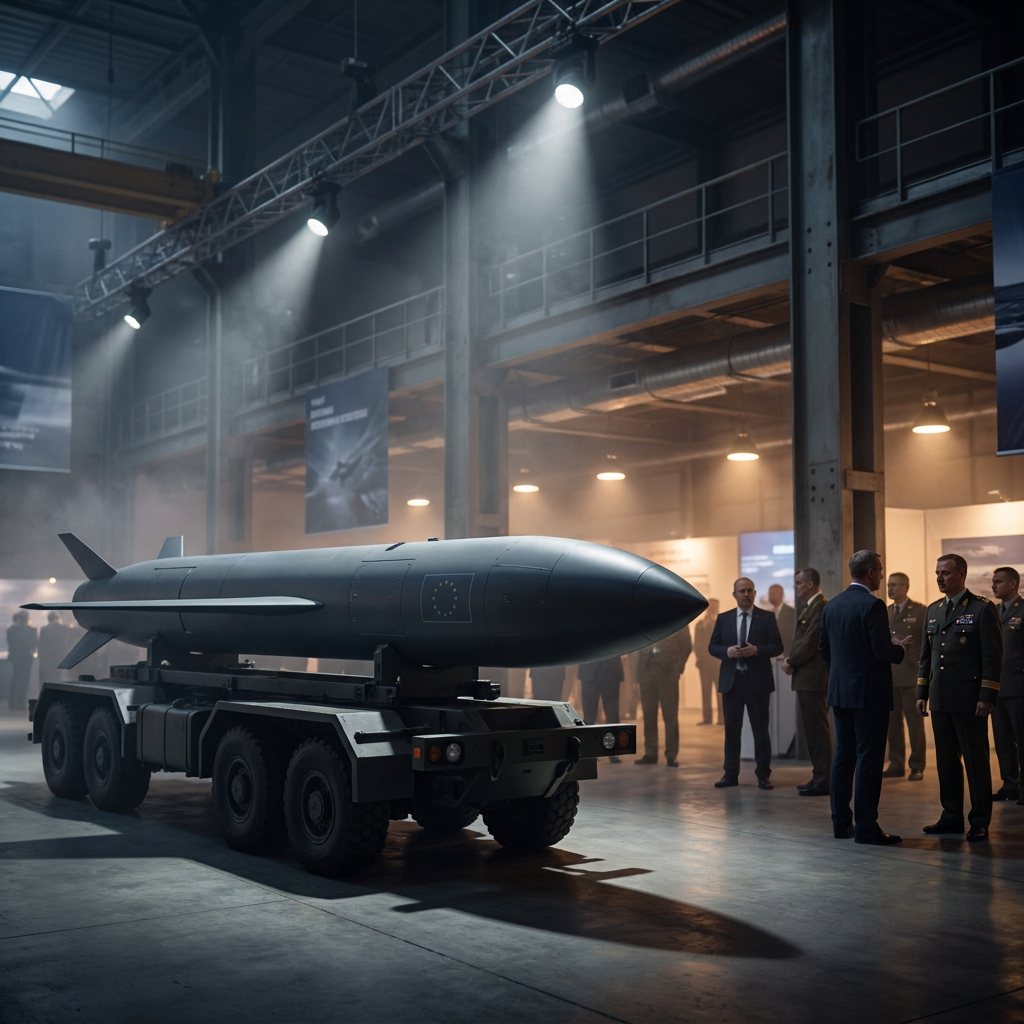
Why are we still funding weapons we cannot operate together? Who benefits from European defense fragmentation—the contractors who sell to every national market separately, the American suppliers who remain irreplaceable, the politicians who can blame Brussels for failures they caused? And what will it take before European citizens demand that their governments make the choice they have been avoiding since 1945: actual strategic autonomy, with all its costs, or honest acceptance that European security will remain dependent on American goodwill—which, as recent years have shown, is not guaranteed?
— REFERENCES —
[1] The Engineer — https://www.the-engineer.com/new-european-container-launched-missile-promises-strikes-beyond-1243-miles/
[2] Chatham House — https://www.chathamhouse.org/2024/01/european-defence-autonomy-illusion-or-necessity
[3] IISS Military Balance 2024 — https://www.iiss.org/publications/the-military-balance
[4] RAND Corporation — https://www.rand.org/topics/european-security.html
[5] European Defence Agency — https://eda.europa.eu/news-and-events/news/2024/03/eda-annual-report-highlights-fragmentation-challenges
[6] ECFR — https://www.ecfr.eu/article/european-strategic-autonomy-the-gap-between-rhetoric-and-reality
[7] SIPRI Arms Transfers Database — https://www.sipri.org/databases/armtransfers
[8] Reuters — https://www.reuters.com/world/europe/european-defence-spending-hits-record-2024-09-15/
[9] Brookings Institution — https://www.brookings.edu/articles/european-strategic-autonomy-in-a-changing-world/
[10] Carnegie Europe — https://carnegieendowment.org/europe/strategic-europe/2023/01/judy-asks-is-european-strategic-autonomy-over https://carnegieendowment.org/europe/strategic-europe/2025/03/the-case-for-europe
AI Disclosure: This post was created with the assistance of artificial intelligence. The ideas, analysis, and opinions expressed are my own — AI was used to help compose, structure, and refine my personal notes and thoughts into the final written content. Images, videos and music featured in this post were also generated using AI tools, based on my own creative prompts and direction.
