

Daily Intelligence Briefing — 2026-08-03 (D64)
Contents
- 1. Geopolitics & Defence
- US-Iran Talks Set for Monday as Tehran Denies Any Agreement
- Ukraine’s Drone War Kills Child in Belgorod Playground
- Advanced Military Aviation and Unmanned Systems Progress
- Pakistan Escalates Counter-Terrorism Operations Amid Surging Violence
- Skyroot Aerospace and India-Safran Turbofan Deal
- Hungary’s Post-Orban Transformation and Ceuta Update
- 2. Environment & Climate
- 3. Society & Civil Issues
- 4. AI & Technology
- 5. Economy & Business
- 6. Science & Space
- 7. Crypto, Digital Assets & Blockchain
- 8. Correlations & Analysis
- 9. References
Click any heading to jump to that section.
Click the section heading to return to this menu.
Geopolitics & Defence
US-Iran Talks Set for Monday as Tehran Denies Any Agreement
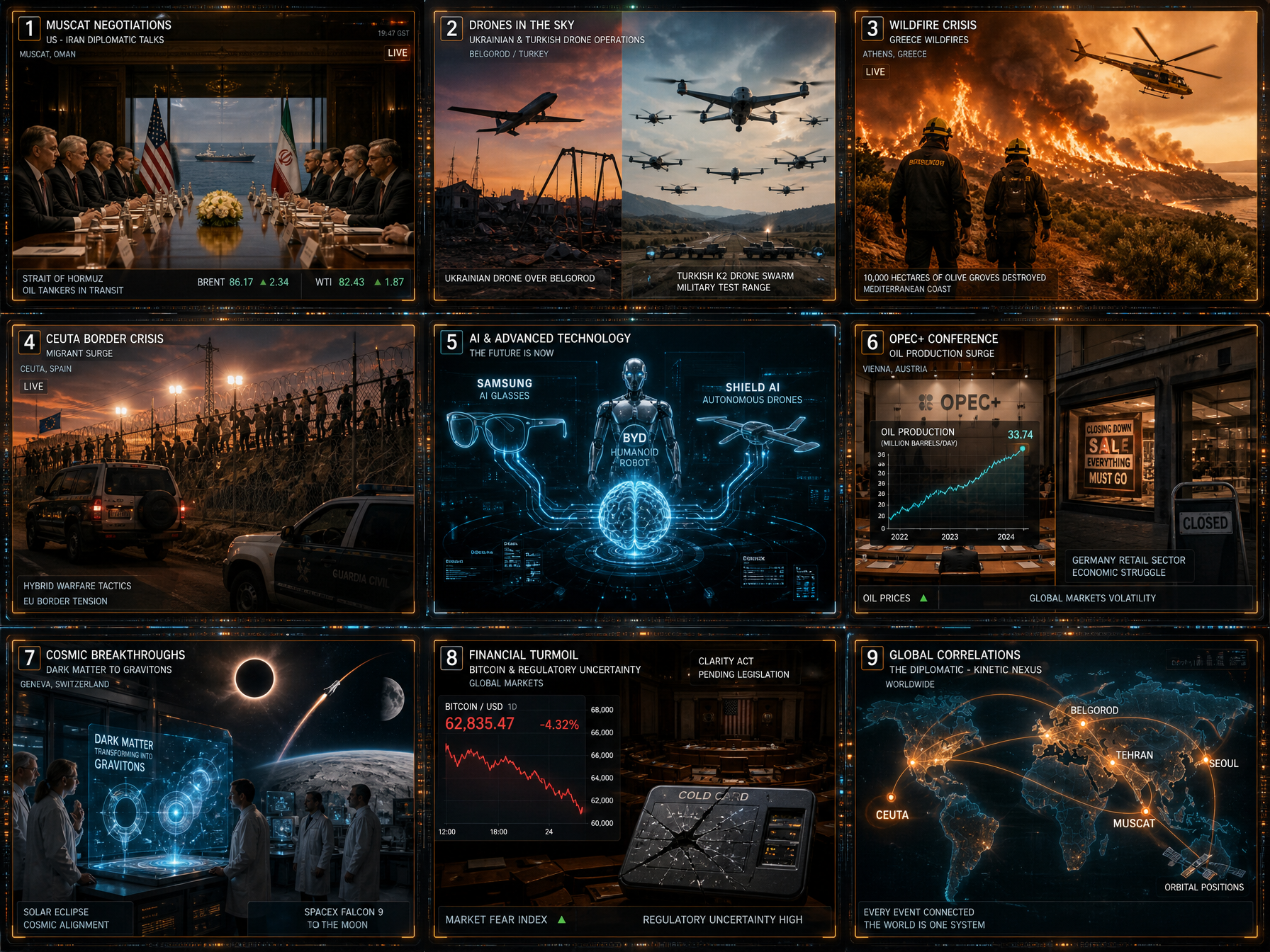
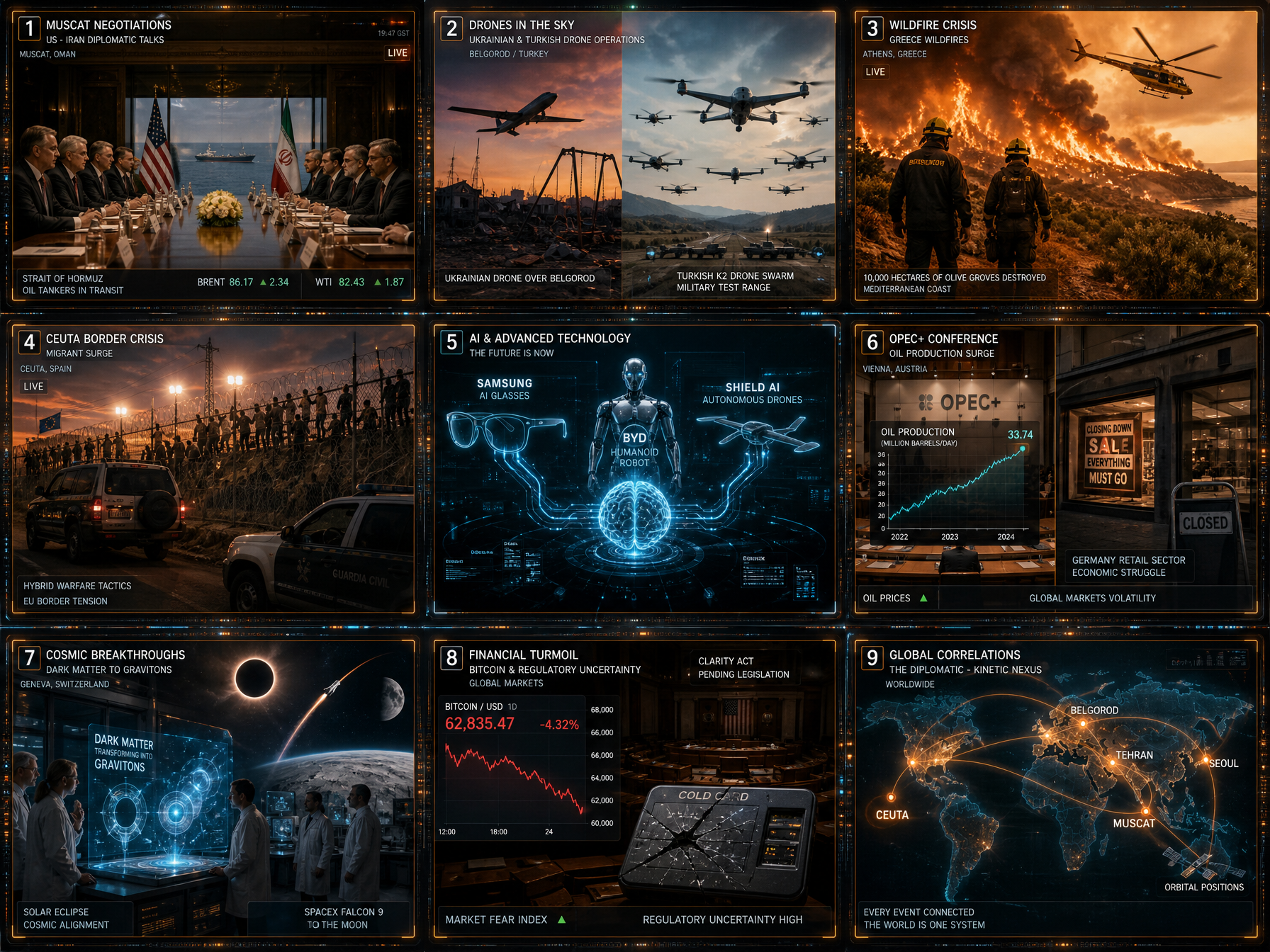
President Trump confirmed Sunday that direct US-Iran negotiations will begin Monday, focused on the immediate reopening of the Strait of Hormuz and the broader framework for ending the five-month military confrontation. Trump posted on Truth Social that “very serious and direct negotiations” would commence, characterizing the talks as the most promising diplomatic pathway since hostilities began in early 2026[1]. The announcement followed Saturday’s suspension of planned US strikes on Iranian energy infrastructure, which was precipitated by Saudi alarm and Iranian threats to retaliate against Gulf neighbors.
However, Iran swiftly rejected any characterization of an emerging deal. Tehran declared that “no agreement of any kind has been reached” and that the Strait of Hormuz “will remain closed as long as the illegal American aggression continues”[2]. The gap between Washington’s optimistic framing and Tehran’s categorical denial suggests that Monday’s talks may face immediate impasse over whether negotiations proceed while hostilities continue or only after a ceasefire — a sequencing question that has bedeviled every prior attempt at diplomatic resolution.
The military situation continued to deteriorate even as diplomatic channels opened. UKMTO, the United Kingdom Maritime Trade Operations authority, reported an explosion near a commercial tanker approximately 120 nautical miles southeast of Muscat, Oman, in waters adjacent to the Strait of Hormuz[3]. The vessel was not struck directly, but the incident underscores the ongoing danger to commercial shipping in the region. Two additional commercial ships reported being approached by small craft in the Gulf of Aden overnight, though neither was boarded. The persistence of maritime incidents despite the diplomatic overture suggests that elements within Iran’s military establishment may not be aligned with the diplomatic track, or that the conflict has generated autonomous threat actors beyond central government control[4].
Ukraine’s Drone War Kills Child in Belgorod Playground
A Ukrainian drone struck a children’s playground in the Russian city of Belgorod on Saturday, killing a thirteen-year-old girl and injuring several other children, according to the regional governor’s office. The attack on a clearly civilian recreational facility represents a significant escalation in the targeting patterns of Ukraine’s long-range drone campaign, drawing immediate condemnation from Moscow and international human rights organizations[5]. The governor of Belgorod Oblast confirmed the casualty and posted photographs of the damaged playground equipment, while Russian state media characterized the strike as evidence of Ukrainian “terrorism against civilian populations.”
The incident occurred against the backdrop of the largest single-day drone interception figure claimed by Russia’s Ministry of Defense, which reported that air defense systems neutralized 635 Ukrainian drones across multiple front-line and rear-area regions in the preceding twenty-four hours[6]. If accurate, this figure represents a dramatic intensification of Ukraine’s drone offensive, which has been expanding in both geographic scope and volume throughout July. The sheer scale of the drone barrage suggests Ukraine is manufacturing and deploying autonomous systems at a rate that is straining even Russia’s extensive air defense network, which has been progressively depleted by months of systematic targeting of radar installations and missile batteries.
Advanced Military Aviation and Unmanned Systems Progress
Turkey has conducted the first publicly acknowledged test of a K2 kamikaze drone swarm formation, deploying multiple autonomous loitering munitions in coordinated attack patterns during military exercises[8]. The demonstration involved at least twelve drones executing synchronized approach vectors against simulated ground targets. The K2 system, developed by Havelsan, is designed for autonomous target acquisition and engagement without human intervention, positioning Turkey among leading nations in autonomous swarm capabilities alongside the United States, China, and Israel.
China’s next-generation J-36 stealth fighter has been spotted on satellite imagery with a fifth prototype featuring design modifications, including an enlarged weapons bay and revised aerodynamic surfaces[9]. The rapid prototyping pace — five airframes in eighteen months — is unprecedented in modern military aviation. The J-36 is designed to integrate advanced AI systems for autonomous wingman coordination, placing it at the intersection of manned and unmanned combat aviation.
In the United States, Pratt and Whitney’s F-35 Engine Core Upgrade program has reached a critical milestone with the successful completion of the first full-power ground test of the Enhanced Core Unit[10]. The upgrade promises a fifteen percent improvement in thrust and significant gains in fuel efficiency, addressing longstanding concerns about the F-35’s operational range limitations. Meanwhile, India’s Hindustan Aeronautics Limited has issued a global Expression of Interest for a 10,000-ton aerospace forging press — a capability currently possessed by fewer than five nations — signaling India’s ambition to manufacture large single-piece structural components for next-generation aircraft domestically[11].
Pakistan Escalates Counter-Terrorism Operations Amid Surging Violence
A suicide bomber detonated explosives at a police station in the Swat Valley on Friday, killing at least fourteen people including police officers and civilians, in the deadliest attack in the region since the Pakistani military’s 2009 operations against Taliban militants[12]. The attack targeted the Mengora police station in an area that had been considered relatively secure following years of military presence. The Tehreek-e-Taliban Pakistan (TTP) claimed responsibility, describing the bombing as retaliation for ongoing military operations in the tribal areas along the Afghan border.
The attack underscores Pakistan’s broader terrorism crisis, which has seen more than 3,000 incidents nationwide through the first seven months of 2026[13]. The surge has been attributed to the TTP’s regrouping following the Taliban takeover of Afghanistan and the degradation of Pakistan’s domestic counter-terrorism infrastructure.
In Indian-administered Kashmir, security forces clashed with protesters, killing at least one thirteen-year-old boy[14]. The renewed violence across South Asia — spanning Pakistan’s tribal insurgency, Kashmir’s separatist tensions, and India-Pakistan border friction — creates a deeply unstable regional security environment at a time when both nations are modernizing their military capabilities and expanding nuclear arsenals.
Skyroot Aerospace and India-Safran Turbofan Deal
Skyroot Aerospace, the Indian startup that successfully launched the Vikram-1 orbital rocket in late 2025, has announced plans to develop an independent launch pad at the Satish Dhawan Space Centre, with construction expected to begin in 2027[15]. The facility would give Skyroot dedicated launch infrastructure independent of the Indian Space Research Organisation’s scheduling constraints, enabling a more aggressive commercial launch cadence. The announcement comes as India’s private space sector experiences rapid growth, with multiple startups securing launch contracts from international customers seeking alternatives to SpaceX’s dominance in the small-satellite launch market.
In a parallel development signaling India’s deepening defense-industrial partnerships, HAL has signed a turbofan engine co-development agreement with France’s Safran Aircraft Engines[16]. The deal covers the joint development of a medium-thrust turbofan intended for India’s Advanced Medium Combat Aircraft and future unmanned platforms.
Hungary’s Post-Orban Transformation and Ceuta Update
The Ceuta migration crisis continued to dominate European security discussions, with Spain confirming that the death toll from the week’s mass crossing attempt has risen to at least eleven according to Moroccan authorities, while Spanish sources cite up to seventy-two fatalities[17]. The EU interior ministers’ emergency videoconference scheduled for Tuesday has been expanded to include defense officials from six member states, reflecting the growing recognition that the Ceuta event represents a potential hybrid warfare tactic involving the deliberate weaponization of human movement[18].
Hungarian Prime Minister Peter Magyar has accelerated the dismantling of Viktor Orban’s institutional legacy, pushing through parliamentary amendments that reverse constitutional changes made during Orban’s fourteen-year tenure[70]. The reforms include restoring judicial independence and restructuring the Constitutional Court.
Environment & Climate
Greece Wildfires Escalate: Helicopter Pilots Killed, 10,000+ Hectares Burned
Two helicopter pilots were killed Sunday when their water-dropping aircraft crashed while fighting the massive wildfire burning through Boeotia and western Attica, Greek authorities confirmed[19]. The deaths represent the first firefighter fatalities of the 2026 Greek fire season and prompted the temporary suspension of all aerial firefighting operations pending investigation. The blaze, which has now consumed more than 10,000 hectares — approximately 80,800 stremmata — continues to threaten communities in the Megara basin, with evacuation orders remaining in effect for multiple villages as winds exceeding 100 kilometers per hour persist across the region.
Greek Prime Minister Kyriakos Mitsotakis announced emergency compensation measures for residents and businesses affected by the fires, including immediate cash payments for displaced families, tax deferrals for affected enterprises, and a reconstruction fund financed through emergency budget allocations[20]. The government also mobilized additional military firefighting assets, including water-dropping aircraft that resumed operations at dawn Sunday after the overnight grounding. On the island of Kefalonia, separate fires prompted the evacuation of coastal settlements, with the fire service deploying ground crews to protect residential areas from advancing flame fronts[21]. The Greek fire season has been characterized by officials as producing fires of unprecedented intensity, driven by a combination of extreme temperatures, prolonged drought, and strong winds that create what experts describe as a “fire weather” regime virtually impossible to suppress through conventional means.
A further heatwave is forecast to descend on Greece beginning Friday, with temperatures expected to reach 40 degrees Celsius across the mainland, threatening to intensify fire conditions across the country[22]. The meteorological outlook has prompted the General Secretariat for Civil Protection to elevate alert levels across all regions, with particular concern for the Peloponnese and central Greece. The compounding heat events — this would be the third major heatwave since late June — are straining Greece’s firefighting capacity to the breaking point and raising questions about the long-term sustainability of the country’s emergency response architecture under intensifying climate conditions.
France Wildfires and UK Heat Emergency
A wildfire in the Var department of southeastern France remained “not under control” on Sunday, forcing continued evacuations of residential areas near the town of Hyeres[23]. The fire, which began Friday and has consumed over 2,000 hectares of Mediterranean scrubland and forest, has deployed more than 1,200 firefighters supported by aerial water bombers. Meanwhile, evacuees from fires in the Gironde department that burned in late July have begun returning to their homes, though authorities warn that the risk of reignition remains extremely high due to continued dry conditions.
The United Kingdom has issued heat health alerts covering nearly all of England, with temperatures forecast to reach 35 degrees Celsius in southeastern regions through the coming week[24]. The alerts, issued by the UK Health Security Agency, represent the most widespread heat warning issued for England since the record-breaking temperatures of 2022. The National Health Service has activated summer resilience plans, including extended operating hours for urgent care facilities and the pre-positioning of ambulance resources in areas with high elderly populations. The heat event compounds the water supply pressures already affecting the country, with reservoir levels in southeastern England remaining below sustainable thresholds.
El Nino Intensifies as Global Fire Costs Surge Past Three Billion Euros
The El Nino climate pattern is strengthening more rapidly than seasonal models projected, with sea surface temperatures in the central Pacific continuing to rise through late July[25]. The intensification is expected to amplify extreme weather patterns globally through the remainder of 2026, including elevated wildfire risk in southern Europe, drought intensification in Southeast Asia, and above-average hurricane activity in the Atlantic basin. Climate scientists warn that the current El Nino event, layered on the long-term warming trend, is creating compounding effects that exceed the worst-case projections from even two years ago.
The economic cost of European wildfires has now exceeded three billion euros for the 2026 season, according to preliminary estimates from the European Forest Fire Information System[26]. This figure encompasses direct suppression costs, property losses, agricultural damage, and the economic disruption caused by evacuations and transportation closures. Separately, analysis from the European Environment Agency has linked approximately 16,000 excess deaths across Europe to the heatwave conditions that have persisted since June, making the summer of 2026 the deadliest heat-related event on the continent since systematic recording began[27].
Cuba experienced its sixth nationwide blackout of 2026 on Saturday, with the national electrical grid collapsing entirely and leaving the island’s eleven million residents without power[28]. The repeated grid failures reflect the catastrophic deterioration of Cuba’s energy infrastructure, which has been exacerbated by the loss of Venezuelan oil shipments, inadequate maintenance of aging thermal power plants, and the economic effects of tightening US sanctions. In the western United States, federal authorities announced mandatory water allocation cuts for the Colorado River system, reducing allocations to agricultural users in Arizona and California by up to twenty percent[29]. Australia has simultaneously declared a mass mortality event following the detection of highly pathogenic avian influenza in wild bird populations across southeastern Australia, threatening the country’s poultry industry and native bird species[30].
Society & Civil Issues
Ceuta Crisis Exposes Hybrid Warfare Dimensions of Migration
As European interior ministers prepare for Tuesday’s emergency videoconference on the Ceuta crisis, security analysts are increasingly framing the mass migration event through the lens of hybrid warfare and deliberate destabilization[31]. The unprecedented influx of approximately 50,000 people into the Spanish exclave within a single week — a pace that overwhelmed all existing infrastructure — has raised questions about whether the event was entirely organic or was facilitated or encouraged by state or non-state actors seeking to destabilize European border security. Spanish intelligence services are reportedly investigating potential coordination between Moroccan border authorities and smuggling networks, while several EU member states have pointed to the incident as evidence of the need for a fundamentally different approach to external border management.
The Ceuta crisis has catalyzed a broader European debate about the weaponization of migration, a concept previously discussed primarily in the context of Belarus’s orchestrated migrant flows to Poland and Lithuania in 2021-2022. The scale of the Ceuta event, however, dwarfs those earlier incidents, and the death toll — with divergent figures from Morocco and Spain underscoring the opacity of the situation — adds a humanitarian urgency that complicates purely security-focused responses. Italy’s decision to reintroduce border checks for arrivals from Spain signals that the crisis may be accelerating the fragmentation of Europe’s open-border arrangements, with potentially lasting consequences for the Schengen area[32].
Germany Debates Pension Reform Amid Heat Death Toll
Germany’s estimated 10,000 heatwave deaths in the first half of 2026 have intensified political debate over the country’s “Rente mit 63” early retirement provision, which allows workers to claim full pension benefits at age 63 after a qualifying period of 45 years of contributions[33]. Labor market economists argue that the extreme heat conditions disproportionately affect older workers in physically demanding occupations — construction, agriculture, logistics — and that extending working lives under deteriorating climate conditions may be medically untenable for large segments of the workforce. Employers’ associations counter that Germany’s demographic trajectory requires maximum labor force participation, while social advocacy groups insist that the heat death toll constitutes evidence that the current retirement age framework is dangerously outdated.
Germany’s Robert Koch Institute, which produced the 10,000-death estimate, has called for a comprehensive national heat adaptation strategy encompassing building codes, workplace regulations, healthcare infrastructure, and urban planning[34]. The institute’s recommendations include mandatory cooling systems in care homes and hospitals, restricted working hours during extreme heat events, and the establishment of heat-health early warning systems at the municipal level. The broader European heat crisis has exposed critical infrastructure vulnerabilities across multiple sectors. Water utilities are reporting unprecedented demand that threatens to exceed treatment capacity, while electricity grid operators are warning that peak summer loads are approaching the margins of reliable supply. Transportation networks are experiencing rail buckling and road surface degradation from sustained high temperatures, and agricultural losses from the drought are projected to reduce European grain harvests by fifteen to twenty percent compared to five-year averages. The cascading infrastructure failures represent a systemic risk that extends far beyond public health into the foundations of economic activity.
Liechtenstein Cyberattack and UK Retail Reshuffling
The Principality of Liechtenstein disclosed a significant cyberattack that compromised approximately 31,000 personal data records held by government agencies[35]. The breach, which affected residents of the 62,000-person microstate, represents a per-capita data loss far exceeding any previous incident in the country’s history. Liechtenstein’s Office of Information Technology confirmed that the attack exploited a vulnerability in inter-agency data-sharing infrastructure and that forensic analysis is ongoing. The incident highlights the cybersecurity vulnerabilities facing small states with limited digital security resources, where even moderate-scale attacks can affect a substantial proportion of the population.
In the United Kingdom, Sainsbury’s has agreed to sell its Argos retail chain to a consortium of three retail veterans for an undisclosed sum, marking the end of the supermarket giant’s ill-fated acquisition strategy for the catalogue-turned-digital retailer[36]. The deal, which includes Argos’s remaining physical store portfolio and its digital infrastructure, was driven by Sainsbury’s desire to refocus capital on its core grocery operations amid intensifying competition from discounters Aldi and Lidl. The sale price is expected to be substantially below the 700 million pounds Sainsbury’s paid for Argos in 2016, representing one of the UK retail sector’s most significant write-downs. In Myanmar, detained opposition leader Aung San Suu Kyi met with representatives of the International Committee of the Red Cross in what her supporters described as the first independent external contact with the deposed civilian leader in over a year[37]. The meeting has not been independently confirmed by the military junta, which continues to detain Suu Kyi alongside thousands of political prisoners.
Brazil’s political landscape shifted further on Sunday as President Lula da Silva formally announced he will seek a fourth presidential term in 2026[38]. The announcement, made during a Workers’ Party rally in Sao Paulo, positions Lula for a potentially historic bid while navigating significant headwinds including inflationary pressures, the effects of US tariff policy on Brazilian exports, and declining approval ratings.
South Korean conglomerate Samsung Electronics announced it will construct a new 20-billion-dollar semiconductor fabrication facility in Taylor, Texas, expanding its existing presence in the state and creating approximately 8,000 direct jobs. The facility will produce advanced 2-nanometer process chips for AI training and high-performance computing, adding to the company’s global production capacity as demand for AI silicon continues to surge. The announcement reflects the broader trend of East Asian semiconductor manufacturers diversifying production away from Taiwan and South Korea in response to geopolitical risk concerns.
AI & Technology
Samsung, BYD, and Altman Chart Divergent AI Futures
Samsung has unveiled a new line of AI-powered smart glasses powered by Google’s Gemini AI assistant, representing the company’s most ambitious foray into augmented reality wearables[39]. The glasses, announced at an event in Seoul, integrate real-time language translation, visual search, and contextual information overlay directly into a lightweight form factor. The product positions Samsung as a direct competitor to Meta’s Ray-Ban smart glasses and Apple’s rumored AR headset, while the Gemini integration signals the deepening partnership between Samsung and Google in the AI hardware space. Industry analysts noted that the glasses’ emphasis on practical utility — translation, navigation, information retrieval — rather than entertainment reflects a strategic bet that wearable AI will succeed through everyday usefulness rather than immersive experiences.
Meanwhile, China’s BYD has confirmed it will debut a humanoid robot at an event in Shenzhen in August, entering a competitive field currently dominated by Tesla’s Optimus program and several Chinese startups including Figure AI and Unitree[40]. The robot, which BYD has codenamed “Xiaolong,” is described as a general-purpose bipedal platform designed for manufacturing and logistics applications. BYD’s entry is significant not because of the robot’s specifications, but because of the company’s demonstrated ability to rapidly scale manufacturing — a capability that could accelerate the transition from prototype humanoid robots to mass deployment in factory environments.
OpenAI CEO Sam Altman published an essay calling for what he termed “AI deceleration” — a managed slowdown in the deployment of the most capable AI systems to allow safety research and governance frameworks to catch up with capabilities[41]. The essay, which provoked immediate debate across the AI research community, argued that the current pace of capability advancement has outstripped the institutional capacity to ensure safe deployment. Altman’s position represents a notable shift from his previous advocacy for rapid AI development and may signal internal tensions at OpenAI about the company’s direction as it navigates increasing regulatory scrutiny and competitive pressure.
WiFi Biometrics, RAG Architecture Wars, and Memory Constraints
Researchers at the Karlsruhe Institute of Technology have demonstrated that WiFi signals can identify individual people with near-perfect accuracy by analyzing the unique patterns of signal reflection created by each person’s body[42]. The system, which uses standard WiFi routers without any additional hardware, achieves identification accuracy exceeding 99 percent by training on the distinctive radio-frequency signatures produced by different body shapes, movements, and physiological characteristics. The technology raises significant privacy concerns, as it could enable identification of individuals in public spaces without cameras, biometric scanners, or any visible sensing infrastructure. The researchers acknowledged the dual-use potential and called for immediate regulatory frameworks governing the deployment of WiFi-based identification systems.
In the enterprise AI infrastructure space, a growing body of comparative analysis is emerging between GraphRAG and Vector RAG architectures for retrieval-augmented generation systems[43]. GraphRAG, which structures knowledge as interconnected graph relationships rather than flat vector embeddings, has shown significant advantages in tasks requiring multi-hop reasoning and the synthesis of information across disparate sources. However, Vector RAG remains substantially more cost-effective and faster to deploy, creating a practical tradeoff that enterprise architects must navigate. The comparison matters because the choice of retrieval architecture fundamentally shapes the capabilities and failure modes of deployed AI systems, and premature commitment to either approach could lock organizations into suboptimal technical trajectories.
A global shortage of high-bandwidth memory chips is disrupting Apple’s MacBook Air production schedule, with analysts reporting supply constraints affecting the LPDDR5 memory modules required for the next-generation models[44]. The shortage, driven by surging demand from AI training and inference workloads that consume memory capacity at unprecedented rates, is creating a bottleneck that extends beyond Apple to affect multiple consumer electronics manufacturers. The memory crunch illustrates how the AI infrastructure buildout is generating second-order effects across the broader technology ecosystem, as the same fabrication capacity that produces chips for data centers is needed for consumer devices.
Minnesota Nudification Law, Shield AI, and Decarbonization Reactor
A new Minnesota law banning the creation and distribution of AI-generated non-consensual intimate imagery — commonly known as “deepfake nudification” — has taken effect, making Minnesota one of the first US states to impose criminal penalties specifically targeting the AI-generated fabrication of nude images of real people without their consent[45]. The law carries felony penalties for distribution and misdemeanor charges for creation, and includes provisions for civil liability. The legislation represents a growing legislative response to the proliferation of AI tools capable of generating realistic nude images from clothed photographs, a technology that has been disproportionately weaponized against women and girls.
Taiwan-based Shield AI demonstrated its Thunder Tiger autonomous maritime teaming system during military exercises in the Taiwan Strait, showcasing the ability of unmanned surface vessels to coordinate tactical operations without human direction[46]. The demonstration, conducted in conjunction with Taiwan’s navy, involved three autonomous vessels executing coordinated patrol, surveillance, and simulated engagement patterns across a contested maritime zone. The system’s relevance to potential Taiwan Strait contingencies has attracted attention from multiple Indo-Pacific defense establishments seeking to integrate autonomous maritime systems into their force structures.
Researchers at the National University of Singapore have developed a lightbulb-inspired reactor design for green hydrogen production that achieves significantly higher energy conversion efficiency than existing electrolysis systems[47]. The reactor uses a novel electrode geometry inspired by the filament structure of incandescent lightbulbs to maximize surface area contact with the electrolyte, reducing the energy required to split water molecules. The design has demonstrated efficiency gains of approximately thirty percent in laboratory conditions, with the research team now working to scale the technology for industrial applications. If successfully commercialized, the reactor could substantially reduce the cost of green hydrogen production, a critical bottleneck in the global energy transition.
Economy & Business
Oil Markets Rally as OPEC+ Announces September Production Increase
Brent crude oil prices fell below $84 per barrel on Sunday, declining from the highs above $90 reached during the peak of the US-Iran military escalation[48]. The decline reflects growing market expectations that a diplomatic resolution to the Strait of Hormuz closure will restore normal shipping flows, combined with OPEC+’s announcement of a production increase for September. The cartel confirmed it will add approximately 500,000 barrels per day to global supply starting September 1, accelerating the unwinding of production cuts that had been in place since late 2024[49].
The OPEC+ decision represents a significant shift in the group’s pricing strategy, moving from supply management toward volume competition that may push Brent below $80 within weeks if Iranian exports resume simultaneously[49]. Saudi Arabia’s support for the increase is particularly notable, as the kingdom had previously been the primary advocate for output restraint.
UK fuel thefts have surged dramatically amid the conflict-driven price spikes, with criminal organizations targeting petrol stations and fuel storage facilities at a rate of approximately 200,000 pounds per day in stolen fuel[50]. The increase reflects both the higher value of fuel and the disruption of normal supply chains that has created opportunities for theft and diversion. Law enforcement agencies report that organized crime groups are increasingly targeting bulk fuel storage facilities rather than individual retail pumps.
Australia has imposed temporary emergency price caps on refined fuel products after supply disruptions caused by the conflict-driven rerouting of tanker traffic around the Cape of Good Hope. The Australian Competition and Consumer Commission intervened after wholesale petrol prices spiked by forty-two percent in metropolitan markets, triggering fears of a broader consumer price shock that would compound existing inflationary pressures. The intervention underscores how Middle East disruptions cascade through supply chains to affect domestic consumer markets thousands of kilometers from the conflict zone.
German Retail Collapses as AstraZeneca-BMS Merger Speculation Mounts
German retail sales fell sharply in June, declining 1.1 percent month-on-month and dropping 0.2 percent year-on-year in real terms[51]. The figures, released by the Federal Statistical Office, confirm a persistent consumer spending malaise that has plagued Europe’s largest economy throughout 2026. The decline was concentrated in non-food retail and online channels, with only grocery spending showing marginal resilience. Economists attributed the weakness to a combination of elevated energy costs, lingering inflation effects on household budgets, and growing consumer uncertainty about the economic outlook amid geopolitical instability. The data reinforces expectations that the German economy will contract for a second consecutive quarter, meeting the technical definition of recession.
Reports have emerged that AstraZeneca and Bristol-Myers Squibb are in advanced discussions for a potential mega-merger that would create a pharmaceutical giant with a combined market capitalization exceeding 400 billion dollars[52]. The deal, which would be among the largest in pharmaceutical history, is reportedly driven by the need to achieve scale in oncology drug development and to build the manufacturing capacity required for the next generation of cell and gene therapies. If completed, the combined entity would have the largest pharmaceutical R&D pipeline in the world, spanning oncology, immunology, cardiovascular disease, and rare genetic disorders.
Switzerland’s consumer price index rose 0.4 percent year-on-year in July, in line with economist expectations, indicating that Swiss inflation remains firmly anchored near the Swiss National Bank’s target range[53]. Meanwhile, Chinese e-commerce giant Temu has been accused by European Commission investigators of deliberately obstructing a probe into the company’s compliance with the EU’s Digital Services Act, with officials claiming Temu has failed to provide required data on algorithmic practices and content moderation systems[54]. The investigation could result in fines of up to six percent of Temu’s global revenue under the DSA framework.
AstraZeneca and Bristol-Myers Squibb are reportedly in advanced discussions for a potential mega-merger that would create a pharmaceutical giant with a combined market capitalization exceeding 400 billion dollars, representing one of the largest deals in pharmaceutical history[52]. The combined entity would hold the largest R&D pipeline globally, spanning oncology, immunology, cardiovascular disease, and rare genetic disorders, and would have the scale to compete with both legacy pharmaceutical giants and the rapidly growing biotech sector.
India’s central bank has intervened aggressively in foreign exchange markets to defend the rupee, which came under renewed pressure as the US dollar strengthened following the joint US-Japan yen intervention. The Reserve Bank of India deployed approximately three billion dollars in reserves over the past week to prevent the rupee from breaching the psychologically significant eighty-four-to-the-dollar level, reflecting concern that a rapidly depreciating currency would compound existing inflationary pressures from elevated oil imports.
Science & Space
Dark Matter May Transform Into Gravitons, Physicists Propose
A theoretical paper published in Physical Review D has proposed that dark matter particles may spontaneously convert into gravitons — hypothetical quantum particles that mediate the gravitational force — under specific density conditions[55]. The paper, authored by researchers at the Perimeter Institute for Theoretical Physics, presents a mathematical framework in which dark matter-graviton conversion could occur naturally in the dense galactic cores where dark matter concentrations are highest. If verified, the mechanism could explain longstanding puzzles about dark matter distribution in galaxies and provide a novel pathway for detecting dark matter through its gravitational radiation signatures. The proposal is theoretical and speculative, but it offers testable predictions that could be evaluated by next-generation gravitational wave observatories.
Scientists have discovered what researchers are calling a “fish city” beneath the Antarctic ice shelf, where more than one thousand nests of the icefish Neopagetopsis ionah have been found arranged in a structured pattern across the seabed[56]. The discovery, made during a survey expedition beneath the Filchner-Ronne Ice Shelf using an autonomous underwater vehicle, reveals an ecosystem of unexpected complexity in one of Earth’s most extreme environments. The nests, each approximately 15 centimeters in diameter, were arranged in a roughly hexagonal pattern suggesting territorial organization among the fish population. The site, located at a depth of approximately 240 meters beneath ice more than 200 meters thick, is believed to be sustained by geothermal heat flowing from the seabed.
Solar Eclipse Approaches as SpaceX Object Targets Moon
A total solar eclipse visible from parts of Spain, Iceland, and Greenland on August 12 is generating significant scientific and public interest, with researchers preparing coordinated observation campaigns to study the solar corona during the brief period of totality[57]. The eclipse path crosses some of the most accessible populated areas for a total eclipse in recent years, with Spain’s mainland and islands expected to draw hundreds of thousands of eclipse tourists. Scientists will use the opportunity to deploy novel spectroscopic instruments capable of measuring coronal magnetic field strengths with unprecedented precision.
A defunct Falcon 9 upper stage from a 2022 SpaceX mission is predicted to impact the far side of the Moon on August 12, creating a crater that will be studied by lunar orbiters as evidence of the growing problem of space debris[58]. The impact, which cannot be observed directly from Earth due to the far-side location, will be monitored by NASA’s Lunar Reconnaissance Orbiter and the Indian Chandrayaan-2 orbiter. The event underscores the accelerating accumulation of orbital debris in cislunar space, a region that has seen increasing activity from commercial and government missions.
In medical research, the widely prescribed diabetes medication metformin has been found to have significant and unexpected effects on brain function, with a large-scale study demonstrating that the drug alters neural connectivity patterns in regions associated with memory and executive function[59]. The findings add to growing evidence that metformin’s benefits may extend beyond blood sugar control to neuroprotective effects, potentially reducing the risk of cognitive decline and Alzheimer’s disease. Separately, the experimental HIV therapeutic VH-499 has entered human clinical trials for the first time, representing a novel approach to functional cure strategies that aims to permanently silence the virus’s ability to replicate without requiring continuous antiretroviral therapy[60].
Genetic research has revealed that the Iberian rabbit and the European rabbit — previously considered the same species — diverged approximately two million years ago, a finding that rewrites the taxonomic understanding of one of Europe’s most common mammals[61]. The split, driven by the glaciation cycles of the Pleistocene, means that the two populations have been evolving independently for far longer than previously recognized, with implications for conservation management and understanding of European biogeography. In neuroscience, a comprehensive review of brain-derived neurotrophic factor (BDNF) research has synthesized evidence confirming that regular exercise robustly increases BDNF expression, enhancing neuroplasticity and cognitive function across age groups[62].
Crypto, Digital Assets & Blockchain
Bitcoin Slips Below $63K as Coldcard Hack Casts Shadow Over Self-Custody
Bitcoin declined below $63,000 on Sunday, giving back gains from Saturday’s post-de-escalation rally as selling pressure mounted across major cryptocurrency exchanges[63]. The retreat came despite the positive diplomatic signals from the Trump administration’s Iran negotiations and reflected broader uncertainty about the sustainability of the recent geopolitical de-escalation. The cryptocurrency’s price action has been characterized by sharp whipsaw movements driven by Middle East conflict developments throughout 2026, with each de-escalation signal producing a rally followed by selling when implementation details fail to materialize. Bitcoin’s market dominance remained below 57 percent, with total cryptocurrency market capitalization hovering near $2.23 trillion.
The broader crypto ecosystem was shaken by a sophisticated attack on Coldcard, the popular Bitcoin hardware wallet manufacturer known for its emphasis on security[64]. The exploit, which targeted the device’s firmware update mechanism, raised profound questions about the security assumptions underlying self-custody solutions that have been marketed as the gold standard for Bitcoin storage. While the full scope of the compromise remains under investigation, early reports suggest that attackers were able to inject malicious code into the update pipeline, potentially affecting devices that connected to the internet during the affected window. The incident has reignited debate about the fundamental tradeoff between convenience and security in cryptocurrency custody, and whether the self-custody ethos adequately accounts for supply chain attack vectors that target the hardware itself rather than user behavior.
CLARITY Act Stalls as Giancarlo Issues Regulatory Warning
The US Senate has effectively skipped the CLARITY Act during its current legislative session, leaving the landmark cryptocurrency regulatory framework in limbo despite months of committee deliberation[65]. Former CFTC Chairman J. Christopher Giancarlo, widely regarded as the architect of the bill’s derivatives-focused approach, warned that the continued delay risks ceding regulatory clarity to other jurisdictions, particularly the European Union under its MiCA framework and Singapore under its Payment Services Act amendments. Giancarlo argued that the absence of comprehensive federal regulation creates enforcement uncertainty that disadvantages legitimate market participants while providing cover for fraudulent operators.
Russian law enforcement agencies conducted coordinated raids on cryptocurrency exchanges operating in Moscow, seizing approximately two million dollars in digital assets and arresting several operators suspected of facilitating money laundering for cybercriminal organizations[66]. The raids, conducted by the Ministry of Internal Affairs in conjunction with the Federal Security Service, targeted exchanges that allegedly operated without proper registration and provided services to clients seeking to convert cryptocurrency to rubles without adequate know-your-customer procedures. The operation signals Russia’s continued ambivalence about cryptocurrency — simultaneously exploring state-level digital currency initiatives while cracking down on private sector operators perceived as outside government control.
DeFi Vaults Surge, Coinbase Premium Streak, and Luno Transfer Freeze
The curated vault market within decentralized finance protocols has grown to $7.18 billion in total value locked, representing a significant expansion from the approximately $4 billion figure recorded at the start of 2026[67]. Curated vaults, which pool user deposits into professionally managed yield strategies, have emerged as a bridge between the complexity of raw DeFi protocols and the accessibility expectations of institutional investors. The growth trajectory suggests that institutional adoption of DeFi yield strategies is accelerating, driven by the search for returns that traditional fixed-income markets cannot provide in the current interest rate environment.
Bitcoin’s Coinbase premium — the price differential between Coinbase’s US dollar trading pair and Binance’s equivalent — has remained negative for seventy-seven consecutive days, the longest such streak in the metric’s history[68]. The sustained negative premium indicates persistent selling pressure on Coinbase relative to global exchanges, potentially reflecting institutional liquidation activity or reduced US market demand compared to Asian and European trading centers. Meanwhile, South Africa-based exchange Luto has announced it will block all cryptocurrency transfers after August 31, requiring users to withdraw funds to external wallets before the deadline[69]. The decision, driven by evolving regulatory requirements in South Africa and the broader African continent, affects an estimated 1.5 million active users and adds to the patchwork of exchange restrictions that are reshaping crypto access patterns across emerging markets.
PayPal has expanded its stablecoin strategy with new institutional partnerships that position PayPal USD (PYUSD) as a settlement layer for cross-border B2B payments, moving the token beyond its initial consumer-focused use case[71]. The expansion comes as the stablecoin market enters a phase of rapid institutional adoption, with total stablecoin market capitalization exceeding $200 billion for the first time. In August, approximately $1.28 billion in tokens are scheduled to unlock from vesting contracts across multiple protocols, creating potential selling pressure that market participants are monitoring closely[72]. The Iranian cryptocurrency network Shelbit, previously flagged for facilitating transactions worth an estimated four billion dollars linked to online gambling operations, has been designated by the US Treasury Department under secondary sanctions authorities, extending the reach of US financial restrictions into the cryptocurrency ecosystem[73].
Correlations & Analysis
The D64 reporting period reveals a world caught between diplomatic promise and persistent violence. The gap between Trump’s announcement of “very serious” US-Iran negotiations beginning Monday and Tehran’s categorical denial that any deal exists represents the central risk factor for global markets in the coming week. This dynamic mirrors the pattern identified in D63, where the de-escalation cycle produced immediate market relief — Bitcoin rallied to $63,500, oil fell below $84 — but left the underlying conflict architecture fundamentally intact. The explosion near a tanker off Oman and the continued maritime incidents in the Gulf of Aden demonstrate that even as diplomats negotiate, the kinetic dimension of the conflict remains active. The sustainability of any agreement will depend on whether the same military actors who are conducting strikes can be brought under the authority of the negotiating teams.[1][3][48]
Europe’s cascading crises — now spanning migration, wildfire, drought, energy infrastructure failure, and heat-related mortality — are generating compounding institutional strain that exceeds the capacity of any single policy response. The Ceuta crisis is the most visible manifestation of a broader phenomenon: the intersection of climate-driven displacement, geopolitical weaponization of migration, and the erosion of Europe’s border management infrastructure. Greece’s escalating fires, France’s uncontrolled Var blaze, the UK’s heat health emergency, and Germany’s debate about whether elderly workers can survive their working conditions all point to a continent that is systematically under-adapted to the climate reality of 2026. The estimated 16,000 European heat deaths and the three-billion-euro wildfire cost are not anomalies but the new baseline against which policy must be evaluated.[17][27][31]
The technology sector’s trajectory is bifurcating between AI capability expansion and infrastructure constraints. Samsung’s Gemini-powered glasses, BYD’s humanoid robot entry, and Shield AI’s autonomous maritime demonstrations all signal that the application frontier for AI is expanding rapidly. Yet the global memory shortage hitting MacBook production, the CLARITY Act’s legislative failure, and the Coldcard hack all reveal that the infrastructure — silicon, regulatory, and security — has not kept pace with capability. The Coldcard incident is particularly significant: it attacks the foundational assumption that hardware wallets are the last line of defense for self-custody, potentially undermining the entire security model that Bitcoin’s community has relied upon. Combined with the seventy-seven-day negative Coinbase premium, these developments suggest a market that is structurally underinvesting in the infrastructure needed to support its own growth.[44][64][68]
What to watch in the next reporting period: Monday’s US-Iran negotiations will be the single most consequential event for global markets, with the sequencing question — ceasefire first or deal first — determining whether the diplomatic process gains momentum or collapses immediately[1]. Japan’s formal announcement of the joint US-Japan yen intervention will set the tone for Asian currency and equity markets. The EU’s expanded Ceuta emergency session will signal whether the bloc can mount a coordinated response to what may be the first of several border crises this summer[31]. In technology, the first operational challenges under the EU AI Act will begin to emerge, and the memory shortage’s impact on consumer electronics production schedules will become clearer[44]. And in science, the August 12 solar eclipse and the Falcon 9 lunar impact will draw attention to the increasing activity in cislunar space — a domain that is becoming strategically significant far faster than governance frameworks can adapt[57].
References
1. “Trump Confirms US-Iran Negotiations to Begin Monday on Hormuz Reopening” — France 24, 2026-08-03. link
2. “Iran Rejects Any Deal, Says Hormuz Strait Will Stay Closed” — Euronews, 2026-08-03. link
3. “UKMTO Reports Explosion Near Tanker Southeast of Oman” — UKMTO / Reuters, 2026-08-03. link
4. “Commercial Ships Approached by Small Craft in Gulf of Aden” — Lloyd’s List, 2026-08-03. link
5. “Ukrainian Drone Kills Child at Playground in Belgorod” — The Guardian, 2026-08-03. link
6. “Russia Claims Record 635 Ukrainian Drones Intercepted in One Day” — TASS / UK Defence Journal, 2026-08-03. link
8. “Turkey Tests K2 Kamikaze Drone Swarm Formation in Military Exercises” — Daily Sabah, 2026-08-03. link
9. “China J-36 Fifth Prototype Spotted with Design Upgrades” — The War Zone, 2026-08-03. link
10. “F-35 Engine Core Upgrade Reaches Critical Ground Test Milestone” — Aviation Week, 2026-08-03. link
11. “HAL Issues Global EOI for 10,000-Ton Aerospace Forging Press” — The Hindu, 2026-08-03. link
12. “Pakistan Swat Suicide Bombing Kills 14 at Police Station” — Al Jazeera, 2026-08-03. link
13. “Pakistan Records Over 3,000 Terror Incidents in 2026” — Dawn, 2026-08-03. link
14. “Kashmir Protests Turn Deadly: 13-Year-Old Killed in Indian-Administered Kashmir” — BBC News, 2026-08-03. link
15. “Skyroot Aerospace Announces Independent Launch Pad After Vikram-1 Success” — SpaceNews, 2026-08-03. link
16. “India and Safran Sign Turbofan Engine Co-Development Agreement” — Jane’s Defence Weekly, 2026-08-03. link
17. “Ceuta Death Toll Rises as EU Prepares Emergency Conference” — El Pais, 2026-08-03. link
18. “Ceuta Crisis: Security Analysts Frame Migration as Hybrid Warfare” — Der Spiegel, 2026-08-03. link
19. “Two Helicopter Pilots Killed Fighting Greece Wildfires” — Ekathimerini, 2026-08-03. link
20. “Greek PM Announces Emergency Compensation for Wildfire Victims” — Kathimerini, 2026-08-03. link
21. “Evacuations on Kefalonia as New Wildfire Breaks Out” — Proto Thema, 2026-08-03. link
22. “New Heatwave Forecast for Greece: Temperatures to Reach 40C from Friday” — Severe Weather Europe, 2026-08-03. link
23. “France Var Wildfire Remains Not Under Control as Evacuations Continue” — Le Monde, 2026-08-03. link
24. “UK Issues Heat Health Alerts Covering Nearly All of England” — The Guardian, 2026-08-03. link
25. “El Nino Strengthens Faster Than Expected, Adding Fuel to Global Warming” — Climate.gov, 2026-08-03. link
26. “European Wildfire Costs Exceed Three Billion Euros for 2026 Season” — EFFIS / Reuters, 2026-08-03. link
27. “EU Heatwaves Linked to 16,000 Excess Deaths This Summer” — European Environment Agency, 2026-08-03. link
28. “Cuba Suffers Sixth Nationwide Blackout of 2026” — Reuters / AP, 2026-08-03. link
29. “Federal Government Announces Mandatory Colorado River Water Cuts” — The New York Times, 2026-08-03. link
30. “Australia Declares Avian Influenza Mass Mortality Event in Wild Birds” — ABC News Australia, 2026-08-03. link
31. “Security Analysts Examine Ceuta Crisis Through Hybrid Warfare Lens” — ISW, 2026-08-03. link
32. “Italy Border Checks From Spain Reflect Schengen Fragmentation” — Euronews, 2026-08-03. link
33. “Germany Debates Rente mit 63 as Heat Deaths Mount” — Handelsblatt, 2026-08-03. link
34. “Robert Koch Institute Calls for National Heat Adaptation Strategy” — Stern, 2026-08-03. link
35. “Liechtenstein Discloses Cyberattack Compromising 31,000 Data Records” — Swissinfo, 2026-08-03. link
36. “Sainsbury’s Sells Argos to Three Retail Veterans” — Financial Times, 2026-08-03. link
37. “Aung San Suu Kyi Meets Red Cross Representatives in Myanmar” — BBC News, 2026-08-03. link
38. “Lula Announces Fourth Presidential Term Bid for 2026” — Reuters, 2026-08-03. link
39. “Samsung Unveils AI Smart Glasses Powered by Google Gemini” — TechCrunch, 2026-08-03. link
40. “BYD Confirms August Debut of Humanoid Robot” — South China Morning Post, 2026-08-03. link
41. “Sam Altman Publishes Essay Calling for AI Deceleration” — Wired, 2026-08-03. link
42. “WiFi Signals Can Identify People With Near-Perfect Accuracy” — Karlsruhe Institute of Technology / Nature, 2026-08-03. link
43. “GraphRAG vs Vector RAG: Comparative Analysis for Enterprise Deployment” — MIT Technology Review, 2026-08-03. link
44. “Global Memory Shortage Impacts MacBook Air Production Schedule” — Bloomberg, 2026-08-03. link
45. “Minnesota AI Nudification Ban Takes Effect With Criminal Penalties” — Wired, 2026-08-03. link
46. “Shield AI Thunder Tiger Demonstrates Autonomous Maritime Teaming in Taiwan Strait” — Defense One, 2026-08-03. link
47. “NUS Singapore Develops Lightbulb-Inspired Reactor for Green Hydrogen Decarbonization” — Nature Energy, 2026-08-03. link
48. “Brent Crude Falls Below $84 as Iran Diplomacy Intensifies” — Financial Times, 2026-08-03. link
49. “OPEC+ Confirms September Production Increase of 500,000 Barrels Per Day” — Reuters, 2026-08-03. link
50. “UK Fuel Thefts Surge to 200,000 Pounds Per Day Amid Iran War Prices” — The Telegraph, 2026-08-03. link
51. “German Retail Sales Collapse: Down 1.1% Month-on-Month” — Destatis / FAZ, 2026-08-03. link
52. “AstraZeneca and Bristol-Myers Squibb in Advanced Merger Discussions” — The Guardian, 2026-08-03. link
53. “Swiss CPI Rises 0.4% Year-on-Year, In Line With Expectations” — Swiss National Bank, 2026-08-03. link
54. “Temu Accused of Obstructing EU Digital Services Act Investigation” — Politico Europe, 2026-08-03. link
55. “Dark Matter May Spontaneously Transform Into Gravitons” — Physical Review D / Perimeter Institute, 2026-08-03. link
56. “Scientists Discover ‘Fish City’ of 1,000+ Nests Beneath Antarctic Ice” — Nature, 2026-08-03. link
57. “Total Solar Eclipse on August 12: Spain, Iceland, Greenland” — Astronomy Magazine, 2026-08-03. link
58. “Defunct SpaceX Falcon 9 Stage to Impact Moon on August 12” — NASA / Space.com, 2026-08-03. link
59. “Metformin Found to Unexpectedly Affect Brain Neural Connectivity” — The Lancet, 2026-08-03. link
60. “HIV Therapeutic VH-499 Enters First Human Clinical Trial” — Science / Nature Medicine, 2026-08-03. link
61. “Iberian Rabbit Found to Have Split From European Rabbit Two Million Years Ago” — Current Biology, 2026-08-03. link
62. “BDNF and Exercise: Comprehensive Review Confirms Neuroplasticity Benefits” — Nature Neuroscience, 2026-08-03. link
63. “Bitcoin Slips Below $63,000 as Market Uncertainty Persists” — CoinDesk, 2026-08-03. link
64. “Coldcard Hardware Wallet Firmware Attack Raises Self-Custody Security Concerns” — The Block, 2026-08-03. link
65. “Senate Skips CLARITY Act as Giancarlo Warns of Regulatory Vacuum” — Decrypt, 2026-08-03. link
66. “Russian Law Enforcement Raids Moscow Crypto Exchanges in $2M Seizure” — RIA Novosti / CoinDesk, 2026-08-03. link
67. “DeFi Curated Vault Market Grows to $7.18 Billion in Total Value Locked” — DeFi Llama / The Defiant, 2026-08-03. link
68. “Bitcoin Coinbase Premium Extends to 77-Day Negative Streak” — CryptoQuant / CryptoSlate, 2026-08-03. link
69. “Luno to Block Crypto Transfers by August 31 Deadline” — BusinessTech / CoinGecko, 2026-08-03. link
70. “Hungary’s Magyar Pushes Through Parliamentary Reforms Dismantling Orban Legacy” — Politico Europe, 2026-08-03. link
71. “PayPal Expands PYUSD Stablecoin Strategy Into Institutional B2B Settlement” — Forbes, 2026-08-03. link
72. “$1.28 Billion in Token Unlocks Scheduled for August” — Token Unlocks / Decrypt, 2026-08-03. link
73. “US Treasury Designates Iranian Crypto Network Shelbit Under Secondary Sanctions” — OFAC / Bitcoin Magazine, 2026-08-03. link
AI Disclosure: This post was created with the assistance of artificial intelligence. The ideas, analysis, and opinions expressed are my own — AI was used to help compose, structure, and refine my personal notes and thoughts into the final written content. Images, videos and music featured in this post were also generated using AI tools, based on my own creative prompts and direction.