




This article is Part 3 of 4 of the series: “Deutschland for Sale” — Germany’s industrial sell-off under foreign ownership
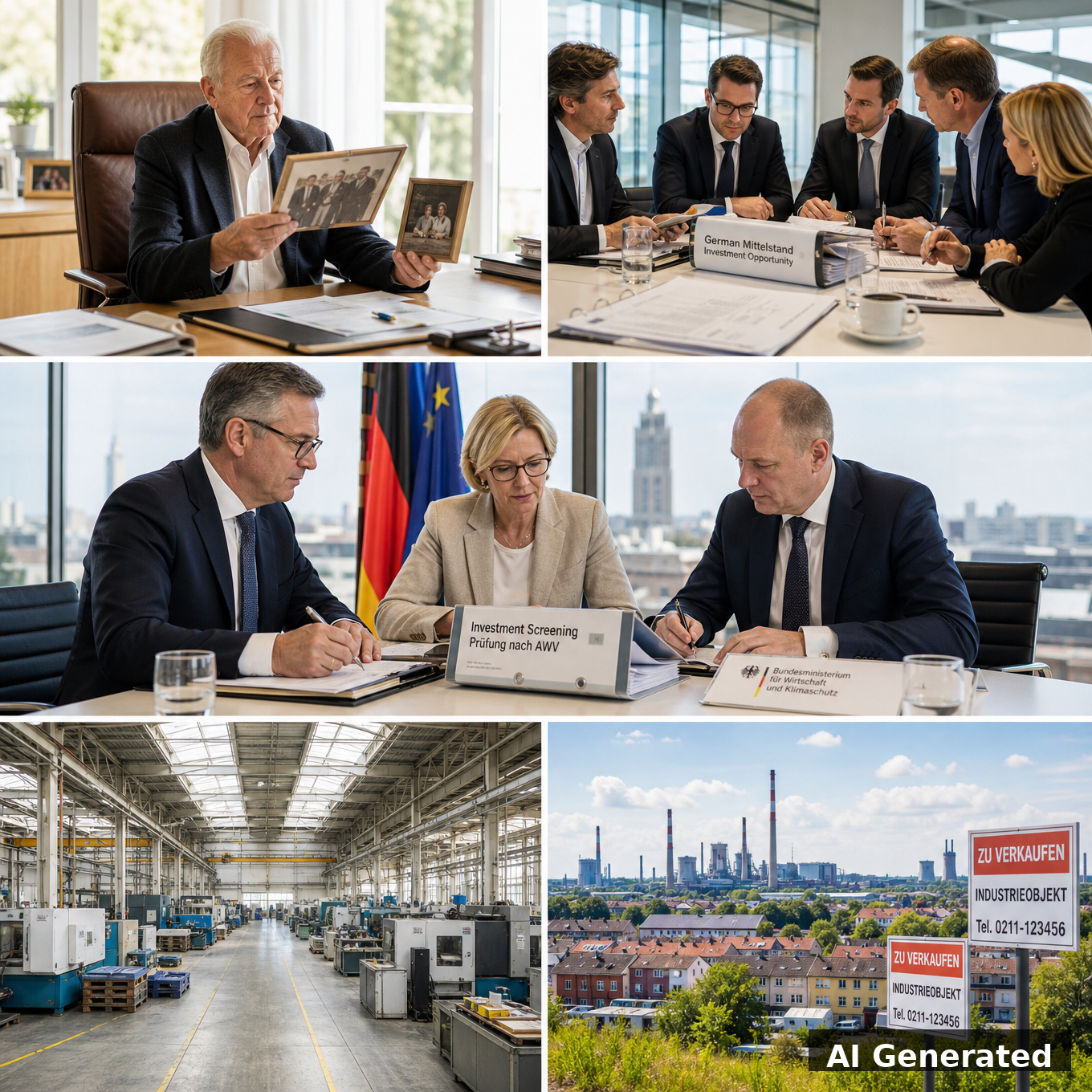
The government insists Germany remains “an attractive investment location.” The economy ministry reviews foreign takeovers with a tool it calls a “sharp sword.” And yet, in a single year, 900 German companies were sold to foreign buyers, record private-equity money poured in, and the biggest deals — Covestro to Abu Dhabi, MediaMarktSaturn to China’s JD.com — went through [3][4][6].
There’s a paradox here worth staring at: a country that claims to guard its industrial crown jewels keeps handing them over. The reason isn’t a lack of will. It’s that the people selling aren’t the ones the state is trying to stop.
Why the owners sell: the succession cliff
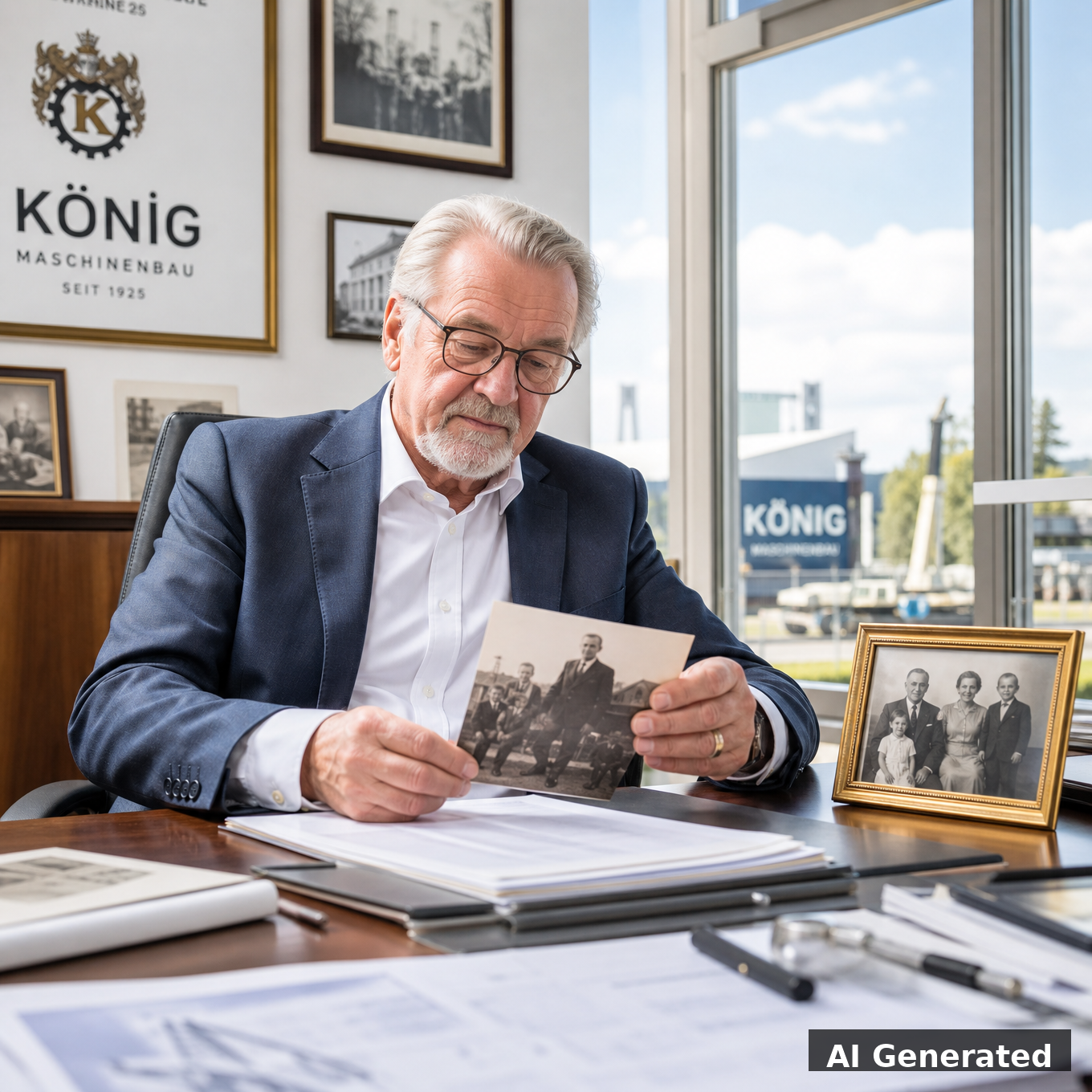
Start with the least understood driver: Germany’s companies are selling because their owners are ageing out. By 2031, 52,500 profitable family companies with 668,000 employees need to hand over to a successor — and a growing share of those families have no heir willing to take over [1]. In Bavaria alone, the state estimates the number of succession cases will keep rising for the rest of the decade [1].
When the children don’t want the factory, the options are stark: sell to a competitor, sell to private equity, sell to a foreign buyer — or close. Many quietly choose the sale. This isn’t a conspiracy of global capital stealing German industry. It’s a demographic pipeline delivering German industry to the global market on a plate.
Layer on the economics, and the pressure doubles. German chemicals ran at just 70% of capacity in 2025, with orders down more than a fifth since 2021 [5]. Festo’s revenue fell three years straight. Asian competition keeps undercutting on price. For a foundering family firm with 700 employees and no heir, a foreign takeover at a decent multiple starts to look less like betrayal and more like rescue.
The wall of money
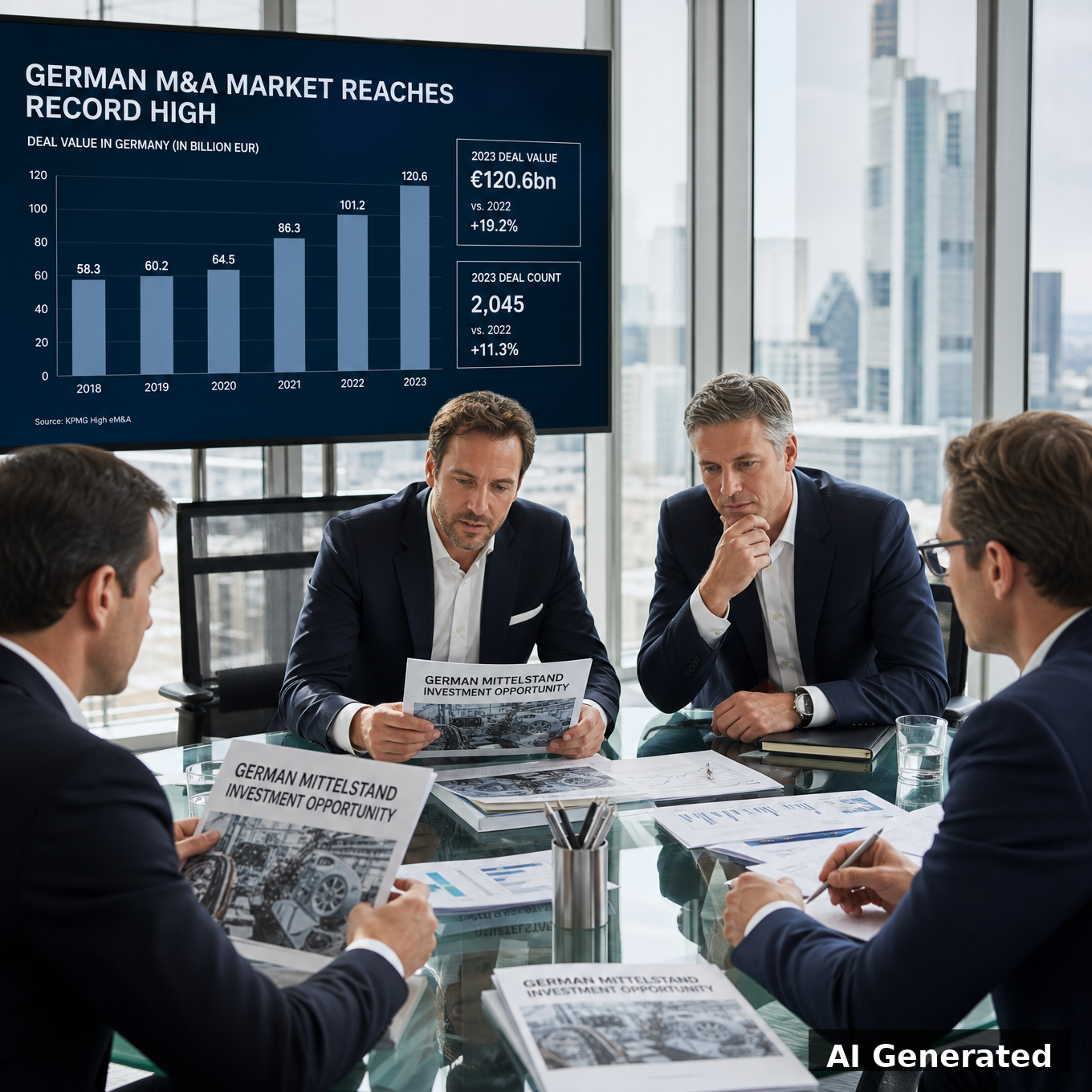
And the money is there, waiting. Private-equity investors spent a record 39.9 billion dollars buying German companies in 2025 — double the year before — and accounted for more than half of all deals for the first time [6][4]. The European Central Bank’s rate cuts made leverage cheap; the post-election political calm made deals bankable; and fifteen years of semi-stagnation made German asset prices look reasonable to anyone holding dollars or sovereign wealth [4]. Add the US and Chinese demand for precisely the things German industry makes — heat pumps, cooling systems, data-centre technology, specialty chemicals — and you have the full picture: willing sellers, patient buyers, and a queue of “hidden champions” nobody is forced to sell but almost nobody can afford to keep.
Previous in this series: Deutschland for Sale, Part 2: The Hollowing-Out Test — Testing whether foreign ownership hollows out German industry
What the state does — and doesn’t — do
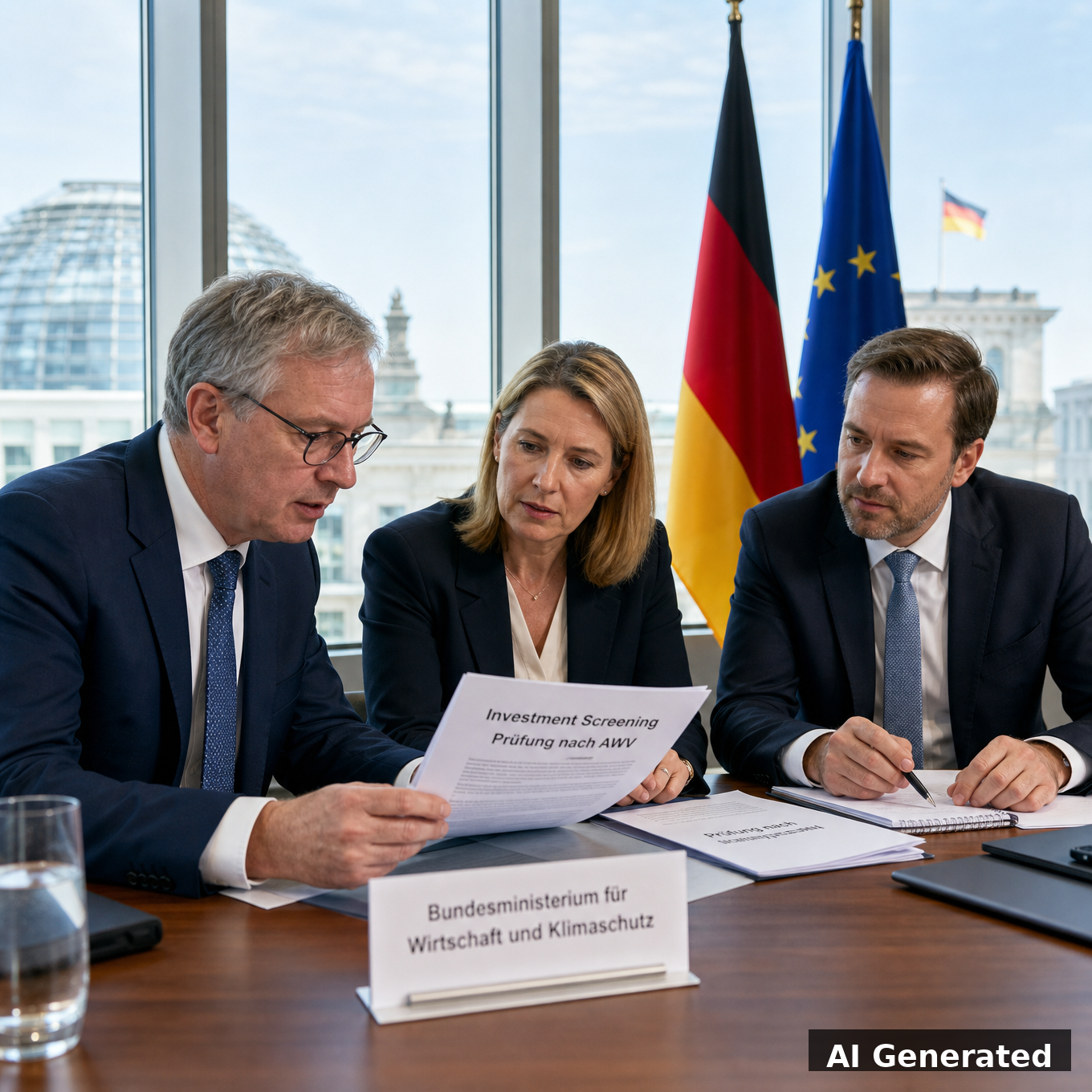
Germany hasn’t been asleep at the switch. It has had investment screening since 2004, expanded it in 2009 and sharpened it repeatedly since, and now runs more than 250 review procedures a year [2]. The tool has real teeth — when it’s used. Government prohibitions have killed or prevented deals at Leifeld Metal Spinning, IMST, Heyer Medical, the Elmos chip fab, ERS Electronic, Siltronic and MAN Energy Solutions — almost all involving Chinese investors in security-sensitive technology [2].
But screening is a security instrument, not an industrial policy. It can only block a takeover that threatens public order or security. It cannot and does not block a normal purchase. MediaMarktSaturn is the perfect illustration: the economy ministry approved the JD.com deal — Europe’s largest electronics retailer — with only two conditions attached: protect customer data, and let the government revoke the approval if problems arise [3]. The European Commission is still examining whether Chinese subsidies distorted the bidding [3]. The same story was told after Covestro, where the Emirati state took over a 17,600-person chemicals champion and clearance was granted [5].
So the answer to the question “why isn’t Germany stopping the sale?” is: it can’t. Screening blocks the dangerous 2% and waves through the ordinary 98 — including the ordinary cases that quietly change the face of German industry.
What the sale means
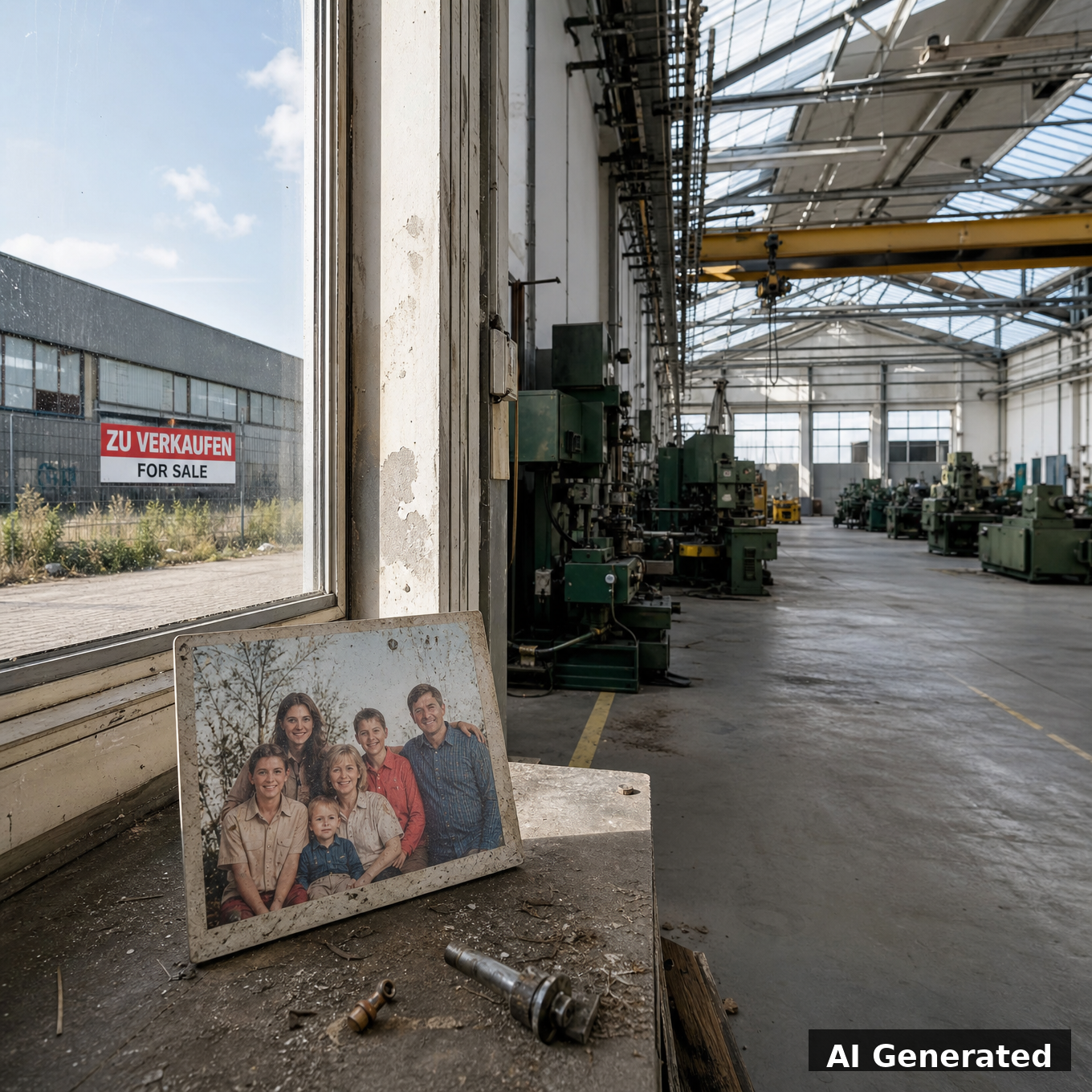
Step back, and the real consequence comes into view. Germany isn’t losing its factories — yet. It is losing the institutional memory of how those factories are stewarded. A family owner who planned to keep the plant for three generations behaves differently under pressure than a private-equity fund with a five-year exit, or a state investor with strategic goals that have nothing to do with German towns. Schliessmeyer was closed within six months of its Swedish takeover; Yanmar’s Crailsheim plant died only after years of losses — the ownership change just removed the brake [5][2].
For supply chains and the energy transition, the risk compounds silently: every foreign-controlled specialist in cooling, heat-pump or battery tech is one board decision away from relocating output along with its patents. The logic that produces “hollowing out” later is already visible in the economics — 70% utilization, falling orders, wage and energy costs nobody wants to pay.
Takeaway
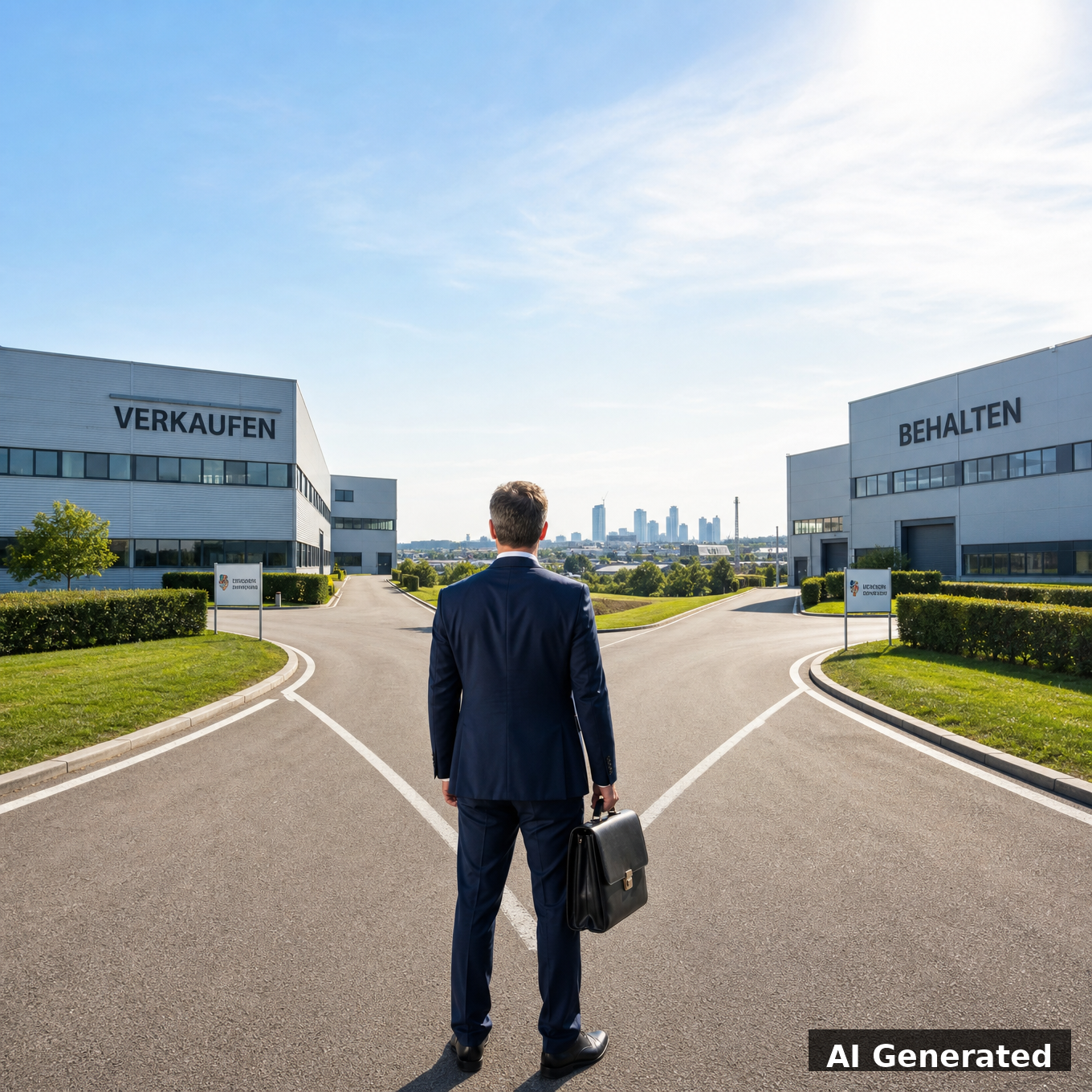
Germany doesn’t have a foreign-buyer problem. It has a seller problem — a succession cliff, a cost squeeze, and a wall of global capital colliding at once. Screening could be tightened, but you cannot regulate your way into a successor, cheaper energy or order books.
The clearest headline of this three-part series: the sale is not an accident, and it won’t be stopped at the border. It will only slow if owning a German factory becomes worth it again — if launching a company stops being a hero’s work, if energy and red tape stop eating margins, if the next generation actually wants in. Until that changes, the Ausverkauf continues — not because Germany is being looted, but because in most cases, the owners have chosen to sell.
References
[1] Bayerisches Staatsministerium für Wirtschaft, Landesentwicklung und Energie. (2026). Aiwanger: ‘Bayern ist Gründerland Nummer eins’ (Regierungserklärung Mittelstand). STMVVI Bayern, Pressemitteilung 281/26. https://www.stmwi.bayern.de/presse/pressemeldungen/281-2026/
[2] Sachs, B., & Rösch, D. (2024). Ausländische Investoren: Übernahme abgelehnt!. WirtschaftsWoche (Gastbeitrag, Kanzlei Noerr). https://www.wiwo.de/unternehmen/dienstleister/auslaendische-investoren-uebernahme-abgelehnt/29923026.html
[3] Deutschlandfunk. (2026). Wirtschaftsministerium billigt Übernahme von Mediamarkt-Saturn durch chinesischen JD.com-Konzern. Deutschlandfunk. https://www.deutschlandfunk.de/wirtschaftsministerium-billigt-uebernahme-von-mediamarkt-saturn-durch-chinesischen-jd-com-konzern-100.html
[4] PwC Deutschland. (2025). Destination Deutschland 2025: M&A-Aktivitäten ausländischer Investoren. PwC. https://www.pwc.de/de/private-equity/destination-deutschland-2025.html
[5] Münchner Merkur. (2026). China-Konzern kauft deutschen Weltmarktführer. Münchner Merkur. https://www.merkur.de/wirtschaft/kauft-deutschen-chemie-riesen-auf-chinesischer-investor-94343125.html
[6] Handelsblatt. (2025). Übernahmen: Investoren kaufen immer häufiger deutsche Unternehmen. Handelsblatt. https://www.handelsblatt.com/finanzen/maerkte/uebernahmen-investoren-kaufen-immer-haeufiger-deutsche-unternehmen/100183959.html
[7] Covestro. (2024). Übernahmeangebot von ADNOC für Covestro erfolgreich. Covestro Investor News. https://www.covestro.com/investors/news/de/uebernahmeangebot-von-adnoc-fuer-covestro-erfolgreich/
AI Disclosure: This post was created with the assistance of artificial intelligence. The ideas, analysis, and opinions expressed are my own — AI was used to help compose, structure, and refine my personal notes and thoughts into the final written content. Images and video featured in this post were also generated using AI tools, based on my own creative prompts and direction.
You’ve reached the end of Part 3 of 4 of Deutschland for Sale. Part 4 — where the money goes — is coming next.
