






Last July, a man in Phoenix stabbed his neighbour over a parking spot. The temperature was 47°C. Two weeks earlier, in a Mississippi prison with no air conditioning, an inmate was beaten so badly he lost sight in one eye. Outside, the heat index had crossed 50°C. You probably heard about neither incident. You almost certainly experienced the heat yourself — the kind that makes you irritable before you have finished your morning coffee, the kind that turns a minor frustration into something you regret by dinner.
We have long suspected that heat makes people aggressive. Parents warn their children about summer tempers. Police departments brace for violent weekends when temperatures spike. But suspicion is not evidence. The question that matters — the one that should keep policymakers awake — is whether heat actually causes violence, or whether we are simply noticing a coincidence and building a comforting narrative around it.
The answer, it turns out, is more unsettling than either option.
What the scientists found when they stopped guessing
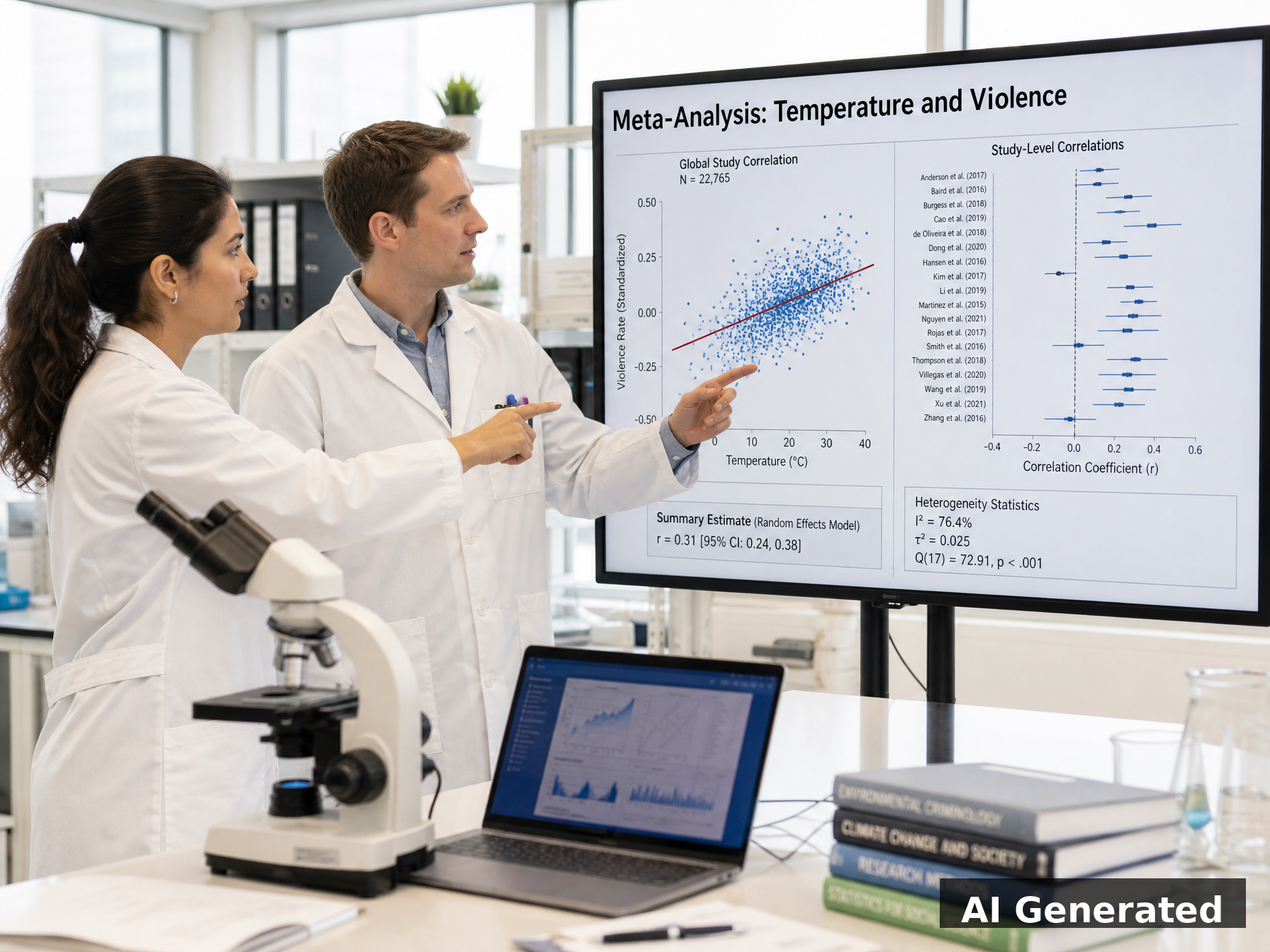
Two independent meta-analyses published in the last two years examined hundreds of studies across dozens of countries. Both reached the same conclusion: for every 1°C increase in ambient temperature, violent crime rises — and non-violent crime does not [1][2]. That distinction matters. If heat simply made people more impulsive in all directions, you would expect shoplifting and fraud to rise alongside assault. They do not. Something specific about heat drives people toward physical aggression.
The first meta-analysis, published in the Western Journal of Emergency Medicine in 2025, synthesised data from studies spanning multiple continents. It found that civil wars and riots were also linked to temperature increases in every relevant study examined [1]. The second, published in Environmental Health Perspectives in 2024, confirmed the pattern with a broader methodological framework [2]. Neither study was funded by an advocacy group. Neither had an ideological axe to grind. They simply followed the data — and the data pointed in one direction.
But correlation, as every first-year science student learns, is not causation. The critics had a point: maybe poorer neighbourhoods have less green space, more concrete, higher temperatures, and more crime — for entirely separate reasons. Maybe the heat is a bystander, not the driver.
The experiment no ethics board would approve
Then came the prison study — and it changed the argument entirely.

In 2021, economists Anita Mukherjee and Nicholas Sanders published a working paper through the National Bureau of Economic Research that did something no laboratory could replicate [3]. They studied Mississippi’s correctional facilities, which largely lack air conditioning. Inmates cannot leave. They cannot adjust their behaviour to avoid the heat. They cannot move to a cooler room or take a cold shower. They are locked in — a setting that strips away every confounding variable that makes heat-violence research so contested.
Their findings were stark. Days with unsafe heat index levels increased daily violent interactions by 20% and raised the probability of any violence occurring by 18% [3]. This was not a marginal effect buried in statistical noise. It was a clear, measurable, causal signal — heat makes people violent, and it does so in a way that cannot be explained away by poverty, alcohol, or urban density, because those factors were held constant by the walls of the facility.
The study was covered by Forbes and The Marshall Project. It was cited in discussions about prison reform. But the implications reach far beyond correctional facilities. If heat causes violence in a controlled environment where people have no choice, what does it do in our cities — where people do have choices, but where the heat is becoming inescapable?
The biology we keep ignoring
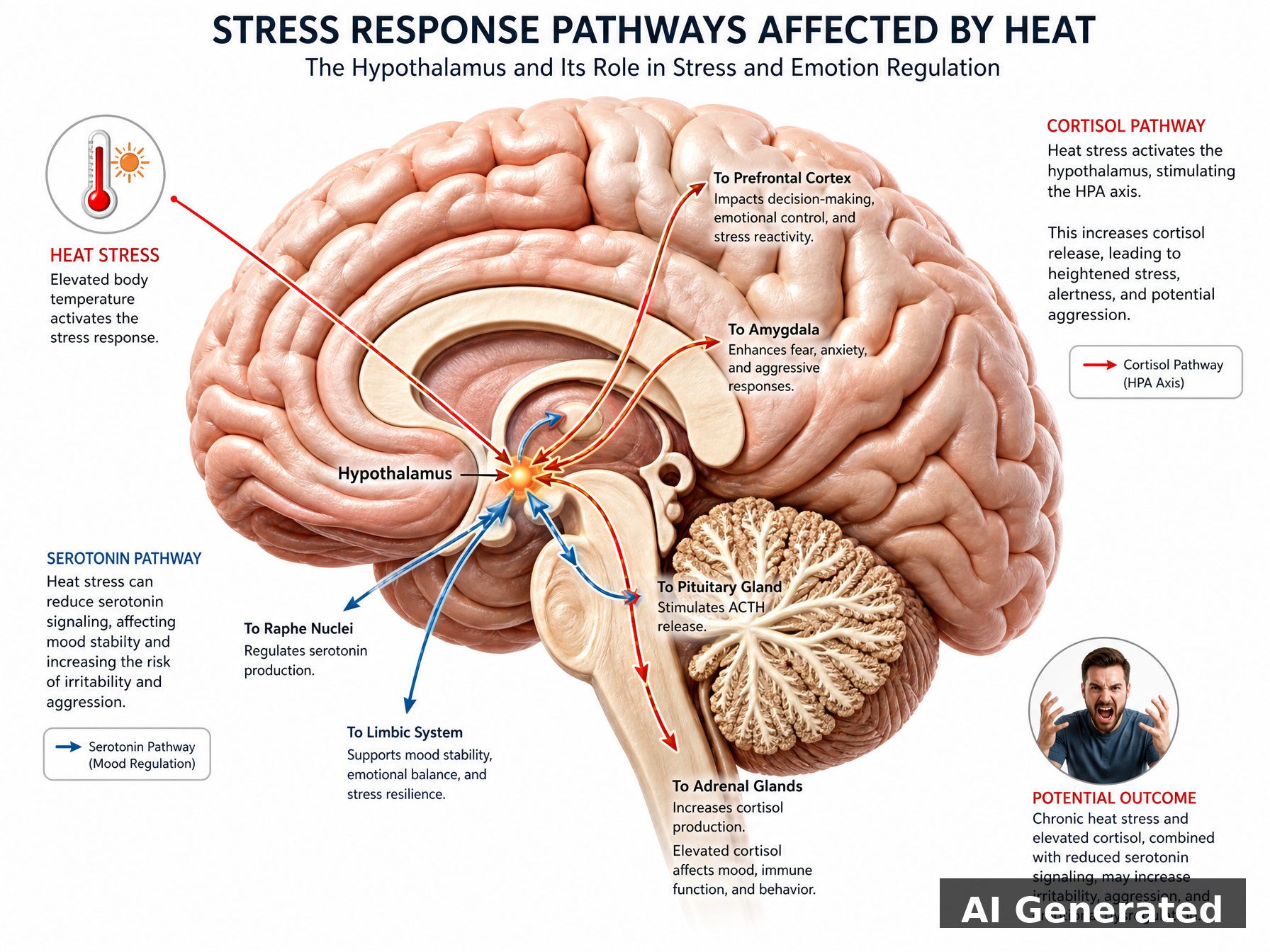
The mechanisms are not mysterious. Heat increases cortisol — the stress hormone. It disrupts serotonin regulation, which governs impulse control. It raises testosterone levels, which are associated with aggression. It interferes with sleep, and sleep deprivation is one of the most reliable predictors of violent behaviour [1]. These are not speculative connections. They are well-documented physiological pathways that operate in every human body, regardless of culture, class, or geography.
Yet we continue to treat heat-related violence as a weather story — something that happens out there, to other people, in other countries. The United States, which has the most robust datasets on this subject, records clear spikes in assault, domestic violence, and homicide during heat waves [1][2]. The pattern repeats every summer. The data is there. The question is why we keep acting surprised.
Who benefits from our confusion?
Here is where the analysis gets uncomfortable. The heat-violence link is well-established in the scientific literature. Two systematic reviews confirm it. A causal study in a controlled environment proves it. The biological mechanisms are understood. So why is this not treated as the public health emergency it clearly is?
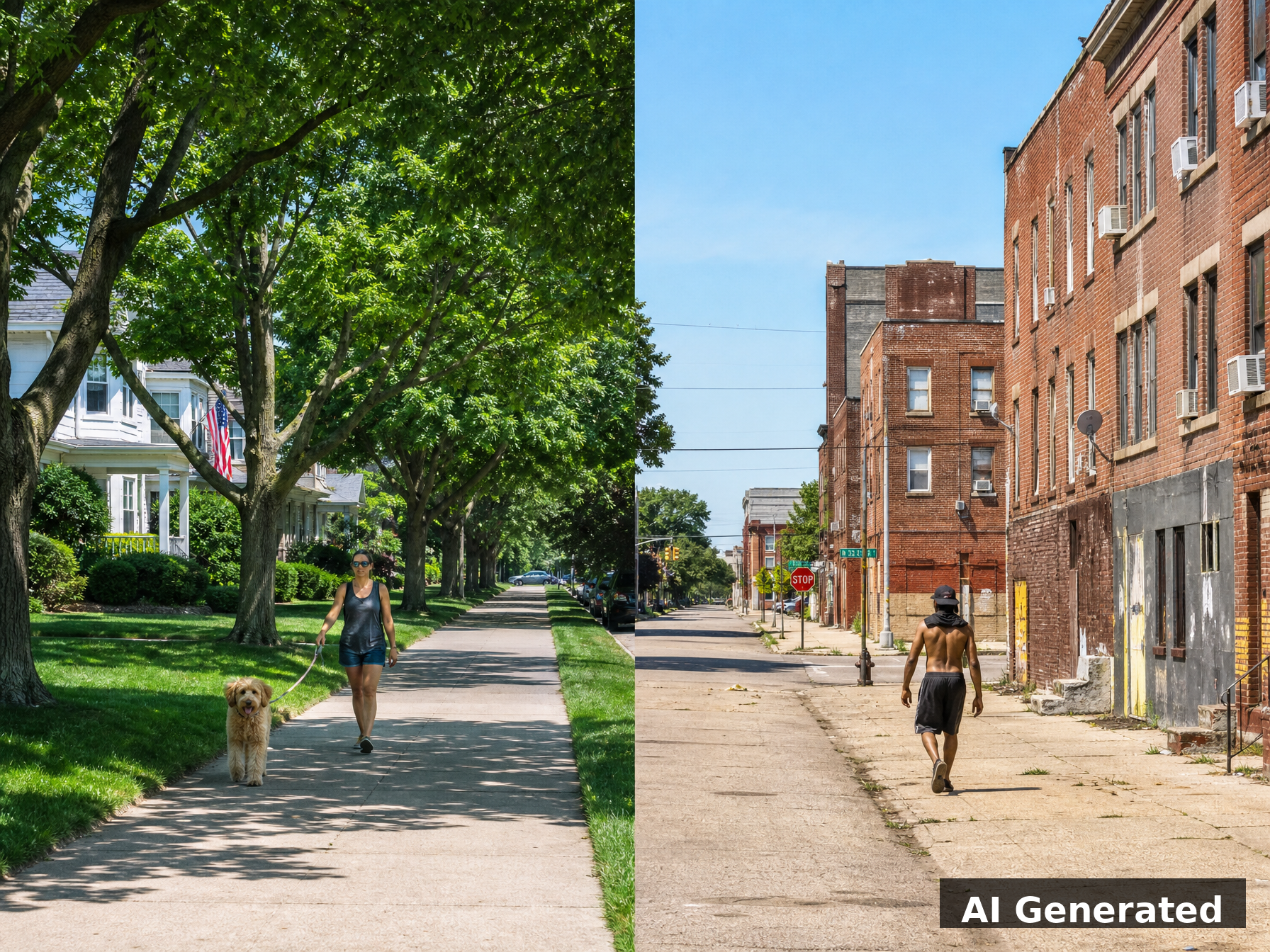
The answer lies partly in where the heat falls hardest. Heat waves do not affect everyone equally. Wealthy neighbourhoods have tree cover, green space, and air conditioning. Poor neighbourhoods have concrete, asphalt, and open windows. The people most exposed to dangerous heat — and therefore most vulnerable to its violent effects — are those with the least political power to demand change [3]. They are incarcerated. They are elderly. They are poor. They are invisible.
When a heat wave kills 600 people in a European city, it makes the news for a week. When it raises domestic violence rates by 15% in a low-income American neighbourhood, it barely registers. The violence is real. The suffering is real. But it does not fit the narrative we prefer — the one where climate change is an abstract, future problem that affects polar bears and coral reefs, not the man next door.
What we could actually do about it

The path forward is not complicated, but it requires honesty. First, treat extreme heat as a public health crisis with the same urgency as pandemic preparedness — because the death toll is already comparable [4]. Second, invest in green infrastructure in the neighbourhoods that need it most: tree cover, parks, cooling centres, and retrofitted housing. Third, mandate climate control in correctional facilities — not as a humanitarian gesture, but as a matter of public safety, because the violence behind those walls spills into the lives of guards, families, and communities.
These are not radical proposals. They are minimum responses to established evidence. The cost of inaction is not abstract — it is measured in stab wounds, in broken bones, in children who witness violence that heat has made more likely and policy has made more preventable.
We know the heat is rising. We know what it does to us. The evidence is not in question. What remains in question is whether we will continue to treat each summer’s violence as a series of unrelated incidents — or whether we will finally name the force that connects them.
How many more meta-analyses do we need before we act?
And when the next heat wave arrives — as it will, as it must — will we be honest about what it will do to us?
Or will we once again call it a coincidence, and look away?
References
[1] Chauhan, V., Thakur, S., Galwankar, S., & Temple, S. (2025). Association of Rising Ambient Temperatures with Increased Violence Worldwide: Systematic Review and Meta-Analysis. Western Journal of Emergency Medicine, 26(5), 1328-1337. https://doi.org/10.5811/westjem.42055
[2] Choi, H. M., Heo, S., Foo, D., Song, Y., Stewart, R., Son, J., & Bell, M. L. (2024). Temperature, Crime, and Violence: A Systematic Review and Meta-Analysis. Environmental Health Perspectives, 132(10). https://doi.org/10.1289/EHP14300
[3] Mukherjee, A., & Sanders, N. J. (2021). The Causal Effect of Heat on Violence: Social Implications of Unmitigated Heat Among the Incarcerated. NBER Working Paper (28987). https://doi.org/10.3386/w28987
[4] Levy, B. S., & Sidel, V. W. (2014). Collective violence caused by climate change and how it threatens health and human rights. Health and Human Rights, 16(1), 32-40. https://pubmed.ncbi.nlm.nih.gov/25474608
AI Disclosure: This post was created with the assistance of artificial intelligence. The ideas, analysis, and opinions expressed are my own — AI was used to help compose, structure, and refine my personal notes and thoughts into the final written content. Images and video featured in this post were also generated using AI tools, based on my own creative prompts and direction.
