
Category Geopolitics

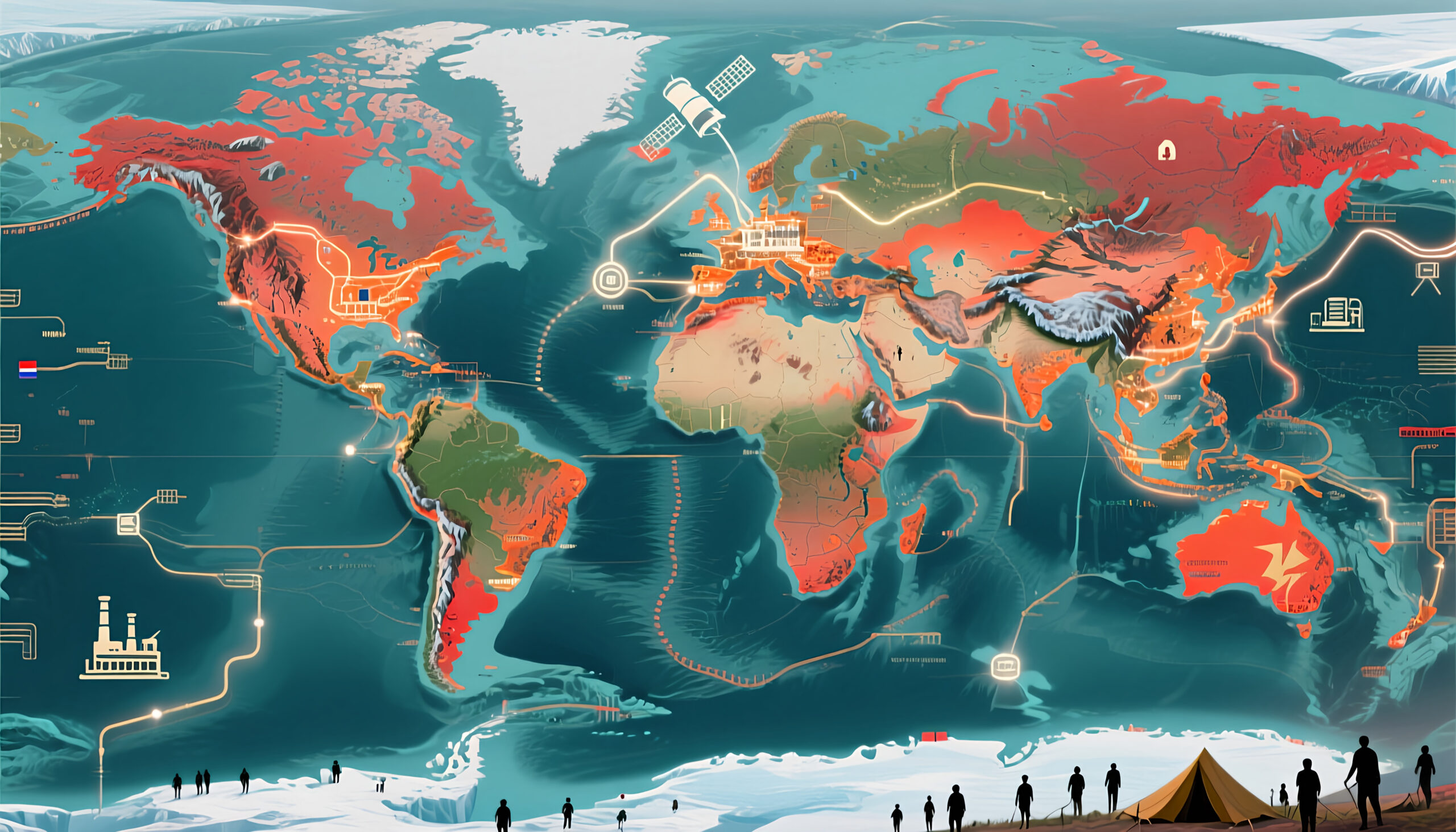
Illustrated world map showing continents, oceans, and polar ice with glowing lines, satellites, pipelines, and silhouettes of people, symbolizing global power networks, trade routes, and human movement.

Geopolitics examines how geography shapes power, conflict, and cooperation between states and other global actors. This category explores how factors such as location, borders, natural resources, trade routes, and demographics influence foreign policy, security strategies, and economic competition. It covers issues like territorial disputes, energy security, military alliances, sanctions, global supply chains, and environmental pressures that alter the balance of power. By connecting political decisions to physical space, geopolitics helps explain why countries act as they do on questions of war and peace, markets and resources, migration, and regional dominance

How the EU–Mercosur Deal Became Europe’s Most Expensive Diplomatic Irrelevance.
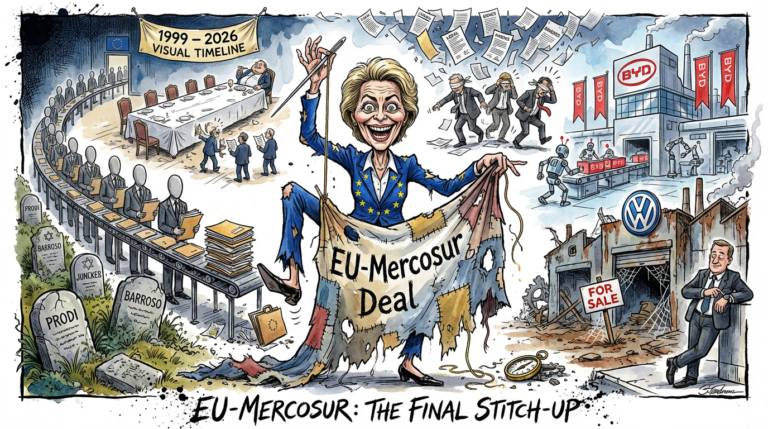
A political cartoon depicting EU Commission President Ursula von der Leyen frantically sewing a tattered "EU-Mercosur Deal" banner. To her left, a conveyor belt of faceless bureaucrats moves past the tombstones of former EU leaders (Prodi, Barroso, Juncker) under a "1999–2026" timeline. To her right, a modern, active BYD factory stands over a derelict, "For Sale" Volkswagen plant, where a dejected businessman leans against the ruins.

Twenty-five years. A quarter of a century of summits, negotiating rounds, political crises, agricultural riots, and constitutional wrangling — and what does the European Union have to show for it? A trade deal with South America that, before a single tariff has been cut, is already drowning in legal challenge, political opposition, and strategic obsolescence. Welcome to the EU–Mercosur agreement: the most ambitious free trade deal Europe has ever built, and quite possibly the most pointless.
Geopolitics: The Two Faces of Europe: Antifascist by Day, Lackey by Night .   

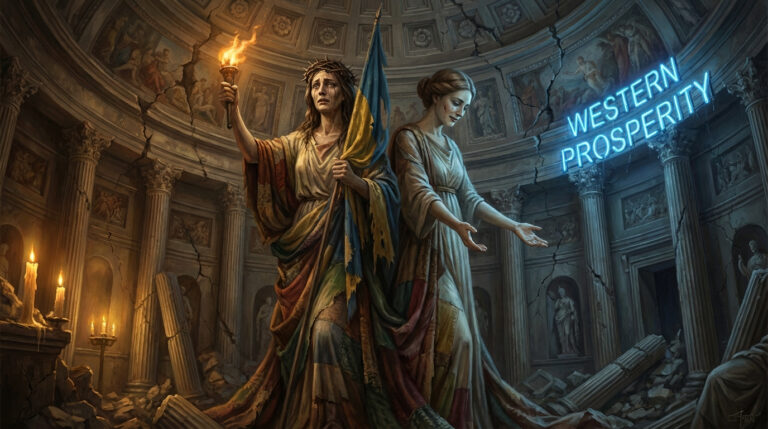
Two robed female figures stand in a crumbling classical rotunda, one holding a flaming torch and a tattered blue and yellow flag, while a neon sign reading Western Prosperity glows on the cracked wall behind them.

Europe has spent three years wrapping itself in the Ukrainian flag. It has sanctioned oligarchs, funded artillery shells, cheered ICC arrest warrants, and lectured the Global South on the sacred inviolability of international law. European leaders have stood at podiums from Brussels to Kyiv invoking the ghosts of 1938, warning gravely that appeasement is how democracies die. It is a powerful performance. The problem is that it is, increasingly, exactly that — a performance, staged for a domestic audience, dissolving the moment the script demands real courage.

The Trump Administration’s Venezuelan Intervention: Legal Justifications, Resource Interests, and MAGA Politics

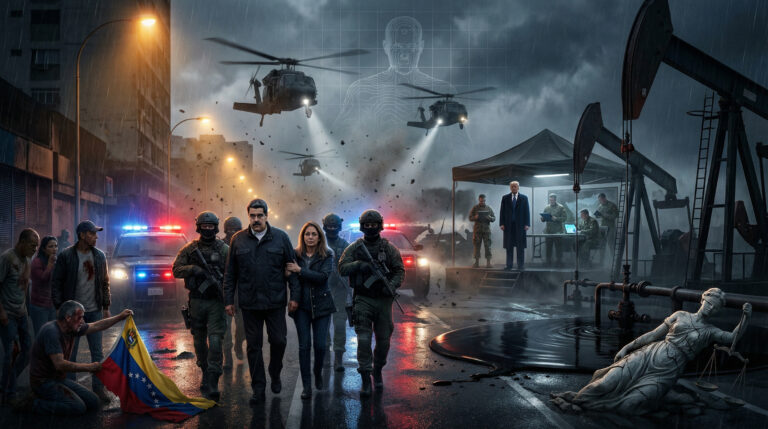
Nighttime street raid in Caracas showing Nicolás Maduro and Cilia Flores being escorted by armed soldiers between police cars with flashing lights, helicopters overhead, Trump observing from an oil-field command tent, and a toppled Lady Justice statue sinking into an oil spill.

On January 3, 2026, in a military operation code-named "Absolute Resolve," the United States conducted a dramatic raid on Caracas, Venezuela, resulting in the forcible abduction of President Nicolás Maduro and his wife, Cilia Flores. The operation, involving 150 aircraft deployed from approximately 20 bases and conducted by U.S. special forces, marked the most aggressive military action of President Donald Trump's tenure.

The EU-Mercosur Agreement: A Quarter-Century Delay and the Price of Institutional Quicksand

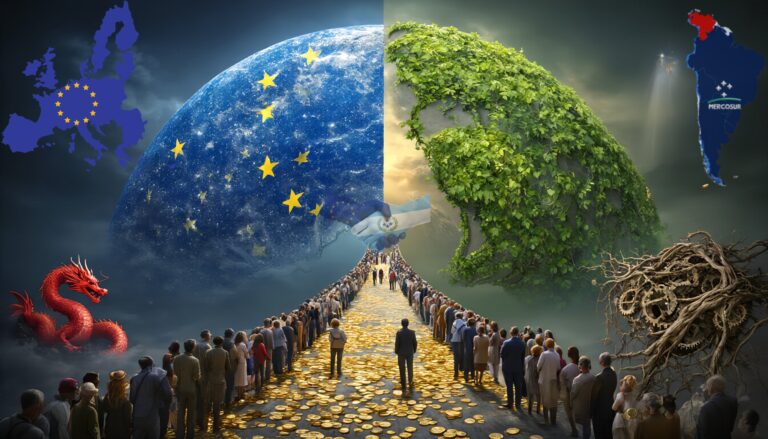
Symbolic illustration of a trade and climate deal between the European Union and Mercosur, showing crowds walking on a golden path between a star-covered Europe and a green, leafy Earth, with shaking hands in the center and regional maps on both sides.

Without fundamental reforms that move it closer to this federal model, the European Union will remain at risk of missing strategic opportunities, reacting too slowly to geopolitical shifts, and ceding influence to more agile and decisive global rivals. The EU-Mercosur story should therefore be seen as a warning: in a world that does not wait, institutional paralysis is a direct threat to Europe's long-term prosperity and security.