



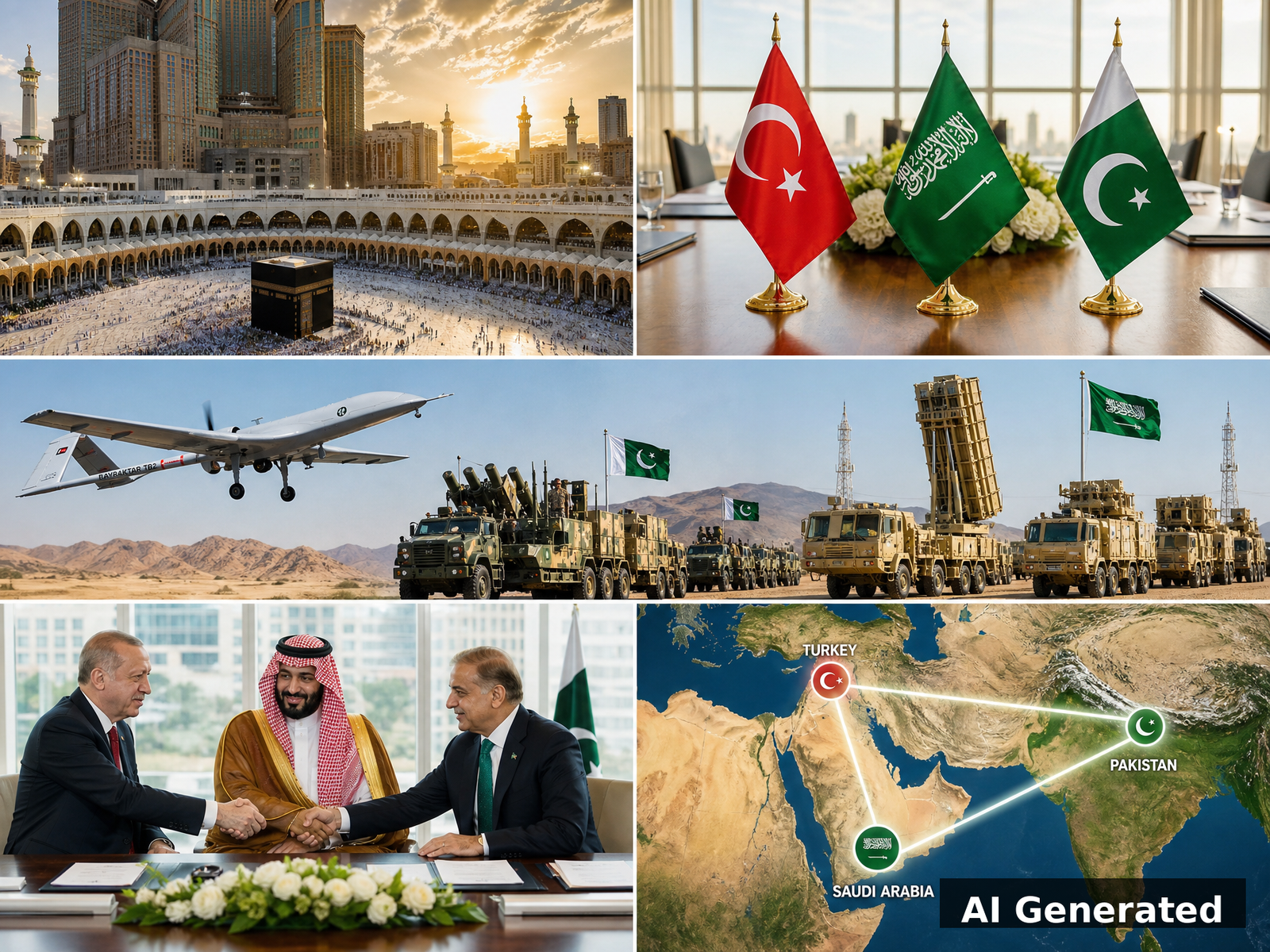


This article is part of the series: “The Mecca Pact” — How Turkey, Saudi Arabia, and Pakistan are reshaping Middle East security (Part 2 of 5)
Part 1: The Mecca Pact: A Tectonic Shift in Middle East Security → Part 2 (this article) → Part 3: Turkey’s Triple Circle: Breaking the Western Chain, Building New Ones → Part 4: The Abraham Axis: A Counter-Bloc Under Stress → Part 5: The Remote Players: How China and the US Are Betting on the Mecca Pact
For decades, the Middle East mapped neatly onto two axes. On one side stood Iran’s “Axis of Resistance” — Hezbollah, the Houthis, Iraqi militias, and the Assad regime. On the other stood the US-backed “Pax Americana”: an informal architecture of deterrence, normalization, and military primacy anchored by Washington and Tel Aviv through the Abraham Accords [8]. That binary is now broken. A third pole has emerged, anchored in Riyadh, Ankara, and Islamabad.
The Mecca Joint Defense Agreement, signed August 7, 2026, does not claim to represent political Islam the way Iran claims to represent “resistance” [8]. Nor does it offer the deterministic promise of integration into a US-led order, as the Abraham Accords did [8]. It is, as former Italian diplomat Marco Carnelos writes, “realignment by risk management rather than by conviction” [8]. That pragmatism is precisely what makes it durable.
Not a Sectarian Bloc — But Sectarian Enough
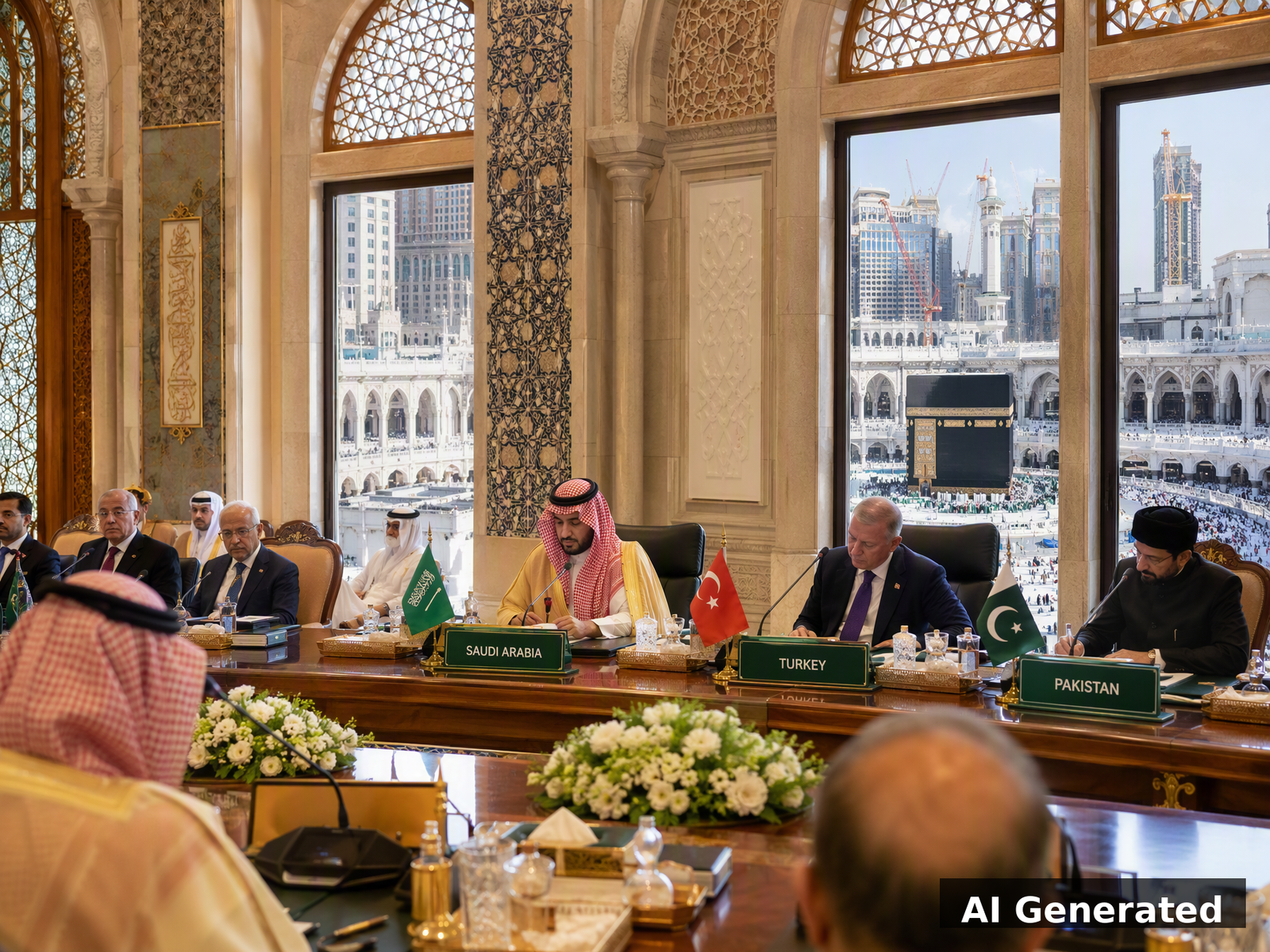
The signatories have been careful to stress the pact is defensive and not directed against any country, particularly Iran [5][10]. Saudi Deputy Minister for Public Diplomacy Rayed Krimly pushed back on suggestions that the agreement represents a new sectarian or military bloc [10]. Iranian Foreign Ministry spokesman Esmaeil Baghaei said Iran saw no reason to be concerned [5].
Yet the symbolism is impossible to ignore. The pact was signed in Mecca — the holiest site in Islam [3]. As JINSA’s Blaise Misztal noted: “The symbolic effect of announcing this pact in Mecca is to suggest that the Sunni Muslim character of the countries involved is a feature, not a coincidence” [3]. This is “further reinforced by the absence of Egypt, which had been discussed as a fourth member of the group but whose government is avowedly anti-Islamist” [3].
The UAE, a close Israeli partner, was not invited [3]. Iran, Shia-ruled and regionally rivalrous, was not consulted as a potential member [5]. The pact’s religious overtones are not accidental — they are the political glue that binds three states with otherwise divergent ideologies. Ankara’s political Islam, Riyadh’s post-Vision-2030 authoritarian pragmatism, and Islamabad’s garrison-state realism “have little in common” [8]. What they share is Sunni identity and a convergent threat perception.
What Each Member Brings
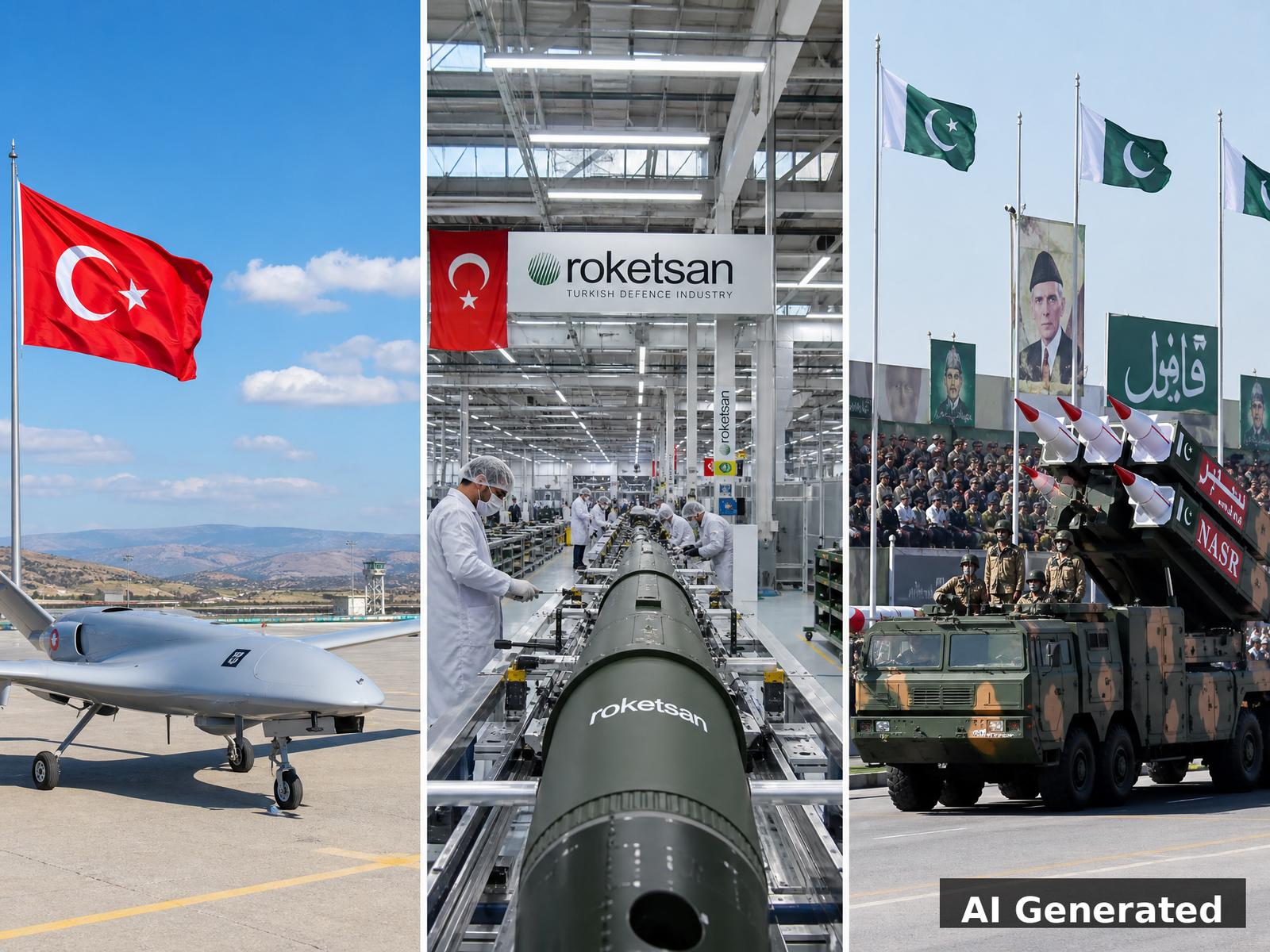
The pact’s complementarity is its strongest feature. Saudi Arabia offers capital, geographic position, political weight, and a substantial defense market [4]. Turkey contributes NATO’s second-largest military and a defense-industrial base that already supplies drones, naval systems, and land platforms across the region [2][11]. Pakistan adds a large, combat-experienced military, significant strategic capabilities, and the distinction of being the pact’s only nuclear-armed member [2][6].
Pakistan’s nuclear status is the pact’s ultimate — if ambiguous — insurance policy. When Reuters asked a Saudi official whether Pakistan is now obliged to provide a “nuclear umbrella” to the kingdom, the official answered only that “this is a comprehensive defensive agreement that encompasses all military means” [12][13]. That deliberate ambiguity neither confirms nor denies a nuclear dimension. It is the ambiguity itself that deters.
Journalist Bob Woodward recounted in his 2024 book a conversation where Crown Prince Mohammed bin Salman allegedly told Senator Lindsey Graham: “I don’t need uranium to make a bomb. I will just buy one from Pakistan” [12]. Whether apocryphal or not, the anecdote captures the strategic logic: Saudi Arabia maintains a nuclear hedge through Pakistan, and the Mecca Pact formalizes the political relationship undergirding it.
Previous in this series: Part 1: The Mecca Pact — Birth of a Sunni Axis — How Turkey, Saudi Arabia, and Pakistan signed a historic defense agreement
The Internal Rivalries
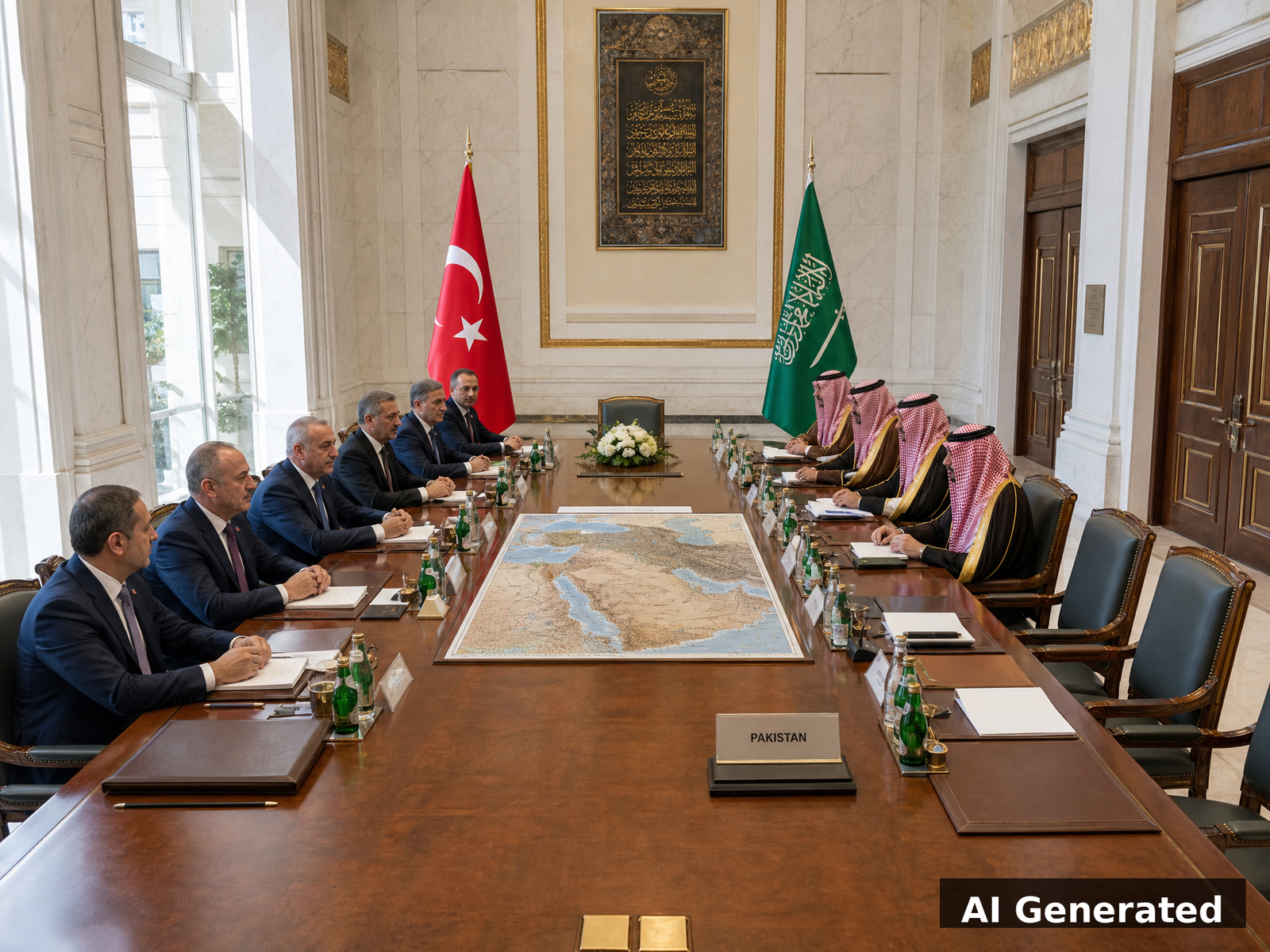
A bloc is not an alliance. Turkey and Saudi Arabia remain rivals for leadership of the Sunni world [8]. Their relations were “poisoned for years by the 2018 murder of journalist Jamal Khashoggi inside the Saudi consulate in Istanbul” [8]. Pakistan’s enthusiasm has “visibly cooled” as Ankara’s role has deepened [8].
JINSA’s Misztal identifies the fundamental flaw: “Each of the three countries thinks that this pact will give it greater power, prestige, influence, and claims to leadership, but there can be only one leader” [3]. The pact institutionalizes a struggle for primacy among states that have rarely accepted one another’s primacy.
Egypt’s potential membership illustrates the difficulty. Turkish FM Fidan predicted Egypt would join “in the next stage” [10][3]. But Cairo fought a proxy war against Turkey in Libya and views Turkey’s Muslim Brotherhood ties with hostility [3]. Egypt is “highly suspicious of Turkey” and “uninterested in joining a pact carrying the religious overtones of the agreement signed in Mecca” [3]. The UAE sits at a careful distance, “still competing with Riyadh for post-oil economic primacy and Israeli security cooperation” [8].
The Third Pole’s Strategic Logic
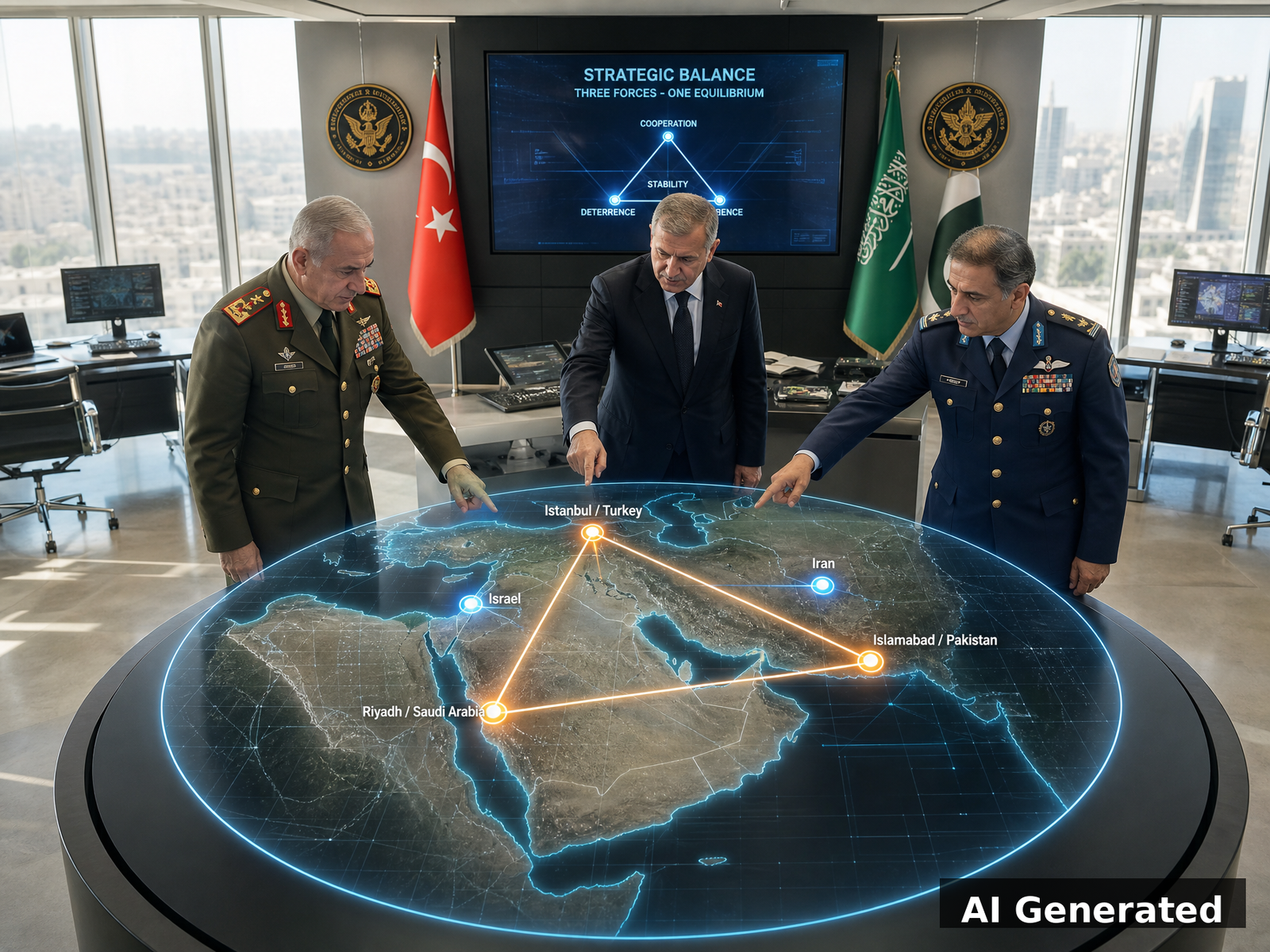
The Mecca bloc is not trying to defeat Iran or Israel. It is trying to prevent either from achieving hegemony. As Khalid Al-Jaber writes: “The objective is not victory. It is the prevention of hegemony” [4]. The pact aims to be “a third pole — a bloc that does not need to fight either power, but one that has enough weight to deny either a monopoly over the region” [4].
This is a fundamentally different proposition from the Abraham Accords, which sought to integrate the region into a US-led framework [1]. The Mecca Pact seeks to build regional autonomy from that framework. The two are not yet in direct conflict, but they represent competing visions of what Middle East stability means [1][8].
Saudi Arabia signed a Strategic Defense Agreement with the US in November 2025 and was designated a major non-NATO ally [10]. But Riyadh did not secure the treaty-level Article 5 guarantee it sought [10]. The Mecca Pact is the hedge. A Saudi source told Fox News: “The United States remains to be our primary strategic partner” [10]. But actions speak louder than words.
The Durability Question
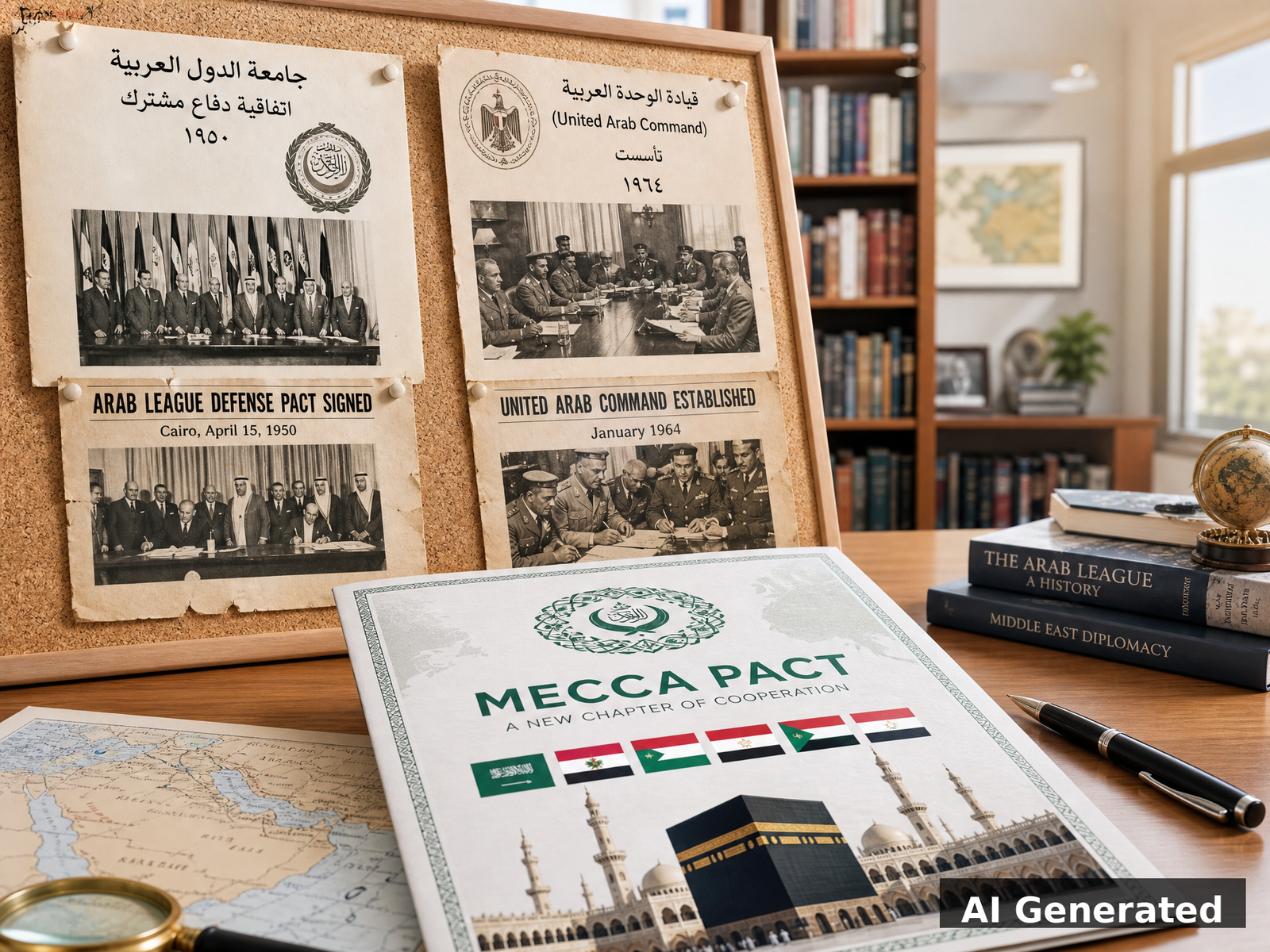
The region has never lacked agreements; it has lacked shared political foundations [4]. The Arab League’s Joint Defense Council (1950) and the United Arab Command (1964) both failed when tested [3]. The Islamic Military Counter Terrorism Coalition (2015) “assembled an impressive roster of participants but failed to translate numbers into unified capability” [4].
The Mecca Pact could become “the first serious building block of a more autonomous regional security order” [4]. But its outcome “will be determined not by defence budgets or membership numbers” but by one question: are the signatories genuinely willing to bear the cost of defending one another? [4].
For now, the pact performs what Carnelos calls “the peculiar role of enabling actors to project their wildest dreams onto it” [8]. Israel sees it as constraining Iran. Tehran sees it as escaping the American umbrella. Turkey sees it as a framework against Israel. Saudi Arabia sees it as preserving the status quo. Pakistan sees it as boosting its standing against India [8].
A pact that means something different to everyone who signs it is either a masterpiece of strategic ambiguity or a house of cards. The Mecca Pact may be both.
🔜 Coming next in this series: Part 3 — The Geopolitical Fallout
References
[1] Cook, S. A. (2026). The U.S.-Led Middle East Order Is Over. The Mecca Agreement Proves It. Council on Foreign Relations. Link
[2] Minor, A., Kugelman, M., & Outzen, R. (2026). Why Saudi Arabia, Pakistan, and Turkey just signed a defense pact. Atlantic Council. Link
[3] Berman, L. (2026). Mecca defense pact isn’t meant to challenge Israel, at least not on the battlefield. The Times of Israel. Link
[4] Al-Jaber, K. (2026). The Mecca pact is not just another regional alliance. Al Jazeera. Link
[5] Motamedi, M. (2026). Where does Iran stand on Saudi-Pakistan-Turkiye pact? Al Jazeera. Link
[6] Cheema, Q., & Murtiza, M. A. (2026). Should India Worry About the Mecca Pact? The Diplomat. Link
[7] El-Husseini, S. F. (2026). The Saudi–Turkish–Pakistani Security Agreement: A preliminary assessment. Middle East Monitor. Link
[8] Carnelos, M. (2026). How a pragmatic axis could reshape the Middle East. Middle East Eye. Link
[9] Lachter, E. (2026). Saudi Arabia, Turkey and Pakistan defense pact worries regional experts. Fox News. Link
[10] MEPEI. (2026). The Mecca Joint Defense Agreement and the Limits of Gulf Strategic Autonomy. MEPEI. Link
[11] Avdaliani, E. (2026). Turkey Reshapes the Organization of Turkic States. Manara Magazine. Link
[12] Akhtar, R. (2025). Beyond the Hype: Pakistan-Saudi Defense Pact Is Not a Saudi Nuclear Umbrella. Belfer Center, Harvard University. Link
[13] Guzansky, Y. (2026). The Looming Nuclear Crisis in the Gulf: Overcoming the Enrichment Dilemma in the Saudi Deal. Foreign Affairs. Link
[14] Carroll, R., & Karam, J. (2026). Three ways China benefits from Saudi-Turkey-Pakistan pact: What to know. Al-Monitor. Link
[15] TRT World Research Centre. (2026). The Mecca Pact: Taking Security into Regional Hands. TRT World Research Centre. Link
[16] Chatham House. (2026). Should Egypt join the Mecca Pact? Chatham House. Link
[17] Reuters. (2026). Saudi Arabia, Turkey, Pakistan pledge mutual defence as Middle East turmoil escalates. Reuters. Link
AI Disclosure: This post was created with the assistance of artificial intelligence. The ideas, analysis, and opinions expressed are my own — AI was used to help compose, structure, and refine my personal notes and thoughts into the final written content. Images and video featured in this post were also generated using AI tools, based on my own creative prompts and direction.
