




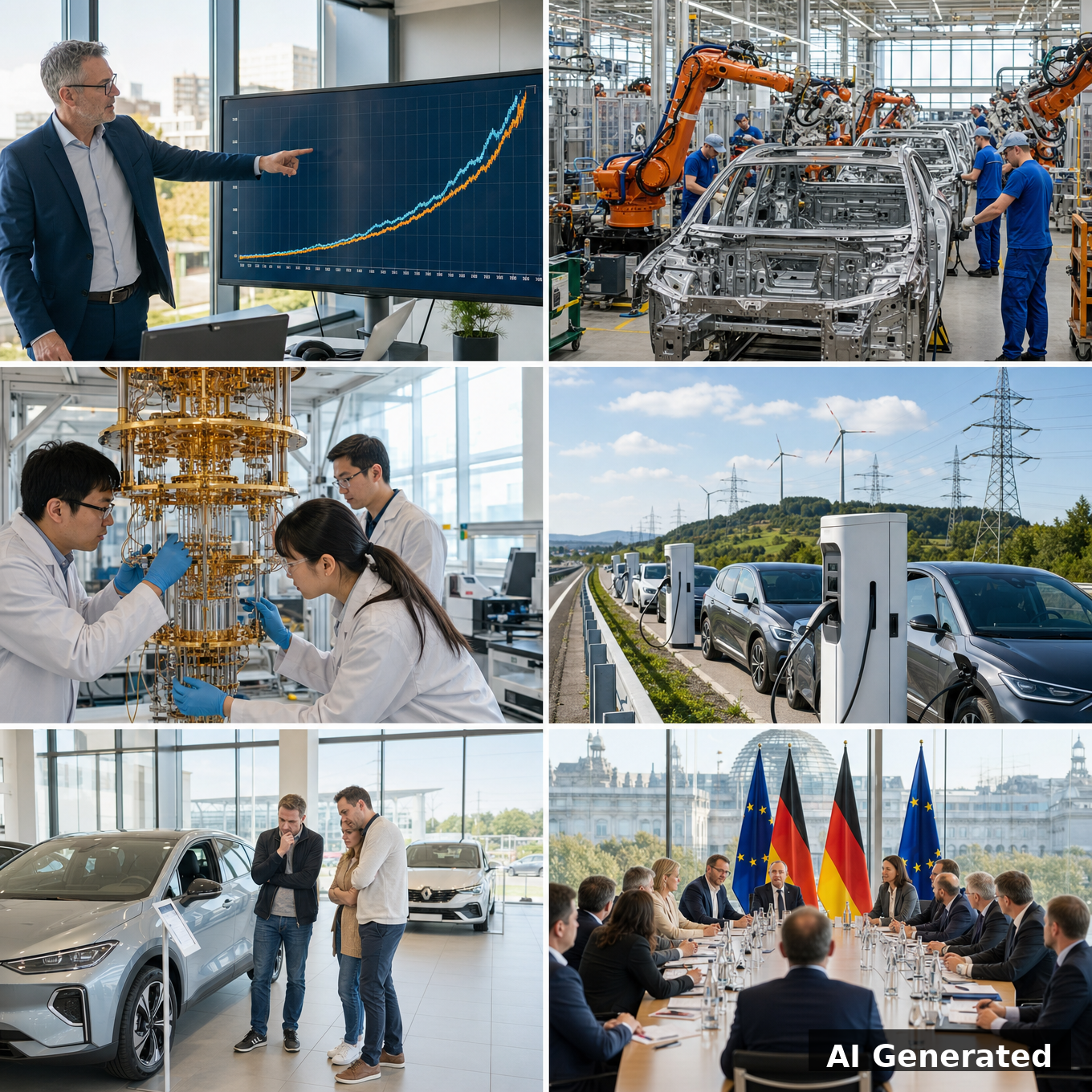


This article is part of the series: “The Last German Car” — how AI and energy reshape the automobile
The promise was simple: replace every combustion engine with a battery, and the planet breathes easier. Then artificial intelligence walked into the room and asked for the same electricity.
There is a chart that haunts European energy planners. It shows two curves rising sharply toward 2030 and beyond. One represents the electricity needed to charge the electric vehicles that governments have mandated. The other represents the electricity needed to power the data centres that train and run artificial intelligence. Both curves assume the same grid. Both assume the same power plants. Both assume someone else will figure out the physics of making electrons appear from nowhere.
This is the collision that nobody in Brussels, Berlin, or Beijing planned for — and it is reshaping the future of the automobile industry faster than any emissions regulation ever could.
The Math Nobody Wants to Do
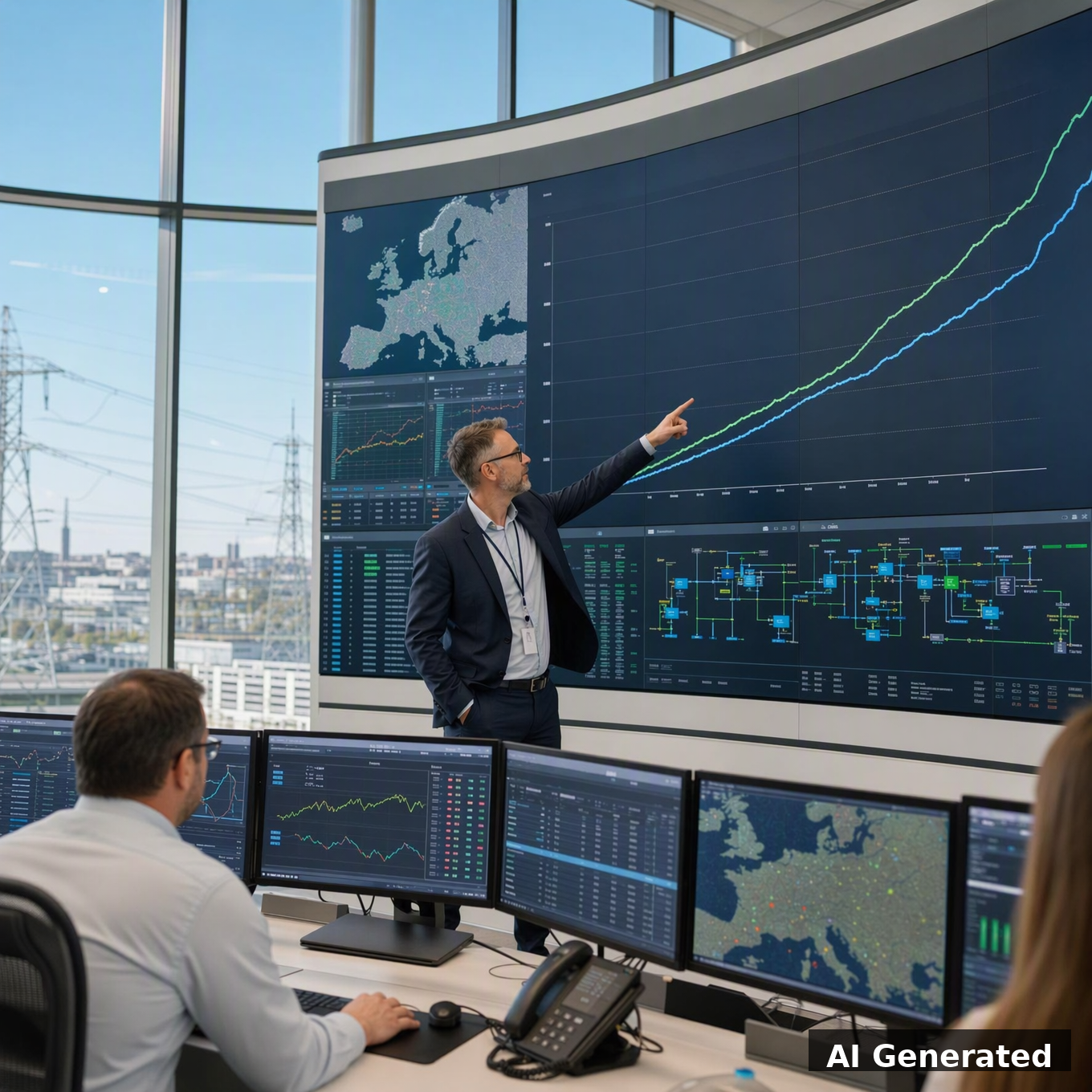
The European Union currently gets about 2% of its electricity consumption from data centres [1]. That sounds manageable. But with the explosive growth of AI workloads — training large language models, running inference at scale, powering autonomous systems — that share is projected to reach 5% by 2030 [1]. Five percent may sound modest until you learn what it means in absolute terms: it is equivalent to the entire yearly electricity consumption of Poland [1].
A single hyperscale AI training facility can consume as much electricity as 100,000 households [1]. The largest data centres now being planned will require twenty times more power than today’s facilities [2]. By 2040, EU data centre capacity could reach 75 gigawatts, consuming roughly 510 terawatt-hours per year [1]. For context, the entire European transport sector — every car, truck, train, bus, and ship — is projected to demand about 500 terawatt-hours by then [1].
Read that again. The servers that power AI will soon consume more electricity than every vehicle on European roads.
Now layer in the EV mandate. The EU has set a 2035 deadline for ending sales of new combustion engine cars. Every one of those cars will need charging infrastructure, and every charge will draw from the same grid that is already struggling to accommodate data centre connections. In Ireland, data centres already consume nearly 20% of national electricity [2]. In the Netherlands, it is 8% [2]. Grid connection queues in traditional data centre hubs like Frankfurt, London, Amsterdam, Paris, and Dublin now stretch seven to ten years — with some delays reaching thirteen [2].
This is not a future problem. It is a present bottleneck. And it is one that the architects of European industrial policy either did not anticipate or chose to ignore.
Germany’s Two Crises Are Actually One
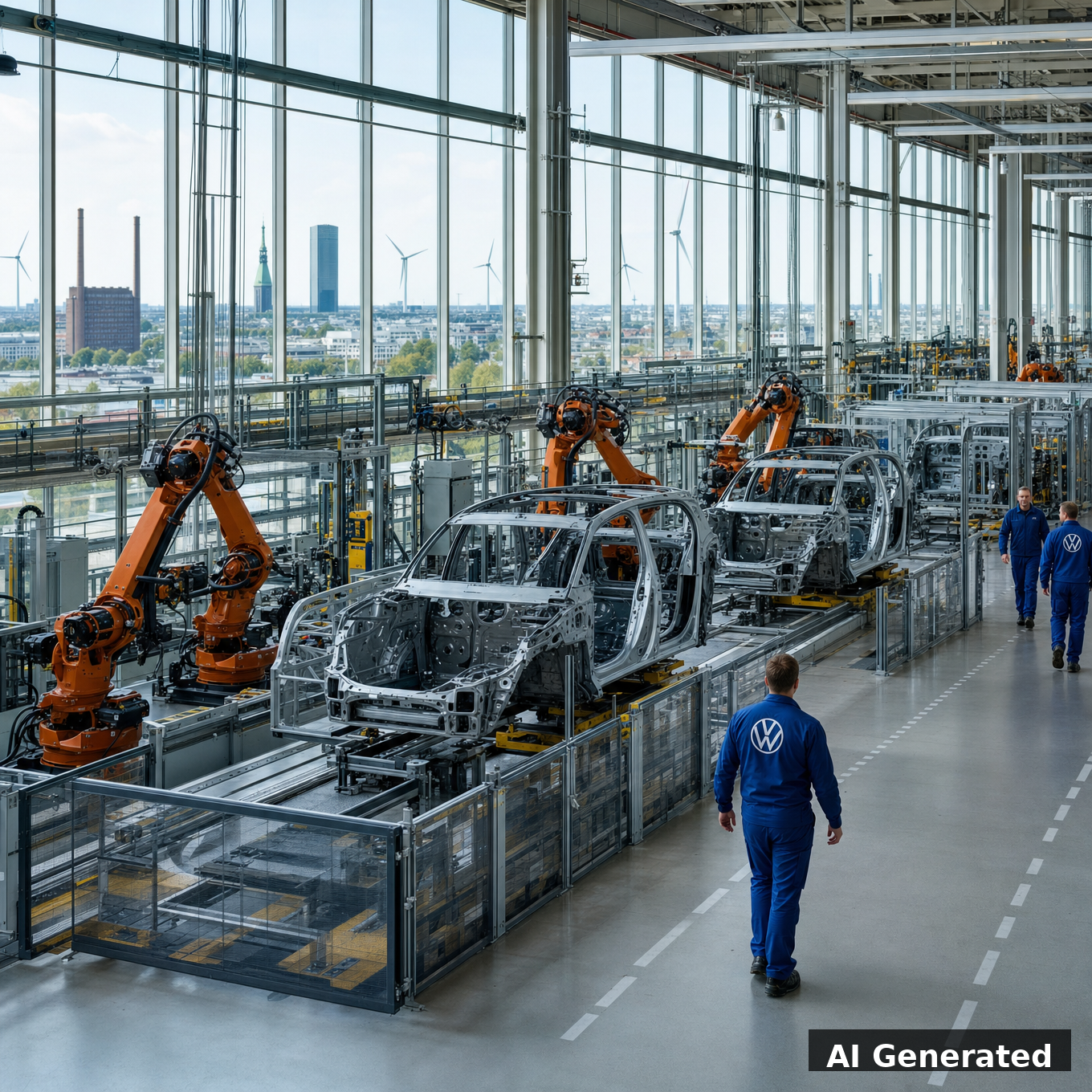
Germany finds itself at the intersection of these two energy crises, and the irony is exquisite. The country that invented the automobile, that built its post-war economic miracle on the back of Volkswagen, BMW, and Mercedes-Benz, that made “German engineering” a global synonym for precision and reliability — that country is now watching its automotive industry contract while its energy grid buckles under competing demands.
The numbers are stark. German car production fell from 5.65 million vehicles in 2017 to 4.1 million in 2023 [3]. Volkswagen, BMW, and Mercedes-Benz all saw their pre-tax profits drop by roughly a third in the first nine months of 2024 [3]. Volkswagen is cutting 35,000 jobs by the end of the decade — the first time in its 87-year history that the company seriously proposed closing German factories [3]. The average German autoworker earns €5,300 per month in base salary, compared to the national average of €4,300 [3]. German automotive labour costs stand at €62 per hour, versus €29 in Spain and €20 in Portugal [3].
And then there is energy. Since Russia’s invasion of Ukraine choked off cheap gas supplies — at precisely the moment Germany was phasing out nuclear power — industrial energy costs have become three to five times higher than in the United States or China [3][4]. The VDA, Germany’s automotive industry association, admits that the country is “consistently slipping downward” in global competitive rankings and calls the trend “alarming” [4].
But here is the part that connects directly to our AI-versus-EV problem: Germany’s energy grid cannot simultaneously support the electrification of transport, the expansion of AI data centres, and the continuation of energy-intensive manufacturing. Something has to give. And the evidence suggests that what is giving way is the dream of replacing every combustion car with an electric one on the original timeline.
China Saw This Coming
While European policymakers were drafting emissions targets and subsidising EV purchases, China was building something different. Not just electric cars — an entire hardware ecosystem designed to reduce dependence on Western technology at every level.
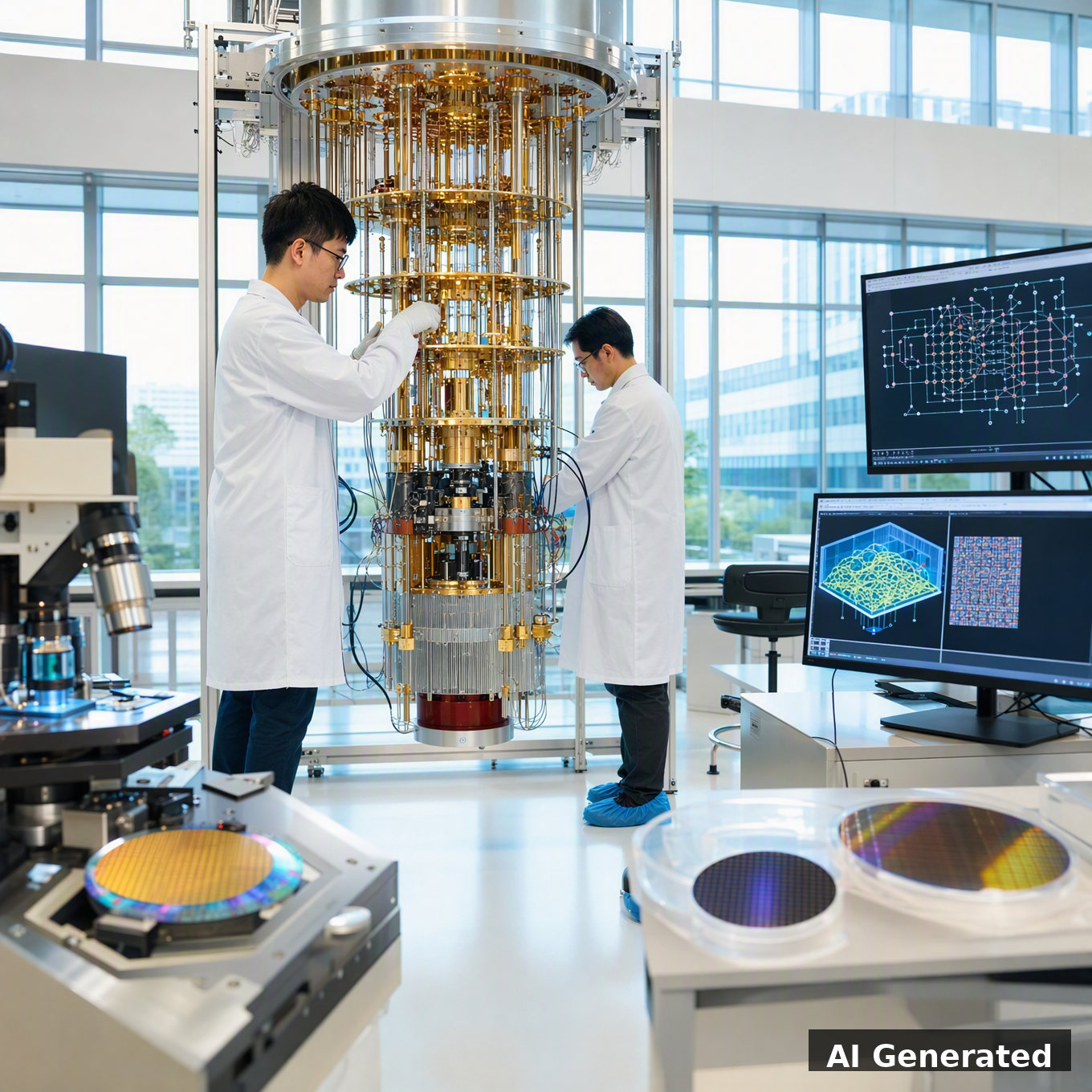
In May 2026, China launched three quantum computers simultaneously, each using a different technology: photonic, superconducting, and neutral atom [5]. This was not a lab demonstration. These were operational machines handling real computational workloads from paying customers. The Origin Wukong-180 superconducting system, with 180 computational qubits, became the first Chinese quantum platform commercially available to global users via cloud access [5].
In July 2026, Reuters reported that a state-owned Chinese company had begun producing domestically developed immersion deep-ultraviolet lithography machines — the equipment needed to manufacture advanced computer chips without relying on foreign suppliers [6]. This follows years of coordinated investment in processors, memory, networking, and manufacturing tools. Huawei’s Ascend 910C processors are being deployed as alternatives to Nvidia hardware for AI workloads [6].
The strategy is not about building one better chip. It is about building an entire supply chain that cannot be disrupted by export controls. And it is working — not perfectly, not completely, but fast enough to reshape the global technology landscape.
What does this have to do with cars? Everything. Because China’s push for hardware independence extends to the very technologies that will define the next generation of mobility: AI chips for autonomous driving, quantum processors for optimisation problems, and the energy infrastructure to power both. China is not choosing between electrifying transport and building AI capacity. It is building the infrastructure for both, at scale, with state coordination that European democracies struggle to match.
XPeng, the Chinese electric vehicle maker, illustrates this integration perfectly. The company is not just selling cars. It is building autonomous driving systems powered by its own AI stack, developing humanoid robots, launching robotaxis in Chinese cities, and — perhaps most audaciously — producing flying cars. Its “Land Aircraft Carrier” has secured 600 pre-orders from the Middle East, the largest overseas bulk order in the flying car sector to date [7]. The UAE aviation regulator is on track to certify air taxis by the third quarter of 2026 [7].
This is not science fiction. This is a company shipping products while European automakers are still arguing about charging standards.
The Subsidy Trap
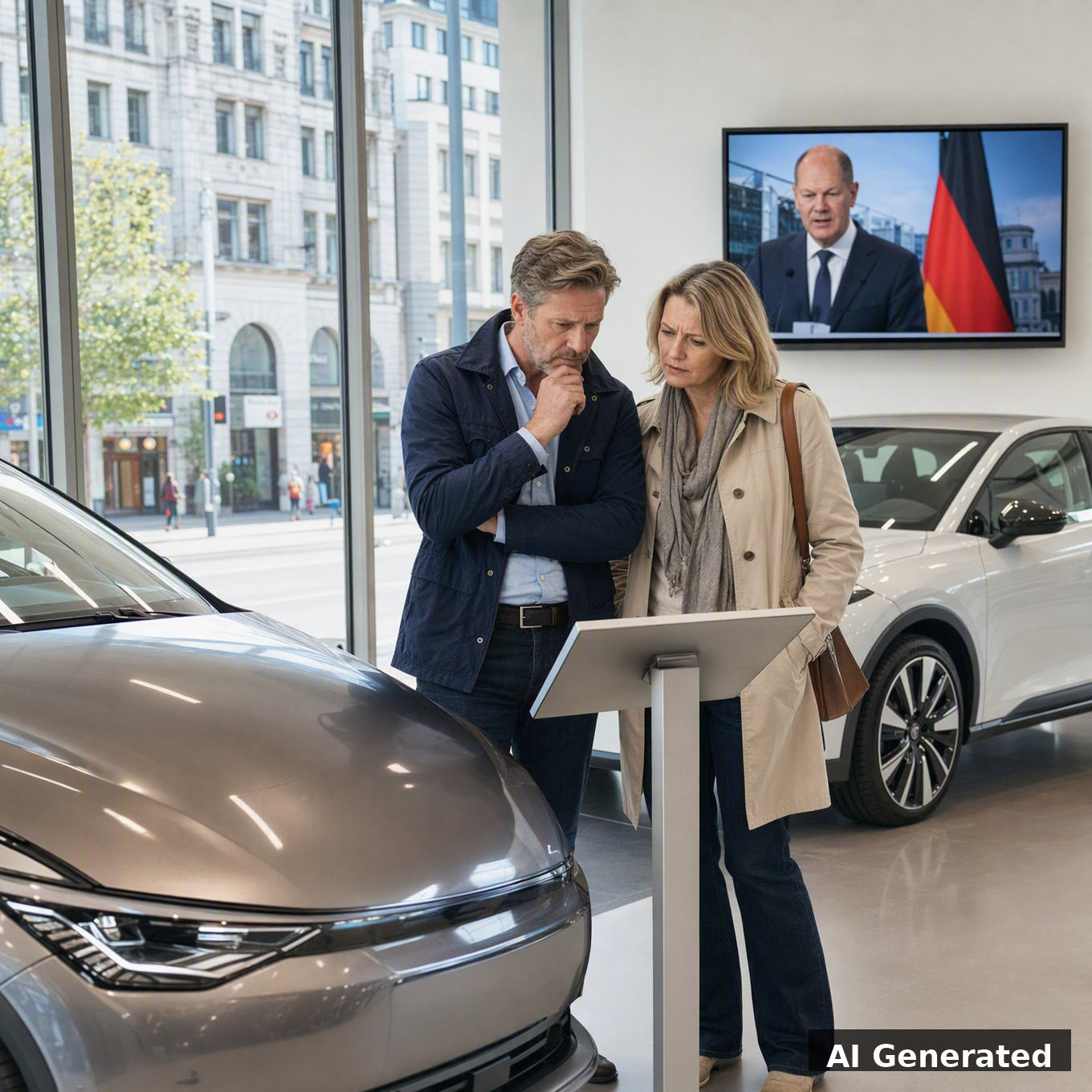
Germany’s response to the EV transition has been, charitably, inconsistent. The government initially offered generous subsidies for electric vehicle purchases, then abruptly abolished them in December 2023 due to budget constraints [3][4]. The result was a 27% collapse in EV sales within Germany in the following year [3].
“The decision to drop subsidies suddenly was very bad, because it undermined trust among our customers,” Simon Schütz, spokesman for the VDA, told the BBC [3]. Independent analyst Jürgen Pieper pointed to a lack of “clear government strategy on electromobility” [4]. The back-and-forth created exactly the uncertainty that consumers and manufacturers needed least.
But the deeper problem is not subsidies. It is the assumption embedded in European industrial policy: that the transition from combustion to electric vehicles can proceed at the pace governments have mandated, regardless of whether the grid can supply the power, whether the supply chains can deliver the materials, and whether the economics make sense without permanent state support.
The International Energy Agency expects European data centre demand to grow by around 70% by 2030 [1]. The European Commission aims to triple data centre capacity by 2030–2032 [1]. But RaboResearch considers this tripling goal “highly ambitious and not within reach” due to grid limitations [1]. And this is before accounting for the additional electricity needed to charge millions of new EVs.
The math does not work. Not at the pace governments have promised. Not with the grid infrastructure currently available. Not while AI data centres are absorbing an ever-larger share of the electricity that was supposed to power the transport transition.
The Lobby Shift

There is a political dimension to this energy collision that is rarely discussed openly. The automotive industry has been one of the most powerful lobbying forces in European politics for decades. In Germany, the relationship between carmakers and regional governments is so intimate that Lower Saxony holds a seat on Volkswagen’s board [3]. In Baden-Württemberg and Bavaria, the political fortunes of state premiers are directly tied to the health of BMW, Mercedes-Benz, and Audi.
But lobbying power is a function of economic weight. As the auto industry contracts — fewer factories, fewer jobs, lower profits — its political influence declines with it. Meanwhile, the technology sector, including AI companies and data centre operators, is growing rapidly and generating new employment and tax revenue. The balance of influence is shifting, and governments will adapt to wherever the money and jobs are.
This is not a conspiracy. It is simply how politics works. When one industry lobby loses influence and another gains it, policy follows. The German government’s sudden abolition of EV subsidies in late 2023 — at a moment when the auto industry was begging for stability — may have been the first visible sign of this shift.
What Comes Next
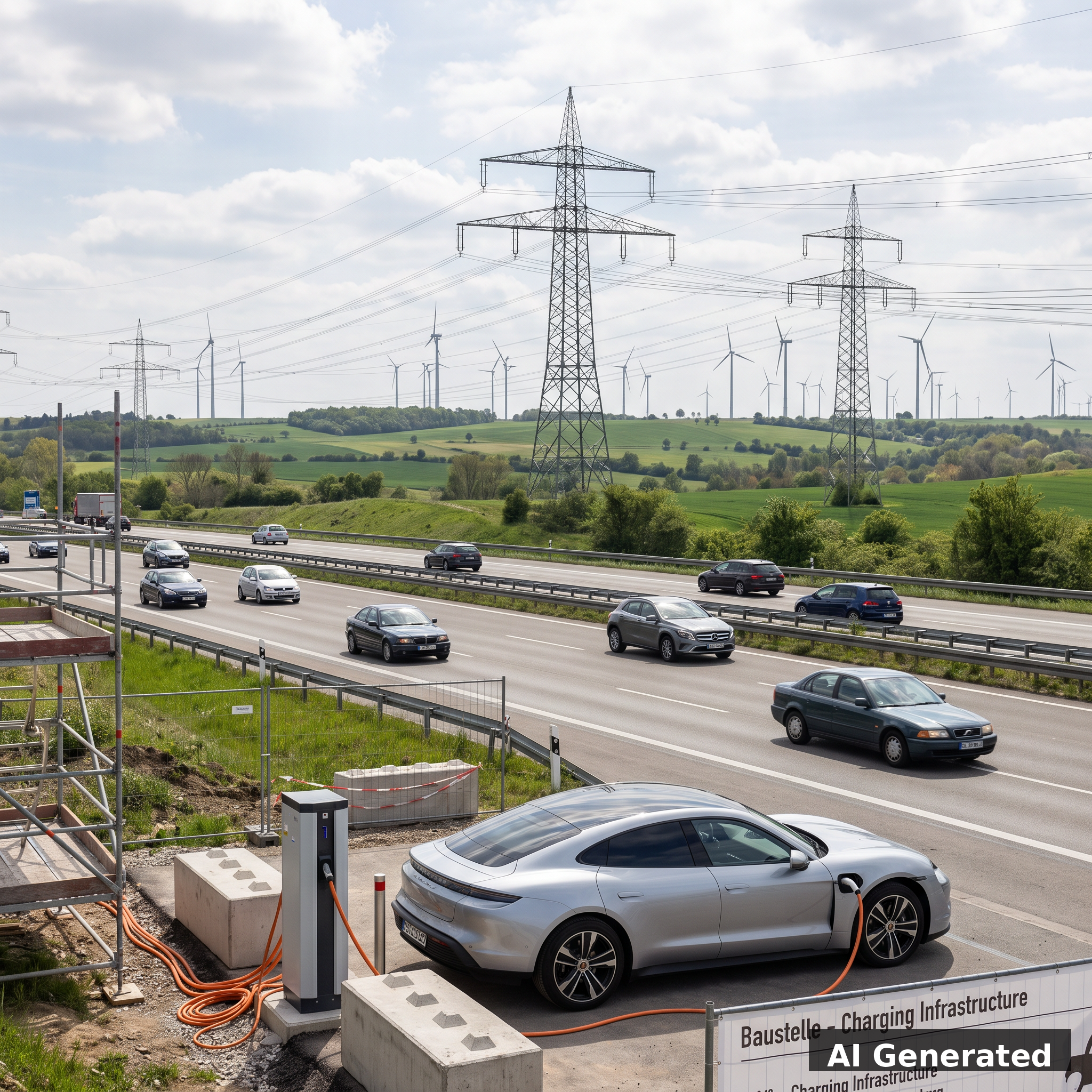
The energy collision between AI and electric vehicles is not a theoretical exercise. It is happening now, in real grid constraints, in connection queues measured in years, and in national electricity consumption figures that are already exceeding projections.
The transition to electric transport will continue. But it will be slower, messier, and more geographically uneven than the mandates suggest. Countries with constrained grids and competing AI demands — which includes most of Western Europe — will fall behind countries that can build energy infrastructure fast enough to power both revolutions.
Germany, for all its engineering prowess, is on the wrong side of this equation. Its grid is constrained, its energy costs are among the highest in the developed world, and its industrial base was designed for a different era. The question is no longer whether the German auto industry will transform. The question is whether Germany will recognise the transformation for what it is — and stop trying to save what cannot be saved.
References
[1] Rabobank. (2026, July). The great electrification: Can the EU power its AI ambitions? RaboResearch. Link
[2] Eurelectric. (2025). AI and energy. Link
[3] Leggett, T. (2025, February 12). Germany’s once-mighty car industry is in crisis. What will it take to fix it? BBC News. Link
[4] Deutsche Welle. (2025, January 27). German auto industry braces for change as car crisis bites. DW News. Link
[5] OriginQC. (2026, July 22). China quantum computer breakthrough 2026: 3 new machines live. OriginQC Blog. Link
[6] CSSNinja. (2026, July 28). China’s AI chip push accelerates its race for hardware independence. Link
[7] Integrator Media. (2026, May 4). XPENG reveals the future of AI mobility at the 2026 Beijing Auto Show. Link
🔜 Coming next in this series: Part 2 examines how autonomous driving — not electrification — is the real disruption
AI Disclosure: This post was created with the assistance of artificial intelligence. The ideas, analysis, and opinions expressed are my own — AI was used to help compose, structure, and refine my personal notes and thoughts into the final written content. Images and video featured in this post were also generated using AI tools, based on my own creative prompts and direction.
