




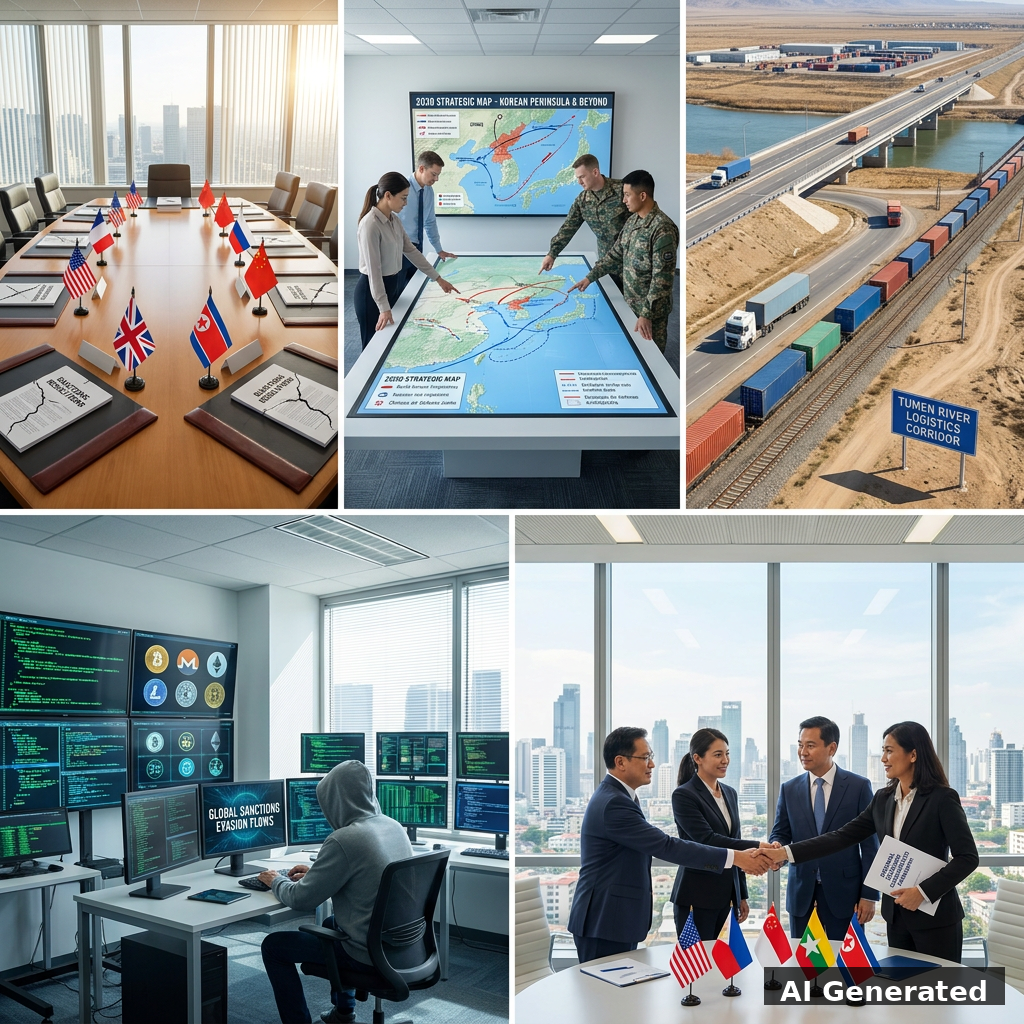


Series: The Frozen Dragon Wakes, Part 3 · East Asia & Pacific · Geopolitics
Previous: The Frozen Dragon Wakes — Part 2: Breaking Containment · Next: Part 1 completes the map.
The New Map
You now know what the frozen dragon has built — an arsenal, an alliance, and a diplomatic network that stretches from Moscow to Vientiane. In Part 1, you saw the military transformation. In Part 2, you saw the containment strategy begin to crack. Now comes the part nobody in Washington, Brussels, or Tokyo wants to say out loud: the architecture that was supposed to keep North Korea contained is failing. And the countries it was designed to protect are quietly adjusting to a world where it no longer works.
The Sanctions That Sanctioned Nothing
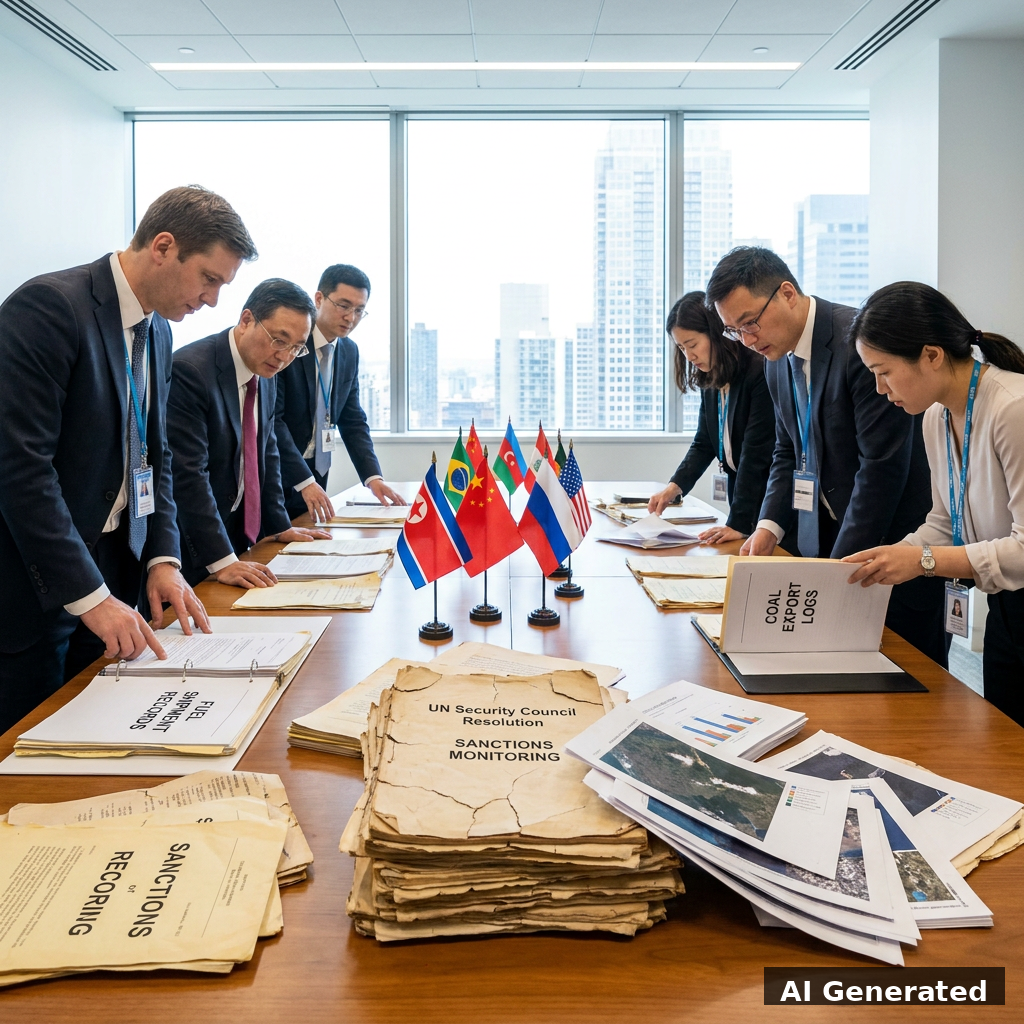
Start with the foundation. The Western strategy for managing North Korea for the past two decades rested on three pillars: economic sanctions enforced through the UN Security Council, military deterrence through the US-South Korea alliance, and diplomatic isolation maintained by a united front between Washington, Beijing, and Moscow. All three pillars are cracking.
The sanctions pillar collapsed first. China and Russia vetoed a US-led resolution to tighten sanctions in 2022, following Pyongyang’s renewed intercontinental ballistic missile testing [1]. Two years later, Russia blocked the renewal of the UN Panel of Experts — the principal mechanism responsible for monitoring sanctions implementation [1][2]. In May 2025, Xi Jinping and Putin released a joint statement explicitly opposing the use of economic sanctions or diplomatic isolation against North Korea [1]. The two countries that once cooperated with Washington to isolate Pyongyang now actively shield it.
The numbers tell the story. Despite UN resolutions capping refined petroleum imports at 500,000 barrels annually, South Korean intelligence estimates Pyongyang imported at least seven times that amount from China and Russia in 2025 [1]. Russia has refused to report its supply shipments to the UN for more than two years [1]. North Korea exported an estimated 1.5 million metric tons of coal last year, often falsely labelling the origins as Russian to evade sanctions [1]. North Korean hackers stole $2.02 billion in cryptocurrency in 2025 — a 51 percent increase from the previous year [1]. The sanctions regime is not dead in theory. It is dead in practice.
The Foreign Policy analysis puts it bluntly: “Relying on economic isolation alone to compel North Korea’s denuclearization is no longer a viable strategy in an era of intense geopolitical rivalry” [1]. You have been told for a decade that sanctions would work if only everyone enforced them. Everyone is no longer enforcing them. And the strategy has no Plan B.
The Alliance That Cannot Say What It Defends
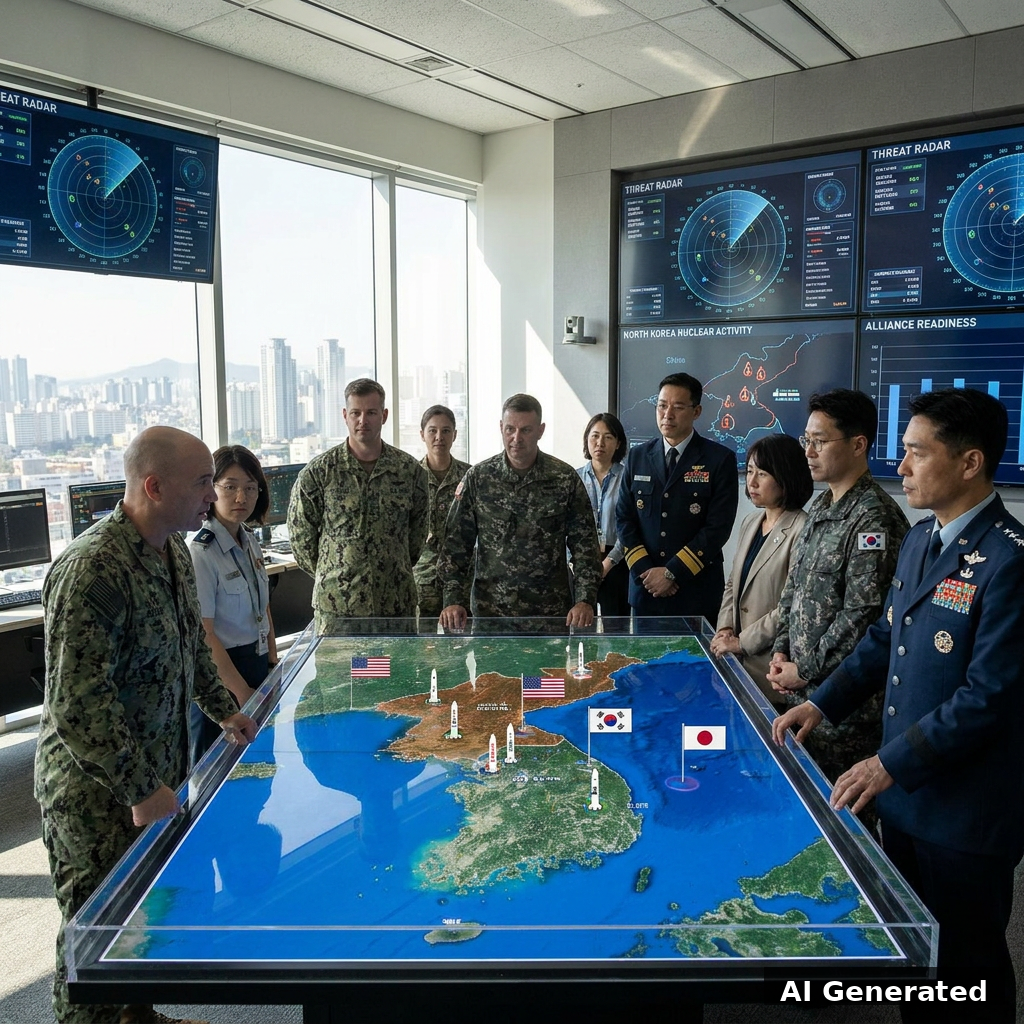
Now look at the military pillar. The US-South Korea alliance and the broader US-Japan security partnership were designed for a specific threat environment: a conventionally weak, nuclearising North Korea that could be deterred by overwhelming force and contained by sanctions pressure. That environment no longer exists.
North Korea now possesses roughly 60 nuclear warheads with enough fissile material for at least 30 more [1]. Between 2022 and 2024, it conducted more than a dozen ICBM flight tests [3]. Its conventional forces are modernising at a pace nobody predicted, guided by Russian expertise and battle-tested in Kursk [4]. The country has new tanks with electronic warfare systems, AI-enhanced attack drones, air defence platforms, and destroyers capable of carrying tactical ballistic missiles [4]. General Xavier Brunson, the US Forces Korea Commander, testified before Congress in April 2025 that Russia’s expanded cooperation will enable advancements of North Korea’s weapons of mass destruction programme across the next three to five years [5].
So what exactly is the US-South Korea alliance deterring now? A nuclear-armed state with Russian-backed conventional forces and a mutual defence pact with Moscow? The deterrence calculus that worked against a starving, isolated North Korea does not work against a funded, armed, battle-hardened one allied with the world’s largest nuclear power. You cannot contain a dragon with a fence designed for a stray dog.
Japan faces the same dilemma. Tokyo has spent decades building its security posture around the assumption that North Korea is a manageable threat — serious enough to justify alliance dependence on Washington, but not existential enough to require independent strategic capability. That assumption is now obsolete. North Korea’s solid-fuel ICBMs, its expanding nuclear arsenal, and its new reconnaissance satellite capabilities mean that Japan is within range of a nuclear power that no longer answers to Beijing and no longer fears the Security Council [3][6].
South Korea, for its part, is hedging. The NATO-South Korea strategic alignment is deepening, with Seoul exploring relationships that extend beyond the traditional US-centred framework [7]. South Korea’s own nuclear debate — once taboo — is now mainstream. When the country you are supposed to be deterring has more nuclear weapons than you have alliances, the conversation changes.
The Countries That Read the Room
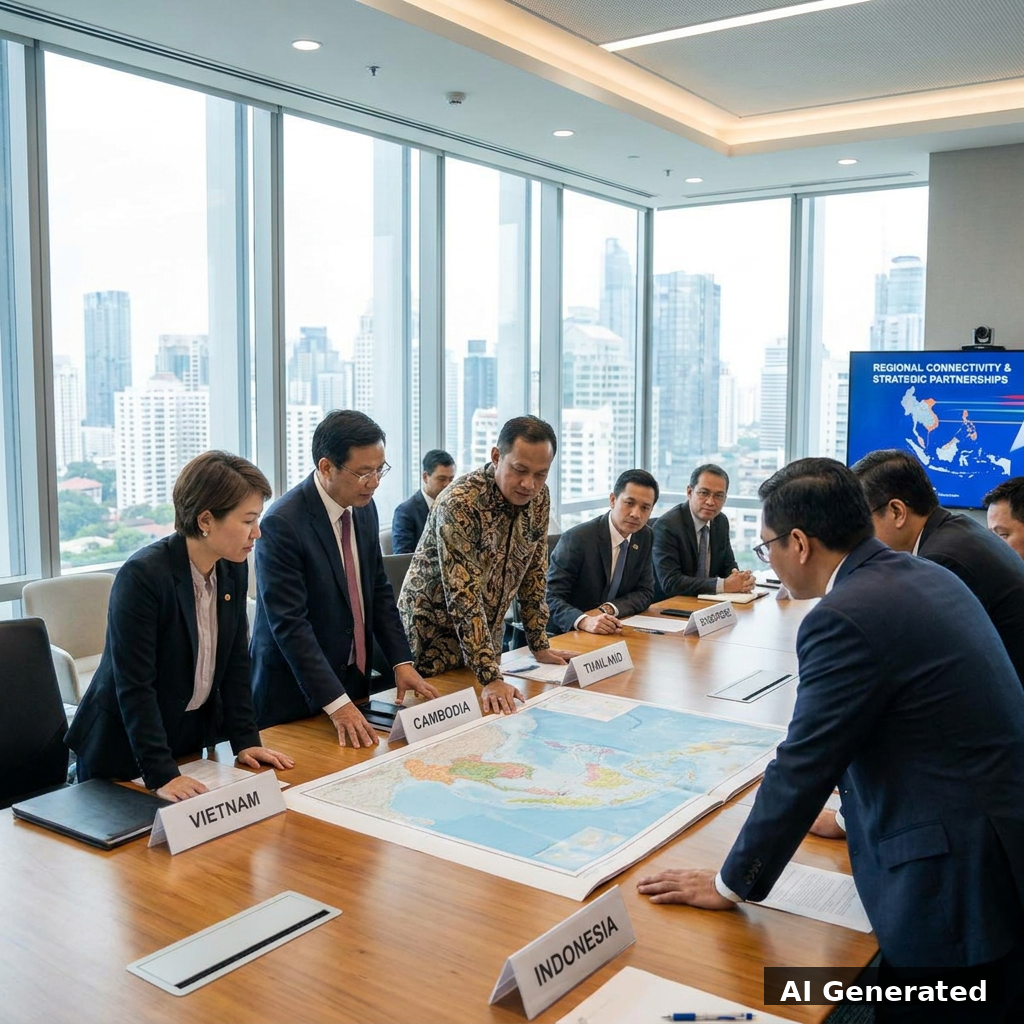
Now steelman the optimists — briefly, because their position deserves acknowledgement even as it crumbles.
The strongest case for continuity is this: the US alliance network in Asia remains the most powerful military coalition in the region. American troops are stationed in South Korea and Japan. The trilateral cooperation agreement signed at Camp David in 2023 deepened coordination between Washington, Seoul, and Tokyo [6]. NATO is expanding its engagement with South Korea [7]. The military infrastructure is intact.
And yet. The Asia Society’s analysis reveals a structural problem the optimists prefer to ignore: the Russia-North Korea alliance did not emerge because the US alliance network failed. It emerged because China’s support proved unreliable [6]. Pyongyang’s frustration with Beijing — the crackdowns on fishing, the sanctions enforcement, the mid-ranking delegation to the 70th Armistice Anniversary while Russia sent its Defence Minister — pushed North Korea toward Moscow [6]. The US alliance network did not prevent this realignment. It was not designed to prevent it. It was designed to contain a different kind of North Korea — one that no longer exists.
The countries in the region are reading the room. Vietnam is “balancing without allying” — deepening ties with BRICS nations while maintaining security engagement with Washington, refusing to commit to any single camp [8]. Cambodia is engaging with North Korea’s ambassador on human rights cooperation [9]. Thailand and Singapore are marking 50 years of DPRK relations with quiet diplomatic upgrades [9]. None of these countries are declaring allegiance to Pyongyang. They are all hedging against a future in which the Western containment architecture does not hold — and they want to be on speaking terms with every player at the table.
You cannot blame them. They watched the United States elect a president who questions the value of its own alliances [10]. They watched Europe prove incapable of independent military action in its own neighbourhood. They watched the UN Security Council become a theatre of vetoes instead of a mechanism of enforcement. And they watched North Korea — the country everyone said would collapse — build nuclear weapons, fight a war in Europe, and construct a $100 million bridge to Russia while its economy grew at its fastest rate in eight years [1]. If you were Hanoi, you would hedge too.
Previous in this series: The Frozen Dragon Wakes — Part 2: Breaking Containment — containment strategy begins to crack.
What the Map Looks Like in 2030
Here is the analytical conclusion you deserve, delivered without hedging.
If the current trajectory continues — and nothing in the available evidence suggests it will reverse — the Korean Peninsula in 2030 looks like this:
North Korea is a nuclear-armed state with 80 to 100 warheads, solid-fuel ICBMs, and a conventional military modernised with Russian technology and combat experience [1][4][5]. It has a mutual defence pact with Moscow that makes any military confrontation with Pyongyang a confrontation with Russia. It has diplomatic relationships across Southeast Asia that provide alternative economic channels and political legitimacy. Its economy is sanctions-proofed through Russian capital, Chinese trade, cryptocurrency theft, and arms exports [1][4].
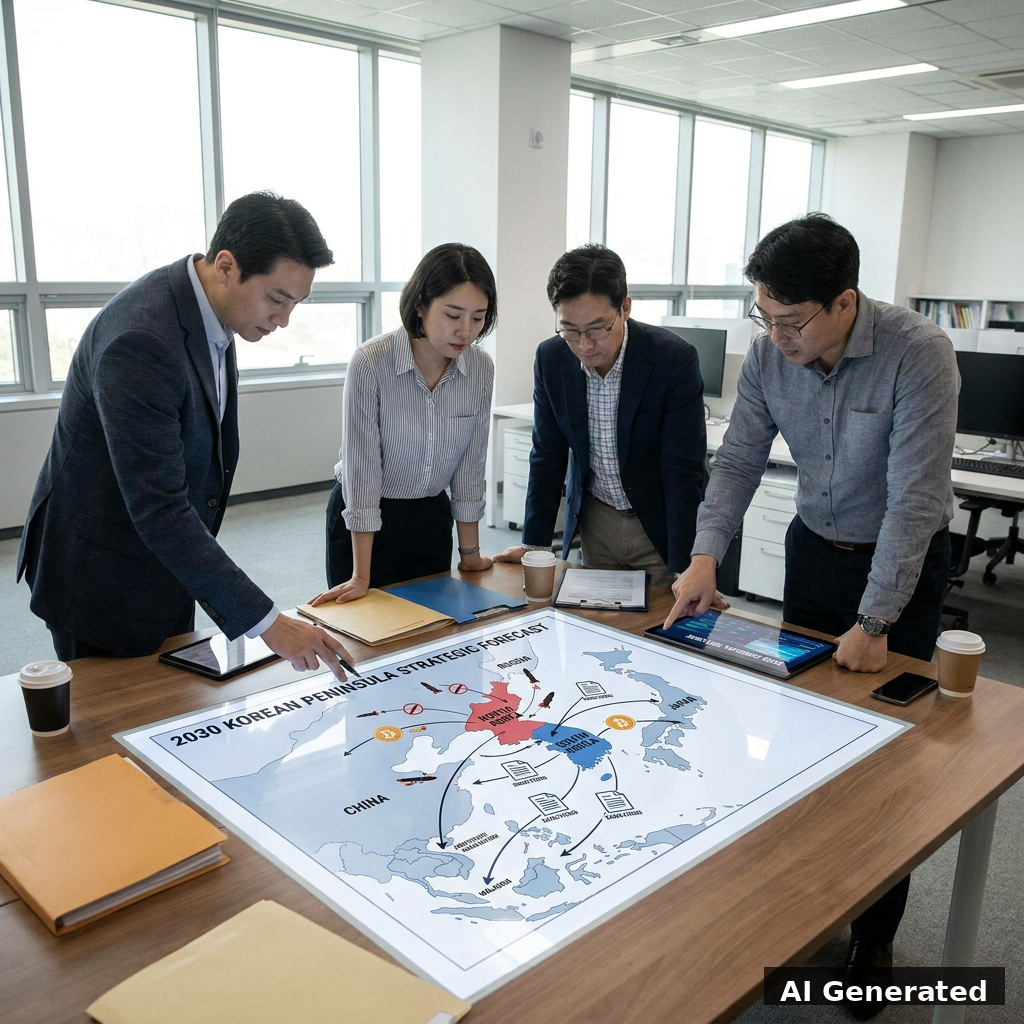
South Korea and Japan remain allied with Washington — but the alliance has changed character. It is no longer about containing North Korea. It is about managing a multipolar Asia in which Pyongyang is a node in a Russia-China axis that stretches from the Arctic to the South China Sea [5][11]. Seoul will pursue its own nuclear capability or accept permanent strategic dependence on Washington. Tokyo will accelerate its military normalisation. Neither will be comfortable.
Southeast Asia has quietly diversified. Vietnam maintains relationships with every major power, including Pyongyang. Cambodia, Laos, and Thailand have functional diplomatic channels with North Korea that were unthinkable a decade ago. The ASEAN Regional Forum remains one of the few spaces where North Korean diplomats sit at the same table as Americans, South Koreans, and Japanese [9]. The containment perimeter is not broken — it is riddled with holes.
And the Western sanctions architecture? It exists on paper. In practice, it is a relic — a mechanism designed for a unipolar world that no longer exists, enforced by a Security Council paralysed by the vetoes of the very powers it was supposed to constrain [1][2].
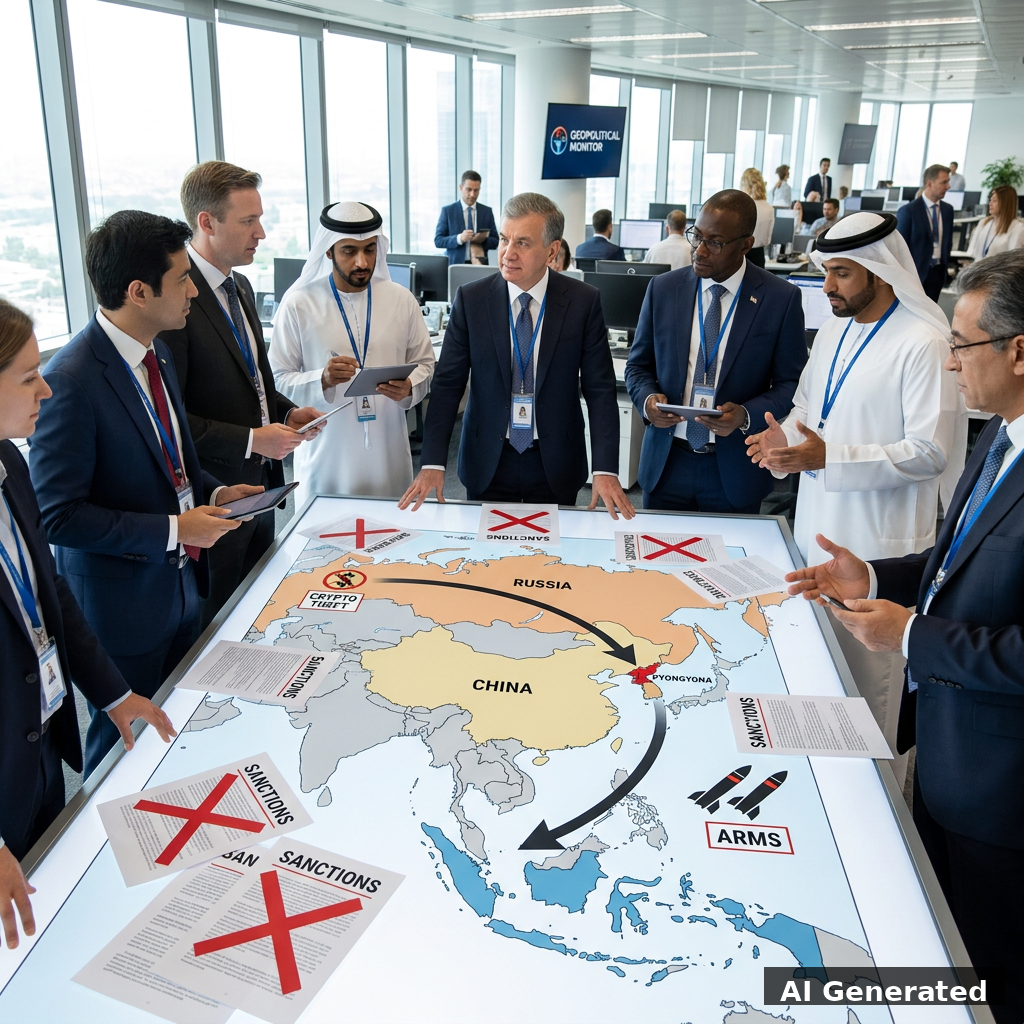
Who benefits from this chaos? Moscow benefits — because a militarily stronger North Korea ties down American strategic attention and resources in the Indo-Pacific while Russia focuses on Ukraine and Europe [5]. Pyongyang benefits — because it has escaped the economic asphyxiation that was supposed to force denuclearisation [1]. Beijing benefits — because a stable North Korea, even an unpredictable one, remains a buffer against US influence on China’s doorstep [6].
Who loses? The ordinary citizens of North Korea, who will continue to starve while their government builds missiles [1]. The ordinary citizens of South Korea and Japan, who will live under a nuclear threat that their alliances can no longer credibly manage. And the ordinary citizens of Southeast Asia, whose governments are quietly accommodating a nuclear-armed dictatorship because the alternative — confronting it — offers no rewards and significant risks.
You were told the international order would hold. It didn’t. You were told sanctions would work. They didn’t. You were told North Korea would collapse. It didn’t.
So here is the question you need to sit with: if the old map no longer describes the territory, who is drawing the new one? And when they finish drawing it — will you have a seat at the table, or will you be standing outside, reading about the bridge that should have told you everything?
—
🔜 Coming next in this series: Part 1 — The $100 Million Bridge to a $34 Million Trade reveals the physical bridge that began the map.
References
[1] Heo, D. (2026). A Divided World Is North Korea’s Greatest Asset. Foreign Policy. https://foreignpolicy.com/2026/07/16/north-korea-sanctions-nuclear-weapons-united-states-russia-china-united-nations-security-council/
[2] Yadav, S. (2026). How Moscow’s wartime alliance with Pyongyang is redrawing the map of Northeast Asian power. Modern Diplomacy. https://moderndiplomacy.eu/2026/06/11/how-moscows-wartime-alliance-with-pyongyang-is-redrawing-the-map-of-northeast-asian-power/
[3] Congressional Research Service. (2026). North Korea’s Nuclear Weapons and Missile Programs. Congress.gov. https://www.congress.gov/crs-product/IF10472
[4] Schepers, K. (2025). Why North Korea is modernising its conventional arsenal. The Interpreter, Lowy Institute. https://www.lowyinstitute.org/the-interpreter/why-north-korea-modernising-its-conventional-arsenal
[5] Asia Society Policy Institute. (2026). Russia–North Korea Military Cooperation in Response to China’s Tactical Ambiguity. Asia Society. https://asiasociety.org/policy-institute/russia-north-korea-military-cooperation-response-chinas-tactical-ambiguity
[6] Asia Society Policy Institute. (2026). Russia–North Korea Military Cooperation in Response to China’s Tactical Ambiguity. Asia Society. https://asiasociety.org/policy-institute/russia-north-korea-military-cooperation-response-chinas-tactical-ambiguity
[7] Springer. (2026). The NATO–South Korea strategic alignment and contemporary global security. International Politics. https://link.springer.com/article/10.1057/s41311-026-00773-6
[8] Belfer Center. (2026). Balancing Without Allying: Vietnam’s Middle-Power Strategy Amid U.S.-China Rivalry. Harvard Kennedy School. https://www.belfercenter.org/research-analysis/balancing-without-allying-vietnams-middle-power-strategy-amid-us-china-rivalry
[9] Kang, G. (2025). Assessing North Korea-Southeast Asia’s Diplomatic Renewal. 38 North. https://www.38north.org/2025/08/assessing-north-korea-southeast-asias-diplomatic-renewal/
[10] East Asia Forum. (2026). Dealing with North Korea cannot wait for a distracted Washington. East Asia Forum. https://eastasiaforum.org/2026/07/12/dealing-with-north-korea-cannot-wait-for-a-distracted-washington/
[11] Stimson Center. (2026). The Korean Peninsula’s Pivotal Role in the Interregnum Between Two Cold Wars. Stimson Center. https://www.stimson.org/2026/the-korean-peninsulas-pivotal-role-in-the-interregnum-between-two-cold-wars/
[12] FPRI. (2025). Russia-China-North Korea Relations: Obstacles to a Trilateral Axis. Foreign Policy Research Institute. https://www.fpri.org/article/2025/03/russia-china-north-korea-relations-obstacles-to-a-trilateral-axis/
AI Disclosure: This post was created with the assistance of artificial intelligence. The ideas, analysis, and opinions expressed are my own — AI was used to help compose, structure, and refine my personal notes and thoughts into the final written content. Images and video featured in this post were also generated using AI tools, based on my own creative prompts and direction.

[…] This is part two of a three-part series on North Korea’s quiet campaign to break Western containment. Part 1: The $100 Million Bridge to a $34 Million Trade · Part 3: The New Map […]