






America Has Not Been Told the Truth About Iran
You have been told the United States is winning this war. You have been told Iran’s military is in ruins, its air force destroyed, its navy at the bottom of the sea. You have been told the Strait of Hormuz is under control. You have been told the losses are manageable. None of this is entirely true — and the gap between what you have been told and what has actually happened is the most important story of 2026 [1][2].
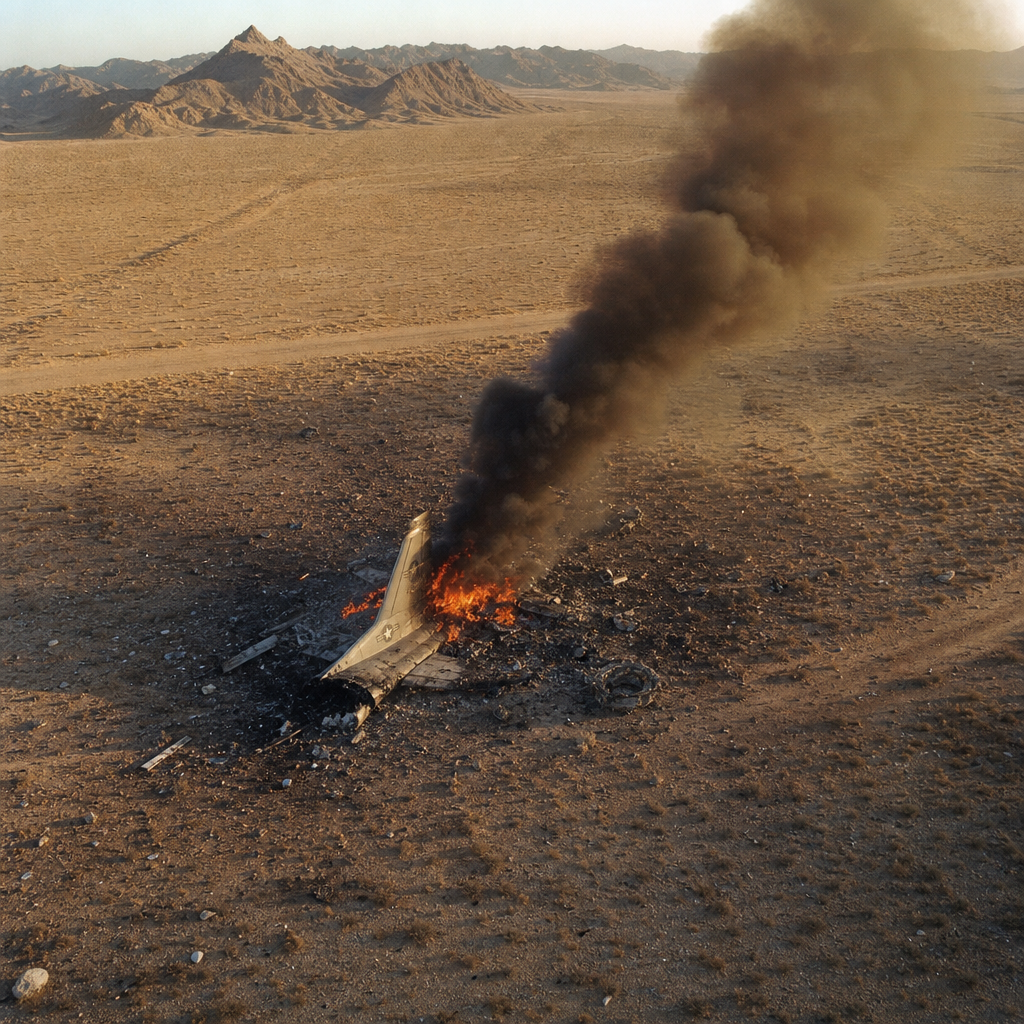
Forty-two US aircraft lost or damaged. Twelve sailors killed in a single missile strike on a destroyer. An AWACS plane burned to its frame. Seven tanker aircraft destroyed or damaged on the ground. Nearly 500 wounded — with a US official telling the Associated Press the real number is “well over 500” [1][2]. And Iran’s F-14 Tomcats — the ones you were told were destroyed in the opening hours — flying combat missions in June, thirty-eight years after their last war [3]. You were told this was a clean operation. It was not.
The war America didn’t plan for.
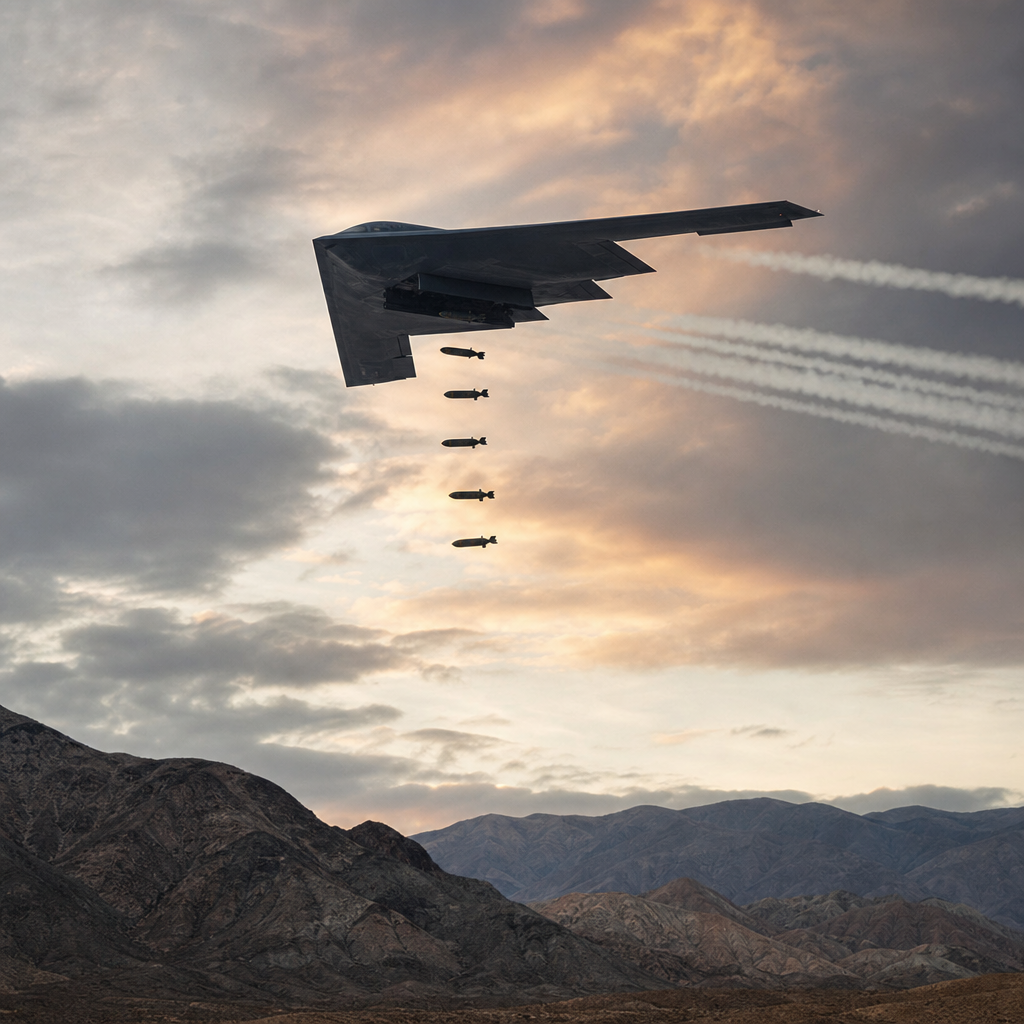
Operation Epic Fury began on February 28, 2026, with a joint US-Israeli strike package that killed Supreme Leader Ali Khamenei and dozens of senior IRGC commanders [2]. B-2 stealth bombers hit Fordo with Massive Ordnance Penetrators. Ohio-class submarines launched 30 Tomahawk missiles. Two hundred Israeli fighter jets executed the largest air operation in the country’s history [4]. The opening was devastating — and by every conventional metric, it should have been decisive.
It was not. Because Iran had spent four decades preparing for exactly this scenario — not by building a conventional military that could match the United States, but by building one that could survive it. The distinction matters more than anything else you will read about this conflict [5].
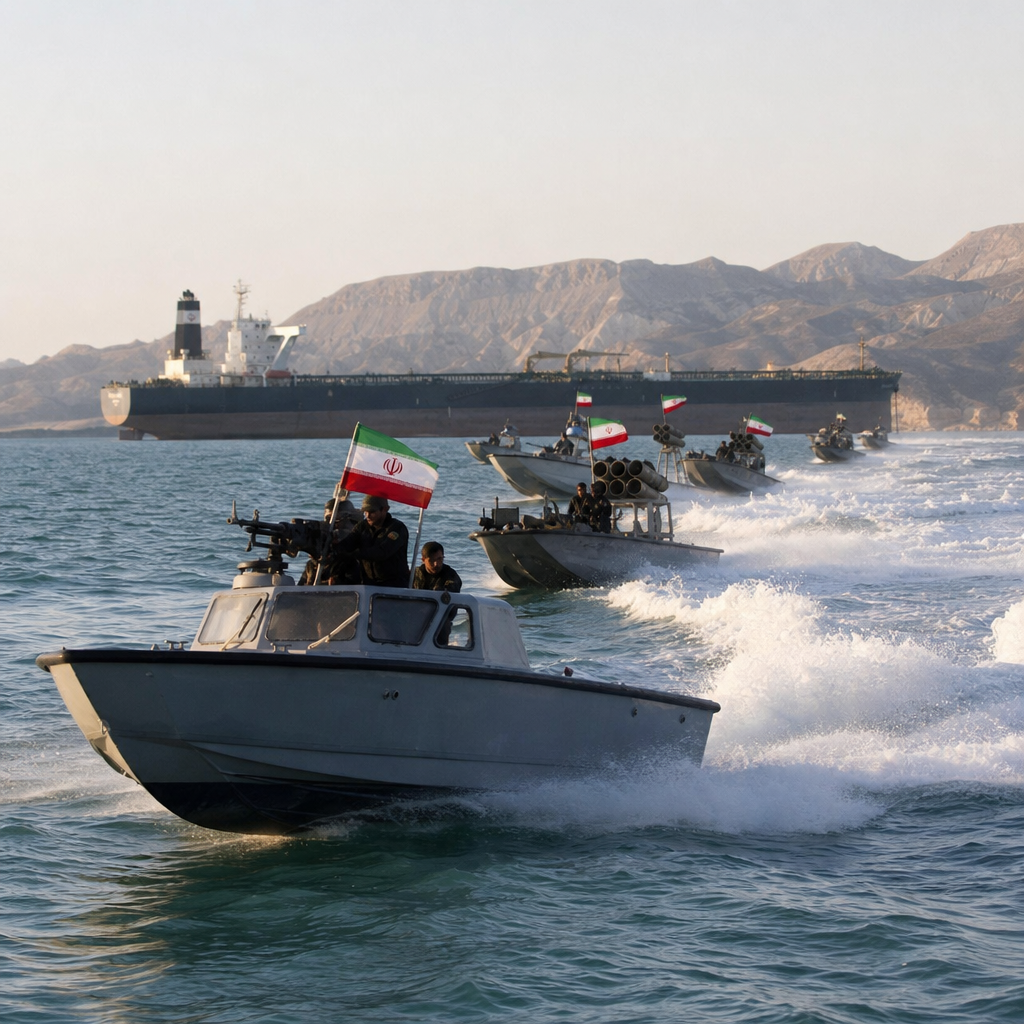
The Pentagon told you Iran’s navy was “completely annihilated: 158 ships” [5]. What the Pentagon did not emphasize was what it left out. The Islamic Revolutionary Guard Corps Navy — separate from Iran’s conventional fleet, operating under a parallel chain of command — maintained its full asymmetric capability. Over 1,000 fast attack boats. Thousands of drones. Anti-ship cruise missiles hidden along the coast. Mines. And a network of reinforced underground tunnels along the Persian Gulf coast where these assets are stored — tunnels that, according to military analyst Michael Eisenstadt of the Washington Institute, would require ground forces inside Iran to destroy [5].
The strongest case for the American strategy is this: the US has achieved air supremacy over Iran, destroyed 22 air defense systems, sunk or damaged 14 Iranian naval vessels, and degraded Iran’s ballistic missile capability by an estimated 60 launchers [2]. The conventional Iranian military has been severely damaged. No US ship has been sunk. No US carrier has been lost. Steven Wills of the Center for Maritime Security argues there has been “no US naval failure” — the Navy was never ordered to force the Strait, and it cannot be defeated in a battle it was not told to fight [6].
And yet — here is what that cannot explain. If the operation was as successful as claimed, why are we now in the thirteenth consecutive night of strikes in late July? Why did the ceasefire collapse? Why has the US reimposed its naval blockade? Why is oil above $100 a barrel? And why did the Pentagon’s own leaked internal estimate — reported by NBC News — put the true cost at $80 to $100 billion, more than triple the official $29 billion figure [2][7]?
The mosquito fleet that humbled a superpower.
You need to understand what happened in the Strait of Hormuz — because it is the single most important tactical lesson of this war, and almost nobody in the Western media is framing it correctly.
Iran’s strategy was never to win a naval engagement against the US Navy. Iran’s strategy was to make the cost of controlling the Strait so high that the United States would be forced into an awkward compromise. This is what the Hudson Institute calls “denial, not control” — complicating access, raising costs, sustaining coercive leverage without escalating into full-scale war [5].
The weapon of choice: small boats. Hundreds of them. Fast, nimble, armed with rockets, machine guns, anti-ship missiles, and mines. On April 22, these vessels — dismissed by President Trump as not “a big threat” — seized two large container ships leaving the Strait of Hormuz, changing the course of the war [5]. On May 7, three US Navy destroyers transiting the Strait came under direct fire from Iranian missiles, drones, and fast attack boats [8]. CENTCOM said all threats were intercepted. On June 9, a US AH-64 Apache helicopter was downed near the Strait by a Shahed drone [2]. The helicopter sank. The crew was rescued by an unmanned surface vessel.
Michael Petersen, a senior fellow at FPRI and expert in naval operations, explained the calculus plainly: “The US Navy only has partial advantage over Iran’s ‘anti-navy’ of fast attack craft, mines, and coastal cruise missiles, so a distant blockade lowers risk to the force” [9]. Read that again. The most powerful navy in the history of the world chose a distant blockade — not because it could not force the Strait, but because the cost of doing so was judged unacceptable [9].
This is the part you were not told. The US blockade targets Iranian ports along the Arabian Gulf and Gulf of Oman — not the Strait itself [9]. The distinction is legally significant (a blockade of the Strait would be an act of war against all shipping) and tactically revealing. The Pentagon assessed that sending major warships into a 21-mile-wide corridor flanked by Iranian territory, saturated with mines, drones, and mobile missile launchers, was too dangerous for sustained operations [9].
The air force that refused to die
Here is the story that should genuinely concern you — because it reveals the limits of what air power alone can achieve against a prepared adversary.
Iran’s air force before the war was a museum. F-4 Phantoms from the 1960s. F-5 Tigers. F-14 Tomcats — the last ones flying anywhere in the world, sustained for 47 years without a single phone call to Grumman through sheer engineering cannibalization [3]. MiG-29s. Su-24s. Mirage F1s. Decades of sanctions had left the fleet aging, parts-starved, and increasingly difficult to maintain [10].
Israel struck Isfahan’s 8th Tactical Air Base on March 7-8. Satellite imagery confirmed at least eight F-14 Tomcats destroyed on the ground, along with ten other aircraft [3]. Hardened aircraft shelters were penetrated — single holes punched through their roofs [11]. Israel claimed complete destruction of Iran’s Tomcat fleet.
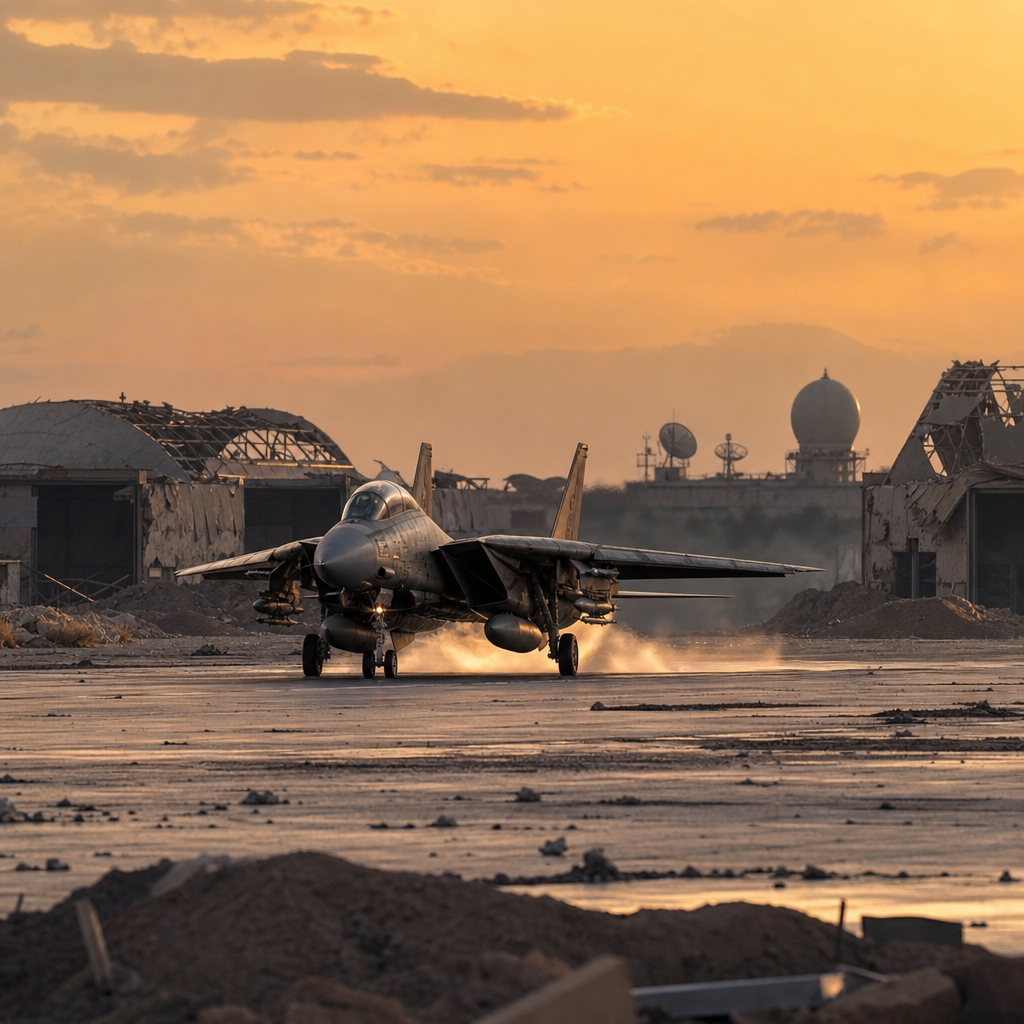
The claim was premature. On June 10, 2026, footage emerged showing Iranian F-14 Tomcats landing after completing combat missions — the first confirmed Tomcat combat sorties since the Iran-Iraq War ended in 1988 [3]. Iran’s F-4s, F-5s, MiG-29As, and Yak-130s had all been seen flying sorties during the conflict before the Tomcat footage appeared [3]. Enough aircraft survived — either dispersed before the strikes or sheltered in hardened facilities — to return to the fight.
The Iranian Air Force did attempt offensive operations. On March 2, two Su-24 tactical bombers tried to strike Al Udeid Air Base in Qatar — the largest US base in the region. Both were shot down by Qatari F-15 fighters [11]. On March 4, an Israeli F-35I shot down a Yak-130 over Iran [11]. These were not the actions of a destroyed air force. They were the actions of a degraded one that was still willing to fight.
But here is the part that reveals the real strategic calculation: Iran’s primary aviation response has not been manned aircraft. It has been drones. The UAE detected 812 drones in the opening days, intercepting 755 with 57 getting through. Kuwait intercepted 283. At least 1,150 drones were launched at regional targets in the opening days alone — and the actual figure is likely higher [10]. Drones are cheaper, simpler, and easier to replace. Iran entered the conflict with an inventory numbering in the thousands. That stockpile does not disappear overnight [10].
What the numbers actually tell you
Let us talk about losses — because this is where the gap between the official narrative and the documented reality is widest.
The Congressional Research Service — the nonpartisan research arm of the Library of Congress — released its assessment on May 13. The numbers: 42 US aircraft lost or damaged. Four F-15E Strike Eagles. Twenty-four MQ-9 Reapers. Seven KC-135 Stratotankers. One E-3 Sentry AWACS — destroyed, not damaged, despite the Pentagon’s classification. One F-35A. One A-10. Two MC-130J special operations aircraft. Two RQ-4 Global Hawks. One MQ-4C Triton. Four AN/TPY-2 THAAD radars. Total equipment attrition: over $5 billion [1].
On March 4, an Iranian anti-ship ballistic missile struck a US Arleigh Burke-class destroyer in the Persian Gulf. Twelve sailors were killed — the single deadliest day for US forces in the entire conflict [2]. This event received minimal coverage in Western media. You probably did not hear about it.
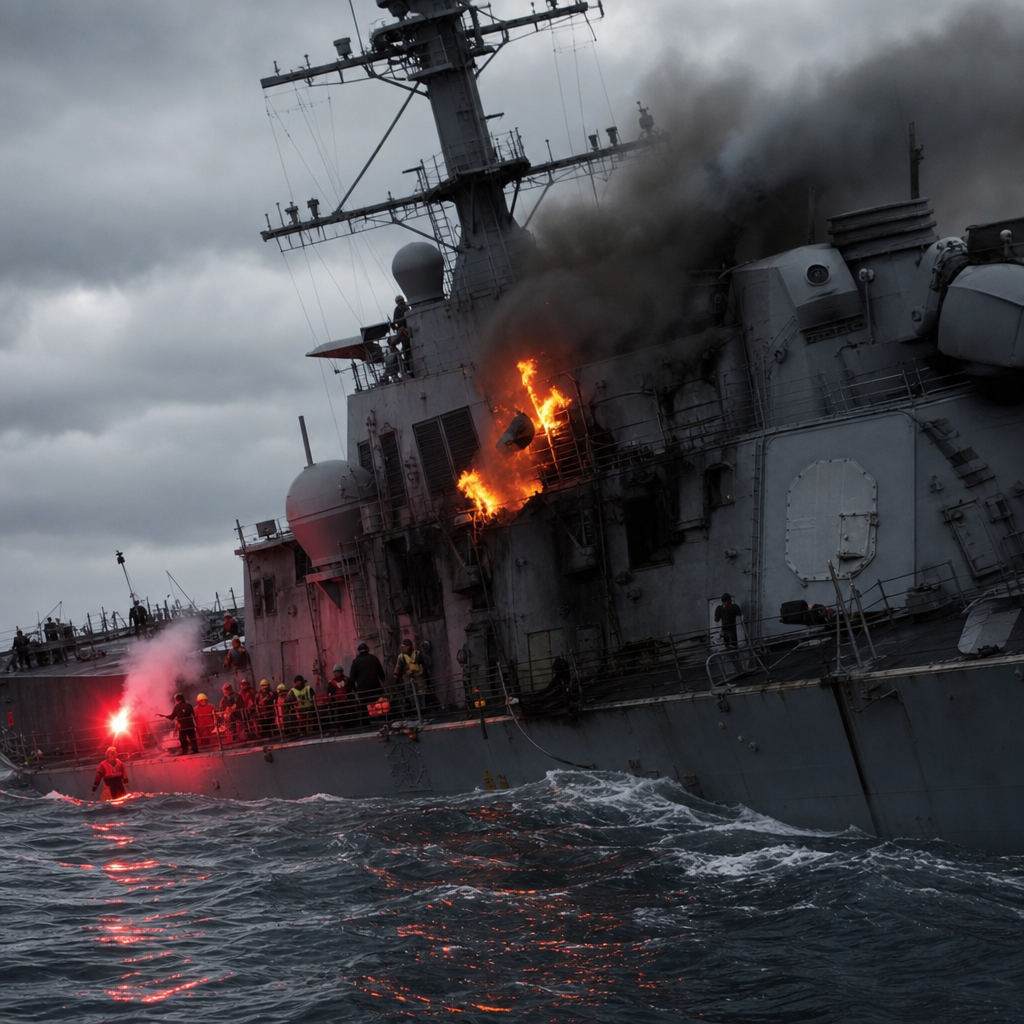
The Pentagon’s official wounded count stands at 482. A US official told the Associated Press the true figure is “well over 500” [2]. The Intercept reported that dozens of earlier injuries went undisclosed and that the Defense Casualty Analysis System is missing at least one known death [2]. The gap between official and independent tallies is not a rounding error. It is a pattern.
And then there is the cost. The Pentagon’s official figure: $29 billion [7]. NBC News reported a leaked internal Pentagon estimate of $80 to $100 billion [7]. The White House submitted an $87.6 billion supplemental to Congress [7]. You can choose which number to believe. But ask yourself: why would the internal estimate be three times the public one?
The stalemate nobody wants to name
You are watching a war that neither side can win and neither side can afford to lose.
Iran cannot stop US airstrikes. The United States cannot secure the Strait of Hormuz. Iran cannot prevent the destruction of its conventional military. The United States cannot prevent Iran from striking six Gulf states simultaneously — Kuwait, Bahrain, Qatar, Jordan, Oman, and Syria — in what Iran called “Operation Nasr 2” [2]. Iran cannot close the Strait entirely — shipping still moves through US-guided routes along the southern rim [6]. The United States cannot reopen it fully — transits dropped from 88-93 per day to 5-35 during the conflict [2].
This is not victory. This is not defeat. This is the most expensive stalemate in modern military history — and both sides are pretending otherwise.
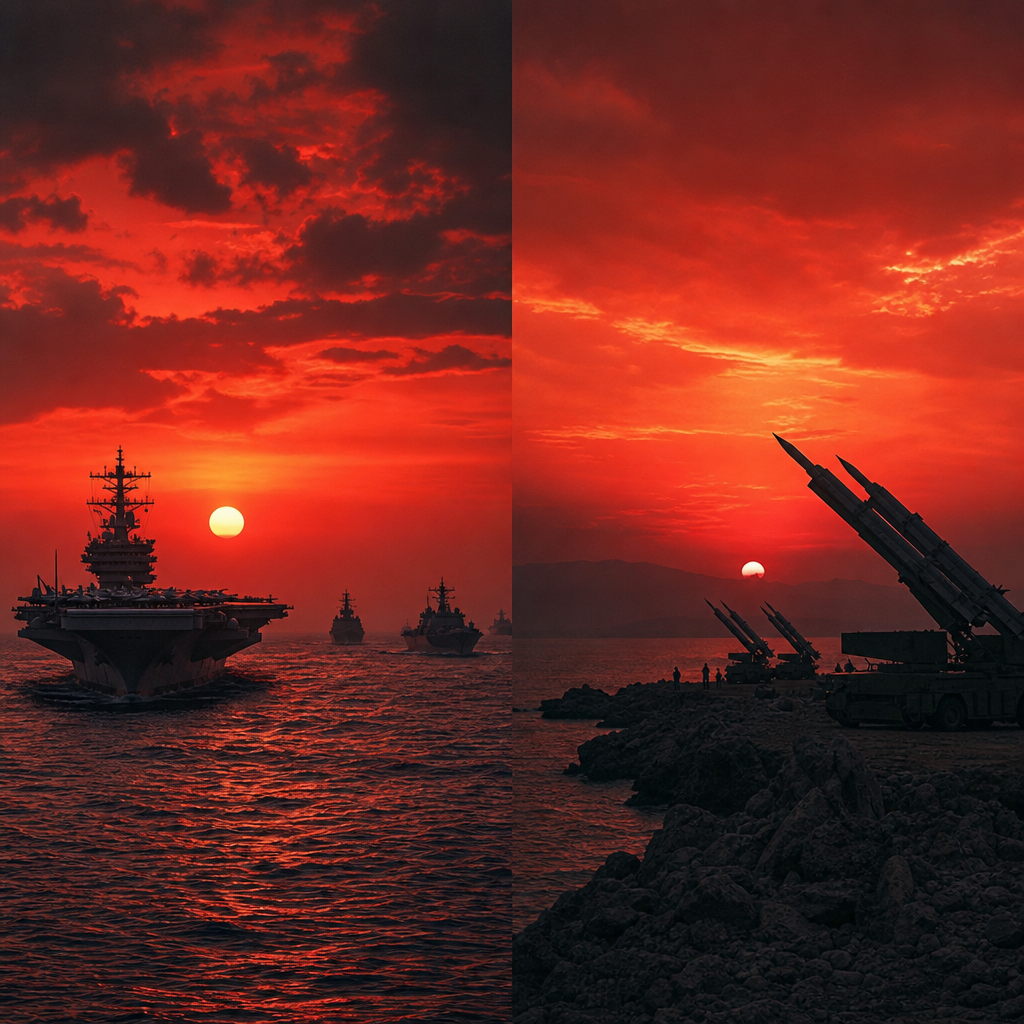
The ceasefire signed on June 15 has ruptured repeatedly. Trump declared it “over” on July 8 [2]. The US reimposed its naval blockade on July 14 [2]. Thirteen consecutive nights of strikes followed. Iran struck commercial shipping. The diplomatic track is stalled. And the people paying the price — the Iranian civilians documented by name (1,701 dead including 254 children, per HRANA), the Lebanese (4,324 killed per the Ministry of Health), the Gulf state nationals (42-50 dead across five countries), and the American service members whose injuries are being quietly managed in a Pentagon database — are not the ones making the decisions [2].
You were told this war had a clear objective and a clear end state. You were told Iran’s military was destroyed. You were told the Strait was under control. You were told the losses were manageable. Every single one of those claims has proven to be somewhere between an exaggeration and a lie.
The question is not whether America is winning. The question is whether America knows what winning even looks like — and whether anyone in Washington has the honesty to admit that it might not be possible.
Who decided that the cost of this war was worth the objective? Who is being held accountable for the gap between the $29 billion you were told and the $100 billion it actually costs? And when the next war comes — because it will — will you be told the truth, or will you be told another story that falls apart the moment you look at the numbers?
References
[1] Scanlon, M. (2026). Congressional report tallies 42 US aircraft lost or damaged in Operation Epic Fury. Military Times. https://www.militarytimes.com/news/pentagon-congress/2026/05/22/congressional-report-tallies-42-us-aircraft-lost-or-damaged-in-operation-epic-fury/
[2] Kukhalashvili, R. (2026). Iran War Casualties 2026: US, Iran & Civilian Death Toll Tracker. MilitarySpend.org. https://militaryspend.org/iran-war-casualties
[3] Kerr, C. (2026). Iran’s F-14 Tomcats turn 50 — and they’re flying combat again. MiGFlug / Afterburner. https://migflug.com/jetflights/iran-f-14-tomcat-50-years-combat-isfahan-strikes-maverick-act-2026/
[4] ABC News Australia. (2026). How the US and Israel struck Iran in Operation Epic Fury. ABC News. https://www.abc.net.au/news/2026-03-04/how-the-israel-and-us-assault-on-iran-unfolded/106406578
[5] Wired Italia. (2026). Iran is using tiny ‘mosquito’ boats to shut down the Strait of Hormuz. Wired. https://www.wired.com/story/iran-is-using-tiny-mosquito-boats-to-shut-down-the-strait-of-hormuz/
[6] Wills, S. (2026). There has been no US naval ‘failure’ in the Strait of Hormuz. Breaking Defense. https://breakingdefense.com/2026/07/there-has-been-no-us-naval-failure-in-the-strait-of-hormuz/
[7] NBC News. (2026). Iran war cost could be as much as $100 billion. NBC News. (Reported Jul 15, 2026 via MilitarySpend.org timeline.)
[8] Foundation for Defense of Democracies. (2026). Iran attacks US Navy vessels transiting Strait of Hormuz. FDD. https://www.fdd.org/analysis/2026/05/08/iran-attacks-u-s-navy-vessels-transiting-strait-of-hormuz/
[9] Salisbury, E., Petersen, M. B., & Hoffman, F. G. (2026). FPRI Experts React: The US Blockade of the Strait of Hormuz. Foreign Policy Research Institute. https://www.fpri.org/article/2026/04/fpri-experts-react-the-us-blockade-of-the-strait-of-hormuz/
[10] World War Wings. (2026). What’s left of Iran’s Air Force after Operation Epic Fury. World War Wings. https://worldwarwings.com/iran-last-jets/
[11] Trevithick, J. (2026). Iranian F-14 Tomcats meet their doom in Israeli airstrikes. The War Zone. https://www.twz.com/air/iranian-f-14-tomcats-meet-their-doom-in-israeli-airstrikes
AI Disclosure: This post was created with the assistance of artificial intelligence. The ideas, analysis, and opinions expressed are my own — AI was used to help compose, structure, and refine my personal notes and thoughts into the final written content. Images, videos and music featured in this post were also generated using AI tools, based on my own creative prompts and direction.
