



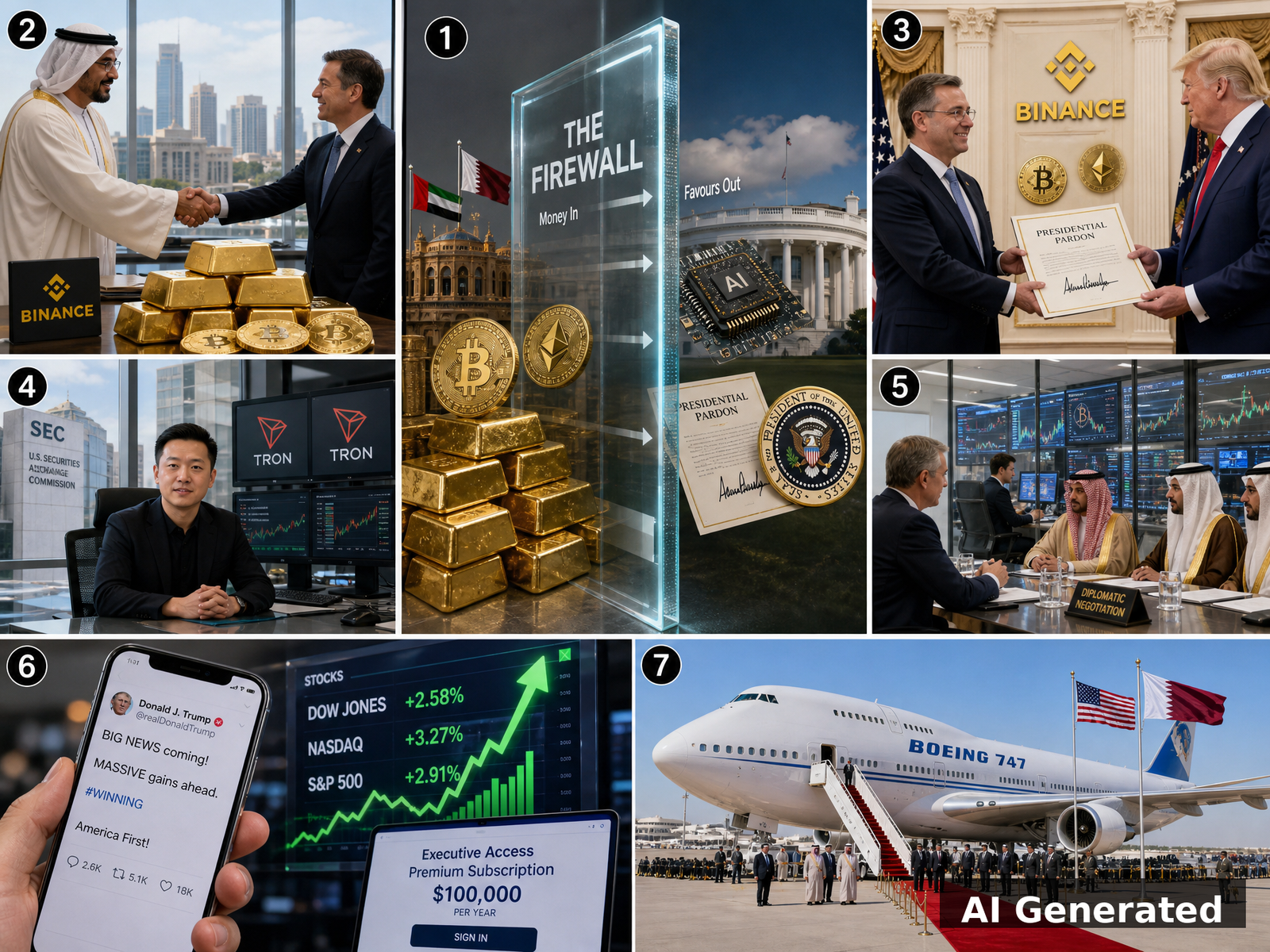


There is something happening in American politics that we are not sure many people have noticed. It is not hidden. The facts are public, documented by the New York Times, BBC, Reuters, ProPublica, The Guardian, and CNBC. But the pattern that connects them — the architecture that makes all of it technically legal while being, to our eyes, obviously something else — that pattern is harder to see.
We think we see it. We are going to lay it out. We are not going to draw conclusions. We are going to ask questions.
The Architecture
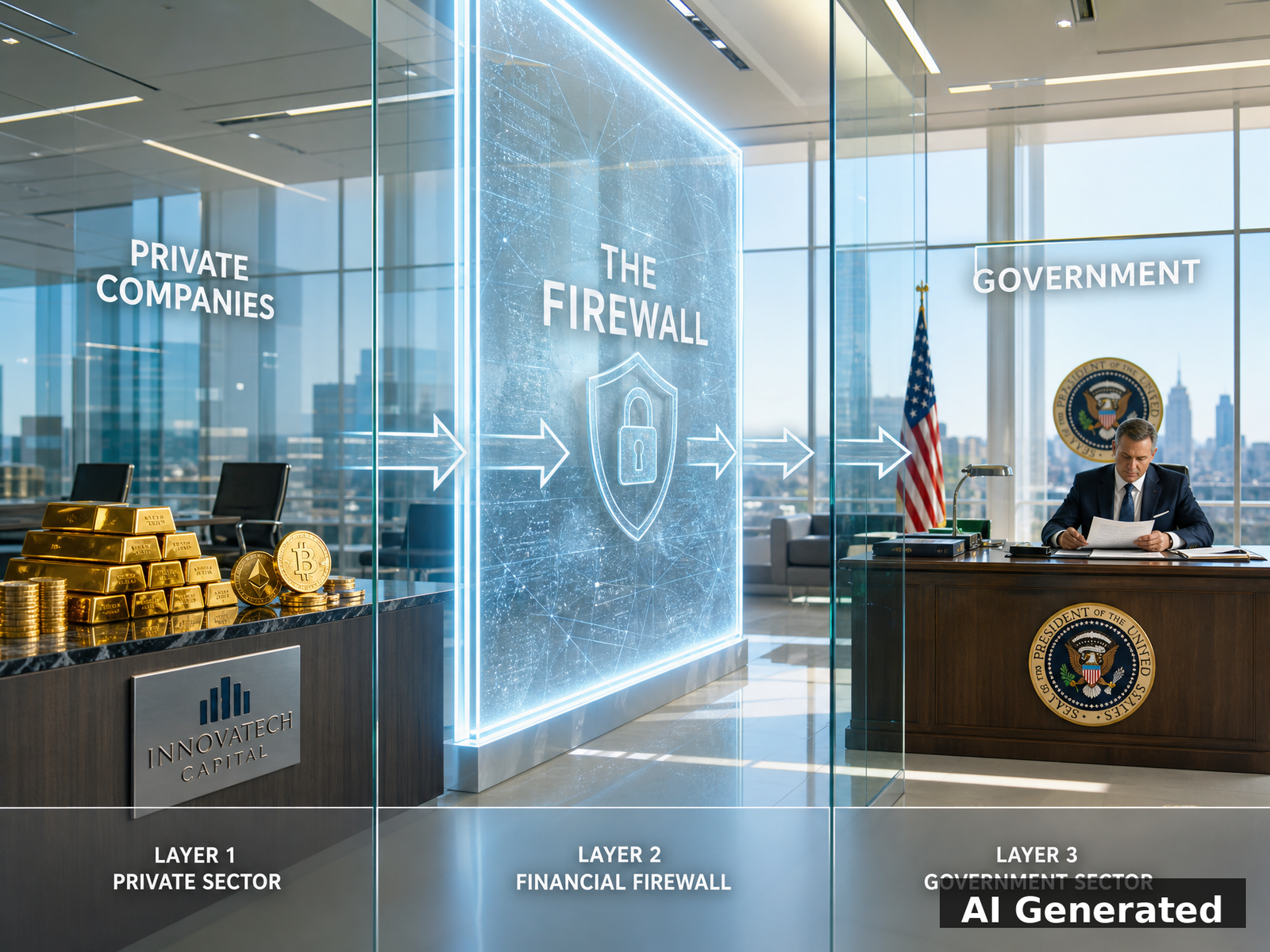
Every transaction we will describe has the same three-layer structure:
1. A private company controlled by the Trump family receives money from a foreign government, a wealthy individual, or a corporation.
2. A policy decision follows from the Trump administration that benefits the party who provided the money.
3. Because the money flowed into a private entity and the policy came from the government, nobody can draw a direct line between the two.
We call this the firewall. The private company is the wall. The money goes in on one side. The favor comes out on the other. But you cannot prove they are connected, because the wall is in the way.
Princeton historian Julian Zelizer put it this way: “In the first term, he created the thinnest of firewalls between his business and policy. In the second term, he didn’t put up any firewall and smashed all guardrails that existed” [12].
Let us show you what we mean.
Case 1: The Sheikh and the Chips
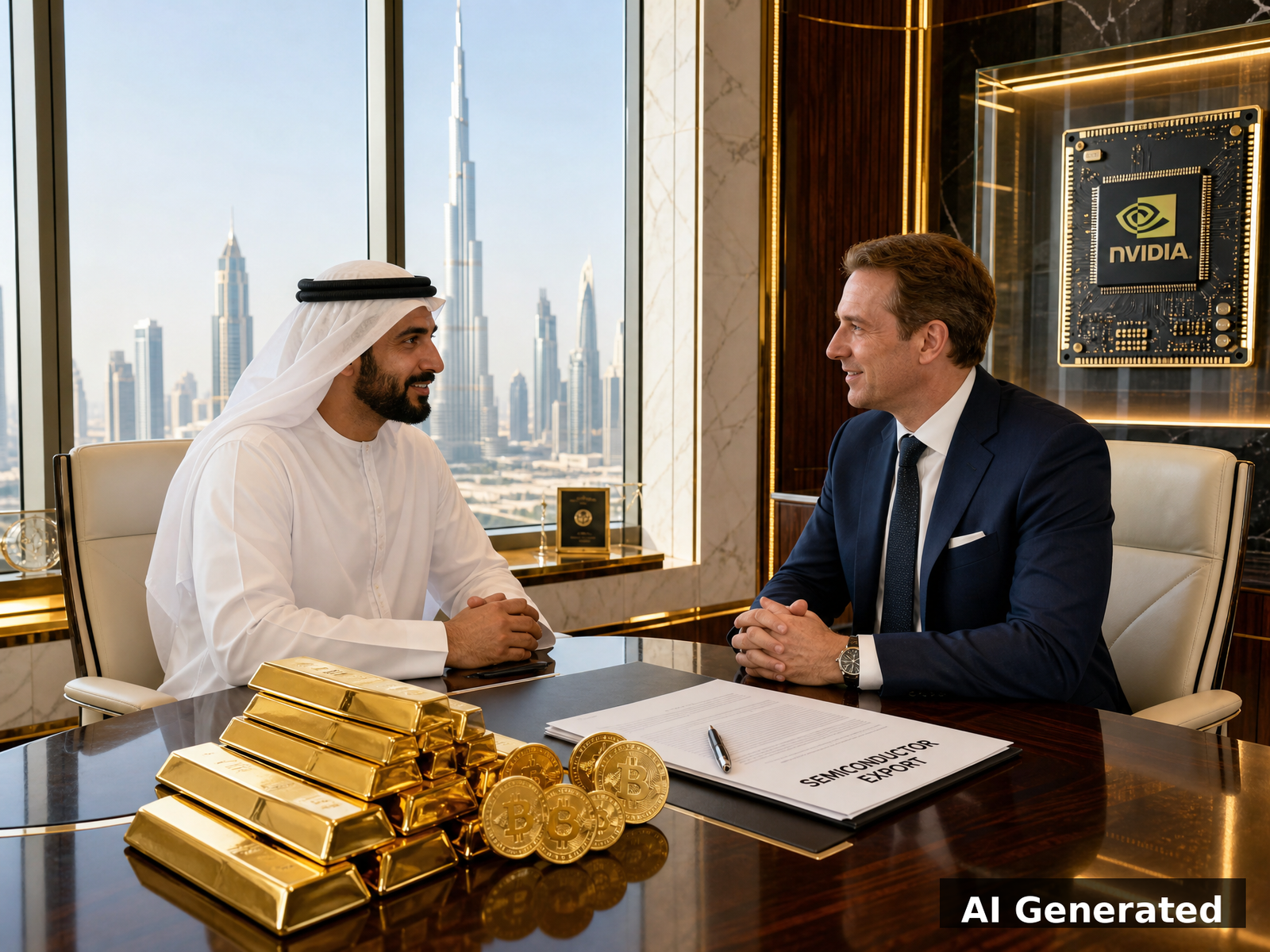
Days before Trump’s second inauguration, Sheikh Tahnoun bin Zayed Al Nahyan — the UAE’s National Security Advisor, a man known as the “Spy Sheikh” who controls an estimated $1.4 trillion — secretly purchased a 49% stake in World Liberty Financial for $500 million [2][13][18]. His state-backed firm MGX also purchased $2 billion worth of WLF’s USD1 stablecoin to finance a deal with Binance [2][11][18].
The investment was not publicly disclosed. Two Tahnoun affiliates were placed on WLF’s board without public notification [2].
Less than two weeks later, the Trump administration rescinded Biden-era AI export controls that had strictly prohibited the transfer of advanced semiconductors to the UAE [18]. The restrictions had been imposed because of documented ties between UAE state-linked entities and the Chinese military [18]. The new terms specifically earmarked 100,000 AI chips annually — including NVIDIA H200s and AMD Instinct MI325Xs — for G42, a company chaired by Sheikh Tahnoun himself [18]. A $1.4 billion arms sale to the UAE was finalized the same month, despite a congressional hold protesting UAE support for the RSF militia in Sudan [18].
The money went into World Liberty Financial, a private company. The chips came from the U.S. government. Two separate channels.
Senator Chris Murphy said: “You wouldn’t be investing in Trump stablecoin unless you want something from him” [11].
Richard Painter, the former White House ethics lawyer under George W. Bush, said the deal is “likely a violation of the emoluments clause” [11].
We are not saying the UAE bought semiconductor access. We are asking: does it look that way to you?
Case 2: The Pardon and the Billion
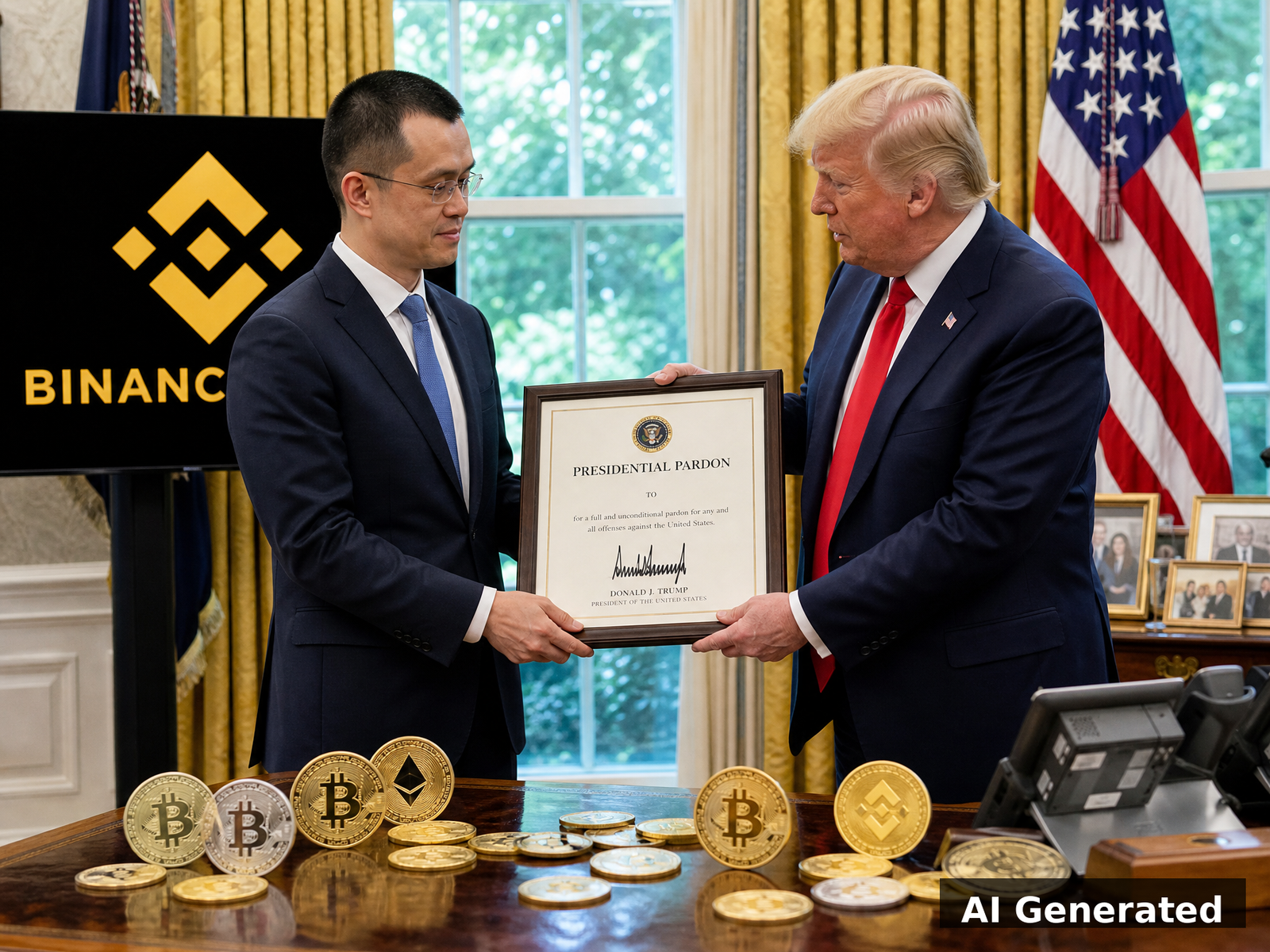
Changpeng Zhao, the founder of Binance, pleaded guilty in 2023 to violating U.S. anti-money-laundering laws. He served four months in prison and agreed to pay $4.3 billion in penalties [7][12].
After Binance facilitated a $2 billion deal using World Liberty Financial’s USD1 stablecoin — a deal that enriched WLF — Trump pardoned Zhao in October 2025 [2][12].
The money went to WLF, a private company. The pardon came from the president. Two separate actions.
We are not saying Changpeng Zhao bought his pardon. We are asking: does the sequence look coincidental to you?
Case 3: The Investor and the Investigation
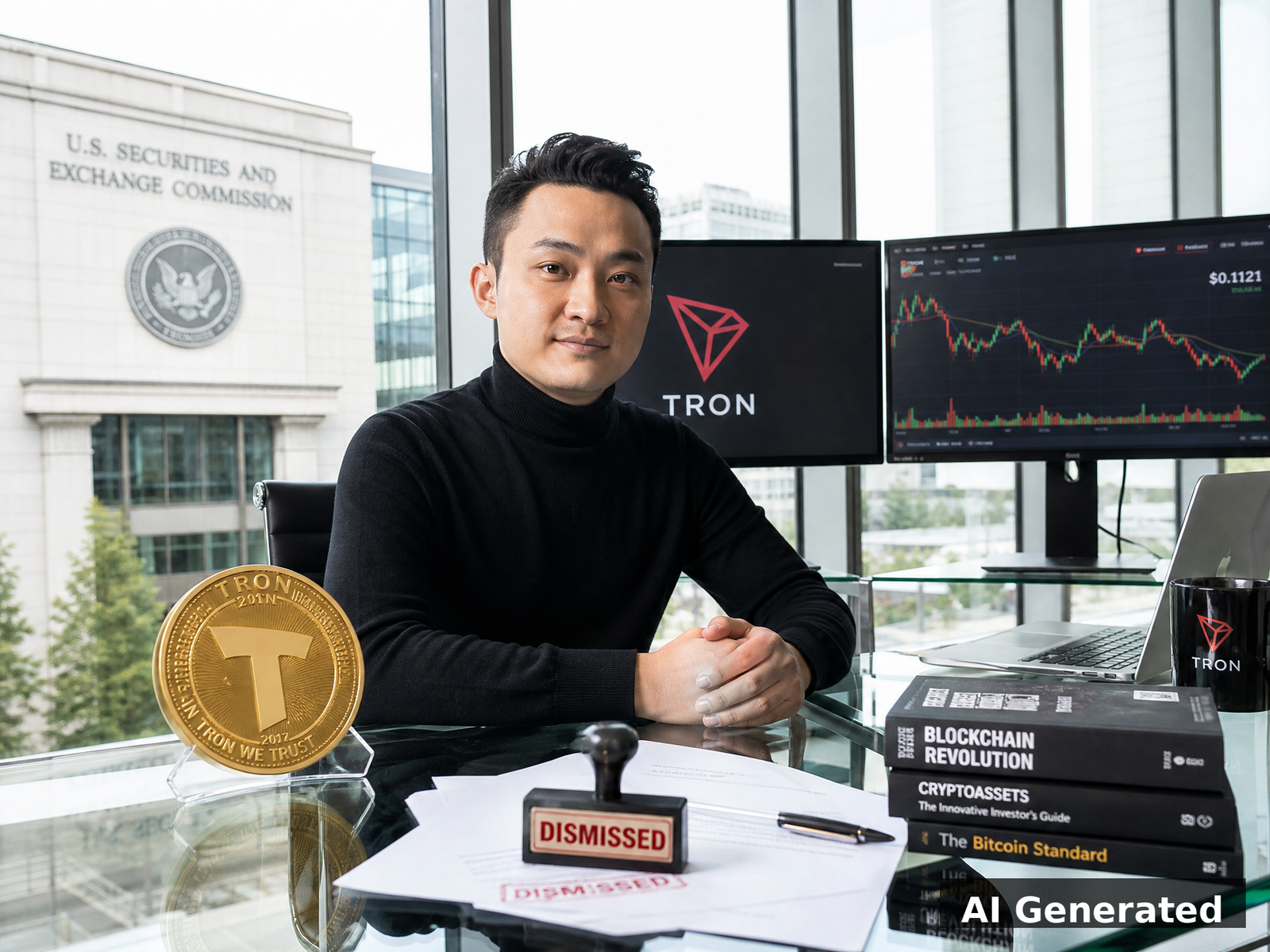
Justin Sun, the Chinese-born billionaire founder of the TRON blockchain, invested at least $75 million in World Liberty Financial tokens and was named a WLF advisor [2]. The SEC had been investigating Sun for fraud [2].
Shortly after Trump took office, the SEC dropped its investigation into Sun [2]. USD1 was subsequently integrated into TRON, Sun’s blockchain [2].
Sun is now suing WLF, alleging the company froze his wallets and denied him voting rights [2][10]. But the SEC investigation remains dropped.
The investment went to WLF, a private company. The investigation was dropped by a federal agency. Two separate events.
We are not saying Justin Sun bought his way out of an SEC investigation. We are asking: does it look that way?
Case 4: The Negotiator and the Crypto Company
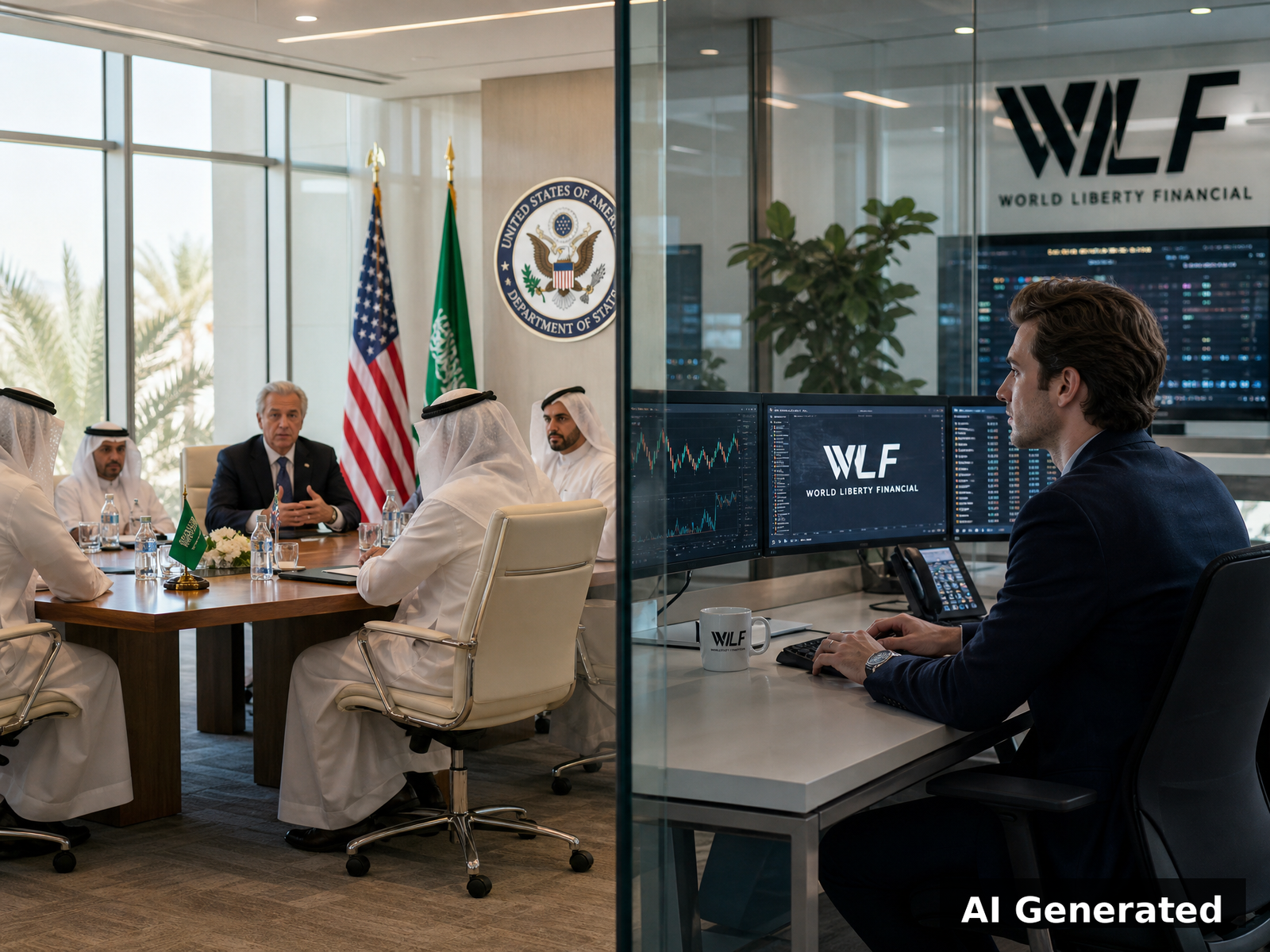
Steve Witkoff is Trump’s Special Envoy for Peace Missions. He is negotiating the Gaza conflict, the war in Ukraine, and nuclear talks with Iran [11][13]. The lives of millions depend on his decisions.
His son, Zach Witkoff, is the co-founder and CEO of World Liberty Financial [2][11][13]. The Witkoff family firm is entitled to 12.5% of WLF’s income [11]. Steve Witkoff was listed as a “co-founder” of WLF and was promoting the company at a Dubai crypto conference even while serving as Trump’s pre-inaugural Gaza envoy [11][13].
The parties Witkoff negotiates with — Saudi Arabia’s Mohammed bin Salman, the UAE’s Sheikh Tahnoun, Qatar’s emir — are the same parties whose sovereign wealth funds have invested in WLF [11][13]. When Zach Witkoff visited Pakistan, he met the country’s army chief and prime minister. The prime minister’s office noted in its press release that Zach is “the son of Steve Witkoff” [11].
Historian Robert Dallek, who has written biographies of FDR, JFK, and LBJ, told The Guardian: “I can’t think of any parallel” — for a special envoy who was also the president’s partner in a private moneymaking venture [11].
The business deals go through WLF, a private company run by the envoy’s son. The diplomatic negotiations are conducted by the envoy. Two separate roles.
We are not saying Steve Witkoff’s diplomatic position is being used to enrich his family’s crypto company. We are asking: does the arrangement look appropriate to you?
Case 5: The Posts and the Traders
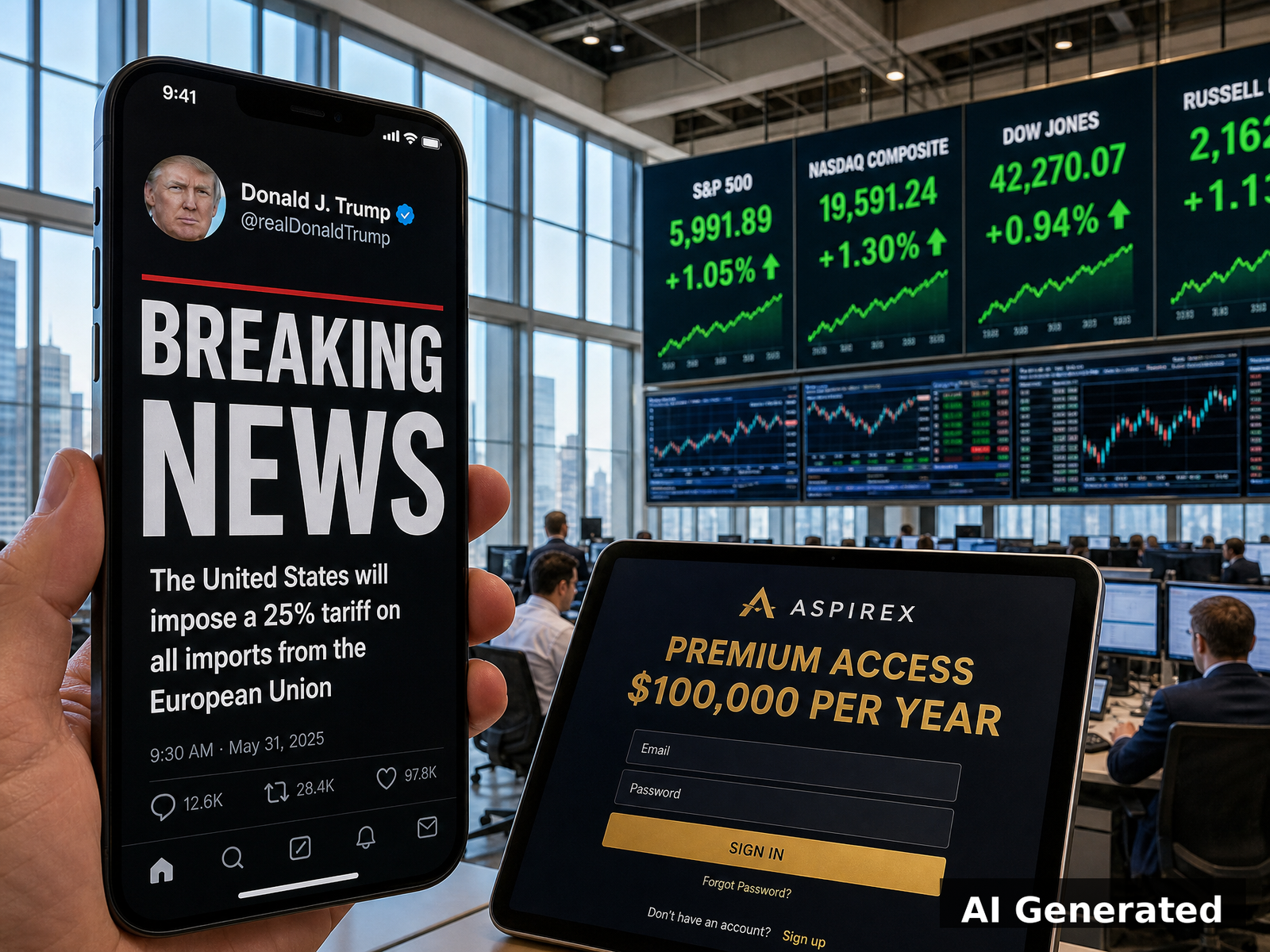
In August 2026, Trump Media launched Truth API, a subscription service giving Wall Street firms faster access to Trump’s Truth Social posts — for up to $100,000 per month [15][16]. Trump is the largest shareholder of Trump Media. His son, Donald Trump Jr., controls the company through a trust [15][16].
Trump’s social media posts regularly move markets. He announces tariff decisions, war developments, and government contracts on Truth Social [15]. In the world of high-frequency trading, even a few milliseconds of advance access can mean tens of millions of dollars [15][16].
The company says it is sharing “public information” [15]. But former SEC enforcers told NPR that early access to posts the public hasn’t seen yet is “the definition of material nonpublic information” [15]. One Wall Street executive told NPR: “If this was any other administration, this would be considered criminal” [15].
Virginia Canter, chief counsel for Democracy Defenders Action, called it “a significant escalation in exploiting and monetizing the presidency for his personal private gain” and “a step towards normalizing insider trading and public corruption” [12].
The money goes to Trump Media, a private company. The market-moving information comes from the president. Two separate channels.
We are not saying the president is selling insider information. We are asking: does it look that way to you?
Case 6: The Plane
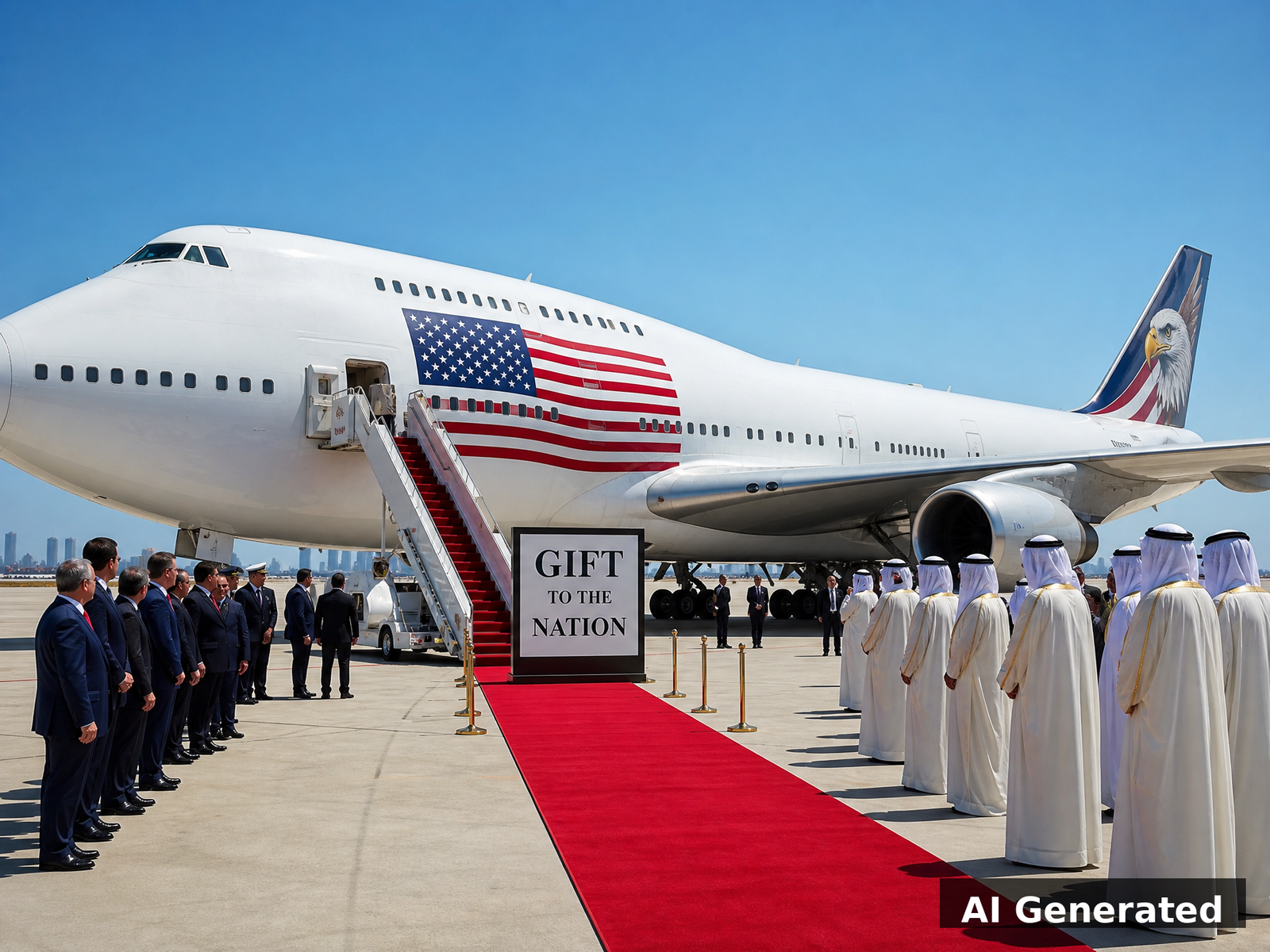
In May 2025, the government of Qatar offered Trump a $400 million Boeing 747 — one of the most expensive gifts ever received by a U.S. president [11][12]. Trump accepted it. “Only a FOOL would not accept this gift on behalf of our country,” he posted on social media [11].
The plane is expected to be used as Air Force One during Trump’s presidency and then transferred to his presidential library foundation after he leaves office [11][12]. Legal experts noted that the gift appears to violate the Foreign Emoluments Clause, which prohibits the president from accepting gifts from foreign states without Congress’s consent [19].
The gift came from the same Qatari government whose royal family spent hundreds of thousands of dollars at Trump’s hotel during the first term [14][17], and whose sovereign wealth fund has financial relationships with the Trump Organization [14]. Steve Witkoff, Trump’s envoy and WLF co-founder, helped broker the plane deal [11].
The plane is a gift to “the country,” but will be used by the president and then housed at his presidential library. The money — in the form of a physical asset — came from a foreign government. The benefit goes to the president personally.
We are not saying Qatar bought influence with a $400 million airplane. We are asking: does it look that way to you?
Case 7: The First Term — Same Pattern, Smaller Scale
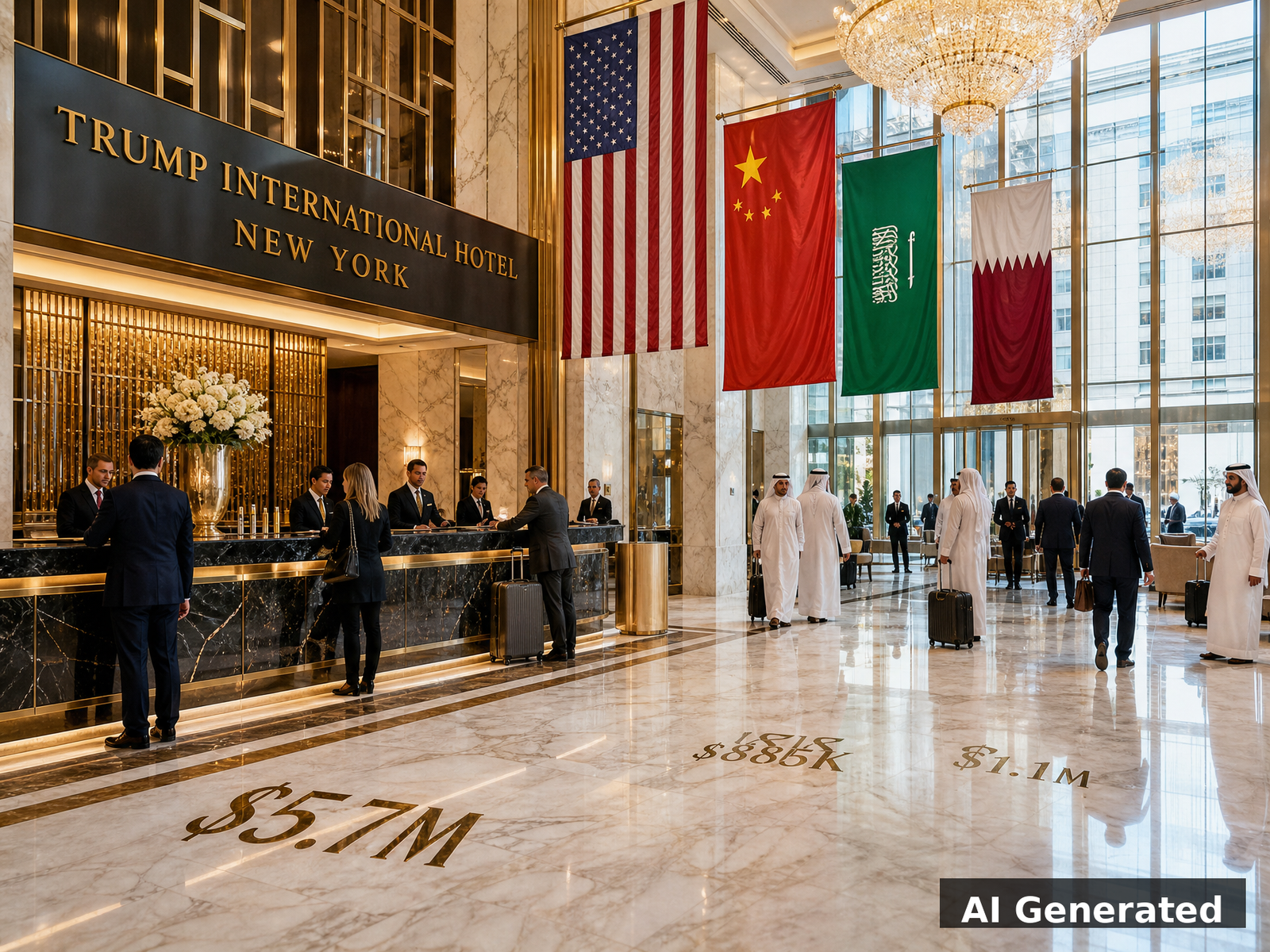
This is not new. During Trump’s first term, foreign governments paid at least $7.8 million to Trump’s businesses — hotels, Trump Tower, golf clubs — according to accounting records obtained by the House Oversight Committee [14][17][20]. CREW’s broader analysis put the figure at $13.6 million [14][19].
China paid $5.7 million, including rent from the state-owned Industrial and Commercial Bank of China at Trump Tower [14][20]. While ICBC was paying Trump, the bank was under scrutiny for doing business with North Korea. Trump took no action against the bank [14].
Saudi Arabia paid $885,000. Trump made Saudi Arabia his first foreign trip and refused to accept intelligence conclusions about MBS’s role in killing Jamal Khashoggi [14][17].
Qatar paid $1.1 million, including a $6.5 million apartment purchase at Trump World Tower. This happened around the time Trump reversed his hostile stance toward Qatar during the Gulf blockade [14][17].
The Trump Organization donated only $448,000 to the U.S. Treasury from foreign government revenue — a fraction of the $13.6 million documented [14].
The money went to the Trump Organization, a private company. The policy favors came from the president. Two separate channels. The firewall held.
Three emoluments clause lawsuits were filed. The Supreme Court dismissed them after Trump left office without resolving the underlying legal issues [19].
The Law That Makes It Legal
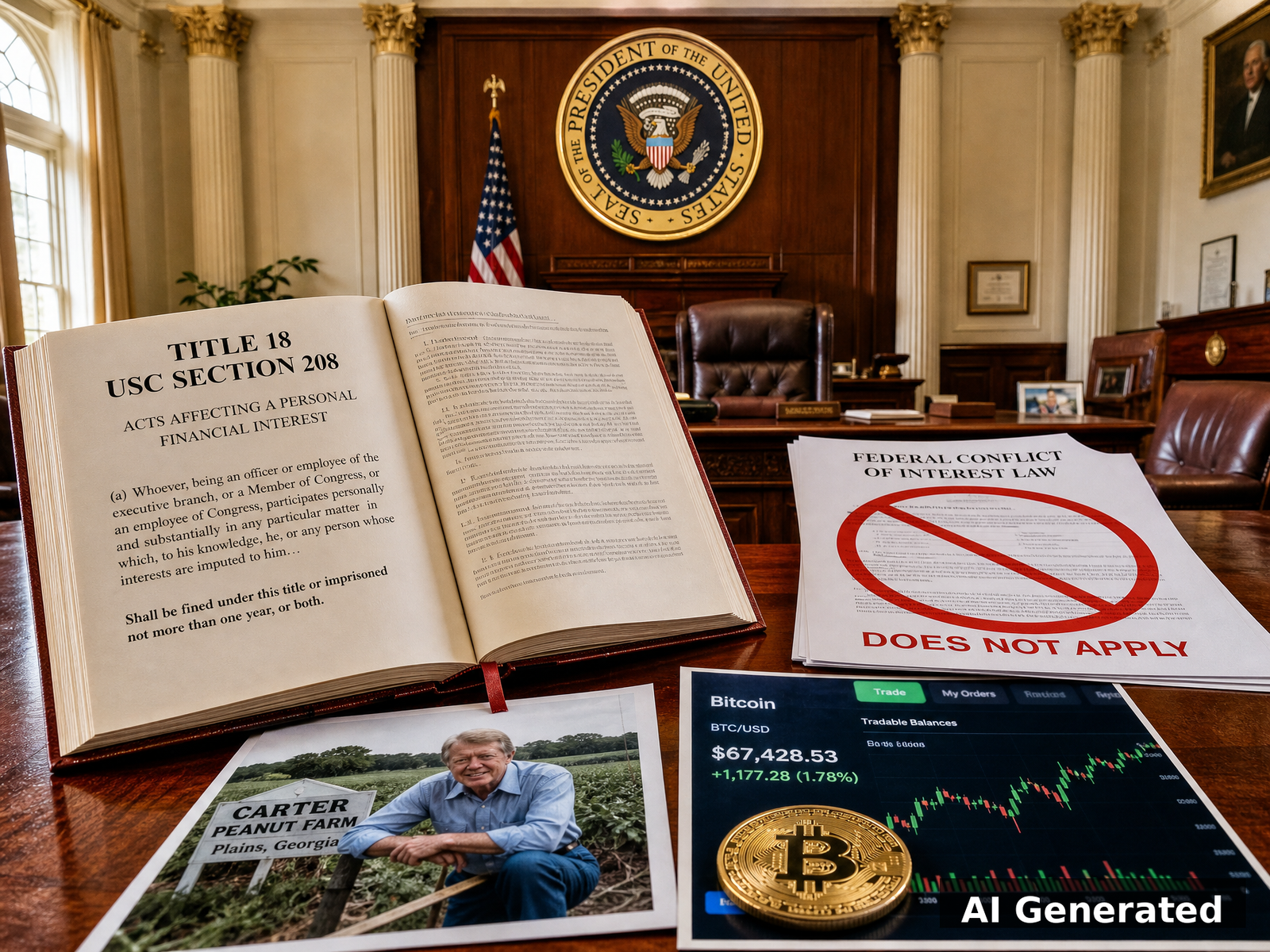
Title 18 U.S.C. Section 208 — the federal conflict-of-interest statute — prohibits executive branch employees from participating in any action that directly affects their financial interests [4]. When George W. Bush nominated Hank Paulson as Treasury Secretary, Paulson was required to divest $500 million in Goldman Sachs stock [4].
But the law does not apply to the President [4][6].
Prior to 2016, presidents acted as if it did. Jimmy Carter put his peanut farm in a blind trust. George W. Bush sold his stake in the Texas Rangers [6]. Trump has placed his fortune in a revocable trust managed by his sons — who are themselves running the crypto companies [4].
Todd Blanche, Trump’s former personal attorney and now Deputy Attorney General, shut down all DOJ crypto enforcement while holding $159,000 to $485,000 in crypto investments [7]. He disbanded the National Cryptocurrency Enforcement Team [7]. He later transferred his crypto to his adult children — technically legal, but, as ethics experts told ProPublica, “at odds with the spirit and intent of the law” [7].
A ProPublica review found that Trump nominated at least 216 political appointees who owned cryptocurrency investments worth between $175 million and $340 million. Under Biden, about two dozen appointees combined held less than $7 million [7].
Larry Noble, former general counsel at the Federal Election Commission, told The Guardian: “Whether you’re a foreign country, a company or an individual who wants the government to approve a business deal, stop an investigation or just be a friend when you need a favor, the message is that this is a pay to play administration” [12].
The Question
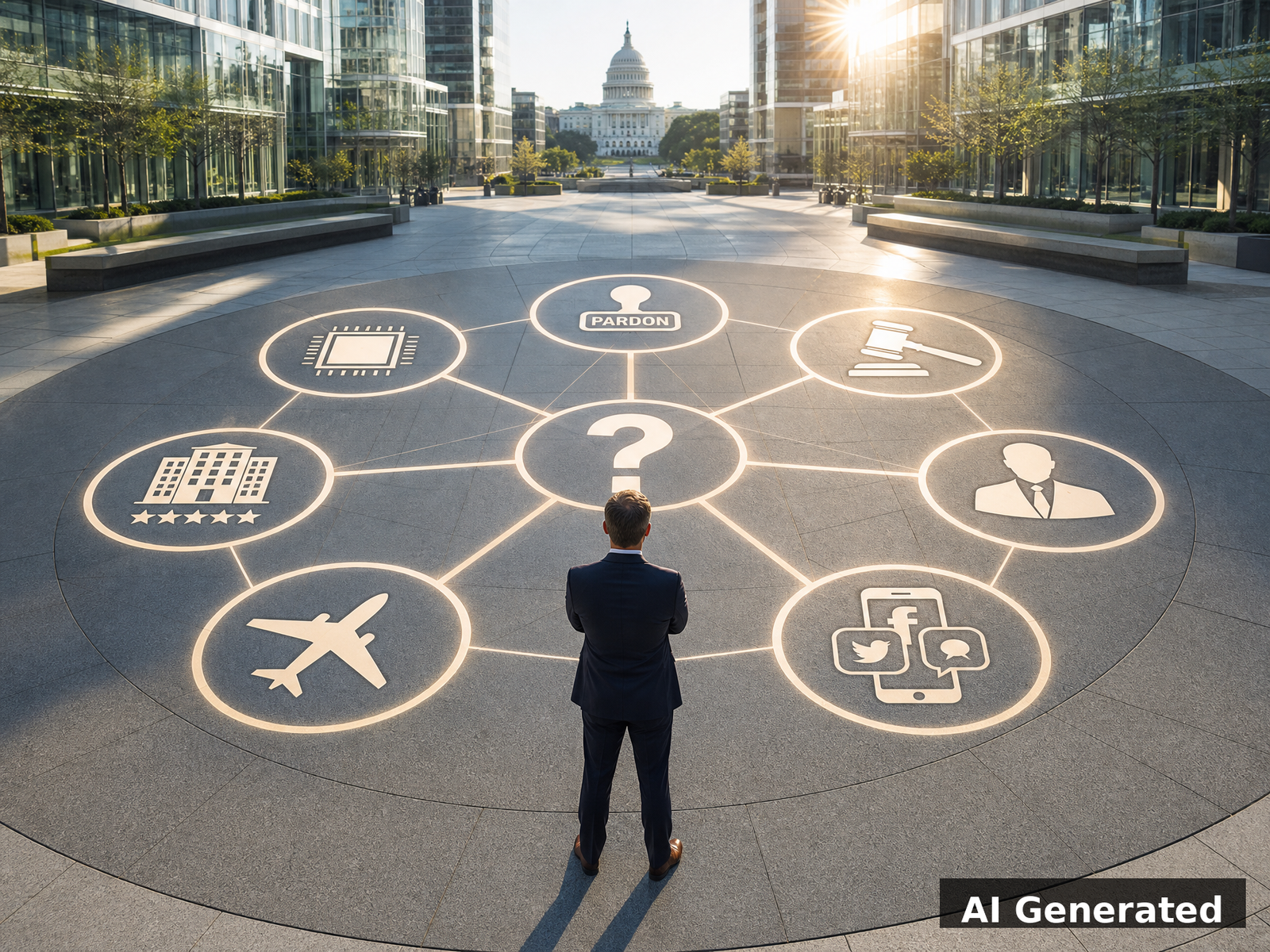
We said we would not draw conclusions. We will not.
We will only ask:
The UAE invests $2.5 billion in the president’s crypto company. The president approves semiconductor exports to the UAE. Does that look like a coincidence?
Binance facilitates a $2 billion deal enriching the president’s crypto company. The president pardons Binance’s founder. Does that look like a coincidence?
Justin Sun invests $75 million in the president’s crypto company. The SEC drops its fraud investigation into Sun. Does that look like a coincidence?
The president’s peace negotiator has a son who runs a crypto company taking money from the same foreign leaders the negotiator is meeting with. Does that look appropriate?
The president sells early access to his own social media posts — posts that move markets — for $100,000 a month. Does that look like insider trading?
During the first term, foreign governments paid $13.6 million to the president’s hotels. Policy favors followed. The Supreme Court dismissed the lawsuits. Does that look like the system working?
In every case, the money went into a private company. The favor came from the government. The firewall holds. Nobody can prove quid pro quo. Nobody can prove bribery. Because the money never went to the president directly. It went to his company. His family’s company. A company he technically does not manage while in office.
We are genuinely puzzled. We think we see a pattern. Do you see it too?
References
[1] Dina, C. (2026). Nearly a million investors lost $3.8 billion on the Trump memecoin. Trump made $636 million. The Next Web. https://thenextweb.com/news/trump-memecoin-investors-losses-636-million-payout
[2] Wikipedia. (2026). World Liberty Financial. Wikipedia. https://en.wikipedia.org/wiki/World_Liberty_Financial
[3] Belanger, A. (2026). Investors lost billions on Trump’s memecoin. Another gala won’t fix that. Ars Technica. https://arstechnica.com/tech-policy/2026/04/investors-lost-billions-on-trumps-memecoin-another-gala-wont-fix-that/
[4] Cassidy, J. (2026). Can anything stop Donald Trump’s corruption? The New Yorker. https://www.newyorker.com/news/the-financial-page/can-anything-stop-trumps-corruption
[5] Peterson, M. (2026). Trump family-backed crypto firm World Liberty gets conditional bank charter approval. CNBC. https://www.cnbc.com/2026/08/14/world-liberty-trump-occ-bank-charter-stablecoin.html
[6] Hays, K., & Hoskins, P. (2026). Trump made more than $1bn from crypto in first year back in office. BBC. https://www.bbc.com/news/articles/cvgmv98ez3zo
[7] Johnson, C. G., & Shaw, A. (2025). Todd Blanche shut down crypto enforcement while holding crypto assets. ProPublica. https://www.propublica.org/article/todd-blanche-crypto-doj-trump
[8] O’Donnell, A. (2026). The definitive guide to Donald Trump’s crypto ventures in 2026. CoinMarketCap. https://coinmarketcap.com/academy/article/trump-crypto-billion-dollar-business
[9] Adejumo, O. (2026). Trump family’s $2.3B crypto windfall matched by $2.25B in investor losses, Reuters finds. CryptoSlate. https://cryptoslate.com/trump-familys-2-3b-crypto-windfall-matched-by-2-25b-in-investor-losses-reuters-finds/
[10] Peterson, M. (2026). Trump family Alt5 Sigma crypto venture left investors with steep losses. CNBC. https://www.cnbc.com/2026/06/09/trump-world-liberty-financial-crypto-alt5-sigma.html
[11] McManus, D. (2025). Trump and special envoy Witkoff stand to reap rewards from official business. The Guardian. https://www.theguardian.com/us-news/2025/may/30/trump-steve-witkoff-envoy
[12] Stone, P. (2026). Trump has amassed staggering wealth in ‘most openly corrupt’ presidency. The Guardian. https://www.theguardian.com/us-news/2026/aug/13/trump-presidency-revenue-wealth
[13] Bernstein, A. (2026). Trump’s world is being transformed by one man. It’s not J.D. Vance or Marco Rubio. Slate. https://slate.com/news-and-politics/2026/07/donald-trump-steve-witkoff-crypto.html
[14] Maguire, R., & Jacobs, R. (2024). Trump likely benefited from $13.6 million in payments from foreign governments during his presidency. Citizens for Responsibility and Ethics in Washington (CREW). https://www.citizensforethics.org/reports-investigations/crew-reports/trump-likely-benefited-from-13-6-million-in-payments-from-foreign-governments-during-his-presidency/
[15] Bennett, G., & Merchant, A. (2026). Paid early access to Trump’s posts raises insider trading questions. PBS NewsHour. https://www.pbs.org/newshour/show/paid-early-access-to-trumps-posts-raises-insider-trading-questions
[16] Allyn, B. (2026). Trump sued over selling faster access to Truth Social posts. NPR. https://www.npr.org/2026/08/12/nx-s1-5929391/trump-truth-social-api-lawsuit
[17] Cohen, Z., Herb, J., & Scannell, K. (2022). New records reveal foreign government spending at Trump’s Washington hotel. CNN. https://www.cnn.com/2022/11/14/politics/trump-hotel-spending-foreign-governments
[18] McManus, A., Miller, A., Mandala, S., & Herman, D. (2026). How Trump’s $500 million UAE crypto deal trades U.S. national security for family profit. Center for American Progress. https://www.americanprogress.org/article/how-trumps-500-million-uae-crypto-deal-trades-u-s-national-security-for-family-profit/
[19] CREW. (2024). The intensifying threat of Donald Trump’s emoluments. Citizens for Responsibility and Ethics in Washington (CREW). https://www.citizensforethics.org/reports-investigations/crew-reports/the-intensifying-threat-of-donald-trumps-emoluments/
[20] Raskin, J. (2024). Oversight Democrats release report proving Trump pocketed millions from at least 20 foreign governments as president. U.S. House Committee on Oversight and Accountability. https://oversightdemocrats.house.gov/news/press-releases/oversight-democrats-release-report-proving-trump-pocketed-millions-from-at-least
AI Disclosure: This post was created with the assistance of artificial intelligence. The ideas, analysis, and opinions expressed are my own — AI was used to help compose, structure, and refine my personal notes and thoughts into the final written content. Images and video featured in this post were also generated using AI tools, based on my own creative prompts and direction.
