




Category West & Central Asia.

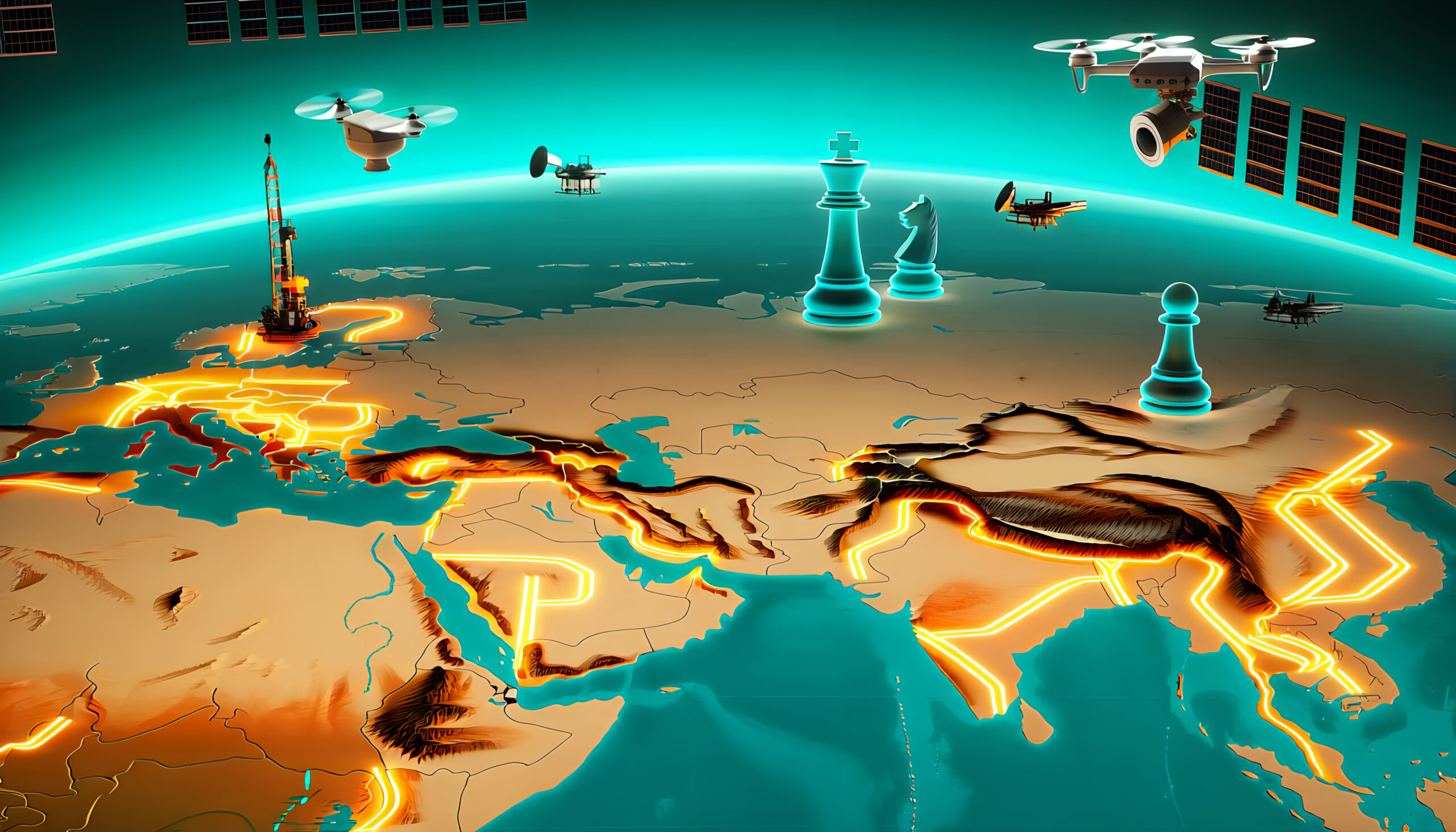
[caption id="attachment_170961260" align="aligncenter" width="300"]Stylized map of West and Central Asia glowing in teal and orange, with bright energy pipelines, mountain ranges, chess pieces, drones, and satellites symbolizing strategic power and surveillance across the region The image shows a curved, digital-style map stretching from the eastern Mediterranean and Arabian Peninsula through Iran to Central and South Asia, tinted in sandy beige and teal. Fiery orange lines trace pipelines and trade corridors over deserts, coasts, and mountain chains. Large luminous chess pieces stand over key areas, while drones, aircraft, and satellite arrays hover against a turquoise sky, highlighting surveillance, energy competition, and great‑power maneuvering across this critical region.[/caption]

West & Central Asia explores the geopolitics of the Middle East, Gulf states, Turkey, the Levant, and Central Asian republics such as Kazakhstan and Uzbekistan. This category covers energy politics, conflicts, religious and ethnic tensions, corridors linking Europe and Asia, and shifting great‑power influence across the region.

Kemi Badenoch Calls Donald Trumps Repeated Attacks on Keir Starmer Childish
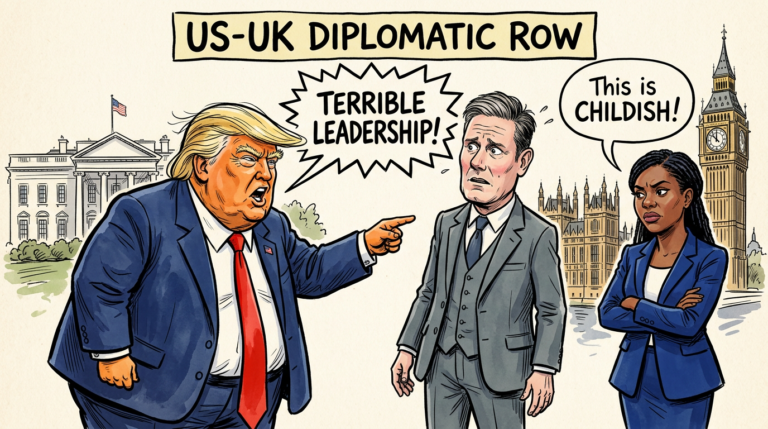
Caricature of Donald Trump shouting at Keir Starmer while Kemi Badenoch looks on calling his attacks childish.

Public rifts between London and Washington over the Iran conflict risk signaling disunity to adversaries and complicating coordinated policy. - UK domestic opinion is shaping leaders’ positions, limiting London’s willingness to expand its military role. - Trump’s pressure and rhetoric, including trade-linked expectations, test the resilience of the UK-US relationship. - Operational caution in the Strait of Hormuz shows London prioritizing risk management over rapid deployments. - Badenoch’s shift from alignment with Trump to criticizing the White House suggests the UK’s political landscape is moving away from overt support for deeper involvement in the war.