




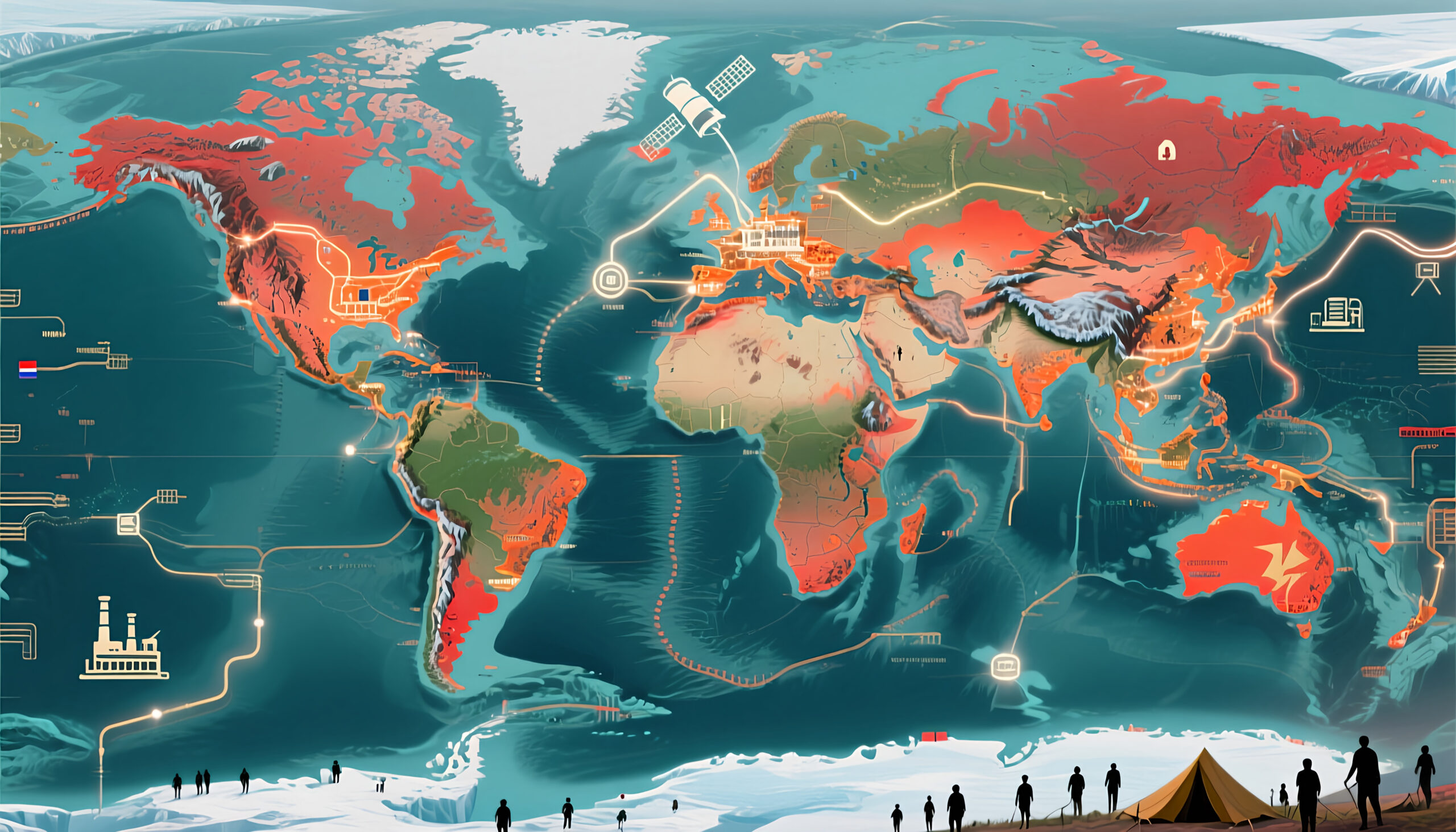
Geopolitics is the study of how geography shapes power, politics, and international relations. It looks at how factors such as location, borders, resources, climate, and physical terrain influence the behaviour, interests, and strategies of states and other global actors. Rather than seeing politics as abstract or purely ideological, geopolitics ties decisions and conflicts to concrete realities: oceans and trade routes, mountains and chokepoints, fertile regions and energy reserves.
At its core, geopolitics examines how states seek to secure their survival, increase their influence, and protect access to vital resources such as food, water, and energy. Control of strategic areas—like sea lanes, straits, major rivers, and borderlands—often becomes central to foreign policy. These interests shape alliances, rivalries, and military deployments, as well as economic projects such as pipelines, ports, and infrastructure corridors. Historical empires and contemporary great powers alike have used geography to justify expansion, containment, or spheres of influence.
Modern geopolitics also considers non-state actors and global systems. Multinational corporations, international organisations, and transnational movements operate across borders, affecting how states wield power and respond to global challenges. Issues such as climate change, migration, pandemics, and cyber security add new layers, because they cross territorial boundaries yet still interact with physical geography. Melting Arctic ice, for example, opens new shipping routes and resource frontiers, reshaping strategic calculations.
Ideology and identity remain important, but geopolitics insists they cannot be understood apart from place. National narratives, security doctrines, and regional projects are often rooted in particular landscapes and historical experiences of invasion, isolation, or dependence. By analysing maps alongside political decisions, geopolitics helps explain why some regions become flashpoints, why certain alliances form, and why conflicts persist even when diplomatic solutions appear possible. Ultimately, geopolitics offers a framework for understanding how the physical structure of the Earth continues to shape human power, competition, cooperation, and the possibilities for peace.

Sub-Categories

Energy bills: UK government urged to launch social tariff to help vulnerable households
The UK government is facing calls to spend almost £4bn to launch a “social tariff”…
EU-Mercosur Trade Agreement Faces Criticism for Lax…
Title: Europe Grapples with New Agricultural Policy Changes Introduction Europe is facing a big change…

The stakes are enormous: how a prolonged Iran war could shock the global economy.
“There are risks from higher oil prices longer term. But this is a tail risk,”…

Germany Backs Mercosur Deal
In the past few weeks, the EU – Mercosur trade deal has stirred up…
France Opposes Mercosur Trade Deal – 2026 03 17
The Mercosur trade agreement is causing quite a stir across Europe. As leaders debate…

Looking for leverage: China keeps close eye on US politics after summit delay
The White House said on Wednesday that China had agreed to postpone Donald Trump’s visit…
Canada in push for joint G7 and Middle East effort to de-escalating Iran war
Canada is pushing for a collective G7 and Middle East approach to de-escalating the Iran…
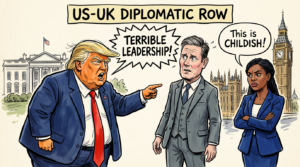
Kemi Badenoch Calls Donald Trumps Repeated Attacks on Keir Starmer Childish
Public rifts between London and Washington over the Iran conflict risk signaling disunity to…
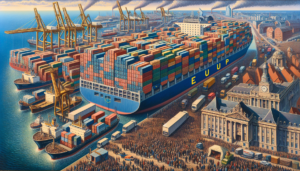
EU-Mercosur Deal Advances
A new trade deal between the European Union (EU) and a group of South American…
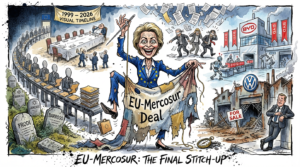
How the EU–Mercosur Deal Became Europe’s Most Expensive Diplomatic Irrelevance.
Twenty-five years. A quarter of a century of summits, negotiating rounds, political crises, agricultural riots,…

Geopolitics: The Two Faces of Europe: Antifascist by Day, Lackey by Night .
Europe has spent three years wrapping itself in the Ukrainian flag. It has sanctioned oligarchs,…

The Trump Administration’s Venezuelan Intervention: Legal Justifications, Resource Interests, and MAGA Politics
On January 3, 2026, in a military operation code-named “Absolute Resolve,” the United States conducted…