




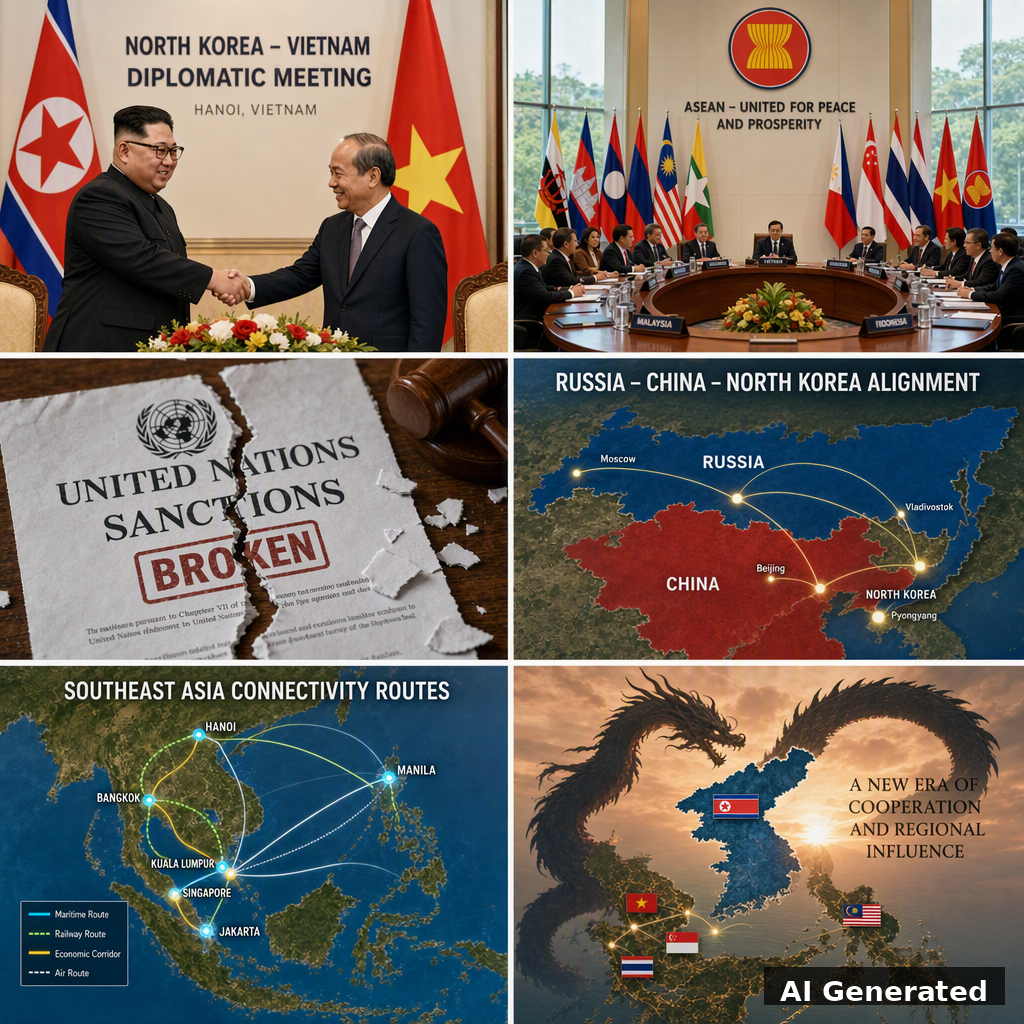


The Frozen Dragon Wakes — Part 2 of 3
This is part two of a three-part series on North Korea’s quiet campaign to break Western containment. Part 1: The $100 Million Bridge to a $34 Million Trade · Part 3: The New Map
The Delegation You Didn't Hear About
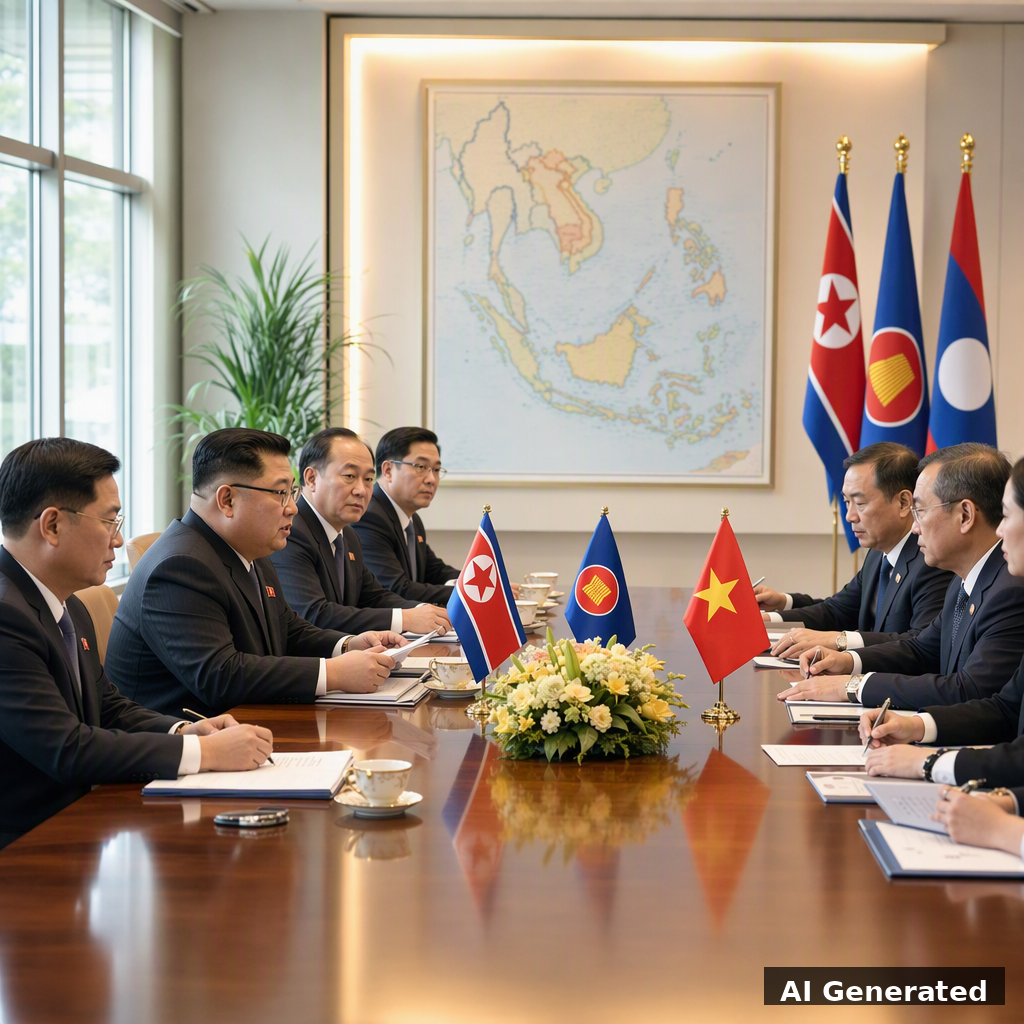
While Western media fixated on the bridge over the Tumen River and the troop deployments in Kursk, something quieter happened in Southeast Asia. In 2024, North Korea dispatched two senior delegations to the region — one led by Kim Song Nam of the Workers’ Party of Korea Politburo to Vietnam and Laos in March, and another led by Vice Foreign Minister Pak Sang Gil to Vietnam, Laos, Thailand, and Indonesia in September [1]. These were not courtesy calls. Vietnam sent multiple delegations to Pyongyang that same year — in June, September, and October — covering public security, military cooperation, and deputy-level policy dialogue [1]. Laos held a deputy minister-level meeting in March 2025 to discuss future cooperation and high-level visits [1].
You probably didn’t read about any of this. That is precisely the point. While you were told North Korea is a hermit kingdom waiting to starve, Pyongyang was quietly rebuilding the diplomatic infrastructure it needs to survive the next decade.
The pattern is deliberate. North Korea is ranking its Southeast Asian relationships by strategic value. Vietnam and Laos sit at the top — fellow communist states with ideological alignment, party-to-party ties that predate this century, and historical reliability as partners in strengthening Pyongyang’s political legitimacy [1][2]. Cambodia carries the diplomatic surface but less institutional substance [2]. Thailand and Singapore occupy a different tier: 2025 marks the 50th anniversary of formal relations with the DPRK for both countries, and North Korea appointed a new ambassador to Singapore who held the unusually high rank of vice minister in the foreign ministry — a signal that Pyongyang is attaching strategic importance to the city-state [1].
You are watching a country that was supposed to be contained build its own diplomatic network from scratch. And the question is not whether it will succeed. The question is what happens to the Western containment architecture when it does.
The Strongest Case That Nothing Has Changed
Now steelman the sceptics — because they have real arguments, and you deserve to hear them before you decide.
The strongest case against the consortium thesis is this: North Korea’s Southeast Asian outreach is nothing new. Pyongyang has maintained bilateral ties with the region since the Cold War, grounded in shared political ideologies and strategic interests [1]. Vietnam and Laos are fellow communist states; North Korea provided material support to North Vietnam during the Vietnam War. Cambodian Prince Norodom Sihanouk and Indonesian President Sukarno developed personal friendships with Kim Il Sung in the 1960s [1]. This is not a new strategy — it is a revival of old habits.
Furthermore, practical cooperation remains extremely limited. Resource constraints, UN sanctions enforcement, and the risk of spillover from North Korea’s security escalations act as natural impediments [1]. North Korea’s illicit operations in the region — cybercrime, oil smuggling, arms trafficking, the assassination of Kim Jong Nam in Kuala Lumpur in 2017 — compound Southeast Asian concerns [1]. Broader geopolitical considerations also matter: amid an intensifying US-China trade war, Southeast Asian states have paid greater attention to adhering to international law and rules-based systems [1]. Most bilateral interactions with the DPRK remain limited to people-to-people exchanges, friendship association visits, and humanitarian aid [1].
In short: the sceptics argue this is diplomatic theatre — old relationships being dusted off for photo opportunities, with no material change to the regional balance of power.
And yet.
What the Sceptics Cannot Explain
Here is what that argument cannot account for: the world in which these relationships now operate is fundamentally different from the one in which they were first built.
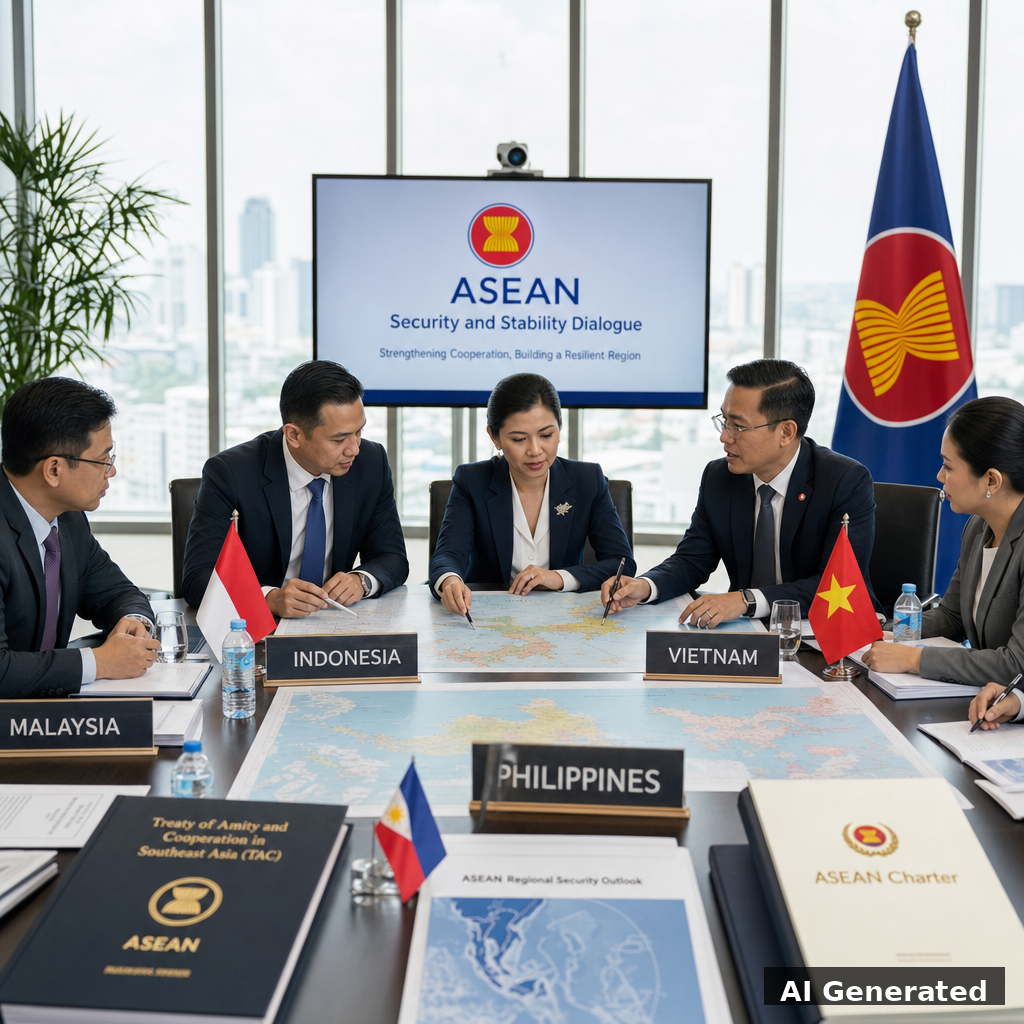
The ASEAN Regional Forum, of which North Korea has been a member since 2000, is one of the few multilateral mechanisms where Pyongyang participates in regional security dialogue [1]. North Korea acceded to the Treaty of Amity and Cooperation in Southeast Asia in 2008 [1]. Both Singapore and Vietnam hosted the Trump-Kim summits in 2018 and 2019 [1]. These are not empty gestures — they are institutional footholds. And institutional footholds become leverage when the power dynamics shift.
They are shifting now. The sanctions regime that once constrained North Korea’s regional engagement has been gutted. Russia vetoed the renewal of the UN Panel of Experts in March 2024 [3]. China and Russia jointly oppose further sanctions [4]. North Korea’s economy grew 3.7 percent in 2024 [4]. The country is no longer the economic basket case that Southeast Asian states were embarrassed to be seen with. It is a militarily significant power with a nuclear arsenal, a battle-tested army, and a patron in Moscow that provides advanced weapons technology [5]. That changes the calculus for every Southeast Asian capital from Hanoi to Bangkok.
The Asia Society’s analysis of the China-Russia-North Korea triangle reveals something the sceptics miss entirely: Pyongyang’s outreach to Southeast Asia is not happening despite the Russia alliance — it is happening because of it [6]. North Korea’s frustration with Beijing likely preceded and motivated its turn to Moscow [6]. China cracked down on illegal fishing in North Korean waters, restricted seafood imports, and intensified sanctions enforcement in 2023 and 2024 — precisely when Pyongyang needed support most [6]. At the 70th Armistice Anniversary in July 2023, China sent a mid-ranking official while Russia sent its Defence Minister [6]. The message was received in Pyongyang. A country that feels abandoned by its largest neighbour does what any rational actor would do: it builds alternative relationships. Southeast Asia is the alternative.
What Hanoi Is Actually Calculating
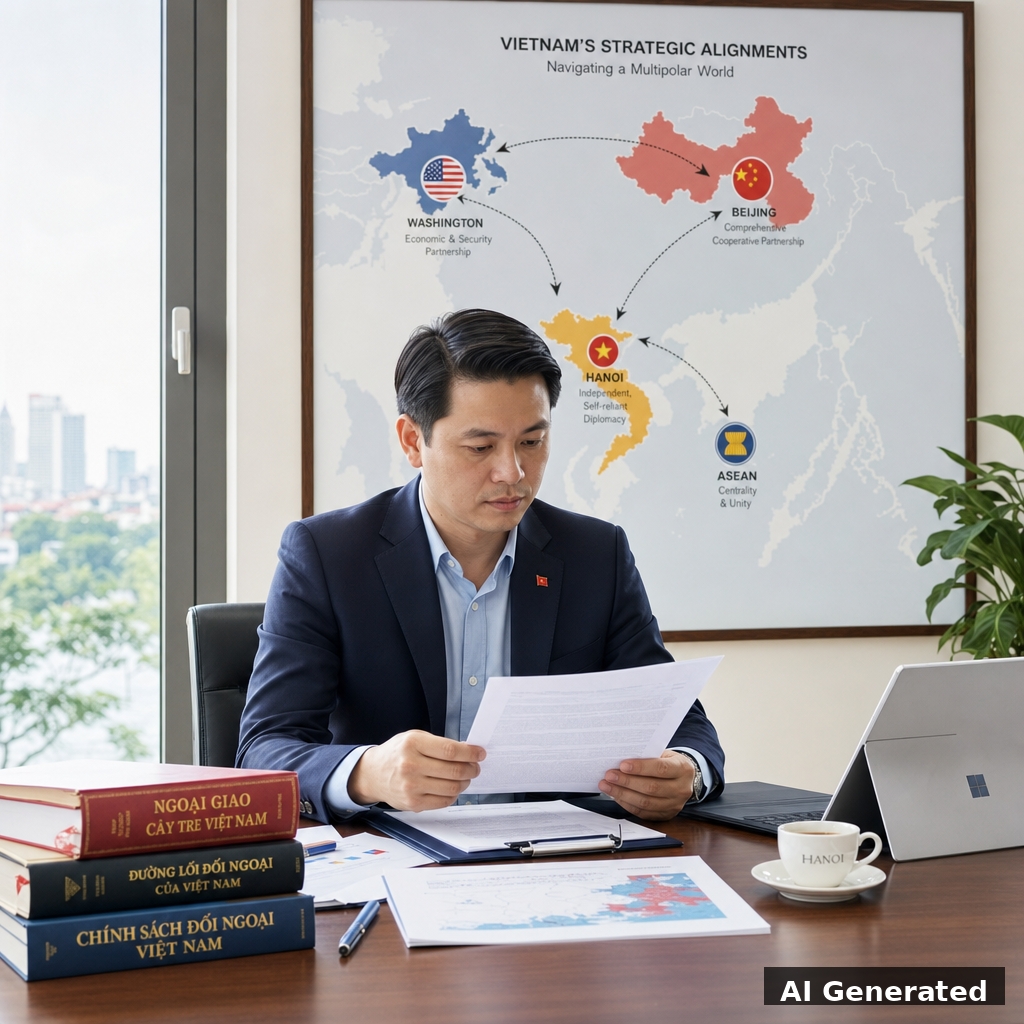
Translate this into the language a Vietnamese strategist would use — because that is where the real story lives.
Vietnam is not choosing sides. Vietnam is doing what Vietnam has always done: balancing. The Belfer Center’s analysis describes Vietnam’s strategy as “balancing without allying” — deepening economic ties with BRICS nations while maintaining security engagement with the United States, all without committing to any single camp [7]. Vietnam established Comprehensive Strategic Partnerships with four ASEAN nations between November 2024 and May 2025 [8]. It is hedging on a continental scale.
Now add North Korea to that equation. Vietnam is the only Southeast Asian state to have sent multiple official delegations to Pyongyang since North Korea reopened its borders [1]. The two countries share ideological foundations as communist states, and Hanoi has maintained party-to-party ties with Pyongyang through every geopolitical shift of the past six decades [1]. Vietnam does not need to choose between the West and North Korea. It needs to keep both channels open — because in a world where the US-led order is fragmenting, the country that maintains the most relationships wins.
For Cambodia, the calculation is different but equally rational. Hun Manet’s government met with the North Korean ambassador in August 2024 to discuss human rights cooperation [1]. Cambodia is navigating a border conflict with Thailand [9] and needs every diplomatic channel available. For Thailand, the 50th anniversary of DPRK relations in 2025 offers a low-cost opportunity to diversify its diplomatic portfolio [1]. For all of them, the principle is the same: in a multipolar world, you do not burn bridges — even bridges to Pyongyang.
The ordinary people who pay the price for these calculations are not diplomats in air-conditioned conference rooms. They are the North Korean labourers sent abroad to generate foreign currency for a regime that invests in missiles instead of hospitals. They are the Southeast Asian workers competing for jobs in sectors where North Korean forced labour undercuts wages. They are the citizens of Vietnam and Laos whose governments are quietly expanding ties with a nuclear-armed dictatorship — and who will never be asked if they approve.
The Consortium That Hasn't Formed Yet
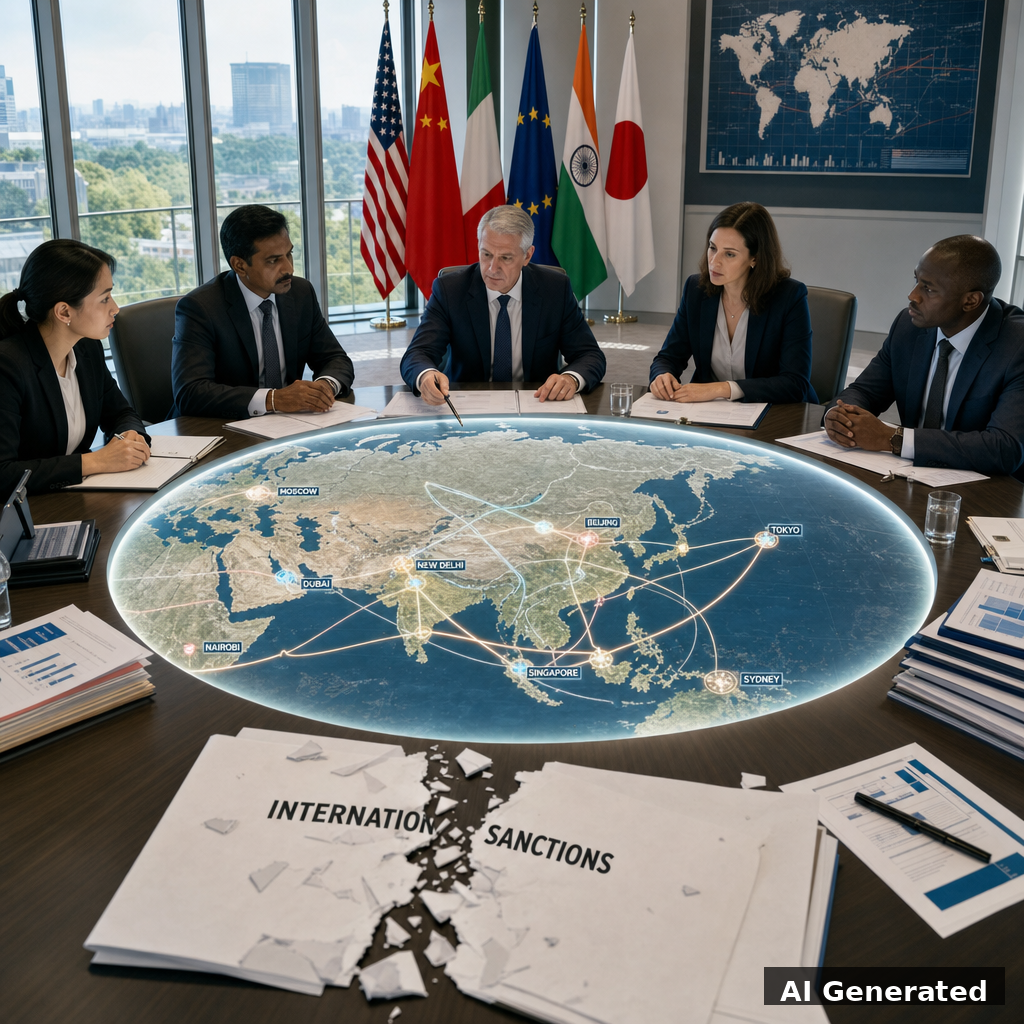
So where does this leave us? You have a North Korea that is building diplomatic relationships across Southeast Asia with deliberate prioritisation [1]. You have a sanctions regime that no longer constrains those relationships [3][4]. You have Southeast Asian states that are hedging against American decline and Chinese dominance by diversifying their partnerships [7]. And you have a China that is watching its monopoly on North Korean external relationships erode — and choosing tactical ambiguity over confrontation [6].
*The consortium has not formed yet.* What exists is pre-consortium positioning — diplomatic infrastructure being laid for a future in which North Korea is no longer isolated but integrated into a regional network that the West cannot dismantle. The institutional mechanisms are there: the ASEAN Regional Forum, the Treaty of Amity and Cooperation, bilateral friendship associations, party-to-party ties between communist states [1]. What was missing was the strategic motivation. Russia provided that motivation.
But here is what should keep you up at night: if North Korea is building the relationships, and China is losing its grip on Pyongyang’s strategic decisions, and Russia is providing the military technology, and the sanctions regime is dead — then what exactly is left of the Western containment strategy? What are Seoul and Tokyo defending? And what happens when the countries that were supposed to be part of the containment perimeter start making their own deals with the dragon?
That is the subject of Part 3.
References
[1] Kang, G. (2025). Assessing North Korea-Southeast Asia's Diplomatic Renewal. 38 North. https://www.38north.org/2025/08/assessing-north-korea-southeast-asias-diplomatic-renewal/
[2] The Diplomat. (2026). How North Korea Is Ranking Southeast Asian Countries. The Diplomat. https://thediplomat.com/2026/02/how-north-korea-is-ranking-southeast-asian-countries/
[3] Yadav, S. (2026). How Moscow's wartime alliance with Pyongyang is redrawing the map of Northeast Asian power. Modern Diplomacy. https://moderndiplomacy.eu/2026/06/11/how-moscows-wartime-alliance-with-pyongyang-is-redrawing-the-map-of-northeast-asian-power/
[4] Heo, D. (2026). A Divided World Is North Korea's Greatest Asset. Foreign Policy. https://foreignpolicy.com/2026/07/16/north-korea-sanctions-nuclear-weapons-united-states-russia-china-united-nations-security-council/
[5] Schepers, K. (2025). Why North Korea is modernising its conventional arsenal. The Interpreter, Lowy Institute. https://www.lowyinstitute.org/the-interpreter/why-north-korea-modernising-its-conventional-arsenal
[6] Asia Society Policy Institute. (2026). Russia–North Korea Military Cooperation in Response to China's Tactical Ambiguity. Asia Society. https://asiasociety.org/policy-institute/russia-north-korea-military-cooperation-response-chinas-tactical-ambiguity
[7] Belfer Center. (2026). Balancing Without Allying: Vietnam's Middle-Power Strategy Amid U.S.-China Rivalry. Harvard Kennedy School. https://www.belfercenter.org/research-analysis/balancing-without-allying-vietnams-middle-power-strategy-amid-us-china-rivalry
[8] The Diplomat. (2026). To Lam's Southeast Asia Visits Expand Vietnam's 'Neighborhood Bamboo Diplomacy'. The Diplomat. https://thediplomat.com/2026/06/to-lams-southeast-asia-visits-expand-vietnams-neighborhood-bamboo-diplomacy/
[9] SpecialEurasia. (2026). Asia-Pacific Geopolitical Risk 2026. SpecialEurasia. https://www.specialeurasia.com/2026/01/07/asia-pacific-risk-2026/
[10] East Asia Forum. (2026). Dealing with North Korea cannot wait for a distracted Washington. East Asia Forum. https://eastasiaforum.org/2026/07/12/dealing-with-north-korea-cannot-wait-for-a-distracted-washington/
[11] ISW. (2026). Korean Peninsula Update, May 19, 2026. Institute for the Study of War. https://understandingwar.org/research/china-taiwan/korean-peninsula-update-may-19-2026/
[12] FPRI. (2025). Russia-China-North Korea Relations: Obstacles to a Trilateral Axis. Foreign Policy Research Institute. https://www.fpri.org/article/2025/03/russia-china-north-korea-relations-obstacles-to-a-trilateral-axis/
AI Disclosure: This post was created with the assistance of artificial intelligence. The ideas, analysis, and opinions expressed are my own — AI was used to help compose, structure, and refine my personal notes and thoughts into the final written content. Images and video featured in this post were also generated using AI tools, based on my own creative prompts and direction.
You’ve reached the end of Part 2 of 3.
Continue the series — Part 1: The $100 Million Bridge to a $34 Million Trade · Part 3: The New Map
