





This article is part of the series: “South Korea Turkey Partnership” — Defense cooperation without political conditionality
← Read Part 1: The Ally America Can’t Afford — And Can’t Afford to Lose
You have probably never heard of the Altay tank. You should know its name, because it tells you something about how the world is reordering itself — not through grand summits or treaty signings, but through engine contracts, technology transfers, and the quiet desperation of countries that have learned they cannot trust their oldest allies.
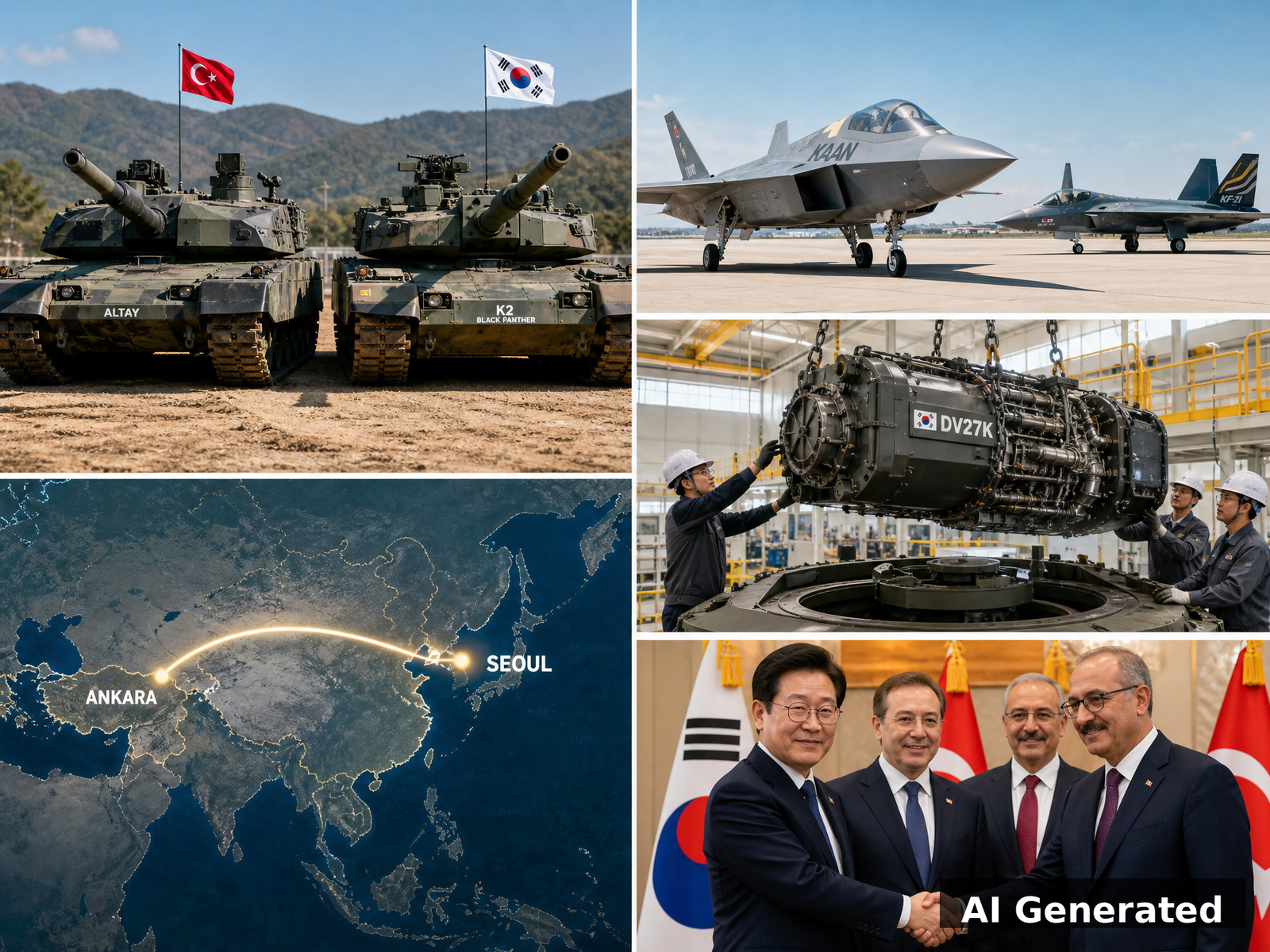
The Altay is Turkey’s first indigenous main battle tank. It is also, in every way that matters, South Korean. The turret design came from Hyundai Rotem’s K2 Black Panther — a $424 million technology transfer [1][2]. When Germany cut off the engine over Turkey’s 2019 Syria operation, South Korea’s Doosan DV27K diesel and S&T Dynamics transmission became the rescue [1][3]. The first 85 production tanks roll on Korean powerplants. Turkey’s indigenous BATU engine won’t replace them until roughly 2028 — if the schedule holds [1].
This is not a buyer-seller relationship. This is two countries that have independently arrived at the same conclusion: you do not own a weapon until you own its engine, and the countries that build engines cannot be trusted to supply them [1][3].
The Contract Behind The Brotherhood
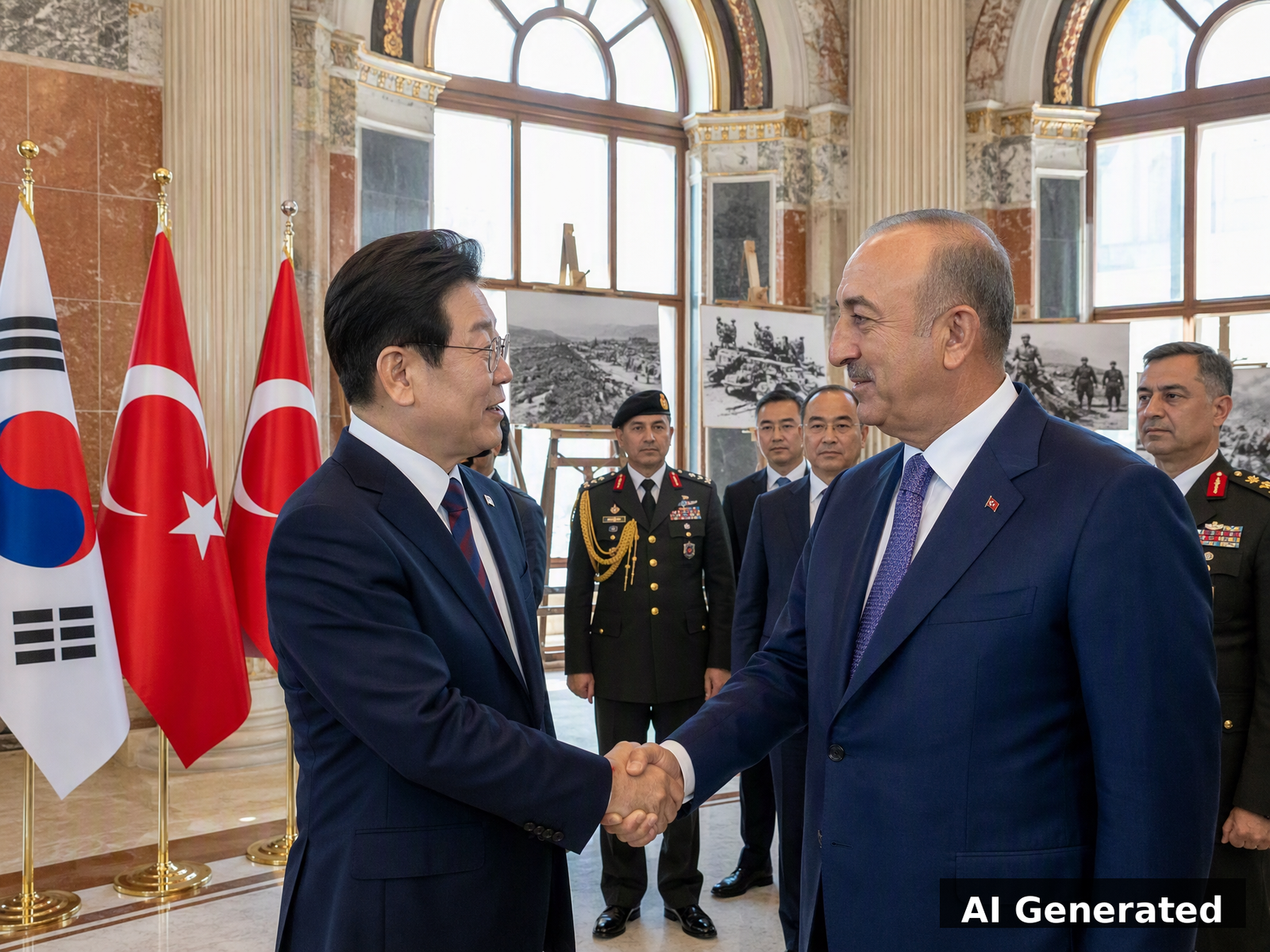
Here is what is actually happening. In November 2025, South Korean President Lee Jae-myung paid a state visit to Turkey — the first in 13 years. The joint declaration was titled “A Legacy of Brotherhood, A Vision For The Future” [4]. Lee described the two nations as “brotherly nations bound by blood” [5]. The Turkish ambassador to Seoul called the relationship “forged as blood brothers during the Korean War” [6].
The blood brotherhood is real — emotionally. Turkey sent 4,500 troops to the Korean War, suffered roughly 1,000 casualties, and maintained a military presence on the peninsula for a decade [7][8]. The Turkish military built the “Ankara School and Orphanage” for Korean orphans [7]. This is genuine shared history, and it shapes public perception: research shows the two societies’ perceptions of one another are “very positive,” with popular affinity described as “the greatest driver of the two countries’ relations” [7].
But the brotherhood is also a myth — ethnically. The Altaic theory, which posits shared Turkic-Korean origins from the Altai Mountains, is “largely not believed by linguists” [9]. The cultural connection is a narrative, not a genetic fact. And yet it serves. It lowers the political friction of defense cooperation. It gives both governments a story they can tell their publics about why they are transferring sensitive technology to a country 8,000 kilometers away.
Behind that story is a dense web of defense-industrial cooperation that has been building for two decades. In 2001, the Turkish Land Forces and Samsung signed a $1 billion artillery control system agreement [7]. The T-155 Fırtına howitzer — Turkey’s domestically produced self-propelled gun — is a co-developed variant of South Korea’s K9 Thunder [10][11]. In January 2023, South Korea’s S&T Heavy Industries signed a $217.9 million deal to supply transmissions for the Altay through 2030 [2]. South Korean FM Cho Hyun confirmed in January 2026 that cooperation continues through “several joint projects, especially the Altay main battle tank project” [5].
The Strategic Case — Why Both Countries Need Each Other
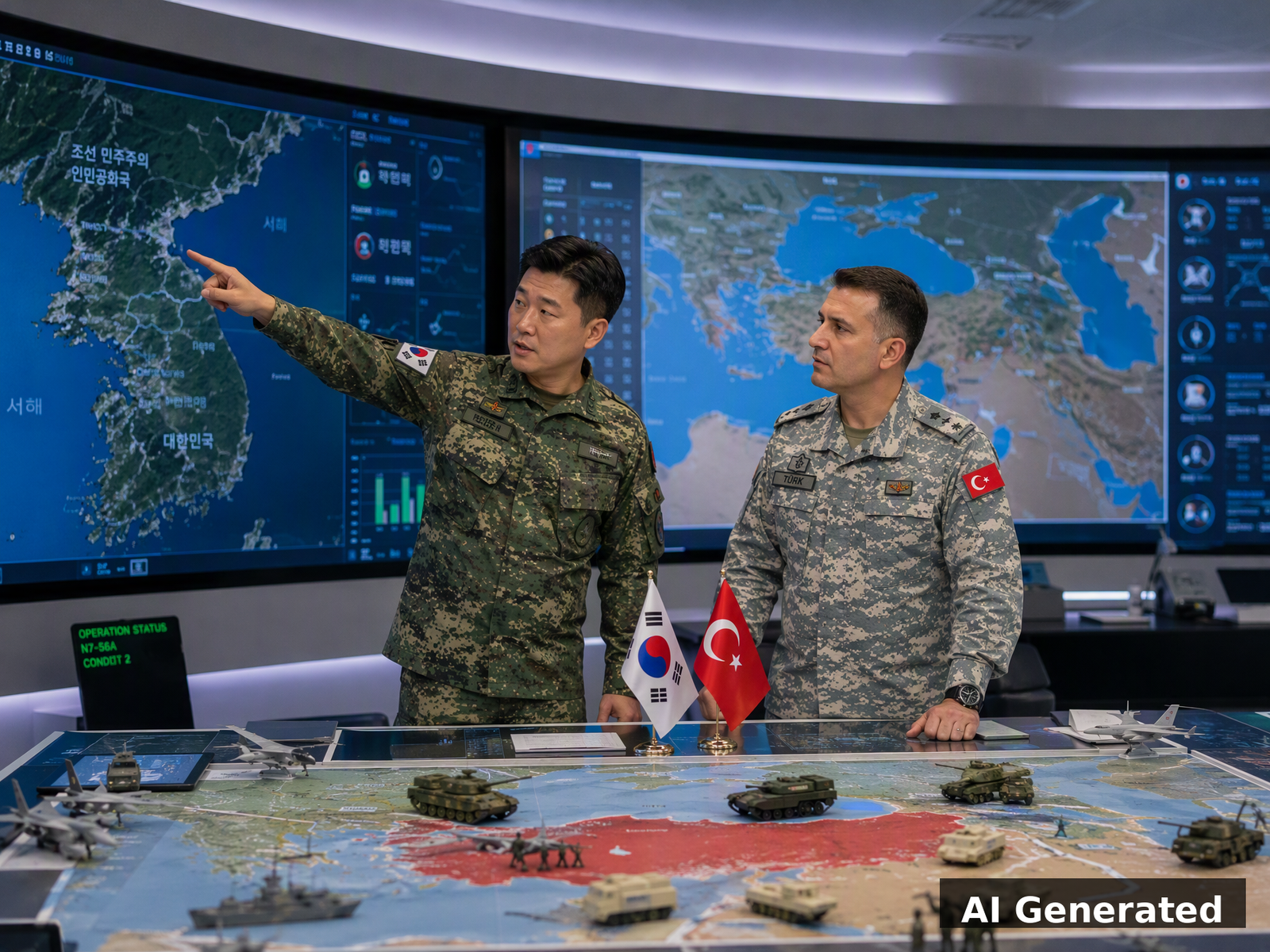
The strongest case for this partnership is this: both countries face the same structural problem from different angles. South Korea’s primary ally — the United States — is becoming transactional and unpredictable under Trump, who just ordered the Pentagon to “substantially reduce” joint military exercises and has extorted a $350 billion investment pledge from Seoul [12][13][14]. Turkey’s primary alliance — NATO — expelled it from the F-35 program over the S-400 purchase and subjected it to CAATSA sanctions that have stalled KAAN fighter engine deliveries [3][15].
Both countries have been burned by Western conditionality. Both are building indigenous defense industries to escape it. And both need a partner who provides technology transfer without political strings.
For South Korea, Turkey offers a European production hub — more than 200 Korean companies have already invested in Turkey [5]. Turkey sits at the crossroads of Europe and the Middle East, with a defense export market that surpassed $10 billion in 2025 [5]. For Turkey, South Korea offers something more critical: the technology to fill the gaps in its indigenous programs without triggering another Western embargo.
The complementarity is precise. South Korea brings capital, advanced defense-industrial capability, and the world’s 10th-largest arms export portfolio [10][11]. Turkey brings NATO’s second-largest military, a rapidly expanding defense industry, and geographic position spanning the Eastern Mediterranean, the Black Sea, and the Middle East [5][6]. Neither imposes political conditionality on the other. Neither demands the other join its wars.
And yet here is what that cannot explain. The two countries “share no common political vision that ensures their cooperation at both the bilateral and international level” [7]. The relationship is deep in defense industry cooperation but lacks the strategic-political framework that would make it a true alliance. Turkey is exploiting South Korea’s anxiety — perhaps for good purpose, perhaps for its own ambitions. The distinction matters.
The Engine Is The Chain
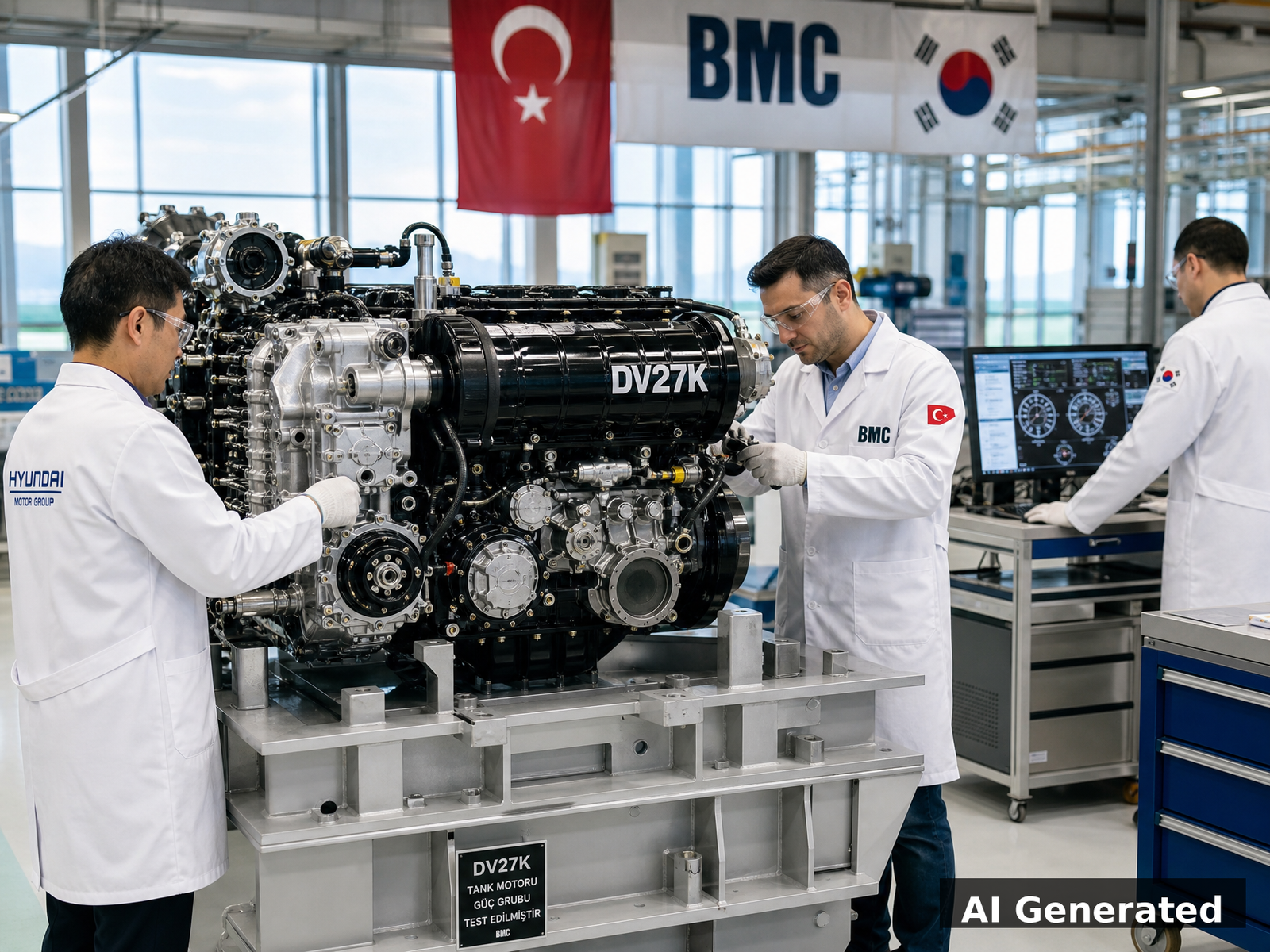
Here is what this is actually costing — in money, in industrial capacity, in strategic coherence. The Altay program took roughly 17 years from the 2008 contract to serial production [1][3]. The KAAN fighter, Turkey’s bid for fifth-generation air power, flies on an American General Electric F110 engine. Turkey has received only 10 of them. Negotiations for 80 additional engines “face obstacles tied to Ankara’s S-400 purchase” under CAATSA sanctions [3]. Turkish FM Hakan Fidan said KAAN’s engines were “waiting for approval in the US Congress” and that licenses had been suspended [3].
The indigenous TF35000 engine that would free the KAAN from American leverage is still in design phase. A KAAN flying on the domestic engine is not expected until roughly 2036 [3]. Between 20 and 40 KAANs will fly on American engines before any switch [3]. The fighter built to escape American dependence still depends on an American powerplant that Washington can restrict.
This is the same lesson the Altay taught: you can build the hull, the armor, the fire control, the active protection system — but whoever builds the engine can stop the weapon [1][3]. South Korea learned this lesson too. Its K2 Black Panther began production on a German MTU engine because Seoul’s own powerpack was not ready. Korea cleared the engine hurdle the hard way — which is exactly why it had an engine to sell to Turkey [1].
The cost of this dependency is measured in years of delay, billions in redirected spending, and a strategic vulnerability that cannot be willed away. Turkey’s air force — 234 aging F-16C/Ds across 10 squadrons — will begin deactivating from 2030 [15]. The KAAN’s first 20 Block-1 deliveries are targeted for 2028, with full operational capability not expected until 2040 [3][15]. The gap between F-16 retirement and KAAN maturity is a decade of vulnerability.
Meanwhile, Greece is studying a follow-on purchase of Rafale F4 fighters with Meteor beyond-visual-range missiles and MICA NG missiles with 40% greater range — while also upgrading 84 F-16s to Block 72 standard and requesting 20 F-35As for delivery in 2027-2028 [16][17]. Turkey is falling behind in the Aegean air balance, and the KAAN will not close that gap for years.
Turkey will not buy Chinese weapons. The S-400 precedent — expulsion from the F-35 program, CAATSA sanctions — taught Ankara that substituting one foreign dependency for another solves nothing [3]. Buying Chinese J-10C or JF-17 fighters would replace American engine dependence with Chinese engine dependence: the same structural problem, different supplier. Turkey’s strategy is sovereignty through domestic production, and South Korea is the partner that helps build that sovereignty without creating new chains [3][5].
The Invoice Arrives In Ankara And Seoul
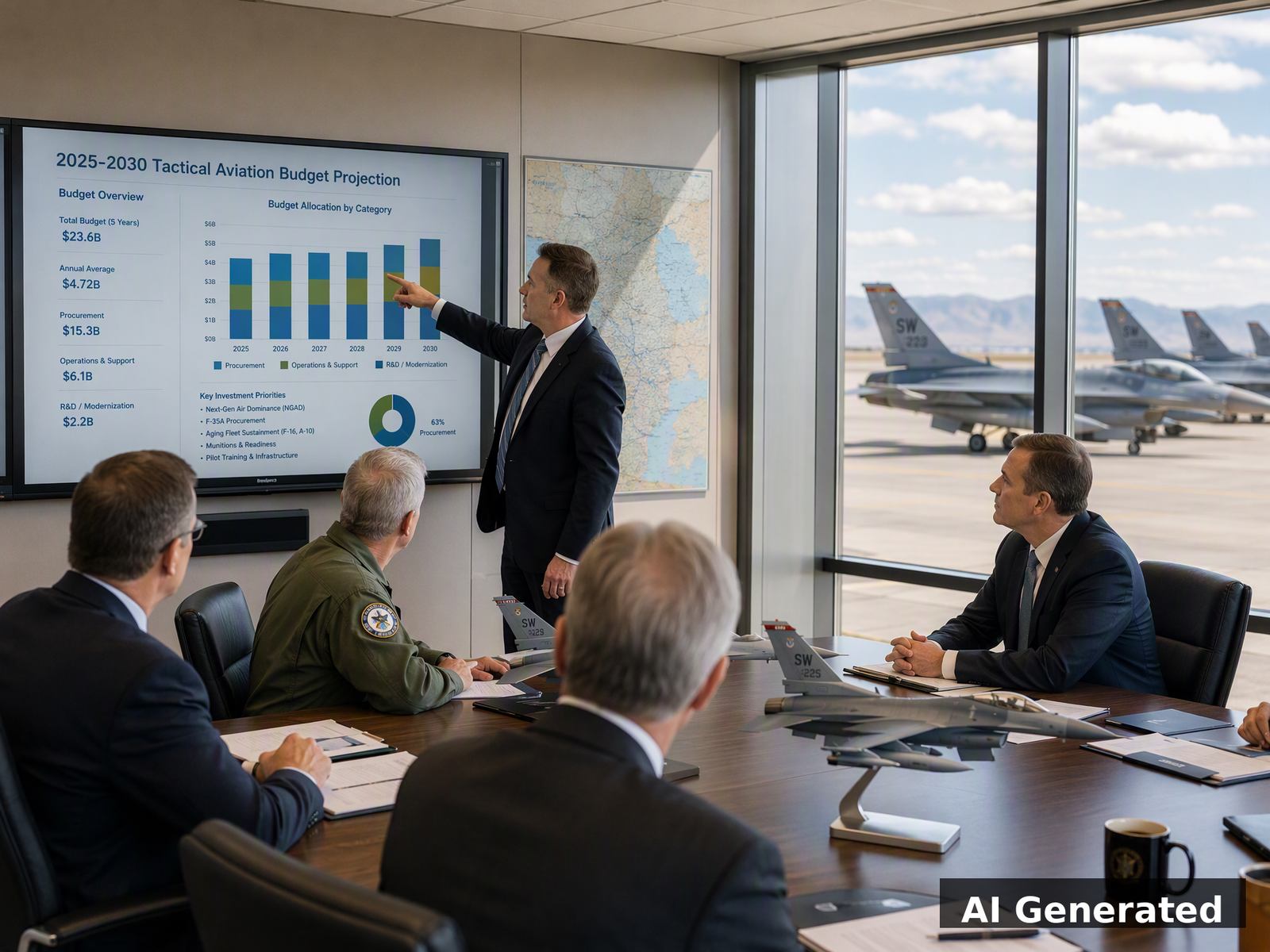
Here is what this means for you — whether you live in Istanbul or Seoul. Your governments are spending billions on defense programs that will take decades to mature, in a world where the threats are accelerating now. Your tax money funds indigenous engine programs, tank production lines, and fighter prototypes that may or may not deliver on schedule. Your security depends on partnerships that are deep but not yet formalized — strategic partnerships without treaty-level guarantees [4][7].
For South Korea, the Turkey partnership is one piece of a broader hedging strategy. Seoul is deepening ties with NATO, expanding defense exports globally, and building “autonomous defense” capabilities [12][13][14]. Turkey is a defense-industrial partner — not a security guarantor. It cannot replace the 28,500 American troops on the Korean Peninsula. It cannot provide a nuclear umbrella. It cannot deter North Korea.
But Turkey offers something the United States increasingly does not: technology transfer without political conditionality, co-production rather than dependency, and a relationship rooted in genuine popular affinity rather than transactional extraction [5][7]. For a country being told to “spend more, not develop more” by Washington [13], that distinction is everything.
For Turkey, the South Korea partnership is a lifeline in its weakest domain — air power. Turkey has caught up in naval capability (the MILGEM program produces indigenous corvettes, frigates, and destroyers) and ground forces (the Altay is now in serial production) [1][3]. But air superiority remains the gap. The KAAN will not be operational until 2028-2029 at the earliest, and full capability is a 2040 proposition [3][15]. Until then, Turkey’s air force is aging F-16s facing Greek Rafales with Meteor missiles and, soon, F-35s [16][17].
The South Korean KF-21 Boramae — a 4.5+ generation fighter that entered mass production in 2025-2026 — represents a potential interim solution or technology source that Turkey could access without American political strings [18]. Both countries are building indigenous fighters. Both face the same engine chokepoint. Both are racing to develop sovereign powerplants. The parallel is not coincidental — it is structural.
The Fork: A New Architecture Or A Marriage Of Convenience
This is where this is heading. In 2027, Turkey and South Korea will mark the 70th anniversary of diplomatic relations [4][5]. Both governments are building toward this milestone with explicit intent to upgrade the partnership [4][6]. The November 2025 joint declaration committed both sides to “promote defence industry cooperation, to cultivate new partnerships and to further deepen the bilateral ties through mutually beneficial projects” [4]. Both sides also “underlined their support to advance overall cooperation in the field of nuclear energy” [4].
The potential extends beyond bilateral defense cooperation. Turkey’s Organization of Turkic States (OTS) — spanning Turkey, Azerbaijan, Kazakhstan, Kyrgyzstan, and Uzbekistan — is evolving from a cultural forum into a geopolitical bloc with defense cooperation dimensions [19]. South Korea, sitting at the eastern edge of the Eurasian landmass, shares something with these Central Asian states: the experience of being a middle power caught between great powers, seeking strategic autonomy without the capacity to achieve it alone.
A South Korea anchored to a Turkey-led Central Asian architecture would gain something it currently lacks: a continental flank that does not depend on the United States or China. It would not replace the American alliance — nothing can, not yet. But it would add a second pillar to a security architecture that is currently single-point-of-failure.
This is the fork. South Korea and Turkey can remain defense-industrial partners — deep, complementary, but limited to technology transfer and co-production. Or they can build something broader: a strategic partnership that connects the Korean Peninsula to the Turkic world, creating a corridor of middle-power cooperation stretching from the Yellow Sea to the Mediterranean.
The first option is safe and incremental. The second is ambitious and uncertain. Both are better than dependence on a guarantor who cancels your deterrent exercises on a Sunday social media post.
Who benefits from the current arrangement? Not the Korean citizen whose security depends on an American president’s mood. Not the Turkish citizen whose air force flies on engines a foreign Congress can freeze. The beneficiary is the system that keeps middle powers fragmented, dependent, and bidding against each other for great-power favor.
Will Turkey and South Korea build the strategic architecture their defense-industrial cooperation already implies — or will they leave it as a partnership without a purpose?
Will the “blood brotherhood” become a real alliance, or remain a story both countries tell themselves while they wait for Washington to come back to its senses?
And when the KAAN finally flies on a Turkish engine and the Altay rolls on a Turkish powerplant — when Turkey no longer needs South Korea the way it does today — will the partnership survive its own success?
References
[1] Kazianis, H. J. (2026, June 18). Turkey Built a Tank to Prove It Didn’t Need Anyone — Then a German Embargo Left It Without an Engine. 19FortyFive. Link
[2] Tiwari, S. (2023, January 31). Turkey Signs $200 Million Deal With South Korea As Seoul Starts Eating Into European Defense Market. The EurAsian Times. Link
[3] Kazianis, H. J. (2026, June 16). Turkey Built a Stealth Fighter to Break Free of America and the F-35 — and It Still Can’t Fly Without an American Engine. 19FortyFive. Link
[4] Turkish Directorate of Communications. (2025, November 24). Joint Statement on the Strategic Partnership Between the Republic of Türkiye and the Republic of Korea. Link
[5] TRT World. (2026, January 23). South Korea hails Türkiye’s rising global role, deepening defence and strategic ties. Link
[6] Tamer, S. M. (2026, January 5). Türkiye’s Foreign Policy Vision and Türkiye–Korea Relations in 2026. Aju Press. Link
[7] Çolakoğlu, S. (2015). Turkey and Korea: From Blood Brotherhood to Strategic Partnership. Asian Pacific Center / EMERiCs-KIEP. Link
[8] Academia.edu. (n.d.). Blood Brothers: What is the Effect of Korean War for the Relations Between Turkey and South Korea. Link
[9] Wikipedia. (n.d.). Altaic languages. Link
[10] Wikipedia. (n.d.). Defense industry of South Korea. Link
[11] PDC Group. (2026, July 5). South Korea’s Defence Industry Boom: How Seoul Became One of the World’s Top Arms Exporters. Link
[12] Modern Diplomacy. (2026, August 18). Has the US South Korea Alliance Changed Under Trump? Link
[13] Sneider, D. (2026, July 21). South Korea military buildup is for the alliance – and for itself. Asia Times. Link
[14] Fields, D. (2026, January 29). Cracks in the ‘Ironclad’ South Korea-US Alliance. The Diplomat. Link
[15] Sünnetci, İ. (2022, August 14; updated 2026, April 14). Turkish Air Force (TurAF) Interim Fighter Requirement & Ongoing Efforts. Defence Turkey. Link
[16] Global Defense Corp. (2025, November 12). Greece will purchase additional Rafale F4 fighter jets. Link
[17] Army Recognition. (2025, November 8). Greece weighs additional Rafale F4 fighter jets as Türkiye pursues Eurofighter deal. Link
[18] Mulvihill, C. (2025, July 23). The long road to Altay. European Security & Defence. Link
[19] Avdaliani, E. (2026, June 16). Turkey Reshapes the Organization of Turkic States. Manara Magazine. Link
🔜 End of series. This is the final part of the South Korea Turkey Partnership series.
AI Disclosure: This post was created with the assistance of artificial intelligence. The ideas, analysis, and opinions expressed are my own — AI was used to help compose, structure, and refine my personal notes and thoughts into the final written content. Images and video featured in this post were also generated using AI tools, based on my own creative prompts and direction.
