




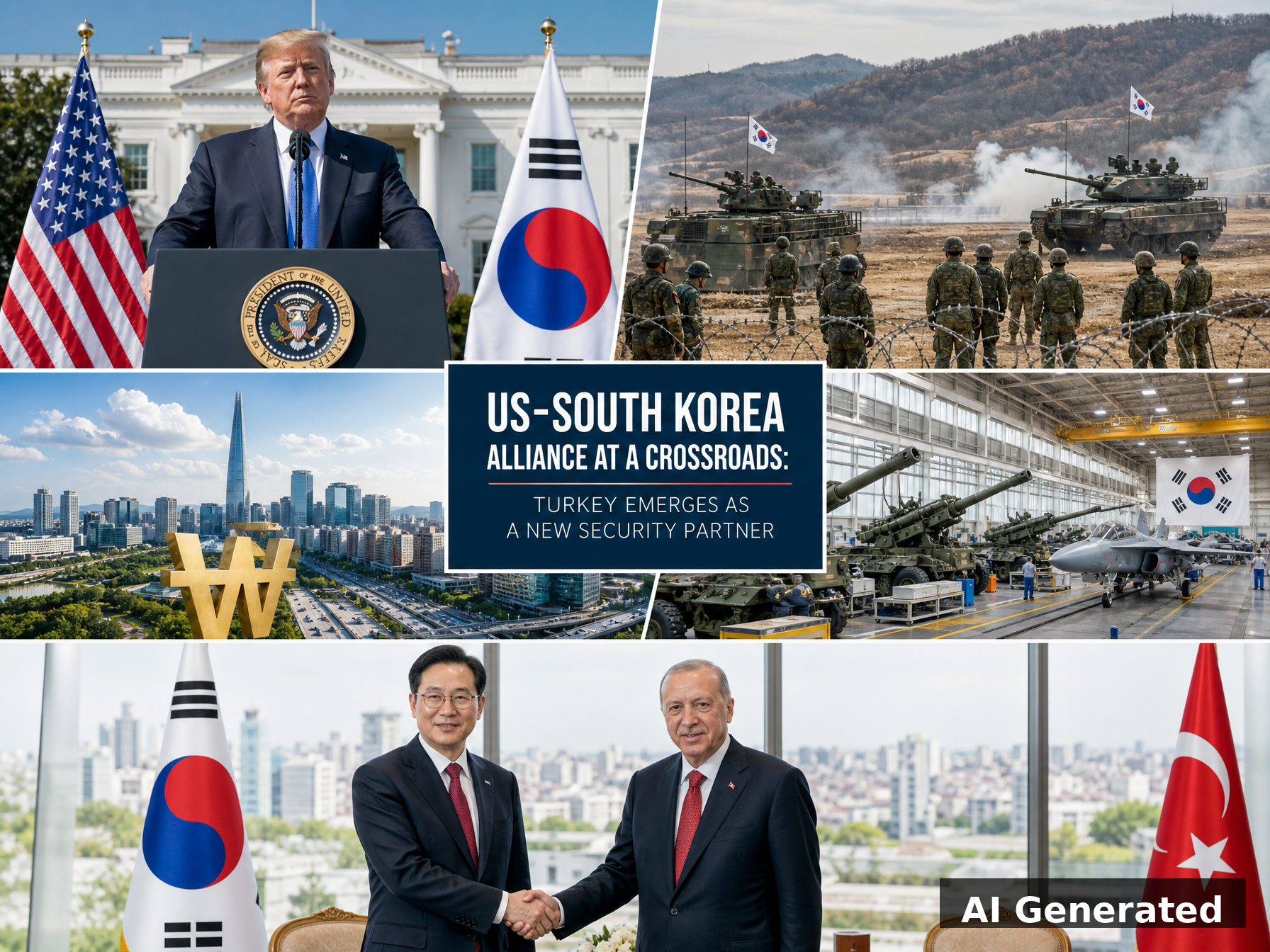


You are being told your alliance is “ironclad.” The word is used so often it should worry you. When politicians repeat a word four times in a single press conference, they are not describing reality — they are trying to hold it together.
President Donald Trump used the term. Secretary of State Marco Rubio used it. Defense Secretary Pete Hegseth used it. South Korean President Lee Jae-myung used it four times on his first visit to Washington. If rhetoric created reality, the US-South Korea alliance would be the strongest in human history [1][2].
It is not. On August 16, 2026, Trump ordered the Pentagon to “substantially reduce” joint military exercises with South Korea — the Ulchi Freedom Shield drills that were expected to involve 18,000 South Korean troops and a sizable portion of the 28,500 American troops stationed on the peninsula. His justification was not a strategic assessment. It was his “very good relationship” with Kim Jong Un, the cost of the exercises, and Seoul’s refusal to support US action against Iran [3][4][5].
The alliance has not collapsed. But it has become something it was never designed to be: transactional, conditional, and strategically uncertain. [6]
The Exercise That Wasn’t — And The Signal It Sent
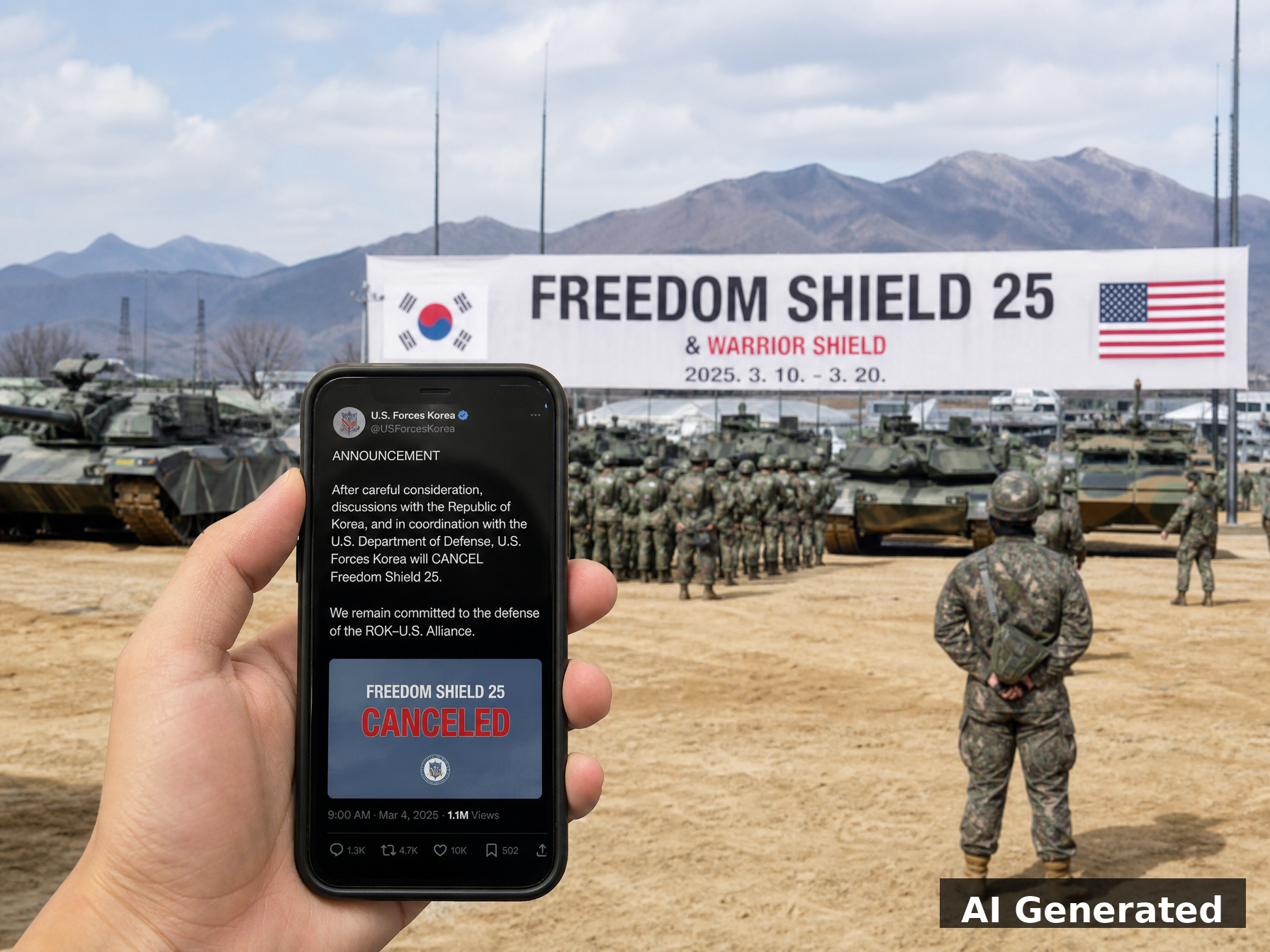
Here is what actually happened. The Ulchi Freedom Shield exercises have been conducted for over 70 years as the core deterrent against North Korean aggression. Trump cancelled major elements of them on a Sunday social media post, one day before they were set to begin. He cited costs. He cited his personal rapport with the dictator in Pyongyang. He cited Seoul’s refusal to join the Iran war [3][4][7].
The Hudson Institute’s Michael Sobolik called it plainly: “Confusing adversaries and allies is a basic foreign policy mistake. Leveraging enemies to attack friends is a deeper failure. President Trump committed both errors” [8].
North Korea launched ballistic missile tests the week before the announcement — precisely the kind of provocation the exercises exist to deter. Trump’s response was to reduce the deterrent [4][7]. You do not need to be a strategist to see the problem. You need only to ask: if the exercises are too expensive, what is the cost of not deterring a nuclear-armed regime that just tested missiles?
The 2026 National Defense Strategy says the US will continue “critical” support for South Korea but that Seoul should expect reductions in other types of support as Washington updates its “force posture on the Korean Peninsula” — language that strongly hints at troop drawdown [2]. Congress added procedural barriers against such a drawdown, but those barriers could be surmounted by a compliant secretary of defense and cooperative congressional Republicans [2].
The Strongest Case For What Trump Is Doing — And Why It Falls Short
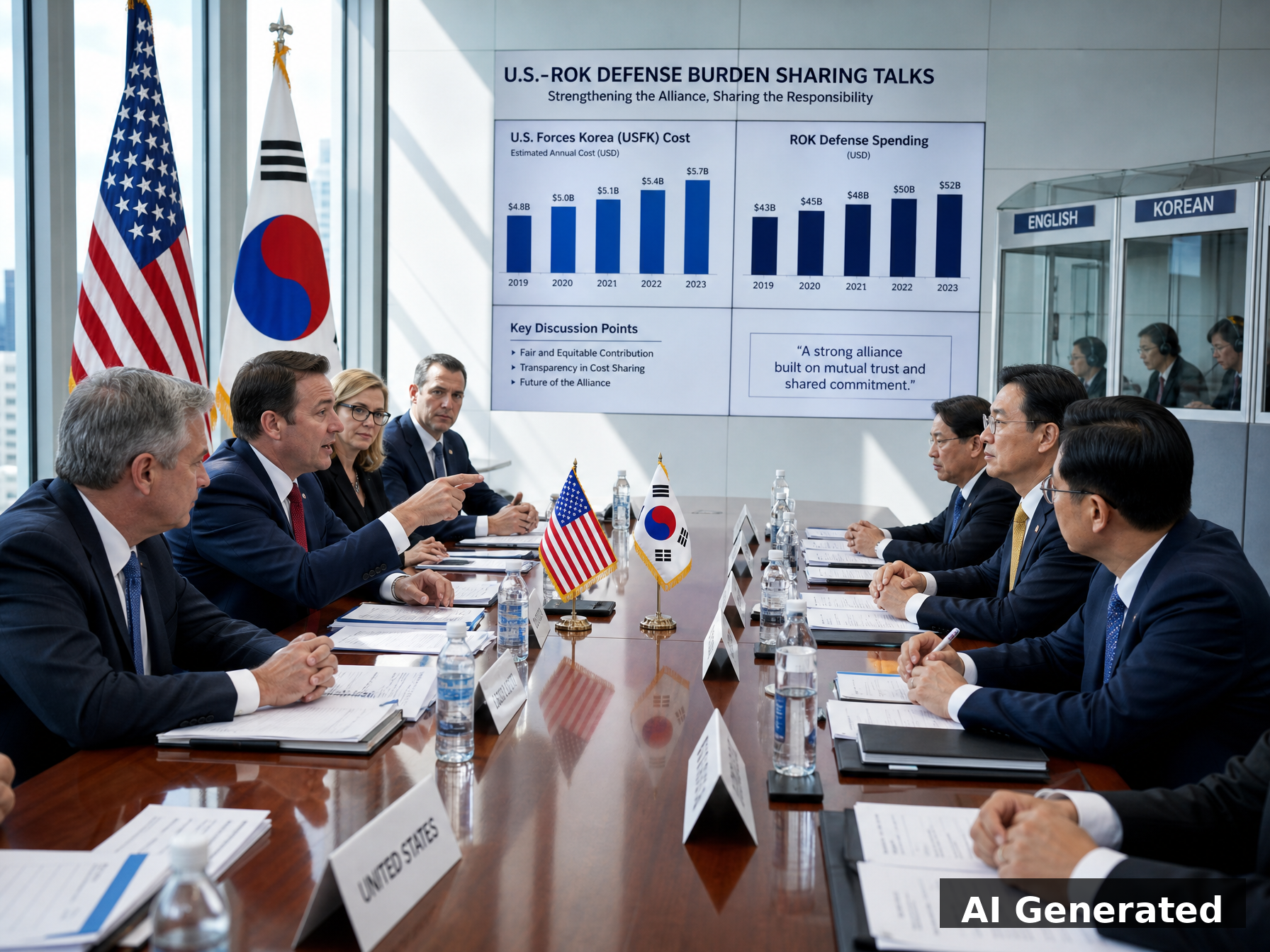
The strongest case for Trump’s approach is this: South Korea is wealthy. It is the world’s 13th-largest economy. It can and should bear more of its own defense burden. The existing cost-sharing agreement requires Seoul to contribute about 1.52 trillion won per year toward the upkeep of US forces — a figure Trump considers insufficient [6]. American taxpayers, the argument goes, should not subsidize the defense of a country that has the resources to defend itself.
There is logic here. South Korea has been increasing defense spending under President Lee Jae-myung, who has pledged a larger security role and faster progress toward transferring wartime operational control — the authority to command South Korean forces in war, currently retained by the US [6][9]. American officials call this “alliance modernization.” South Korean officials increasingly call it “autonomous defense” [9]. The alliance, in this reading, is evolving rather than weakening.
And yet here is what that cannot explain. In 2025 alone, the Trump administration slapped staggering new tariffs on South Korean goods, extorted a pledge to invest $350 billion in the United States, and detained more than 300 Korean workers at a Hyundai factory in Georgia during an immigration raid [2]. Trump publicly suggested South Korea “give us ownership of the land where we have the big fort” — a reference to Camp Humphries, the largest overseas American military base in the world [2]. On January 26, 2026, he threatened to raise tariffs on South Korean exports from 15 percent to 25 percent because the Korean legislature hadn’t approved the trade deal [2].
These are not the actions of an ally recalibrating burden-sharing. These are the actions of a power treating its partner as a revenue source. The Diplomat’s David Fields put it with precision: “Although few will say so publicly, Korean leaders have little respect for Trump and are rapidly losing respect for the United States” [2].
What This Is Actually Costing South Korea
The financial cost is staggering. The $350 billion investment pledge — later capped at $20 billion per year after Lee’s October 2025 meeting with Trump in Gyeongju — is money that will not go into South Korea’s own defense industrial base, its own economy, or its own citizens’ welfare [2]. Korean Finance Minister Koo Yun-cheol stated in January 2026 that South Korea was unlikely to invest even that reduced amount, citing a lack of identified projects and the weakness of the Korean won [2].
The strategic cost is harder to measure but more dangerous. South Korea is being asked to simultaneously spend more on its own military, invest billions in the American economy, accept tariffs on its exports, and watch its primary security guarantor reduce the exercises that deter the existential threat 40 kilometers north of Seoul [6][9].
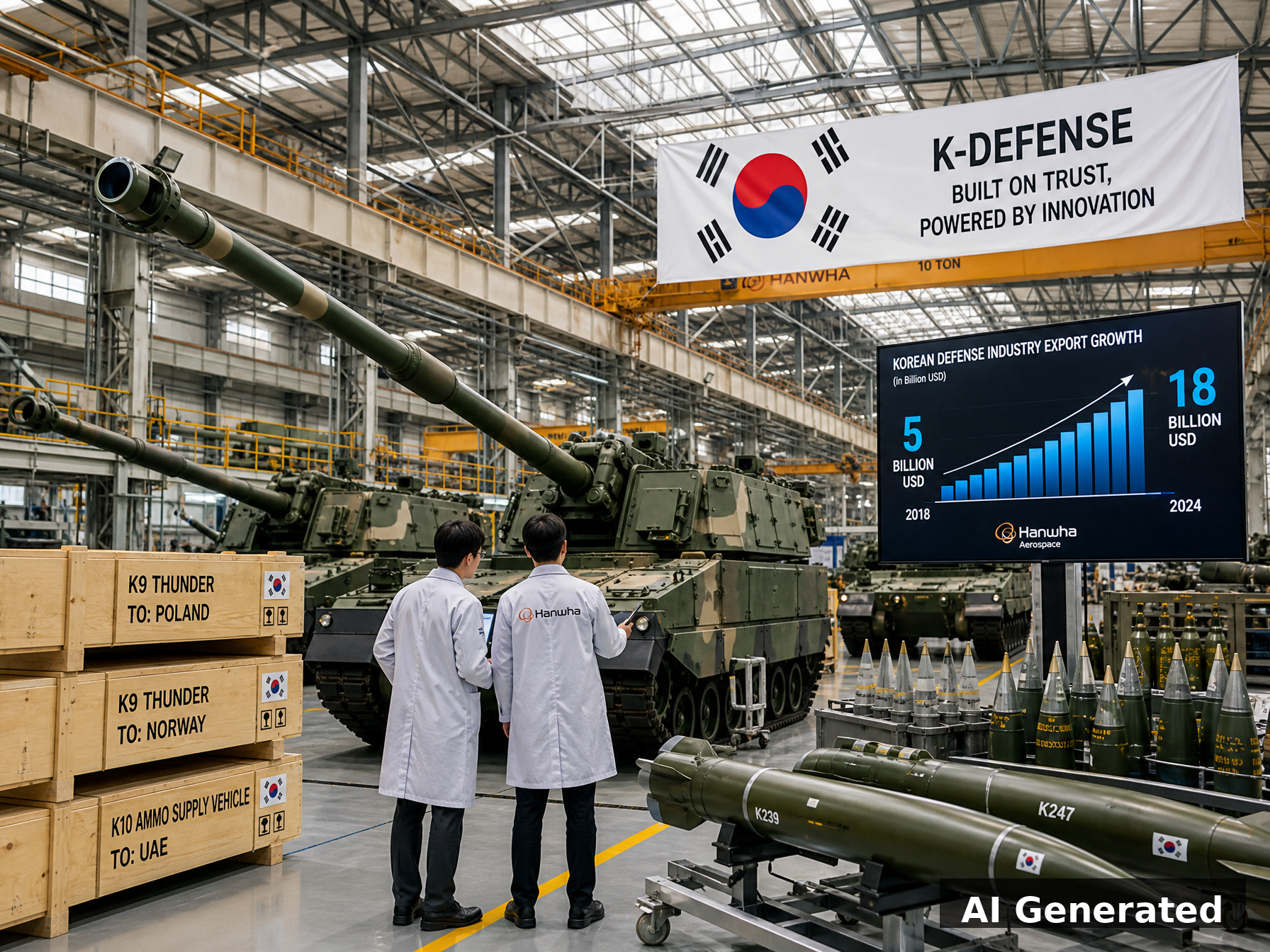
Meanwhile, the defense industrial base that South Korea is building — and it is building an impressive one — serves two masters. American officials want South Korea to buy American weapons. Pentagon policy chief Elbridge Colby asserted that “no alternative country or countries can compete with the US defense industrial base” and that access to it “is a privilege, not a right” [9]. But South Korea’s own defense exports reached approximately $18 billion in 2025, up from $5 billion in 2020 [10]. Korean-made howitzers, tanks, submarines, and fighter aircraft are now operated by armed forces across Europe, Asia, and the Middle East [10][11]. The country is becoming a defense exporter at the moment its own security guarantor is becoming unpredictable.
The CSIS observed that South Korea has contended with changes under Trump “not by resisting, but by embracing them with a ‘let’s make deal’ attitude” [12]. That is not a strategy. That is survival.
The Invoice Arrives In Seoul
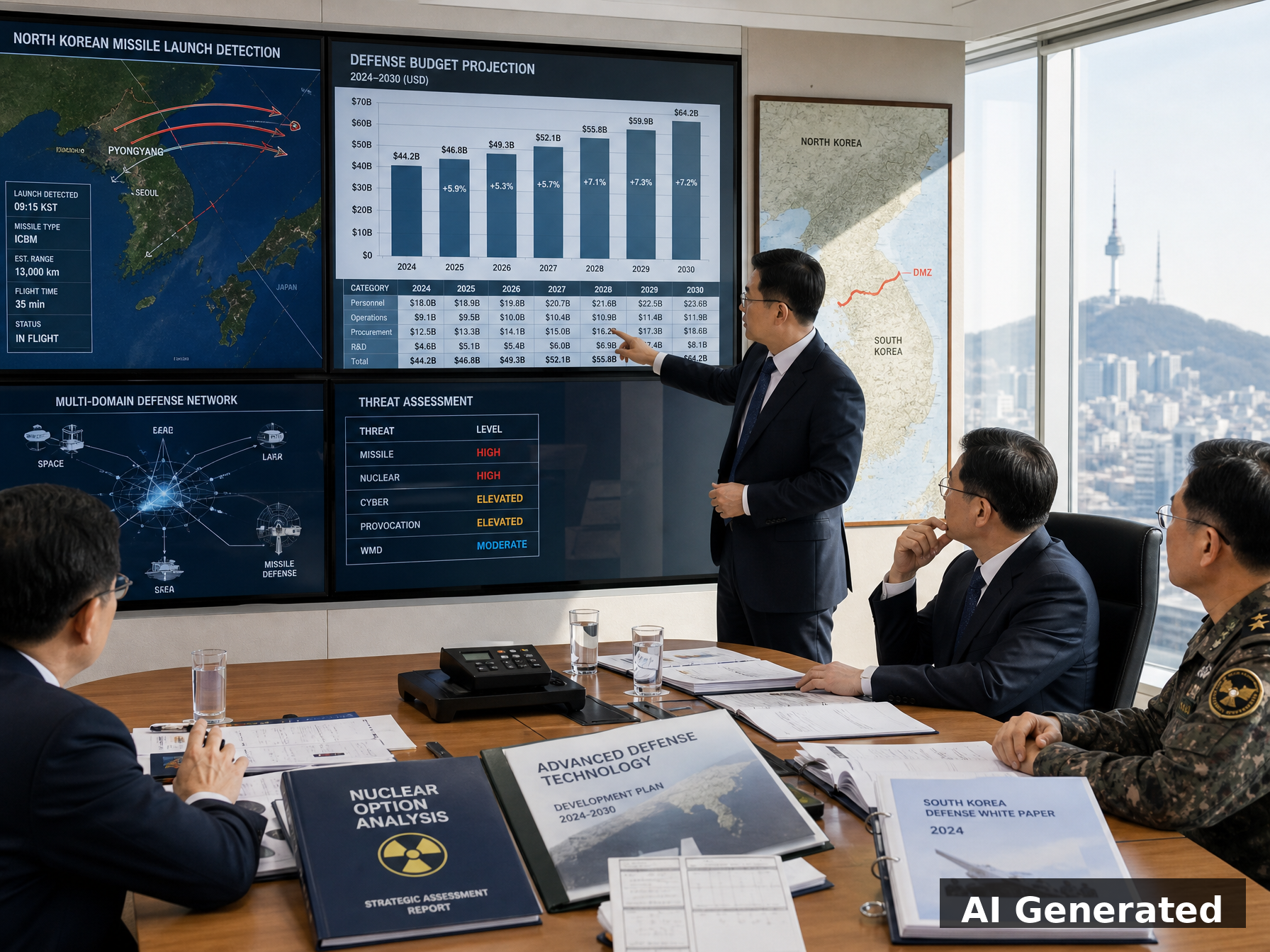
Here is what this means for you if you live in Seoul. Your government is being squeezed between an American president who treats your country as a balance sheet item and a North Korean regime that keeps testing missiles while the deterrent exercises are cut [3][4][7]. Your taxes are going to fund American military presence that may be reduced regardless of what you pay. Your economy is being asked to invest in the United States at a time when your own currency is weak and your own defense industry needs capital [2][9].
A senior South Korean official told Asia Times: “The withdrawal of USFK is not something we want to see. But if it becomes a reality for us, and we have to fend for ourselves, we need to block the threat of nuclear weapons” [9]. That sentence should stop you cold. It is the statement of a government preparing for abandonment.
The most obvious response — a South Korean nuclear weapons program — is still beyond the pale, though the interest is growing [2][9]. Alternatively, policymakers in Seoul are interrogating whether rapid changes in defense technology might create a reliable form of conventional deterrence — laser weapons, AI-powered defense systems that can “potentially intercept hundreds of missiles at one time” [9]. “We are learning the lessons of the Ukraine and Iran wars,” the senior official said [9].
But technology takes time. And the gap between today’s unreliable American guarantee and tomorrow’s indigenous deterrence is measured in years — years during which North Korea continues to build its nuclear and missile capabilities and strengthen military cooperation with Russia [6].
The Fork: Diversify Or Remain Exposed
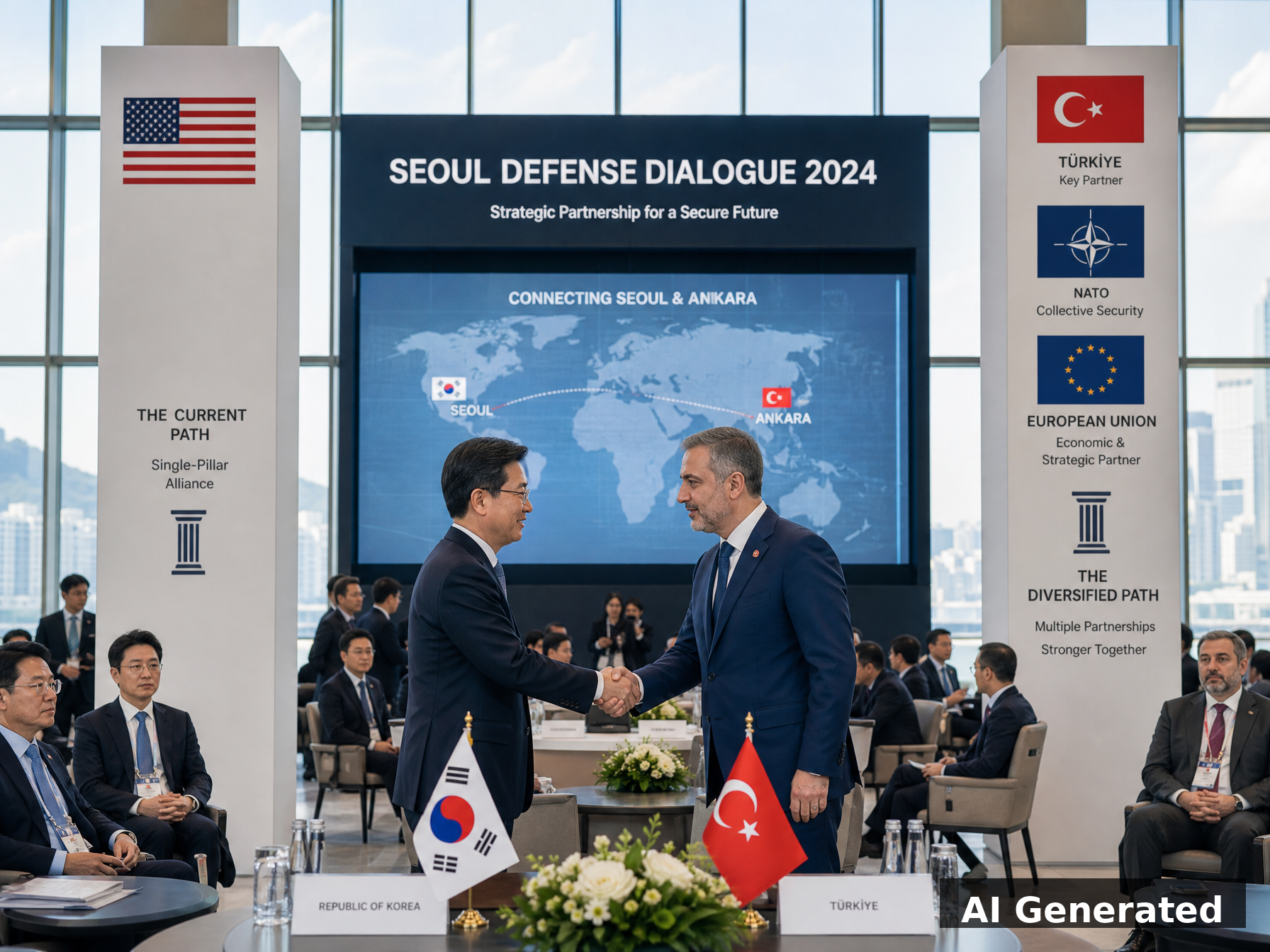
South Korea’s security architecture is a single pillar: the United States. That pillar is not collapsing, but it is bending under the weight of a president who sees allies as customers and deterrence as a cost center [6][8]. The structural problem is not Trump himself — he is constitutionally barred from a third term. The problem is that the alliance built on the assumption of American predictability has proven unable to absorb American unpredictability [2][6].
The Diplomat’s assessment is blunt: “As of today, there is no other country to which South Korea could turn to for comparable security guarantees and military support” [2]. But: “Korean leaders must surely be wishing they had alternatives to consider. A few more years of America First foreign policy and they will be working hard to create them” [2].
This is the fork. South Korea can remain dependent on a single guarantor whose reliability is now conditional — or it can build a diversified security architecture with multiple partners who provide different capabilities without demanding political subservience. The first option is cheaper in the short term and catastrophic if the guarantee fails. The second option is harder, slower, and more expensive — but it builds the kind of resilience that survives political whiplash in Washington.
The pattern is already visible. South Korea is deepening ties with NATO — President Lee attended a NATO Defense Industry Forum in July 2026 [9]. It is expanding defense exports to Europe, the Middle East, and Asia [10][11]. And it is quietly strengthening a relationship with a country that shares its experience of depending on an unreliable West — a country that learned the engine lesson the hard way and is now building its own.
That country is Turkey. And the partnership forming between Ankara and Seoul may prove more consequential than either capital currently admits.
Who benefits from South Korea’s current exposure? Not the Korean citizen paying taxes for a guarantee that comes with conditions. Not the American taxpayer whose money funds bases that may be drawn down regardless. The beneficiary is the political system that treats alliances as transactions — and the adversary in Pyongyang watching the exercises shrink while its missiles grow.
Will South Korea build the diversified security architecture it needs, or will it remain a single-pillar state hoping the pillar holds?
Will you — the citizen, the taxpayer, the conscript-in-waiting — accept a security model that asks you to pay more for less?
And when the next Trump social media post reshapes your defense posture overnight, who will you call?
🔜 Coming next in this series: Part 2 — How Turkey and South Korea’s defense industries are converging
References
[1] Modern Diplomacy. (2026, August 18). Has the US South Korea Alliance Changed Under Trump? Link
[2] Fields, D. (2026, January 29). Cracks in the ‘Ironclad’ South Korea-US Alliance. The Diplomat. Link
[3] Politico. (2026, August 16). Trump directs Hegseth to scale back joint military exercises with South Korea. Link
[4] Fox News. (2026, August 16). Trump orders major cut to US-South Korea drills as North Korea ramps up missile tests. Link
[5] Army Recognition. (2026). Trump orders reduction US-South Korea military exercises citing Kim Jong Un ties and Seoul refusal on Iran War. Link
[6] Khan, S. (2026, August 18). Has the US South Korea Alliance Changed Under Trump? Modern Diplomacy. Link
[7] The New York Times. (2026, August 16). President Orders Reduction of Military Exercises With South Korea. Link
[8] Sobolik, M. (2026, August 17). Trump’s Break with South Korea Projects Weakness in the Pacific. Hudson Institute. Link
[9] Sneider, D. (2026, July 21). South Korea military buildup is for the alliance – and for itself. Asia Times. Link
[10] PDC Group. (2026, July 5). South Korea’s Defence Industry Boom: How Seoul Became One of the World’s Top Arms Exporters. Link
[11] IP Defense Forum. (2025, November 13). South Korea leverages defense tech diplomacy at ADEX 2025. Link
[12] CSIS. (2025, October 6). South Korea’s Response to U.S. Demands: Minimize Risk, Maximize Reward. Link
[13] KEIA. (2026, February 2). U.S.-South Korea Relations in 2026: Key Issues to Watch. Link
[14] The Guardian. (2026, August 17). Trump says Kim Jong-un has responded to his overtures. Link
[15] Politifact. (2026, August 17). Trump wants to reduce joint military exercises with South Korea. What are they for? Link
[16] Liberty One News. (2026). Trump Cuts South Korea Drills, Demands Cost Sharing. Link
[17] Tamer, S. M. (2026, January 5). Türkiye’s Foreign Policy Vision and Türkiye–Korea Relations in 2026. Aju Press. Link
[18] TRT World. (2026, January 23). South Korea hails Türkiye’s rising global role, deepening defence and strategic ties. Link
AI Disclosure: This post was created with the assistance of artificial intelligence. The ideas, analysis, and opinions expressed are my own — AI was used to help compose, structure, and refine my personal notes and thoughts into the final written content. Images and video featured in this post were also generated using AI tools, based on my own creative prompts and direction.
