






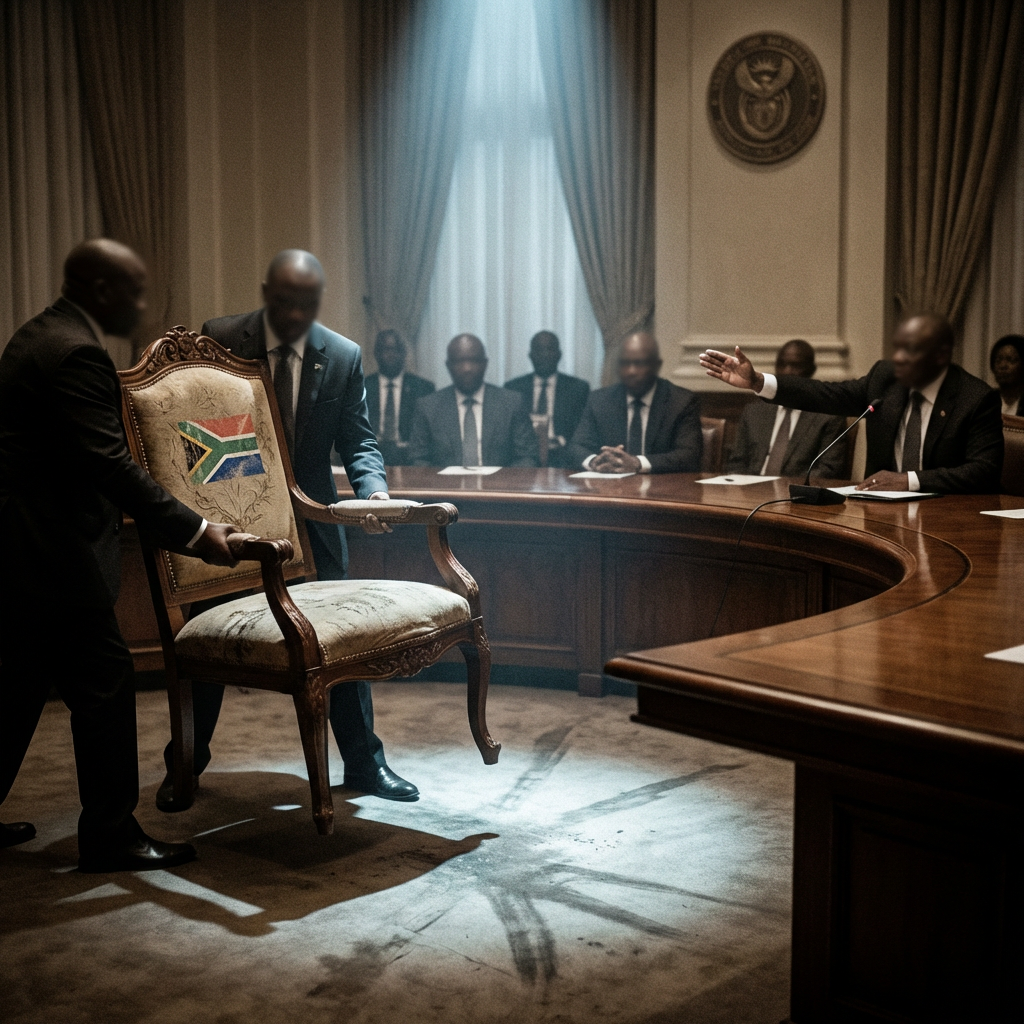
In a move that reeks of backstage arm-twisting and strategic pettiness, South Africa found itself abruptly “disinvited” from a G7 foreign ministers’ meeting in France, a decision that lays bare the corrosive influence of U.S. domestic politics on multilateral diplomacy. The episode is less about logistics and more about power, signaling Washington’s willingness to fracture global forums to settle scores and enforce ideological conformity, leaving allies like Paris to manage the diplomatic fallout. This isn’t just a snub; it’s a calculated geopolitical signal with racial undertones, echoing a troubling pattern from the Trump era.
Strategic Background
The G7, a bloc of advanced economies, has long used outreach to “strategic partners” like South Africa to lend broader legitimacy to its agenda. France, holding the rotating presidency, had extended such an invitation. The reversal follows a well-documented period of strained U.S.-South Africa relations, primarily over Pretoria’s non-aligned stance on Russia’s war in Ukraine and its perceived support for Moscow. Historically, the U.S. has exerted pressure on allies to isolate states it views as adversaries, but directly compelling a fellow G7 member to disinvite a guest from a different continent is a notable escalation in coercive diplomacy.
What This Move Signals
The disinvitation is a classic exercise in sphere-of-influence policing. Washington is broadcasting that strategic non-alignment is no longer a viable hedge; you are either fully within the Western orbit or you are suspect. The message to the Global South is stark: independence of action carries a cost. For France, the episode is a humiliating demonstration of limited sovereignty within the alliance, forced to execute a U.S. directive that undermines its own diplomatic outreach in Africa. The racial subtext cannot be ignored. The Trump administration’s openly contemptuous treatment of African nations—labeling them with vulgar epithets—cast a long shadow. This action, whether intentionally or not, perpetuates a dynamic where a predominantly white-led bloc disciplines a major Black African power for not adhering to its dictates, resurrecting uncomfortable questions about hierarchical order.
Implications for European Security and Interests
This is a net negative for European interests. It actively weakens the EU’s strategic autonomy by showcasing its deference to U.S. whims, even when those whims damage European diplomatic capital. Economically, it complicates Europe’s engagement with a key African partner on critical minerals and trade. Politically, it exposes a rift: while some Eastern EU members may applaud the hardline on Russia, it fractures EU unity on how to engage the Global South. Normatively, it eviscerates the EU’s claim to be a principled, rules-based actor, revealing it as a bloc that can be coerced into petty exclusions that serve another power’s domestic narrative.
Trans-Atlantic and Allied Dimensions
The U.S. emerges as the clear tactical victor, having successfully imposed its will on a core ally. However, the strategic cost is a deeper erosion of trust within the alliance. The action aligns perfectly with the “with us or against us” doctrine of the Trump years, a doctrine the Biden administration has rhetorically distanced itself from but whose tools it sometimes employs. For NATO, it underscores a dangerous trend: the weaponization of all diplomatic and economic tools for a singular focus on Russia, potentially at the expense of broader coalition-building. The opportunity for a coordinated response is nil; the U.S. dictated the terms, and France complied.
The Other Side of the Board
Moscow and Beijing are the primary beneficiaries. Russia sees yet another example of Western hypocrisy and bullying, a perfect propaganda tool to bolster its narrative in Africa and the Global South. China observes the fracturing of Western-led multilateral forums with satisfaction, as it strengthens its case for alternative institutions like BRICS where such coercive dynamics are ostensibly absent. For South Africa, the snub likely hardens its resolve to deepen ties with non-Western blocs, accelerating the very geopolitical split the G7 ostensibly seeks to prevent.
Brussels on the Chessboard
The EU’s response has been one of deafening silence and passive acquiescence. No senior European official has publicly questioned the rationale or defended the principle of inclusive diplomacy. France, as the host, has offered only a tepid justification about “aligning formats,” a phrase that convinces no one.
The Strategic Verdict
This is a stark failure. The EU, and specifically France, chose to be a vassal in someone else’s geopolitical drama rather than a sovereign actor defending its own diplomatic channels. The cost is measured in lost credibility across Africa and the Global South. A strategically assertive EU would have publicly rejected the coercion, stating clearly that its guest list is its own, and that dialogue with non-aligned states is essential, not optional. Instead, Brussels demonstrated that its strategic autonomy is, for now, a paper doctrine. When pressured, it folds.
The Diplomatic Hangover
Watch for three indicators. First, South Africa’s voting pattern at the next UN General Assembly session on Ukraine-related resolutions—expect a harder line. Second, the tone of the EU-South Africa summit later this year; it will be a masterclass in strained courtesy. Third, France’s future moves in Africa; will it double down on independent outreach or retreat further into Washington’s shadow? The strategic thesis is clear: by allowing a key forum to be used for ideological policing, the G7 has weakened itself, proving that in today’s multipolar world, exclusion is a greater sign of weakness than strength.
