

Category Economy

A suited figure stands in the middle of a city street, arms raised toward twin fiery columns rising into the sky, as sleek skyscrapers and decaying tenements face each other across a cracked “interest-rate” fissure, with a broken GDP statue and anxious crowds symbolizing economic inequality and crisis.

The “Economy” posts category covers how money, jobs, prices, and production interact in society and markets. It explains economic activity—production, distribution, trade, and consumption of goods and services—and tracks indicators like inflation, unemployment, GDP, and interest rates. It also explores policy choices and their effects on households and businesses. This category delves into macroeconomic trends such as economic growth, recessions, and fiscal or monetary policy, while also addressing microeconomic issues like consumer behavior, market competition, and income inequality. It examines how global trade, exchange rates, and financial systems influence domestic economies. Additionally, it considers the impact of technological change, labor markets, and demographic shifts on economic performance. By analyzing the interplay between government decisions, business strategies, and individual choices, the “Economy” category provides insight into the forces shaping prosperity, stability, and economic opportunity in modern societies.

 United States Economic Report January 2026

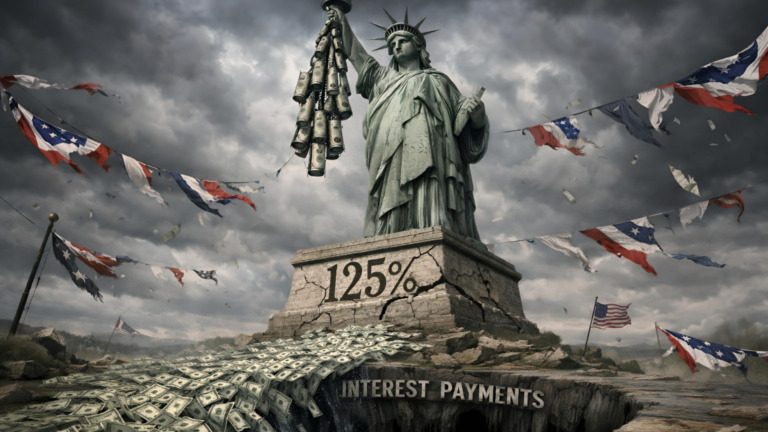
A stormy political illustration of the Statue of Liberty standing on a cracked pedestal marked “125%,” holding chains of dollar bills as waves of US banknotes pour into a dark pit labeled “INTEREST PAYMENTS,” surrounded by tattered American flags.

The United States economy enters 2026 with remarkably resilient momentum, expanding at an estimated 4.3% annualized rate in Q4 2025—the strongest quarterly performance in two years—yet faces a complex macroeconomic crossroads as multiple forces converge to shape the trajectory ahead.