



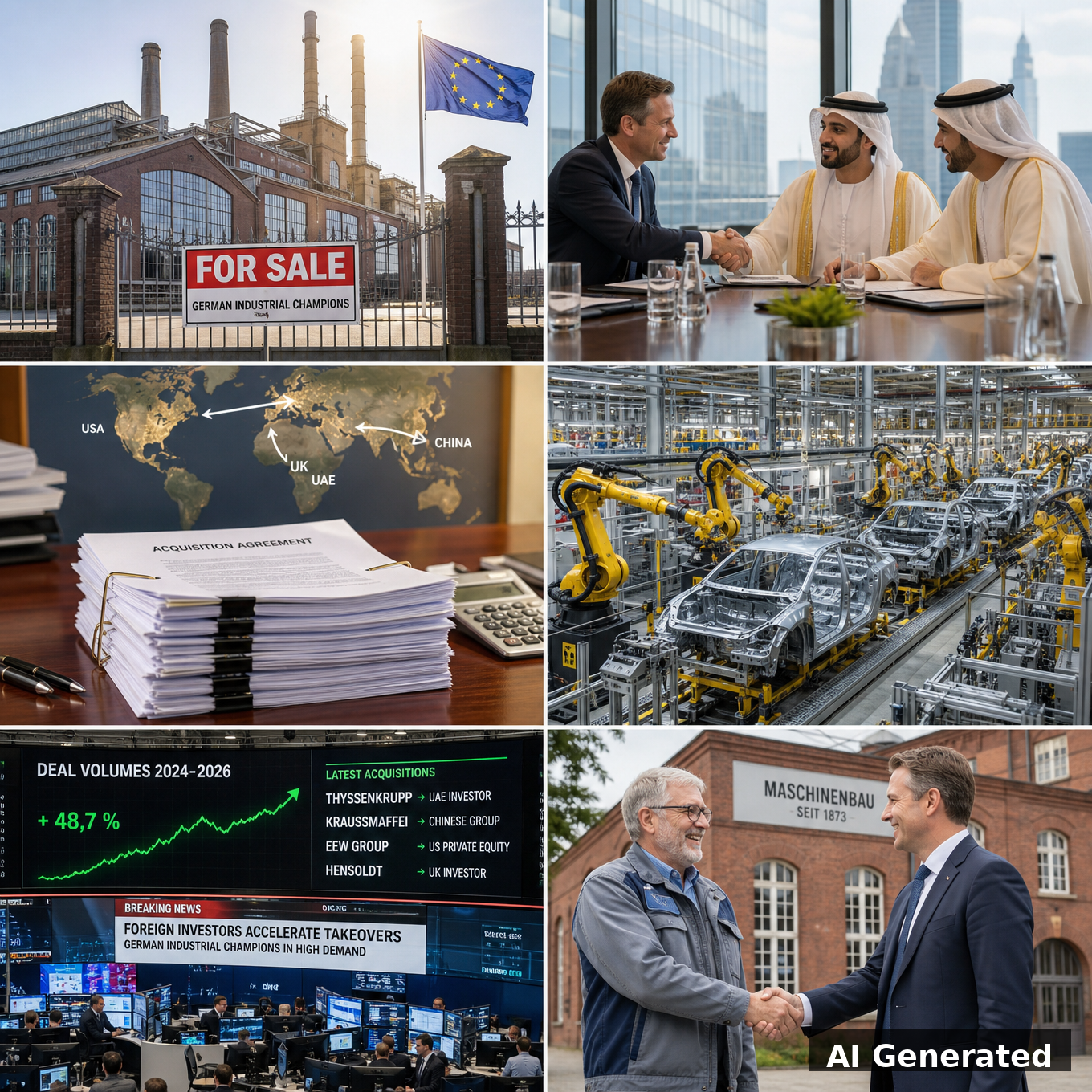


In August 2026, the Bulthaup family sold EBM-Papst — the Swabian ventilation giant that quietly cools half the world’s data centres — to the American group Madison Air for €5.1 billion [3][4]. It was done in roughly ten weeks, and the German press immediately reached for the same word it always does now: Ausverkauf — sell-off. “Again a jewel of German industry goes to America,” ran one headline.
The instinct is understandable. But before we accept the narrative, let’s look at the actual record. Because the truth about what is happening to German industry is both bigger and stranger than the EBM-Papst deal suggests — and it isn’t quite the story the headlines tell.
A survey of foreign takeovers of German industry, 2024 to mid-2026
In August 2026, the Bulthaup family sold EBM-Papst — the Swabian ventilation giant that quietly cools half the world’s data centres — to the American group Madison Air for €5.1 billion [3][4]. It was done in roughly ten weeks, and the German press immediately reached for the same word it always does now: Ausverkauf — sell-off. “Again a jewel of German industry goes to America,” ran one headline.
The instinct is understandable. But before we accept the narrative, let’s look at the actual record. Because the truth about what is happening to German industry is both bigger and stranger than the EBM-Papst deal suggests — and it isn’t quite the story the headlines tell.
The numbers are staggering
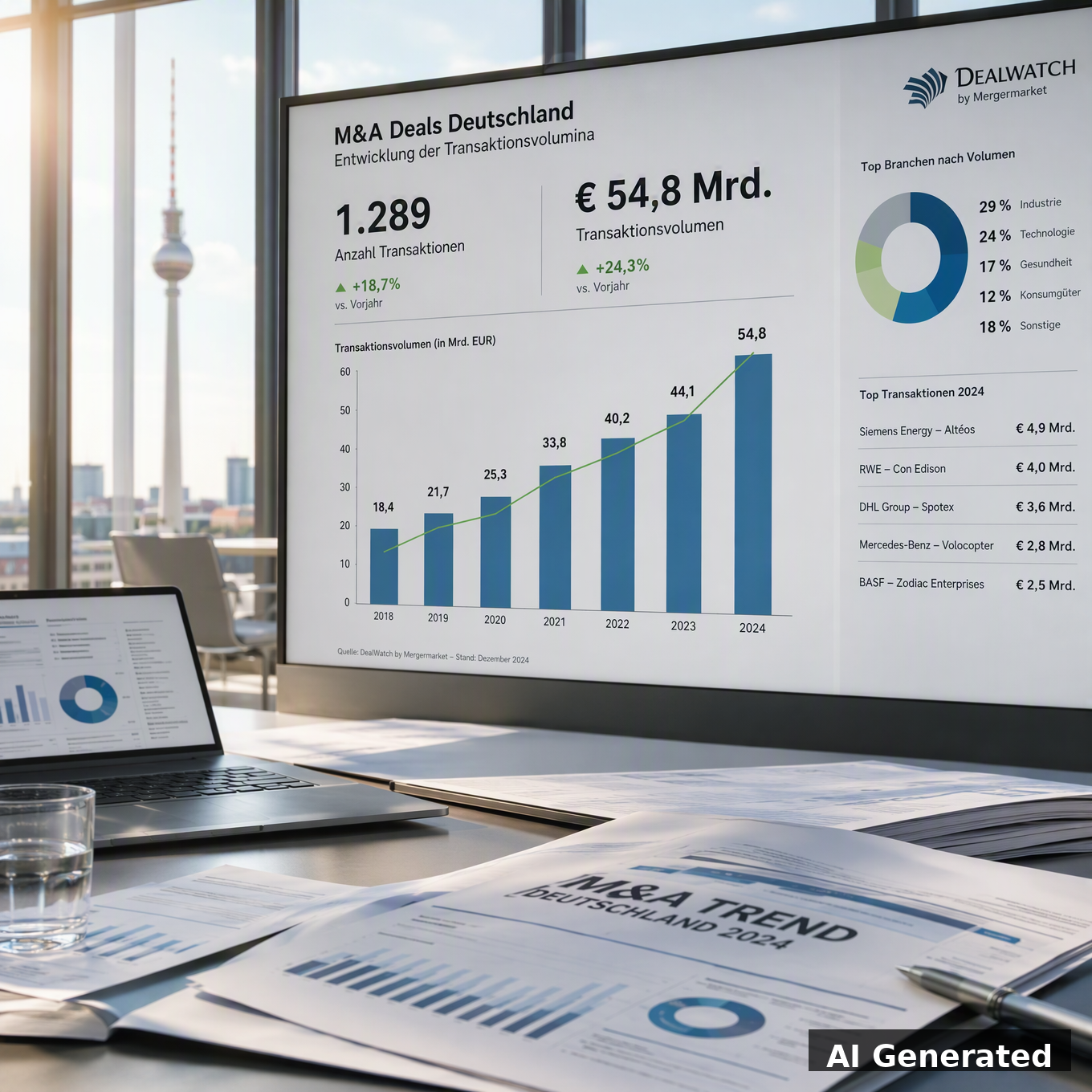
Start with the scale. By mid-December 2025, 1,641 German companies had been sold for a combined $107.1 billion — a 30% jump in deal volume over 2024. Of those, 900 went to foreign buyers for $82.5 billion [1]. Private-equity firms set an all-time record, spending $49.9 billion in Germany in a single year — double what they spent the year before [1].
Consultancy PwC counts 1,233 deals by foreign investors in Germany in 2025, worth roughly €113 billion — up from €101.6 billion in 2024. For the first time ever, private-equity buyers accounted for more than half of all acquisitions (52%), overtaking strategic buyers [2]. And the sector mix has shifted: industrial manufacturing overtook technology as the single most-sold sector in Germany, making up 29% of all foreign deals [2].
This is not a blip. Roughly 7,861 of Germany’s top companies are now in foreign hands — a number that grows every quarter.
Who sold, to whom, for how much
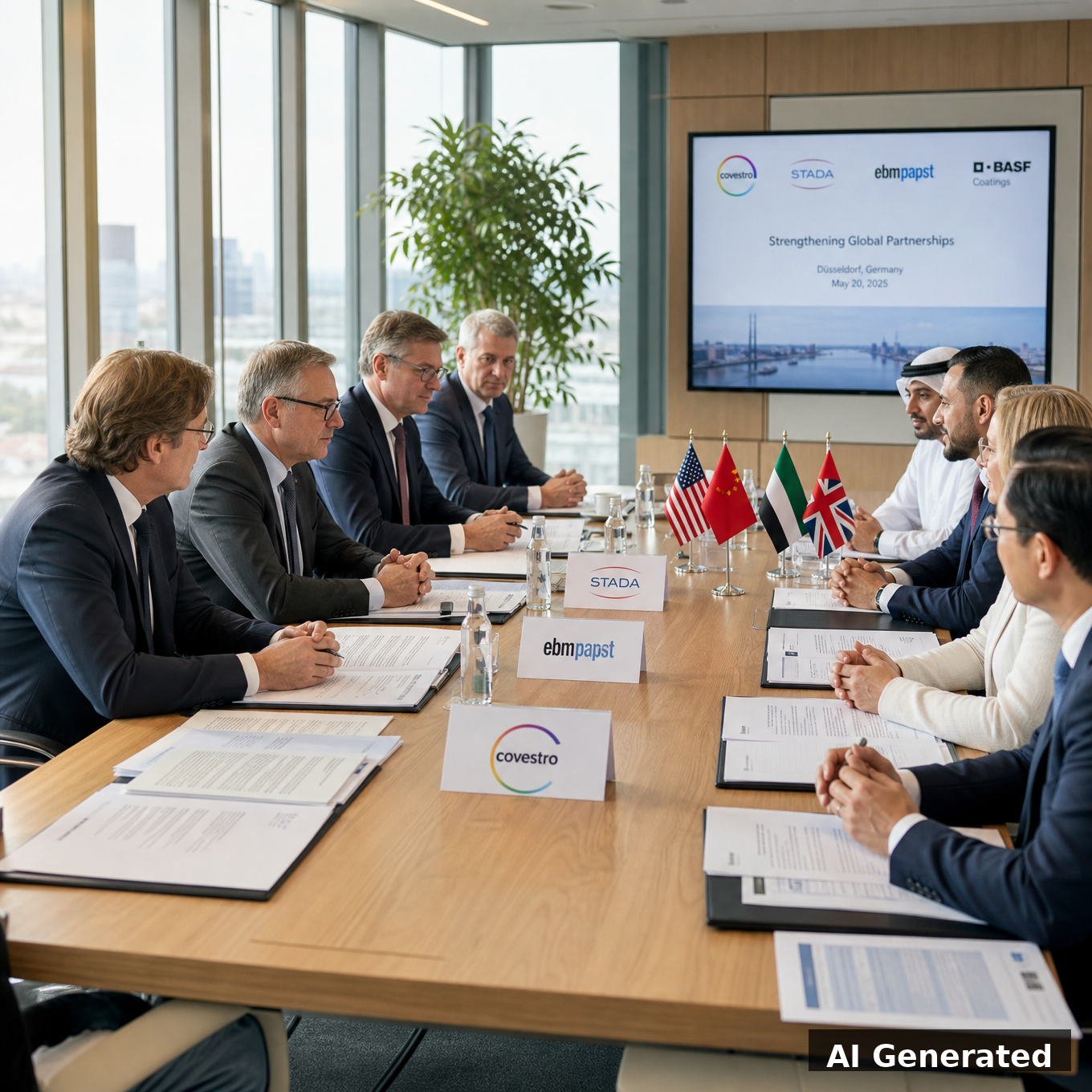
The list of large foreign takeovers in the window 2024 → mid-2026 reads like a roll call of German industrial muscle:
Covestro (chemicals, 17,600 staff) → Adnoc/XRG, the UAE’s state oil giant, for ~€15 billion. Completed December 2025 [5].
BASF Coatings, reborn as Surventis (10,700 staff, HQ Münster) → US buyout firm Carlyle + Qatar’s sovereign fund QIA. Effective July 2026 [6].
Stada (pharmaceuticals, 11,670 staff) → British buyout firm Capvest, ~€7 billion. Completed April 2026 [7].
Ceconomy / MediaMarktSaturn (electronics retail, ~40,000 staff) → Chinese e-commerce giant JD.com, ~€4.1 billion. Approved by Germany’s economy ministry June 2026.
METRO (wholesale, >84,000 staff) → Czech investor Daniel Křetínský’s EP Global Commerce. Majority taken in 2025 [8].
Apleona (facility management, ~43,000 staff) → US buyout firm Bain Capital, €4 billion. Completed February 2025.
MorphoSys (biotech) → Swiss pharma Novartis, €2.7 billion. Completed 2024.
Wintershall Dea (oil & gas) → British firm Harbour Energy. Completed September 2024.
thyssenkrupp Steel Europe — Křetínský’s EPCG took a 20% stake in 2024.
EBM-Papst (ventilation, ~13,000 staff) → Madison Air, €5.1 billion. Announced August 2026 [3][4].
Perlon-Gruppe (chemical world-market leader, insolvent) → Chinese group Wuxi Yinda Nylon. June 2026 [9].
Commerzbank — Italy’s UniCredit pushed past 40% in a hostile takeover by mid-2026, the year’s largest deal at over €40 billion.
Add Tipico, Amprion, Motel One and IFCO, and the pattern is unmistakable: the buyers are American private equity, Chinese and Emirati state-linked capital, and a handful of aggressive European investors [2]. The targets are exactly the engineering, chemical and industrial champions Germany built its wealth on.
But here’s the uncomfortable twist
Now the part that should make you pause before you cry Ausverkauf.
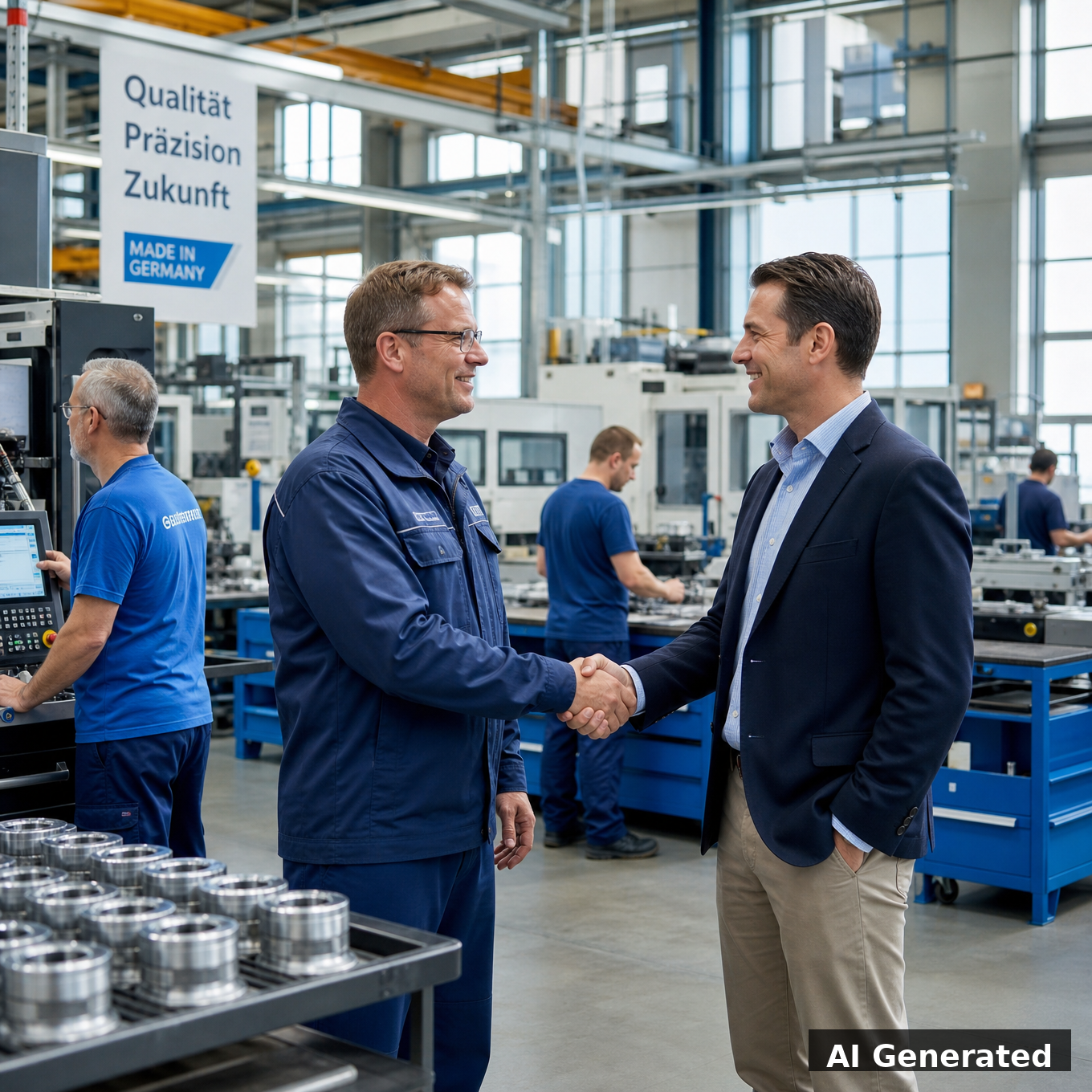
The biggest buyers are going out of their way to say they are not moving production abroad. EBM-Papst’s new owner promised Mulfingen “remains the headquarters and an important research, development and production site,” with no change to existing labour agreements [3]. Surventis keeps its HQ and its biggest integrated coatings plant in Münster [6]. Perlon’s Chinese buyer committed to keeping all three German sites and most of its 510 jobs [9]. Covestro’s Emirati owner made it the centrepiece of its new chemicals business [5].
In other words, the great German sell-off of 2024–2026 has not yet produced the great offshoring — at least not in the big deals. The buyers paid billions for the plants, the patents and the workforce. Moving them abroad would be throwing away the purchase.
What the survey really shows
So what is happening? Three things, and they’re all more interesting than a simple “sell-off”:
First, ownership is changing hands at record speed. The volume is real, the acceleration is real, and it is concentrated in the industrial heartland [1][2].
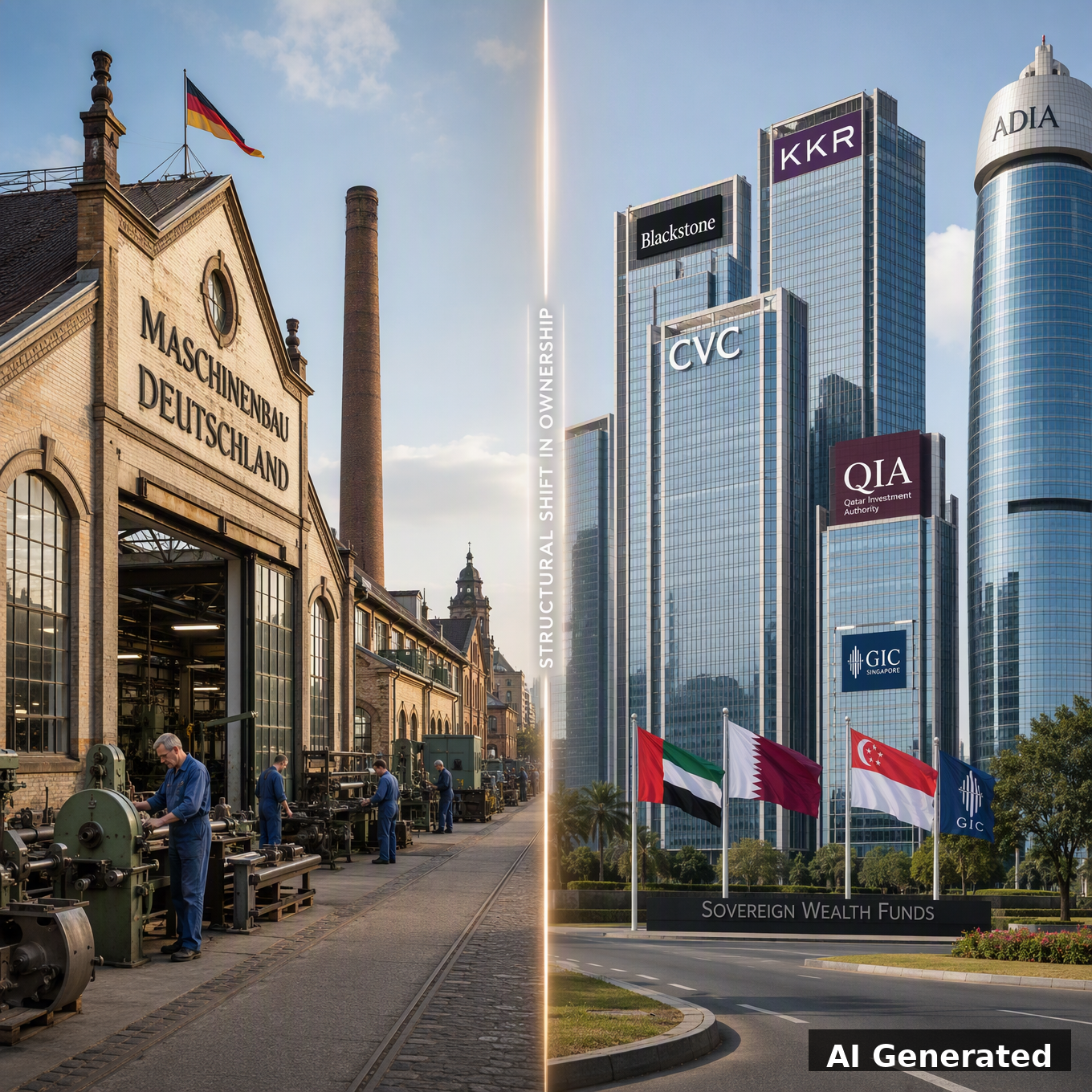
Second, the buyers are increasingly financial and state-linked, not industrial. Private equity now drives most deals; Gulf and Chinese state capital is buying strategic industrial assets [2]. That’s a structural shift in who owns Germany’s factories, even if the factories stay put.
Third, the risk is in the future, not the present. The offshoring hasn’t happened yet — but the pressure that forces it (energy costs, Asian competition, weak order books) is mounting. German chemicals were running at only 70% capacity in 2025, with orders down more than a fifth since 2021 [9]. A foreign owner under private-equity return targets may be far less patient with a struggling German plant than a family owner was.
Takeaway
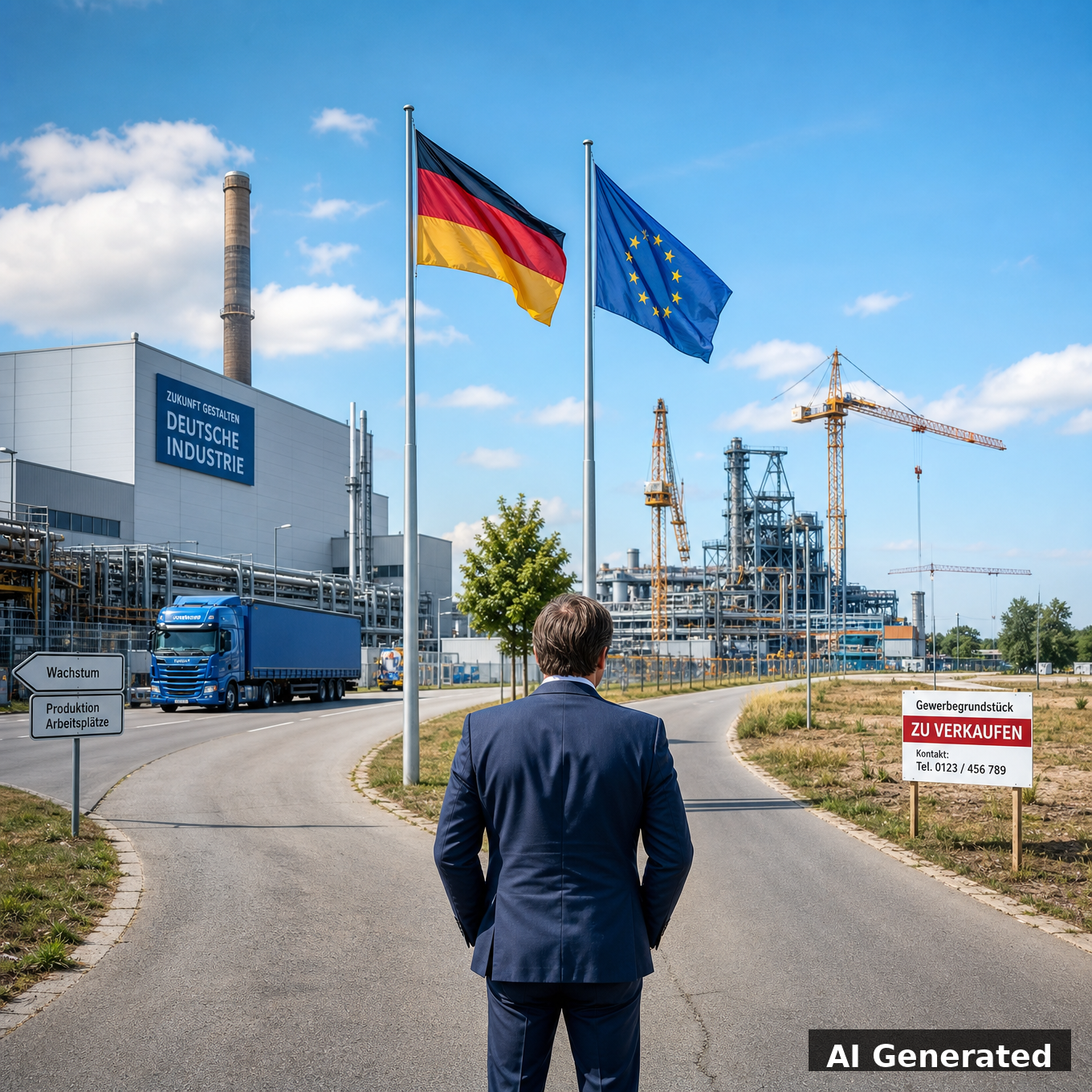
The survey cuts both ways. The “sell-off” is real — but it is a sale of ownership, not yet a sale of production. The factories are still in Germany; the question is who holds the keys, and what they’ll do with them when the next downturn comes.
That question — does foreign takeover actually hollow out German manufacturing, or is that a myth? — is the subject of Part 2. Because the answer, as we’ll see, is not nearly as comforting as the buyers’ press releases suggest.
References
[1] Handelsblatt. (2025). Übernahmen: Investoren kaufen immer häufiger deutsche Unternehmen. Handelsblatt. https://www.handelsblatt.com/finanzen/maerkte/uebernahmen-investoren-kaufen-immer-haeufiger-deutsche-unternehmen/100183959.html
[2] PwC Deutschland. (2025). Destination Deutschland 2025: M&A-Aktivitäten ausländischer Investoren. PwC. https://www.pwc.de/de/private-equity/destination-deutschland-2025.html
[3] Produktion. (2026). Madison Air kauft EBM-Papst für 5,1 Mrd. Euro. Produktion. https://www.produktion.de/wirtschaft/uebernahme-madison-air-kauft-ebm-papst-fuer-51-mrd-eur/2720122
[4] Handelsblatt. (2026). Ventilatorenspezialist EBM-Papst wird an US-Konzern verkauft. Handelsblatt. https://www.handelsblatt.com/unternehmen/mittelstand/familienunternehmer/industrie-ventilatorenspezialist-ebm-papst-wird-an-us-konzern-verkauft-01/100247761.html
[5] Covestro. (2024). Übernahmeangebot von ADNOC für Covestro erfolgreich. Covestro Investor News. https://www.covestro.com/investors/news/de/uebernahmeangebot-von-adnoc-fuer-covestro-erfolgreich/
[6] Surventis. (2026). Surventis startet als eigenständiger, weltweit führender Anbieter für Automobillacke und Oberflächenbehandlung. Surventis/Chemetall. https://www.chemetall.com/global/de/about-us/press-releases/2026/Surventis-launches-as-an-independent-global-leader
[7] STADA Arzneimittel AG. (2026). STADA erwirbt umfassendes Consumer-Healthcare-Portfolio von Orifarm. STADA / Presseportal. https://www.presseportal.de/pm/13125/6301266
[8] METRO AG. (2026). METRO steigert Umsatz und Ergebnis im H1 2025/26. METRO AG Newsroom. https://newsroom.metroag.de/de/news/metro-steigert-umsatz-und-ergebnis-im-h1-2025-26
[9] Münchner Merkur. (2026). China-Konzern kauft deutschen Weltmarktführer. Münchner Merkur. https://www.merkur.de/wirtschaft/kauft-deutschen-chemie-riesen-auf-chinesischer-investor-94343125.html
AI Disclosure: This post was created with the assistance of artificial intelligence. The ideas, analysis, and opinions expressed are my own — AI was used to help compose, structure, and refine my personal notes and thoughts into the final written content. Images and video featured in this post were also generated using AI tools, based on my own creative prompts and direction.
