







A Friday hack in Berlin exposed a gap between what developers choose and what the industry sells them
On Friday, October 23rd, I walked into my first ever Global AI Community convention — a “Graphs Gone Wild” mini-hack at CODE University in Berlin, organized by Global AI Berlin with Microsoft and Neo4j as sponsors [11][21]. The room was wonderful: mixed ages, mixed backgrounds, rows of laptops open, people building small prototypes and showing them to strangers. As an enthusiast of AI and computers, I felt genuinely at home.
What surprised me was not the graph database on the agenda — Neo4j is a remarkable piece of engineering [21]. It was the laptops around me. Almost everyone was working with Claude, Copilot, or Gemini. Not a GLM terminal in sight. Not a MiMo tab open.
I kept thinking: these are perfectly intelligent models on those screens. But they are not so far above the intelligence of models that cost almost a hundred times less [1]. Something else was choosing those models — and it wasn’t quality per token.
The price gap is real, and it is enormous

Let’s do the math that a convention floor rarely does.
Anthropic’s own pricing page lists Claude Opus 5.5 at $4 per million input tokens and $20 per million output [1]. Google’s Gemini 3.1 Pro runs $2/$12 [6]. Now the other column: Z.ai’s GLM-5.3 costs $1.40/$4.40, and GLM-5.3-Flash drops to $0.15/$0.50 [5]. Xiaomi’s MiMo-V2.6-Pro sits at roughly $0.44 in, $0.87 out, with the Flash tier at $0.14/$0.28 [7][19]. The weights themselves are MIT-licensed — free to download, free to run, forever [19].
So I did something concrete. I burned 12.2 billion tokens last month and I’m already past 10.5 billion this month [1]. At a rough 70/30 input-to-output split, here’s what that month would have cost:
| Model | Approx. monthly cost (single user) |
|---|---|
| Claude Opus 5.5 ($4/$20) | ~$108,000 |
| Gemini 3.1 Pro ($2/$12) | ~$61,000 |
| GLM-5.3 ($1.40/$4.40) | ~$28,200 |
| MiMo-V2.6-Pro ($0.44/$0.87) | ~$6,800 |
| GLM-5.3-Flash ($0.15/$0.50) | ~$3,100 |
(Arithmetic is mine, from published list rates — your exact split will shift the numbers, but not the shape.) Against the cheapest capable tier, we are talking a 15- to 35-fold difference, and against legacy Opus pricing it approaches the “almost hundred times cheaper” claim I made walking out of that hall [1]. On Xiaomi’s own accounting, MiMo’s flagship runs at 1/20th to 1/60th the cost of leading international models at comparable intelligence [19]. Artificial Analysis puts MiMo-V2.6-Pro at roughly $0.13 per benchmark task, while Claude Opus 5 and GPT-6 Astra sit at $3–$8 per task [13][19].
For a team of three at my usage, multiply those rows by three: over $324,000 a month on Opus 5.5, versus about $9,400 on GLM-5.3-Flash. That is not a rounding error. That is a different economy.
But are they actually as good? (The honest answer: almost)

Here I have to be fair to the laptops around me.
The frontier still leads. On the Artificial Analysis Intelligence Index, Claude Opus 5.5 scores 58; the best open-weight model, Xiaomi’s MiMo-V2.6-Pro, scores 46 [13]. Maxime Labonne’s tracking of the open frontier puts it plainly: six closed models still outscore every open one, and “closed models still keep a clear edge on real-world agentic coding tasks” [16].
But the gap has collapsed from a chasm to a step. VentureBeat’s side-by-side of GLM-5.2 showed it *beating* GPT-5.5 on SWE-bench Pro (62.1 vs 58.6), on long-horizon task completion, and on tool-use benchmarks — for roughly one-sixth the cost [8]. Labonne’s own data shows open models trailing the closed frontier by only 6–8 index points [16]. On specific instances, as I said in that hall, cheap models can exceed Opus. On average, they no longer embarrass it.
GLM-5.3 deserves its own paragraph
GLM-5.3 is the model I didn’t see on a single laptop in Berlin, and it is the one the data keeps pointing to. On the Artificial Analysis Intelligence Index it scores 45 — third among 121 models [13]. Its Coding Index is 74.8 and its Agentic Index is 53.1 [7] — both squarely in the range you’d expect from a frontier tool, at $1.40/$4.40 instead of $4/$20. On GPQA Diamond it hits 91.7% [7]. Z.ai’s own numbers, replicated by VentureBeat, showed GLM-5.2 — the predecessor — beating GPT-5.5 on SWE-bench Pro; GLM-5.3 inherited that lineage and pushed further [8].
Two honest caveats: Artificial Analysis flags GLM-5.3 as “particularly expensive” for an open-weight model* and “very verbose” (210M output tokens vs a 140M median) [13] — verbosity eats into the per-token savings. And Z.ai has since added GLM-5.3-Prime, a high-speed serving tier running the same weights* at exactly double the price ($2.80/$8.80) [7]. The irony writes itself: even the cheap model has a premium speed lane now.
The tools argument matters too
GLM speaks the Anthropic Messages API natively, which means it drops straight into Claude Code-style harnesses — the same agent workflows — without a proprietary cage [8]. What is often called “restrictive tooling” in frontier products is not a technical necessity. It is a business model.
The full five-angle comparison

Smart buying isn’t one number. Here is the multi-axis view:
| Angle | GLM-5.3 / MiMo | Claude Opus 5.5 / GPT-class |
|---|---|---|
| Monthly cost @ 12.2B tokens | ~$28,200 / ~$6,800 | ~$108,000 |
| Coding index | 74.8 (GLM-5.3) [7] | AA Coding not isolated, but Opus leads intelligence 58→45 [13] |
| Agentic / tool use | 53.1 (GLM-5.3); MCP-Atlas 77.0 vs GPT-5.5’s 75.3 (GLM-5.2) [7][8] | Opus 5.5 tops overall index [13] |
| Context window (input) | 1,048,576 (~1M) [7] | 1M (full window at standard price) [1] |
| Max output tokens | 131,072 (128K) [7] | server-side cap, not published |
| Cache read | GLM-5.3 $0.26; MiMo-Pro $0.0036 (99% off) [5][7][19] | Opus 5.5 $0.20 (5% of input) [1] |
Two things jump out. First, MiMo’s cache discount is absurd — $0.0036 per million cached tokens [19] — and agentic coding re-reads the same repository constantly, so the *effective* input price for agent workloads is a fraction of even the cheap list price. Second, GLM and MiMo match frontier context (1M+) at the cheap tier, while Gemini charges more above 200K tokens [6] — a hidden cost that rewards the expensive provider.
Why is everyone renting the expensive stuff?
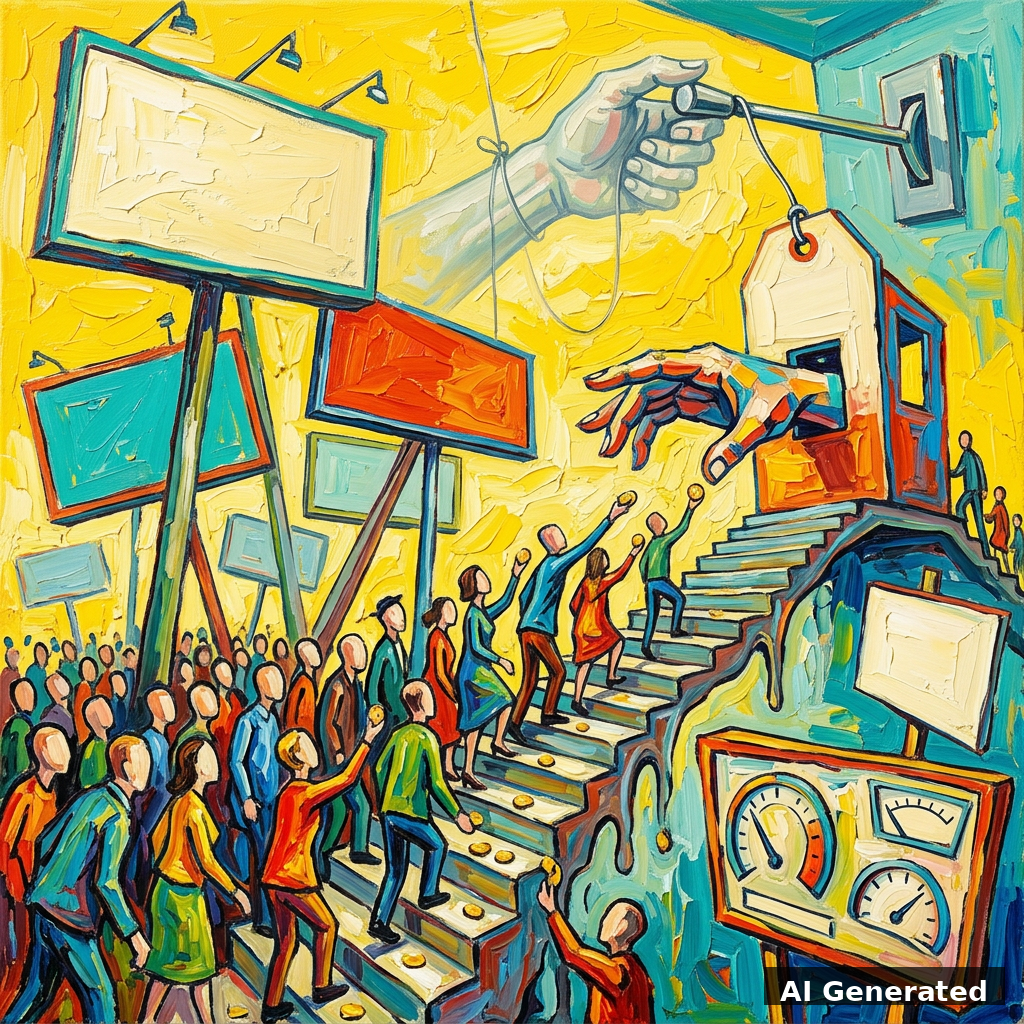
If the economics are this lopsided, the conference room should have looked different. Four forces explain the gap.
The packages cannot carry your tokens — by design
Every major “claw” tool — Claude Code, Codex, GitHub Copilot — sells a subscription, not raw tokens. Claude Code comes with Claude Pro ($17–20/month) or Max ($100–200/month), but usage is metered on a rolling five-hour session window plus weekly caps [1]. Codex is bundled into ChatGPT plans (Plus ~$20, Pro $100–200) with 10–60 cloud tasks per five-hour window on the entry tier [20]. GitHub Copilot charges a seat ($10–100/month) plus GitHub AI Credits at $0.01 each for agent work [24].
Now run my usage through those caps. 12.2 billion tokens a month is roughly 400 million tokens per day [1]. No flat tier on earth expresses that. Exceed the window and you are either throttled or paying per token at API rates — $4/$20 on Opus 5.5 [1] — which means the “unlimited” feeling of a $20 subscription evaporates the moment you work like I work.
Watch what happens to the effective per-token cost when the cap does its job. A single Max-20x Claude seat costs $200/month [1]. Now here is the part the vendors do not print on the pricing page: nobody publishes what the cap actually is. Anthropic describes it as a “rolling five-hour session window plus weekly limits” [1] — but no token number appears anywhere. The ceiling is a corporate secret, reset on a schedule you cannot audit, adjusted at the vendor’s discretion. To make the math concrete, let us assume — and this assumption is deliberately visible to you, the reader, precisely because Anthropic will not give us a real number* — a generous 500 million tokens per package cycle. At that assumed allowance, your effective in-window rate is $0.40 per million tokens. Cross the unpublished threshold and the same seat’s marginal tokens bill at $4 input / $20 output — a fifty-fold jump, overnight, by a limit you were never told. My own usage, 400 million tokens per day* [1], would exhaust that assumed package inside thirty-six days — no, inside thirty-six hours; the remaining twenty-nine days of the month bill at full API rates, dragging the seat’s effective cost from $200 toward the $108,000 single-user figure in the table above.
This is the trap encoded in the word “included.” The cap is not a limit on your spending — it is a limit on your discount, guarded by an opaque number only the vendor knows. You are not buying a tool; you are renting permission, at a price that moves on someone else’s whim. Cross the line, and the subscription was never a subscription at all. It was a pay-as-you-go plan wearing a friendly monthly number.
These caps are not a technical limitation. They are the price of admission to the real rates — and the bill is unreadable until it arrives. These are burdensome expenses dressed up as convenience, and the opacity is the point: a customer who cannot see the ceiling cannot compare the ceiling.
Advertising, at industrial scale
CNBC reported that Microsoft and Google have paid individual creators $400,000–$600,000 for multi-month promotion deals, while generative-AI platforms spent over $1 billion on US digital ads in 2025 — up 126% year-over-year [4]. Anthropic is described as “one of the more aggressive” in creator marketing [4]; one analysis counted 31 sponsored creators publishing 50 #ClaudePartner posts, mostly mid-tier influencers [9]. And now the products themselves carry ads: OpenAI began testing ads inside ChatGPT in early 2026, matched to the subject of your conversations [12]. To Anthropic’s credit, it has publicly pledged Claude stays ad-free [14] — but influencer checks clear either way. Business Insider documented creators facing audience backlash, some demanding a 20–30% risk premium to post AI sponsorships at all [23].
Defaults dressed up as recommendations
OpenAI announced that GPT-5.6 would become the “preferred model” across Microsoft 365 Copilot [20]. CNBC obtained an internal Microsoft memo instructing developers to default to OpenAI’s flagship: *”shifting more workloads to OpenAI models helps us get greater value from our token investment”* [15]. That is not a developer choosing the best tool. That is a partnership choosing for them.
Scoreboards that can be gamed
The Leaderboard Illusion study found Meta tested 27 private variants of Llama-4 before publishing only the best-scoring one, and estimated Google and OpenAI received 19.2% and 20.4% of all Chatbot Arena data while 83 open-weight models shared 29.7% [3][18]. When the leaderboard is bent, the room follows the leaderboard.
The boxes are the trap

At the convention I kept hearing wonderful ideas — task management, automated workflows — all being assembled inside hosted boxes: a server you rent, a database you don’t own, a “claw” you subscribe to [1]. I saw these walled gardens early in my own AI journey, on ChatGPT and Perplexity, and my reaction then is my reaction now: cumbersome, overburdened, and buggy — probably because the whole point is that you *can’t* host it yourself on a cheap server [1].
The data says this is by design, not accident. A Zapier survey of 542 executives found 81% worried about AI vendor dependency, 47% would lose a key business function if their vendor failed, and only 6% could switch without disruption [17]. Lock-in now forms at the workflow layer in about 18 months — less than half the time cloud lock-in took [17]. The commodity is the model. The platform is the trap.
And the exit is open. Self-hosting break-even against premium API rates lands around 5–10 million tokens per day [22]. I burn roughly 400 million a day. For heavy users, the financial argument for owning your stack is not close.
And you don’t even need the best cheap model
Here is the point the industry does not want you to notice: GLM-5.3 and MiMo are the capable* end of the cheap spectrum. Below them sits an entire tier — DeepSeek’s Flash variants, MiniMax, Qwen, the smaller GLM-Flash and MiMo-Flash models — running at $0.10–$0.50 per million tokens [2][5]. For drafting, summarizing, classification, boilerplate, first passes on well-scoped tasks, these models are more than sufficient. The only reason to route everything* through a $20-output flagship is habit, marketing, or a default someone else chose for you.
These boxes restrict, compress, and oppress talent and opportunity [1] — not because the models inside are weak, but because the walls around them decide who gets to build, at what price, and on whose infrastructure.
The leaderboard nobody can buy

Here is where the story turns hopeful — and it goes back to those laptops.
Look at OpenRouter’s live rankings, measured in tokens actually processed by millions of developers [2]. The monthly top models: DeepSeek V4.1 Flash, GLM 5.3 Flash, MiMo-V2.6-Flash, Tencent’s Hy4, another DeepSeek variant. In the weekly view, the top five are DeepSeek, DeepSeek, MiniMax, GLM — and Tencent. Claude Opus 5.5 ranks sixth [2]. By maker: DeepSeek 24.4% of requests, then Google, OpenAI, Z.ai — Anthropic trailing at 4.7% [2].
Nobody sponsored those positions. Developers voted with their tokens — for cost, for capability, for the freedom to switch. Andrej Karpathy himself proposed these usage rankings as a harder-to-game alternative to Chatbot Arena, because every routed request is “directly voting for some combo of capability+cost” [10].
One honest caveat: token volume shows what is used, not what is best, and free-tier variants inflate some counts [2]. But the direction is unmistakable. Qwen, as I noted, is present but weaker — around 5.3% of requests [2]. The market has already spoken; it is just speaking a language the sponsors don’t repeat.
What Global AI should be growing

I left the convention with nothing but warmth for the people in that room. But my expectation — and my message to the organizers — is this: Global AI should be growing the AI by growing the person, not the product [1].
The stack that lets a student in that hall build a 100%-sovereign task system already exists, is MIT-licensed, and costs pennies [5][7][19]. The convention even said “use whatever stack you like… or something completely experimental” [11]. Then let the teaching match the invitation: run the cheap models, own the database, wire it yourself on hardware you control.
By nature I do my own way, with my own tools — knowledge, ability, skills, experience that nobody can license back to me [1]. That is not an eccentricity. In 2026, with the tools already free, it should be the default.
Free their minds from the financial concern, and people open up and create [1]. The models are ready. The rooms are full. The only thing still for rent is permission.
—
References
[1] Anthropic. (2026). Plans & pricing. Claude by Anthropic. https://claude.com/pricing — combined with personal usage figures and observations from author’s own voice recording (noteshelf_recording.m4a; 12.2B tokens/month, “boxes” observation, sovereignty argument).
[2] OpenRouter. (2026). LLM Rankings — live rankings by real-world usage (data through Oct 24, 2026). OpenRouter, Inc. https://openrouter.ai/rankings
[3] Singh, S., Nan, Y., Wang, A., D’Souza, D., Kapoor, S., Üstün, A., Koyejo, S., Deng, Y., Longpre, S., Smith, N. A., Ermis, B., Fadaee, M., & Hooker, S. (2025). The Leaderboard Illusion. arXiv preprint arXiv:2504.20879. https://doi.org/10.48550/arXiv.2504.20879
[4] Vallese, Z. (2026, February 6). Google and Microsoft offer lucrative deals to promote AI, but even $500,000 won’t sway some creators. CNBC. https://www.cnbc.com/2026/02/06/google-microsoft-pay-creators-500000-and-more-to-promote-ai.html
[5] Z.AI. (2026). Pricing — Overview. Z.AI Developer Documentation. https://docs.z.ai/guides/overview/pricing
[6] Google. (2026). Gemini Developer API pricing. Google AI for Developers. https://ai.google.dev/gemini-api/docs/pricing
[7] OpenRouter. (2026). MiMo-V2.6-Pro & GLM 5.3 — API pricing & benchmarks. https://openrouter.ai/xiaomi/mimo-v2.6-pro · https://openrouter.ai/z-ai/glm-5.3
[8] Franzen, C. (2026, June 16). Z.ai’s open-weights GLM-5.2 beats GPT-5.5 on multiple long-horizon coding benchmarks for 1/6th the cost. VentureBeat. https://venturebeat.com/technology/z-ais-open-weights-glm-5-2-beats-gpt-5-5-on-multiple-long-horizon-coding-benchmarks-for-1-6th-the-cost
[9] Mahoney, M. (2025, June 30). B2B influencer marketing case study: Inside Anthropic’s influencer marketing program. Favikon. https://www.favikon.com/blog/inside-anthropic-influencer-marketing-program
[10] Willison, S. (2025, April 30). Understanding the recent criticism of the Chatbot Arena. Simon Willison’s Weblog. https://simonwillison.net/2025/Apr/30/criticism-of-the-chatbot-arena/
[11] Global AI Community. (2026). Graphs Gone Wild. https://globalai.community/e/ack9t53d
[12] Perez, S. (2026, February 9). ChatGPT rolls out ads. TechCrunch. https://techcrunch.com/2026/02/09/chatgpt-rolls-out-ads/
[13] Artificial Analysis. (2026). Comparison of AI models across intelligence, performance, and price. https://artificialanalysis.ai/models
[14] Anthropic. (2026, February 4). Claude is a space to think. Anthropic. https://www.anthropic.com/news/claude-is-a-space-to-think
[15] Novet, J. (2026, August 5). Microsoft AI exec tells developers to default to OpenAI’s top model as part of efficiency push. CNBC. https://www.cnbc.com/2026/08/05/microsoft-makes-openai-gpt-5point6-sol-default-in-github-copilot-for-staff.html
[16] Labonne, M. (2026, July 6). The State of the Open Frontier. Maxime Labonne’s Substack. https://maximelabonne.substack.com/p/the-state-of-the-open-frontier
[17] Gazivoda, D. (2026, April 9). The AI infrastructure trap: How the Big Three are quietly locking your engineering organization in. StepTo. https://stepto.net/blog/ai-vendor-lock-in-infrastructure-risk-2026
[18] Whitwam, R. (2025, May 1). New study accuses LM Arena of gaming its popular AI benchmark. Ars Technica. https://arstechnica.com/ai/2025/05/researchers-claim-lm-arenas-ai-leaderboard-is-biased-against-open-models/
[19] eesel AI. (2026, September 23). Xiaomi MiMo V2.6 pricing: Every plan, model, and API cost in 2026. eesel AI. https://www.eesel.ai/blog/xiaomi-mimo-v2-6-pricing
[20] OpenAI. (2026). Codex — AI Coding Partner. OpenAI. https://openai.com/codex/ · GPT-5.6 preferred-model announcement: https://openai.com/index/gpt-5-6-preferred-model-microsoft-365-copilot/
[21] Zaid, Z. [Global AI Berlin]. (2026, October 23). Graphs Gone Wild — Mini Hack. Meetup / Global AI Berlin. https://www.meetup.com/de-DE/de-DE/global-ai-berlin/events/316500152/
[22] Lehmkämpfer, C. (2026, June 1). Open source vs closed API LLM cost comparison 2026. Lyceum Technology. https://lyceum.technology/magazine/open-source-vs-closed-api-llm-cost-comparison/
[23] Bradley, S., & Whateley, D. (2026, August 20). The creator economy’s hottest debate: Can influencers post AI ads without alienating their fans? Business Insider. https://www.businessinsider.com/ai-brand-deals-chatgpt-claude-influencers-weigh-backlash-over-paychecks-2026-8
[24] GitHub. (2026). GitHub Copilot — Plans & pricing. https://github.com/features/copilot/plans
AI Disclosure — This article was researched, drafted and edited with the assistance of AI tools. All images and the featured video in this article were generated with AI and are labelled “AI Generated” in accordance with the EU AI Act.
