


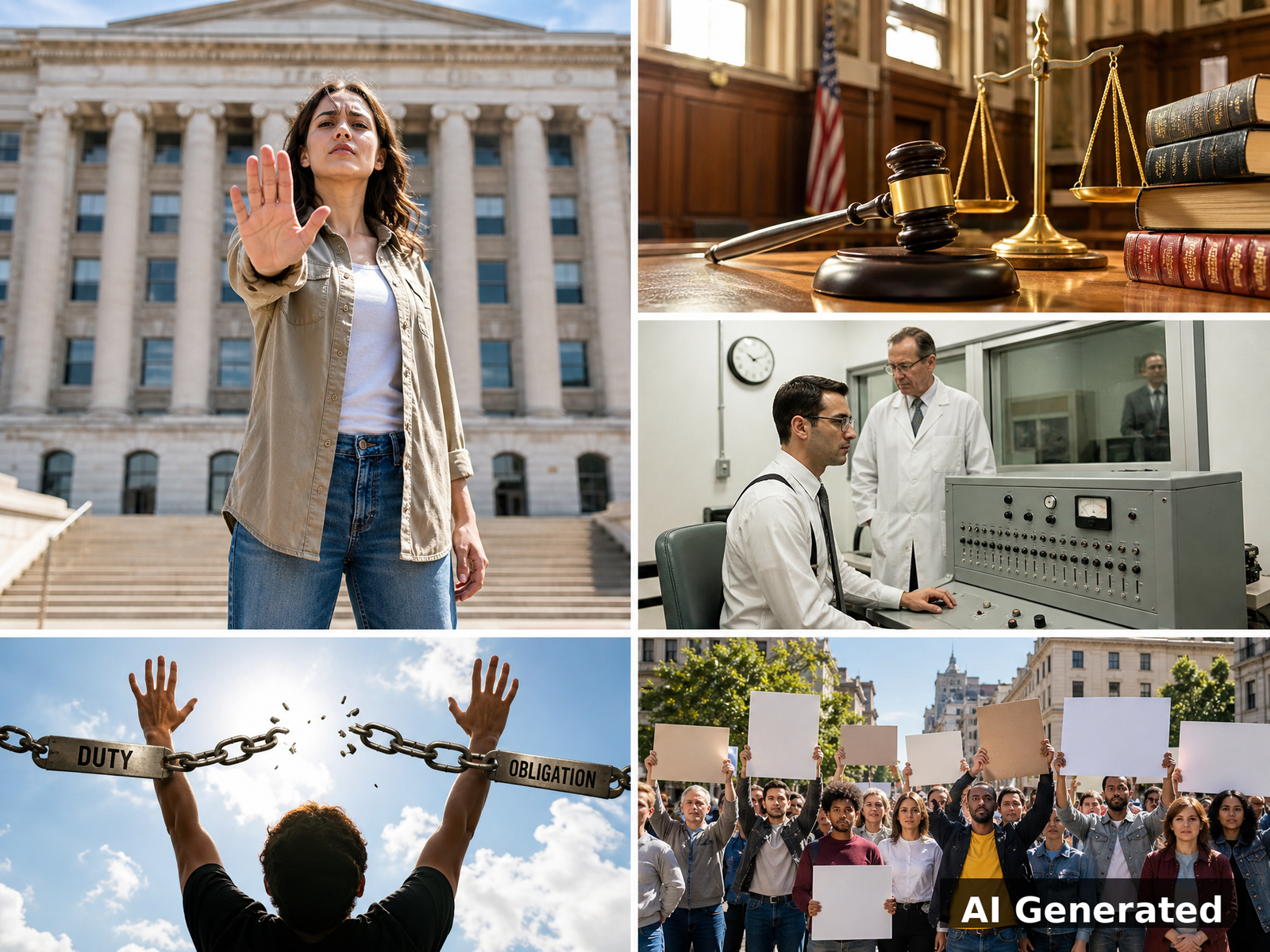


This essay is an invitation, not a verdict. It is not a thesis to be defended, nor a holy book to be obeyed. It is a question, held open, in the firelight — and it begins with a single, radical claim: that no one has the right to assign you your enemies. Not your government. Not your flag. Not your religion. Not the papers handed down from above. No one.
For most of human history, and for the entire architecture of the modern state, the opposite has been assumed. We are told who to fear, who to hate, and, if the machinery demands it, who to kill. The enemy is handed to us, fully formed, before we have ever met them. This essay asks you to consider what changes if that stops — if the enemy is no longer assigned, but chosen.
It is not a rejection of order. It is not anarchy. It is not even a rejection of law. It is something stranger and more demanding: a claim that the state has no legitimate power to decide who your enemies are — and that this single, simple understanding could point the way toward a more peaceful world.
The State’s Oldest Power
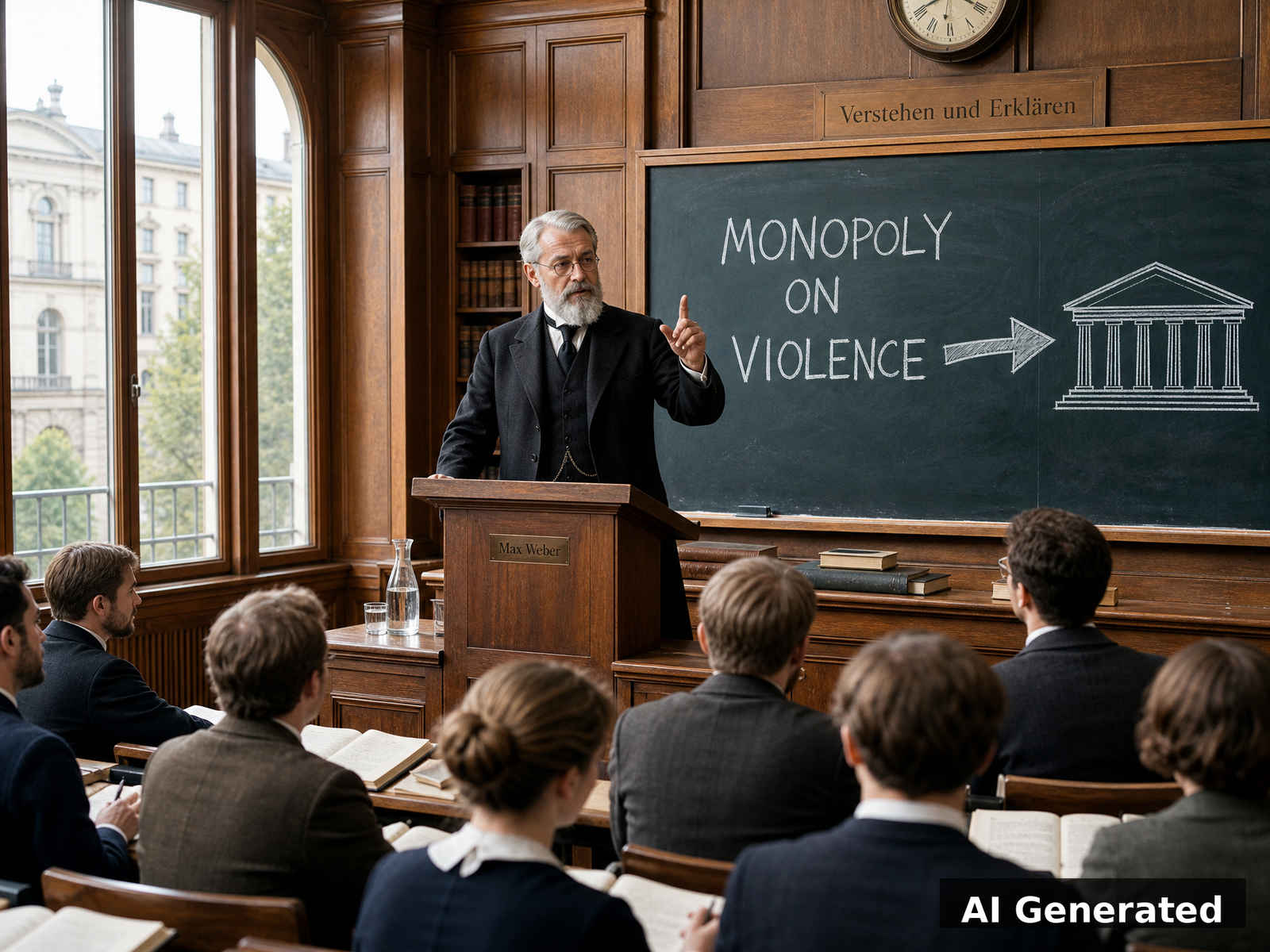
Max Weber gave the modern state its most famous definition. It is, he wrote, “a human community that (successfully) claims the monopoly of the legitimate use of physical force within a given territory” [1]. Read that carefully. The state does not claim a monopoly on violence — criminals use violence every day. It claims a monopoly on the legitimacy of violence. It can hand killing to an army, a police force, a conscripted teenager, and keep for itself the right to call it justice. It is the sole author of legitimate enmity [1].
This is the load-bearing wall of the modern state. Thomas Hobbes built it in 1651. In the state of nature, he argued, there is “a war of every man against every man” — driven by competition, diffidence, and glory — and life is “solitary, poor, nasty, brutish, and short” [2]. The only escape, Hobbes insisted, is to surrender your private judgment — including your judgment about who is your enemy — to an absolute sovereign. In Chapter XVIII of Leviathan, the sovereign’s rights explicitly include “of making war and peace.” The sovereign decides. That is the price of order [2].
So here is the first contradiction we must confront. Hobbes says the state’s power to name your enemies is the price of peace: give up your private judgment, gain safety. But the claim that no one can assign your enemies says that power is the original sin — the very thing that manufactures war. And the uncomfortable truth is that both can be right. The state that claims your enemies also claims your blood. The monopoly on legitimate violence is also a monopoly on legitimate killing [1]. John Gray, the philosopher, put it plainly: the modern state’s monopoly of force has been used for mass killing on a horrifying scale, and we should not “pass too quickly over victims of state terror” [14]. The state that pacifies you is the same state that reserves the right to decide which of your neighbors is no longer a neighbor but an enemy.
The Lawless Prince
Here is the heart of the matter, and it is a distinction almost no one draws clearly. There are two levels of violence, and they are not the same.

Inside the state, the monopoly on violence is necessary. Without it, there is mayhem. We need laws and courts. We need the state to hold the monopoly on force internally, or the strong simply crush the weak. This is not the problem. This is the foundation of a functioning society.
But the state, as an actor among states, is a lawless prince. It has all the violence of the individual, but none of the individual’s law.
Consider the difference. If my neighbor buys a new boat, and I feel threatened by it, and I walk over and shoot him — that does not work. There is a law against it. There is a court. I am bound, as an individual, to resolve my disputes through nonviolent means. The law applies to me.
But the state? The state can look at another nation and say: “You are interfering with my interests. What you are doing creates fear in me. You threaten me.” And then the state can bomb that nation to dust — in the name of protecting the state. No court stops it. No law binds it. The state has the violence of the individual — the primitive violence that exists on a personal level — but it wears none of the individual’s chains.
This is the corruption the claim identifies. The state has taken a power that no one should have — the power to decide who your enemies are — and it has exempted itself from the very law it imposes on you. It demands that you resolve your disputes nonviolently, through courts and law. And then it resolves its disputes with bombs. The state is a lawless prince, and it is precisely why we need law more than ever — law that binds the state as firmly as it binds the citizen.
The Rule of Law vs. the Rule of Men
There is a distinction that matters more than almost any other: the difference between the rule of law and the rule of men dressed as law.
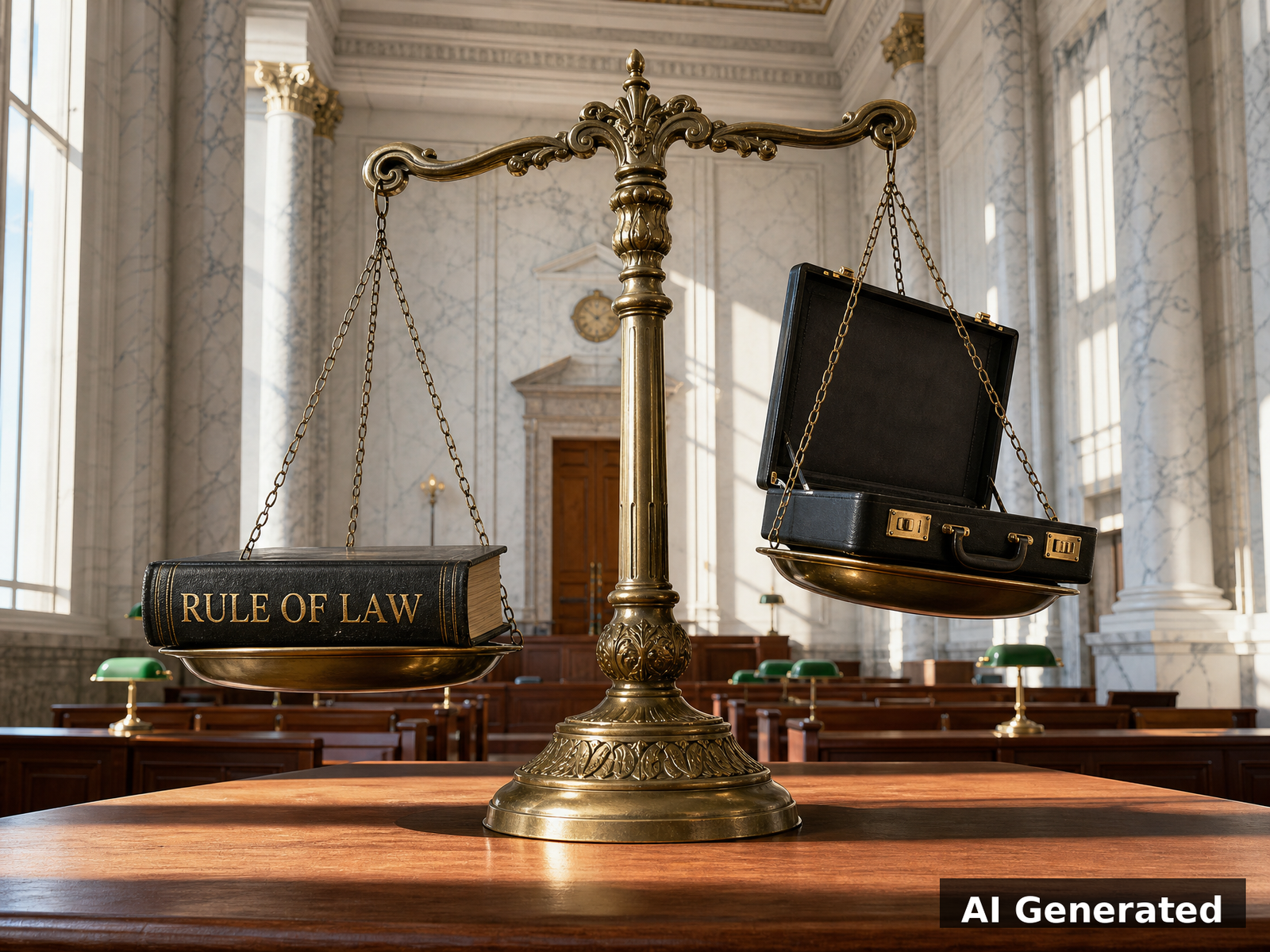
The rule of law, in its classical ideal, is defined as the opposite of the “rule of men.” It demands that power be exercised “within a constraining framework of well-established public norms rather than in an arbitrary, ad hoc, or purely discretionary manner” [13]. It holds that no one is above the law. It holds that the law constrains power, that it binds the ruler as much as the ruled, and that it does not serve the interests or the personal egos of the powerful [13].
That is the rule of law. And it is a beautiful, fragile, largely unrealized ideal.
The rule by law is something else entirely. It is law used as a weapon. It is the state passing a law that obligates you to fight its assigned enemy, and calling that obligation justice. It is the politician who enriches himself and uses the law to pass the interests of the group that sponsors him. It is the lobbyist’s law, the ego’s law, the law of the faction and the corporation, all wearing the same robe, all demanding the same obedience [13].
The claim “no one tells me who my enemies are” is not a rejection of the rule of law. It is a demand that the rule of law finally become what it claims to be — a cage around power, not a weapon of power. It is a demand that law recognize the person as free from the state, even while that person is part of the state. A person belongs to the state, but is not owned by it.
The Right the State Must Protect
Now we reach the loudest claim of this essay — and it is not a cry of rebellion. It is a demand for law.
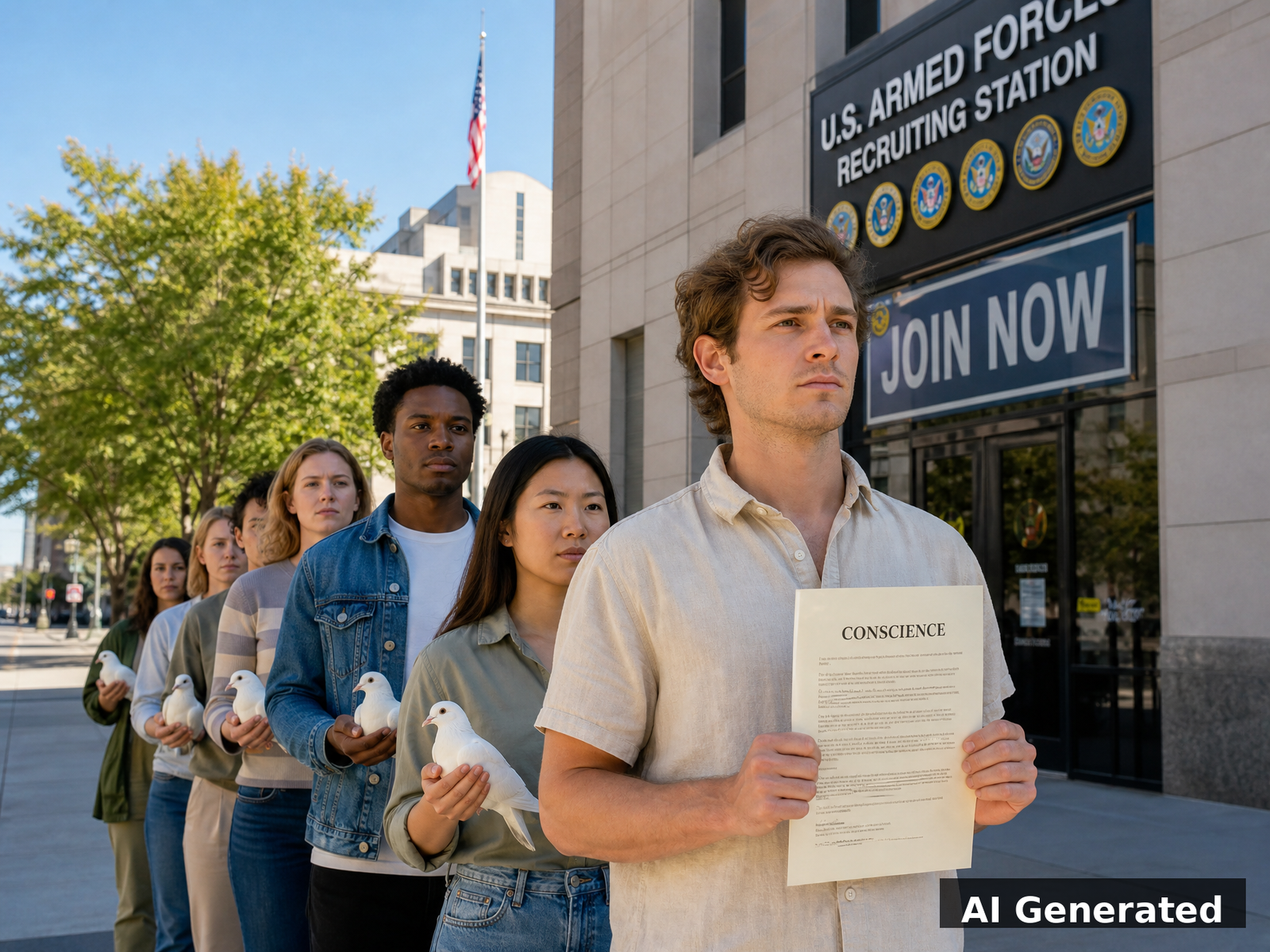
The right to choose your own enemies is not a right that exists against the state. It is a right that the state should recognize and protect. Not merely tolerate. Not merely ignore. Recognize and protect — the way it recognizes and protects your right to life, to speech, to conscience.
This is not utopian. It is already, in embryo, in the law itself. The UN Human Rights Committee has derived a right to conscientious objection to military service from the freedom of conscience, precisely because “the obligation to use lethal force might seriously conflict with the freedom of conscience” [11]. The law itself, in its best moments, recognizes that a person may refuse the state’s enemy. The right already exists, half-formed, waiting to be honored.
To make the state recognize and protect the right to choose your own enemies is to close the gap between the law’s promise and the law’s practice. It is to say: the state may not conscript your conscience. The state may not assign your enemy. If the state wants to go to war, it may find people who want to fight — but it may not compel the rest of us to be their soldiers, just because it says “you are part of the state, and this is your enemy.”
This is not about curtailing the state’s powers to wage war. It is about extending your freedom — your personal freedom — into the right to choose your enemies. It is the difference between being a citizen and being a conscript of someone else’s war.
The Enemy Is a Gift — and a Trap
Why does the state assign your enemies? Because it is easier to rule a people who are afraid of an enemy than a people who are free to think. An enemy unites. An enemy distracts. An enemy justifies. The state that can name your enemy has already won half the battle — it has taken your attention, your fear, and your willingness to obey, and it has done so with a single word.

And here is the trap. When you accept the state’s enemy, you surrender the most important thing you have: your own judgment. You enter what Stanley Milgram called the “agentic state” — the condition in which “the individual no longer views himself as responsible for his own actions but defines himself as an instrument for carrying out the wishes of others” [8].
Milgram’s experiments are among the most unsettling in psychology. Ordinary people — postal clerks, teachers, engineers — were told by an authority figure to administer electric shocks to a man in another room. The man screamed. He begged. And 65% of participants kept going all the way to the maximum 450 volts — not because they were monsters, but because an authority told them to, and they surrendered their judgment [8]. The psychiatrists had predicted only 0.1% would go that far. They were catastrophically wrong.
This is the empirical heart of the claim. It is not our “animal heritage” that makes humans kill humans — it is obedience. It is the surrender of self-definition. The acceptance of the assigned enemy is the acceptance of the agentic state. And the refusal of the assigned enemy is a refusal of that state — the one thing Milgram’s subjects could not do: look at the authority, and say no.
Blood Writes the Truth
There is a line that is easy to misread as glorifying violence: “Blood writes more clearly than your lies.” But it is not a celebration of blood. It is the opposite. It is a statement that blood is the truth — that in a world of words, flags, and official papers all designed to conceal, blood is the one thing that cannot lie.
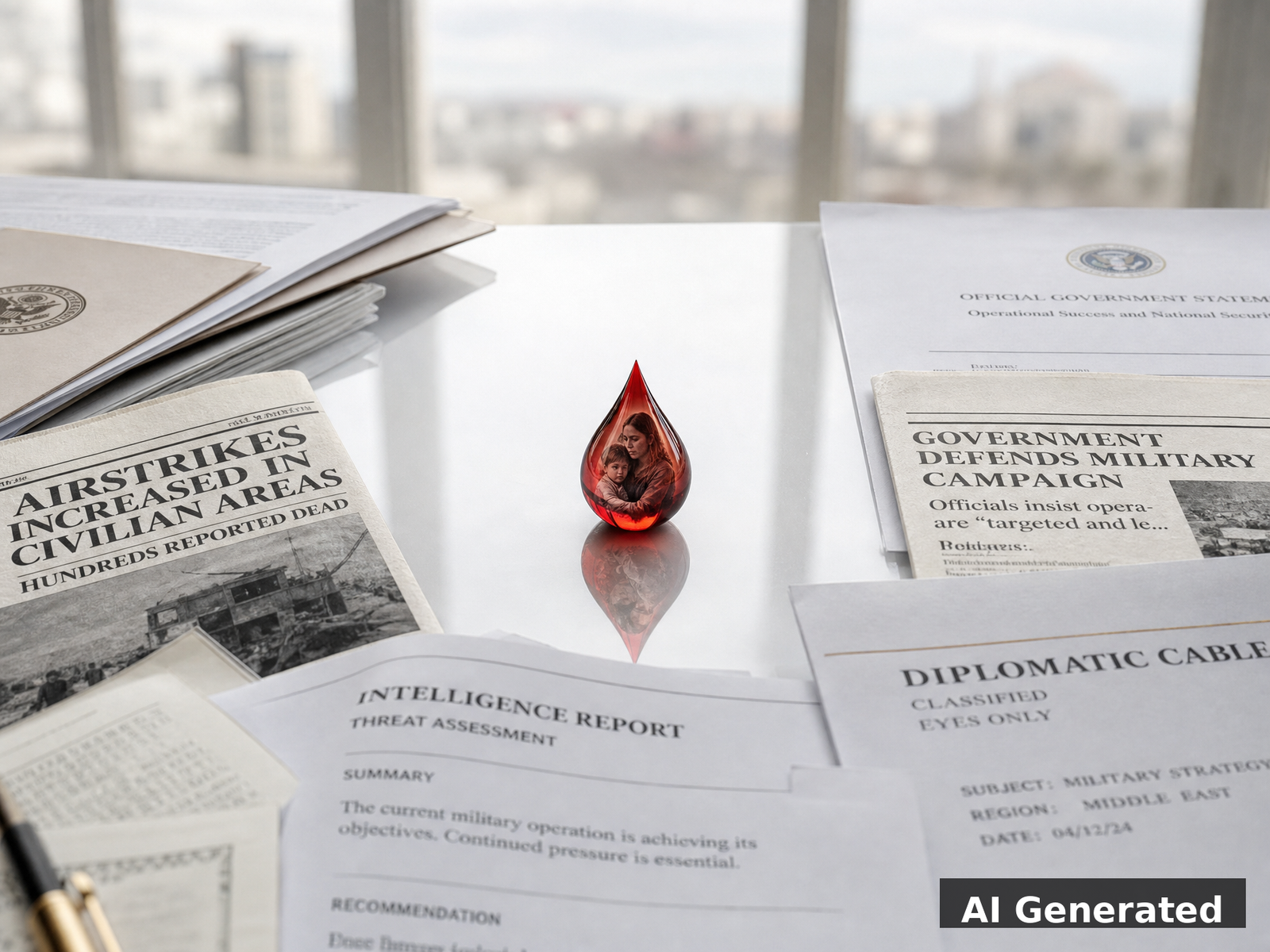
Look at the condition of humankind. We are bathed in the blood of our fellows. Every war, every violent conflict, has the same shape: the innocent pay with their lives, their livelihoods, their futures — while others benefit and enrich themselves, under the guise of nation, under the guise of state. The blood is the truth because it shows what the words hide. It shows who actually pays. It shows who actually profits. And it shows that the enemy is not the person across the border — the enemy is the system that sends the innocent to kill the innocent so that a few can enrich themselves.
This is why the claim matters. It is not about denying that enemies exist. On a personal level, enemies exist; it is in our nature to have them. The claim is that we should not allow the resolution of enmity to be violence. And we should certainly not allow the state to decide who our enemies are, and then to send us to kill them, in the name of a profit we will never see.
The Mechanism of Change
An idea, by itself, changes nothing. A single person refusing the assigned enemy changes nothing — not alone. The claim only becomes powerful when it is shared, when it is understood, when millions of people grasp that they do not have to accept the enemy they have been assigned.

And here is the remarkable thing: people do not actually want war. Given a real choice — not the choice between two flags — people want to live their lives, quietly, with their neighbors, with their families, with their loved ones, and to do the best they can in the short time they have. They have differences, of course. But they do not want to kill each other.
The state knows this. That is why it must assign enemies before it can send you to war. It cannot wait for you to discover who your enemy is, because you would discover that they are a person, with a family, with a life like yours. So the state assigns the enemy in advance, before you can think. The enemy is a mechanism of obedience, a way to make the agentic state possible.
If we stop having enemies assigned to us, what happens? The war machine loses its fuel. A state cannot conduct a war if its people do not want to fight it. If the state wants war, and there are people who actually want to fight it, let them — but they should not be able to conscript the rest of us. The state should not be able to take me as its soldier just because it says “you are part of the state, and this is your enemy.” If I have not chosen that enemy, I have not chosen that war, and I am not obliged to give my life for it.
This is not naive. It is a philosophy, not a plan. It will not happen by turning a switch. It will take decades, even centuries, and it may never fully happen. But the philosophy is this: if the people of a state become more critical, if other states become more critical, the whole thing changes. The assigned enemy — “they are Iraqis, now they are the devils, all of them” — is first of all false, and second of all wrong. The moment we refuse it, the war machine begins to starve.
The Lawless Prince and the Need for Law
This brings us back to the heart of it. The state is a lawless prince — it has the individual’s violence without the individual’s law. And that is precisely why we need law more than ever.
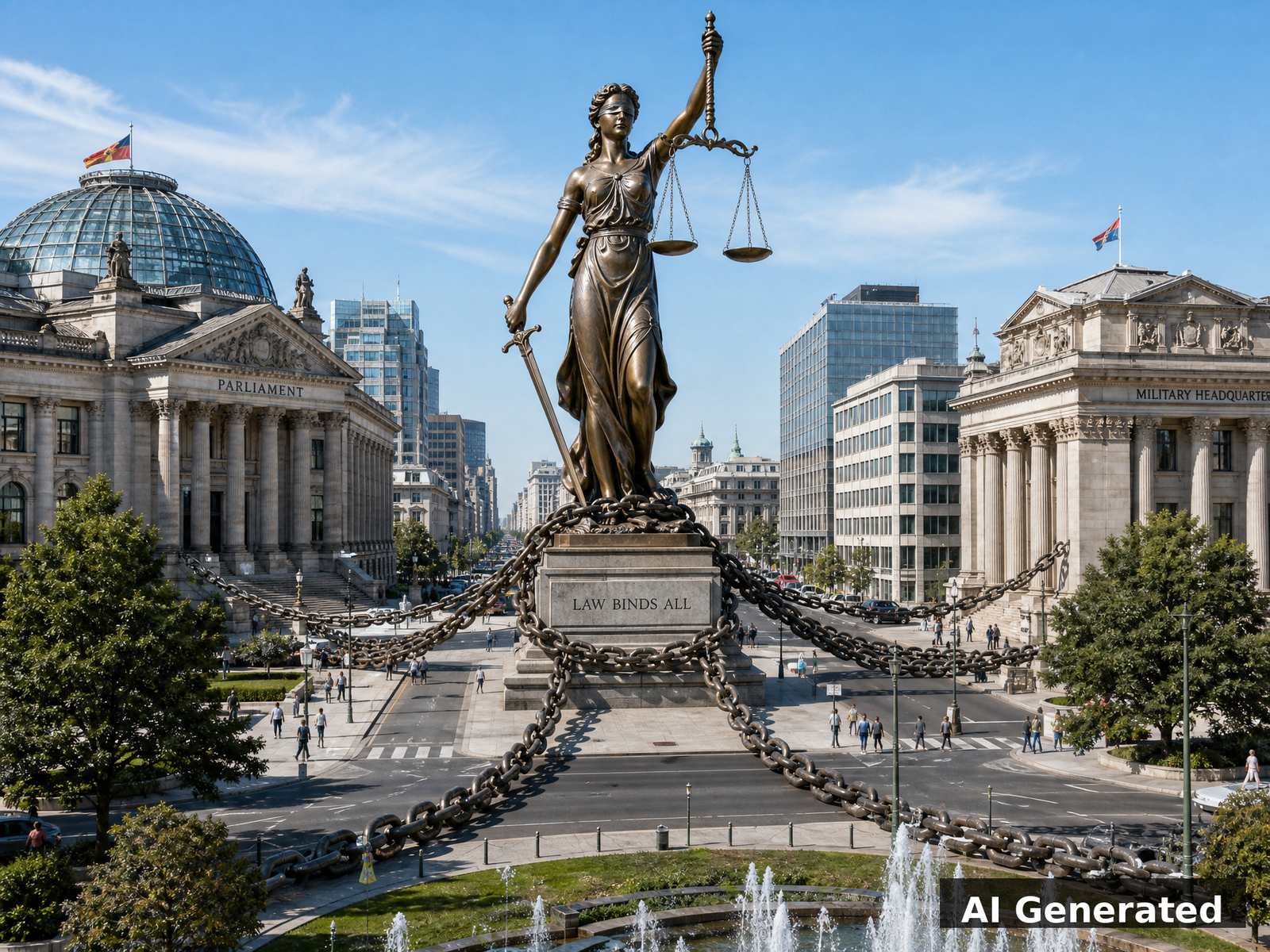
We do not need less law. We need more law — law applied to the state as firmly as it is applied to the citizen. We need the state to be bound by the same nonviolent resolution it demands of us. We need the state to recognize and protect the right to choose our own enemies, not to assign them.
The state can claim a monopoly on violence. It cannot claim a monopoly on your conscience. It cannot assign your enemies. It cannot take your judgment, your life, or your love, and call it duty. That is yours. That is the right to choose your own enemies. And it is the most radical, and the most human, claim there is.
Toward Evolution
There is something deeper here, and it is worth naming plainly. To decide our own enemies is not merely a political claim. It is a step in our evolution as a species.

For most of our history, the enemy was given to us — by the tribe, by the flag, by the faith, by the state. We inherited our enmities the way we inherited our blood. But we are no longer creatures of pure instinct. We are capable of reason, of conscience, of choosing. And if we wish to truly evolve as human beings, the freedom to decide our own enemies is not optional — it is essential. It is the difference between being moved by forces and moving ourselves.
This is the evolutionary claim at the heart of the essay. The state assigns enemies because it fears your freedom to think. But a species that can decide its own enemies — that can refuse the assigned enemy and choose peace — is a species that has begun to evolve beyond the war that has haunted it for millennia.
Not a Theory, an Invitation
This essay is not a theory. It is not a thesis to be defended and footnoted and approved by a thousand academics until it becomes a doctrine. It is an invitation. It is a question, held open.

The academy, for all its value, is restricted. Its views are written by a few, approved by many, and then hardened into bibles. But this is not a belief to be enforced. It is a thought to be offered. It is “this is what I think” — and it is an invitation for you to think, and to submit your own views, and to hold your own question.
Because the truth is, the claim that no one tells me who my enemies are is not a conclusion. It is a beginning. It is the first stone, and it is a question.
The Takeaway: A Glimpse of Hope
When you finish this, I hope you sit with a question. I hope the question turns inward, and you ask it of yourself, honestly: Who is my enemy? And who decided that?

That question is the whole point. Because once you ask it, you have already begun to free yourself from the assigned enemy. You have already begun to think.
And there is a glimpse of hope in it. Not a certainty. Not a promise that the world will be perfect. But a hope that we can move forward, as a species, away from war. A hope that if we start determining our own enemies, we might begin the long path toward a more peaceful world. Maybe it will not be totally peaceful. But it will be more peaceful. And that is worth fighting for — not with the state’s enemies, but with the quiet, stubborn refusal to be assigned them.
Once no one tells you who your enemies are, you have to figure it out for yourself. And that is the loneliest, and the most honest, and the most human task there is.
References
[1] Weber, M. (2026). State monopoly on violence. Encyclopaedia Britannica. https://www.britannica.com/topic/state-monopoly-on-violence
[2] Hobbes, T. (1651). Leviathan. https://www.gutenberg.org/files/3207/3207-h/3207-h.htm
[3] Rousseau, J.-J. (1762). The Social Contract. https://www.marxists.org/reference/subject/economics/rousseau/social-contract/ch01.htm
[4] Kant, I. (1795). Perpetual Peace: A Philosophical Sketch. Toward Perpetual Peace. https://web.viu.ca/johnstoi/kant/peace.htm
[5] Sartre, J.-P. (2026). Jean-Paul Sartre. Stanford Encyclopedia of Philosophy. https://plato.stanford.edu/entries/sartre/
[6] Graeber, D., & Wengrow, D. (2021). The Dawn of Everything: A New History of Humanity.
[7] Schmitt, C. (1932). The Concept of the Political. https://plato.stanford.edu/entries/schmitt/
[8] Milgram, S. (2025). Milgram Experiment. Simply Psychology. https://www.simplypsychology.org/milgram.html
[9] Anderson, B. (1983). Imagined Communities: Reflections on the Origin and Spread of Nationalism.
[10] United Nations. (1945). Preamble and Chapter I. United Nations Charter. https://www.un.org/en/about-us/un-charter/preamble
[11] OHCHR. (2026). OHCHR and conscientious objection to military service. United Nations Human Rights Office. https://www.ohchr.org/en/conscientious-objection
[12] Pinker, S. (2011). The Better Angels of Our Nature: Why Violence Has Declined.
[13] Waldron, J. (2026). The Rule of Law. Stanford Encyclopedia of Philosophy. https://plato.stanford.edu/entries/rule-of-law/
[14] Gray, J. (2015). Steven Pinker is wrong about violence and war. The Guardian. https://www.theguardian.com/books/2015/mar/13/john-gray-steven-pinker-wrong-violence-war-declining
[15] Varadarajan, T. (2021). ‘The Dawn of Everything’ Review: Wrong from the Start. American Enterprise Institute / Wall Street Journal. https://www.aei.org/commentary/the-dawn-of-everything-review-wrong-from-the-start/
[16] Lewis-Kraus, G. (2021). Early Civilizations Had It All Figured Out. The New Yorker. https://www.newyorker.com/magazine/2021/11/08/early-civilizations-had-it-all-figured-out-the-dawn-of-everything
[17] Wengrow, D., & Graeber, D. (2021). Do Things Have to Be This Way? Sapiens. https://www.sapiens.org/culture/dawn-of-everything-excerpt/
[18] Kulchyski, P. (2023). Everything Goes: Three Problems with The Dawn of Everything. Historical Materialism. https://www.historicalmaterialism.org/everything-goes-three-problems-with-the-dawn-of-everything-a-review-of-the-dawn-of-everything-by-david-graeber-and-david-wengrow/
[19] Stanford Encyclopedia of Philosophy. (2026). Cosmopolitanism. https://plato.stanford.edu/entries/cosmopolitanism/
[20] Stanford Encyclopedia of Philosophy. (2026). War. https://plato.stanford.edu/entries/war/
[21] Stanford Encyclopedia of Philosophy. (2022). Max Weber. https://plato.stanford.edu/entries/weber/
[22] Stanford Encyclopedia of Philosophy. (2023). Jean Jacques Rousseau. https://plato.stanford.edu/entries/rousseau/
[23] Stanford Encyclopedia of Philosophy. (2024). Immanuel Kant. https://plato.stanford.edu/entries/kant/
[24] United Nations. (2023). What is the Rule of Law. https://www.un.org/ruleoflaw/what-is-the-rule-of-law/
[25] Wikipedia. (2026). Conscientious objector. https://en.wikipedia.org/wiki/Conscientious_objector
[26] Wikipedia. (2026). Conscription. https://en.wikipedia.org/wiki/Conscription
[27] Wikipedia. (2026). Nation state. https://en.wikipedia.org/wiki/Nation_state
[28] Wikipedia. (2026). Peace. https://en.wikipedia.org/wiki/Peace
[29] Wikipedia. (2026). State of nature. https://en.wikipedia.org/wiki/State_of_nature
[30] Wikipedia. (2026). The Better Angels of Our Nature. https://en.wikipedia.org/wiki/The_Better_Angels_of_Our_Nature
AI Disclosure: This post was created with the assistance of artificial intelligence. The ideas, analysis, and opinions expressed are my own — AI was used to help compose, structure, and refine my personal notes and thoughts into the final written content. Images and video featured in this post were also generated using AI tools, based on my own creative prompts and direction.
