




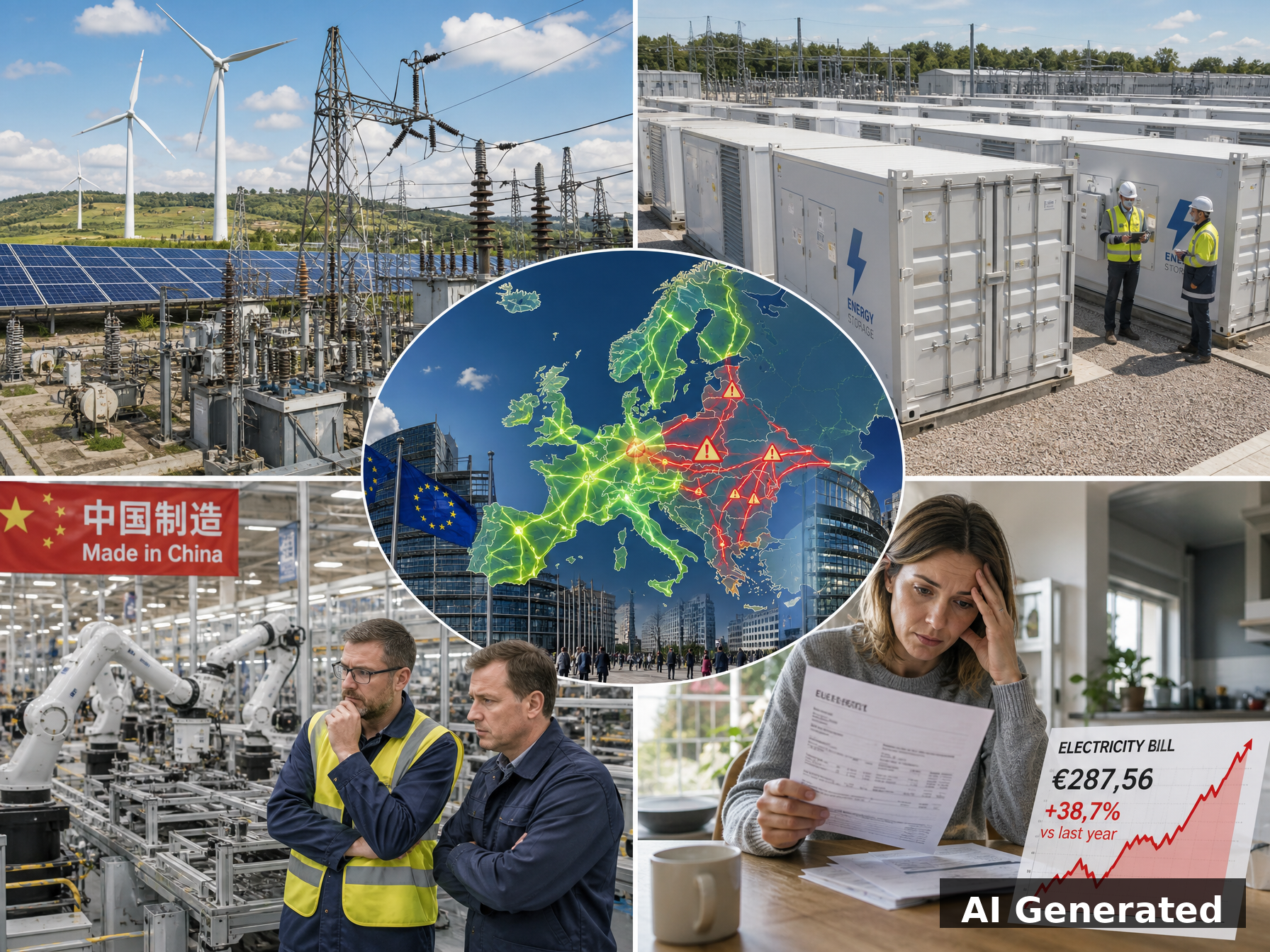

You saw the turbine spin last spring. You saw the solar field gleam at midday. You paid for both in your electricity bill — and then you paid again when the grid operator ordered them to shut down.
Seventy-two terawatt-hours. That is how much clean electricity Europe threw away in 2024 — enough to power Austria for an entire year. The continent curtailed it because the wires could not carry it, the storage could not hold it, and the markets could not absorb it. The cost of managing that waste approached nine billion euros. And someone, somewhere, is counting on you not noticing.
Europe has the clean energy. It does not have the grid.
The numbers are not disputed. They are published, verified, and ignored.
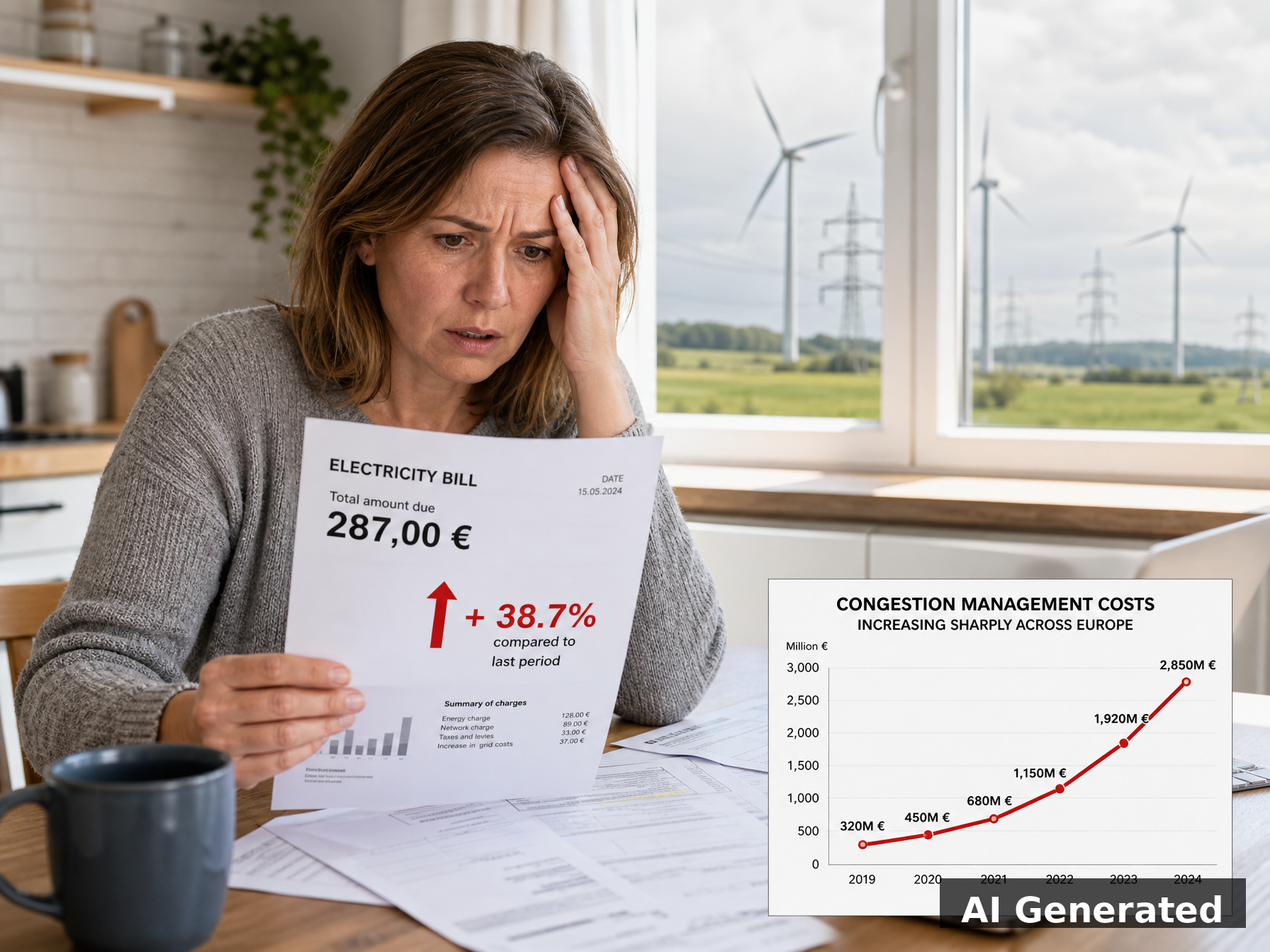
In 2024, seven European countries curtailed €7.2 billion in renewable electricity. Germany alone wasted €3.3 billion worth of wind and solar power — its solar curtailment jumping 97 percent in a single year. Spain discarded up to €2.5 billion more, its monthly curtailment rate climbing to nearly 11 percent of renewable output in mid-2025. Across the continent, congestion management costs — the price of telling clean generators to stop producing while paying fossil plants to fill the gap — neared nine billion euros.
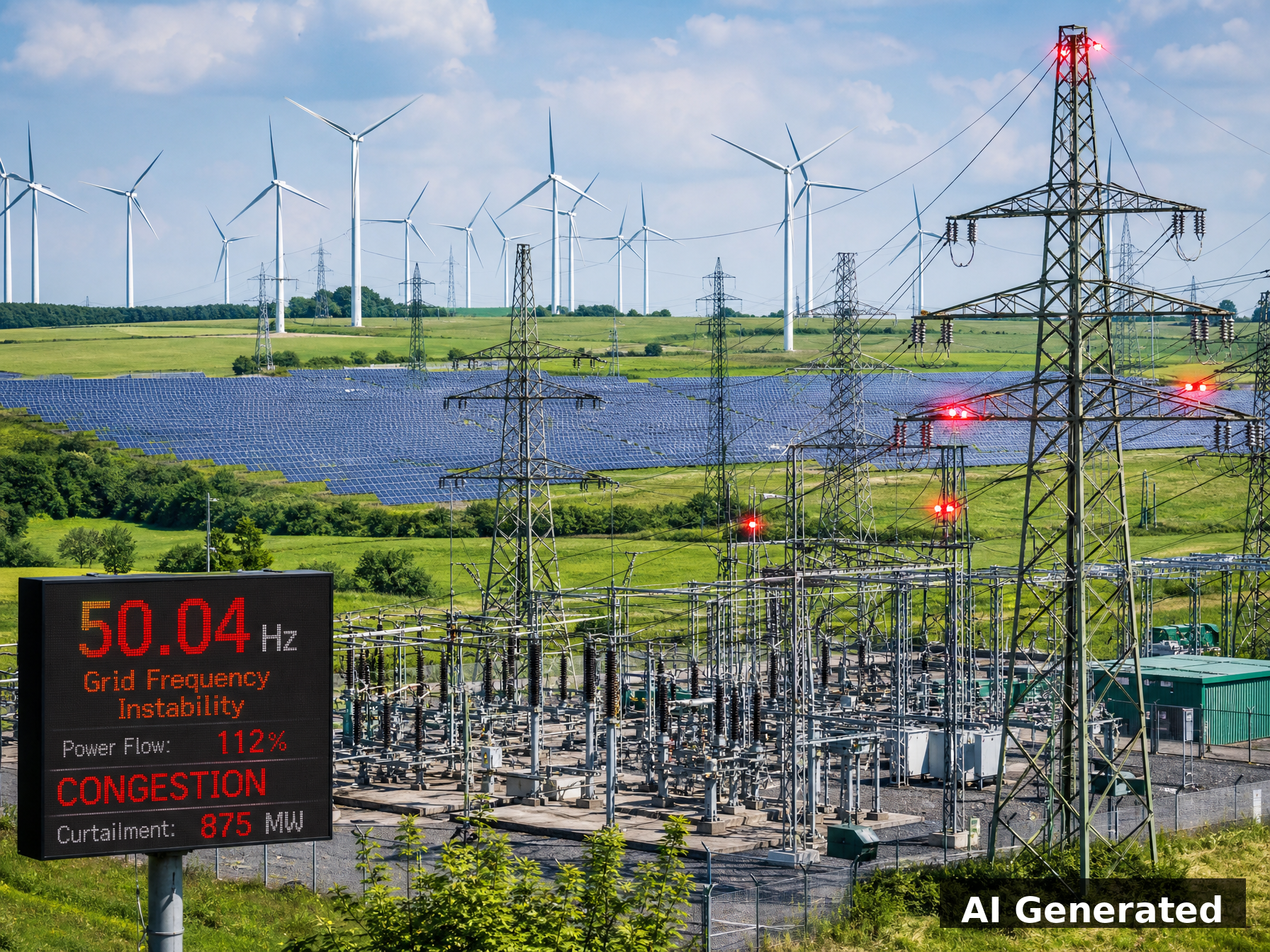
The cause is not technical mystery. It is structural failure. Europe built renewable generation at the speed of economics and grid infrastructure at the speed of bureaucracy. One thousand gigawatts of clean energy projects now sit stranded in connection queues across the EU — more than three times the capacity needed to meet 2030 climate targets. Italy alone accounts for 370 GW of that backlog. The European Commission estimates €584 billion is needed by 2030 just to modernise electricity grids. Distribution networks alone require €730 billion between 2024 and 2040.
The continent that claims to lead the global energy transition is paying billions to waste the energy that transition produces.
The communiqué promised decarbonisation. The grid operator pressed the off switch.
The strongest case for solving this is not environmental. It is economic.
The steelman argument is this: every euro spent on curtailment solutions returns multiples in avoided costs, industrial competitiveness, and domestic employment. The evidence is not theoretical. It is operational.
California cut solar curtailment by 12 percent in early 2025 — not through breakthrough technology, but through battery deployment. The state’s grid-scale storage capacity surged 45 percent in 2024 alone, from 8 GW to 11.6 GW. Batteries buy cheap solar at midday, store it, and sell it during expensive evening peaks. The duck curve — that infamous midday glut followed by evening scarcity — is being actively flattened. The EU installed 27.1 GWh of new battery capacity in 2025, a 45 percent year-on-year increase. Aurora Energy Research estimates over €24 billion flowing into four-hour battery systems alone.
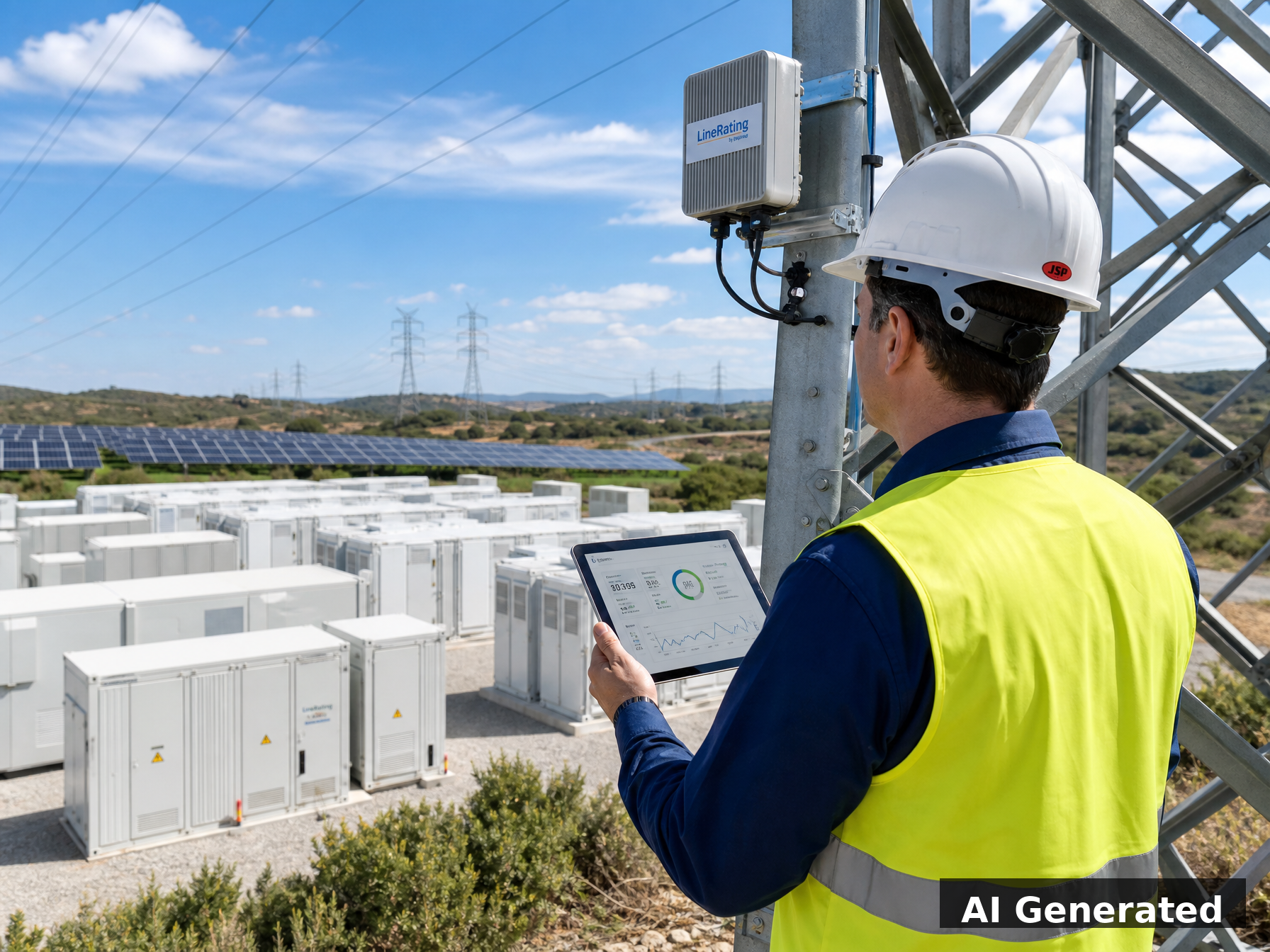
Dynamic line rating — sensors and software that unlock 10 to 40 percent more capacity from existing transmission lines without new construction — is deployed nowhere near at scale. The technology works. The deployment does not.
And the jobs are real. Clean tech manufacturing employed 1.8 million people in Europe in 2025. Battery storage is now an established infrastructure asset class — Allianz Global Investors acquired a 50 percent stake in TotalEnergies’ German battery portfolio for approximately €500 million. The roles in highest demand — asset managers, grid connection specialists, battery integration engineers — are exactly the high-value, location-locked positions Europe claims to want.
The economic case is closed. The investment is flowing. The execution is what is failing.
The Draghi Report linked energy flexibility directly to industrial survival. The Clean Industrial Deal committed to flexibility guidance by the fourth quarter of 2025. Spain fast-tracked battery permitting after its 2025 blackout. The policy direction is clear. The machinery implementing it remains the bottleneck.
And beneath the machinery, a harder question waits.
The green economy is being built. The question is who will own it.
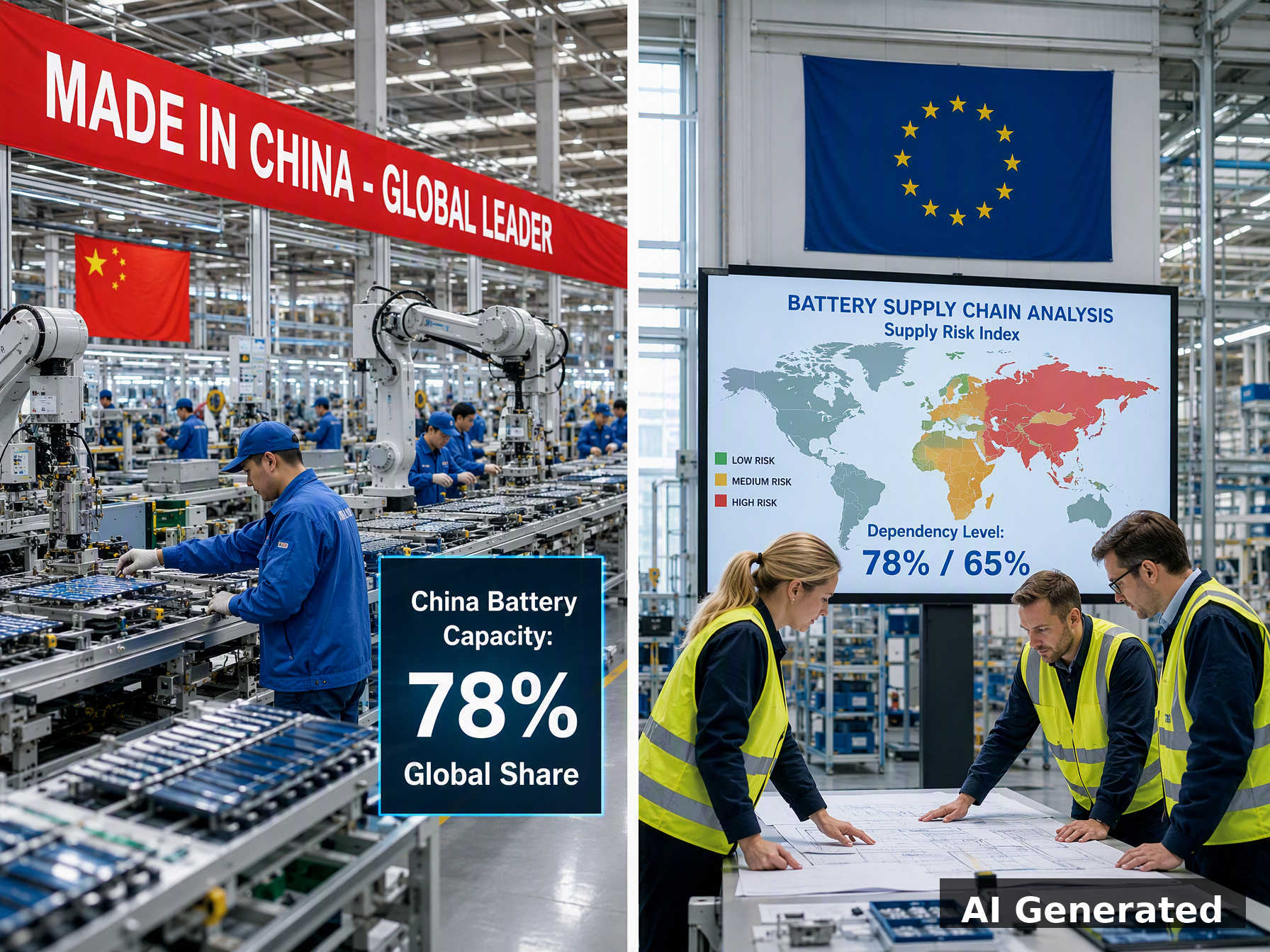
China installed 430 GW of wind and solar in 2025. It also controls over 80 percent of global battery manufacturing capacity. The dominance is commercially motivated today. The naïveté is believing it will remain so.
The EU’s grid modernisation needs — €584 billion by 2030, €730 billion for distribution alone — will be met partly by Chinese-manufactured batteries, inverters, and power electronics. This is not a problem while trade flows freely. It becomes an existential vulnerability when it does not. Europe has lived through the consequences of strategic energy dependence once — with Russian gas. Building a second dependency on Chinese clean-tech supply chains while claiming to pursue energy security is not policy. It is amnesia.
Meanwhile, the EU’s own regulatory architecture is strangling the transition it was designed to enable. Permitting timelines for high-voltage lines stretch ten years or longer in some member states. The 70 percent cross-zonal capacity target mandated by regulation is not met at most borders — Poland and the Czech Republic have installed devices specifically to block unwanted German electricity surges. National flexibility support schemes are fragmented. Smart meter rollout — the prerequisite for demand-side flexibility — remains incomplete in ten member states. Germany, the EU’s largest economy, had achieved smart meter penetration of just 5.5 percent by the end of 2025.
The policy is not the problem. The machinery is.
The green economy is arriving. The question is whether European industry will build it, or whether the continent will import its own transition from the country that manufactures it fastest.
You are already paying for this failure.
Your electricity bill includes a line item you have never seen. It is the cost of telling wind farms in northern Germany to stop producing while paying gas plants in Bavaria to start. It is the cost of grid congestion management — €2.5 billion in Germany alone in 2023, rising every year. It is the cost of a system that builds clean generation faster than it builds the infrastructure to use it.
The JRC projects that in a business-as-usual scenario, curtailment will reach 310 TWh by 2040 — enough to power a mid-sized European country — and congestion management costs will exceed €100 billion annually. That money comes from grid fees. Grid fees come from your bill. You are paying for energy that was generated, clean, and then deliberately wasted because the system could not absorb it.
Had that 72 TWh been used instead of gas in 2024, roughly 30 to 40 million tonnes of CO₂ would have been avoided. By 2040, in the do-nothing scenario, the figure rises to 130 to 170 million tonnes annually. The climate cost compounds alongside the financial cost. Both arrive in the same places — in family budgets, in health systems, in agricultural losses, in the slow erosion of what was once predictable.
The agreement is signed in conference rooms. The consequences are felt in fields, in hospital wards, and in the monthly bill you open with a wince.
The grid is the battlefield. Europe is not yet on it.
The solutions are not speculative. They are deployed, proven, and waiting.
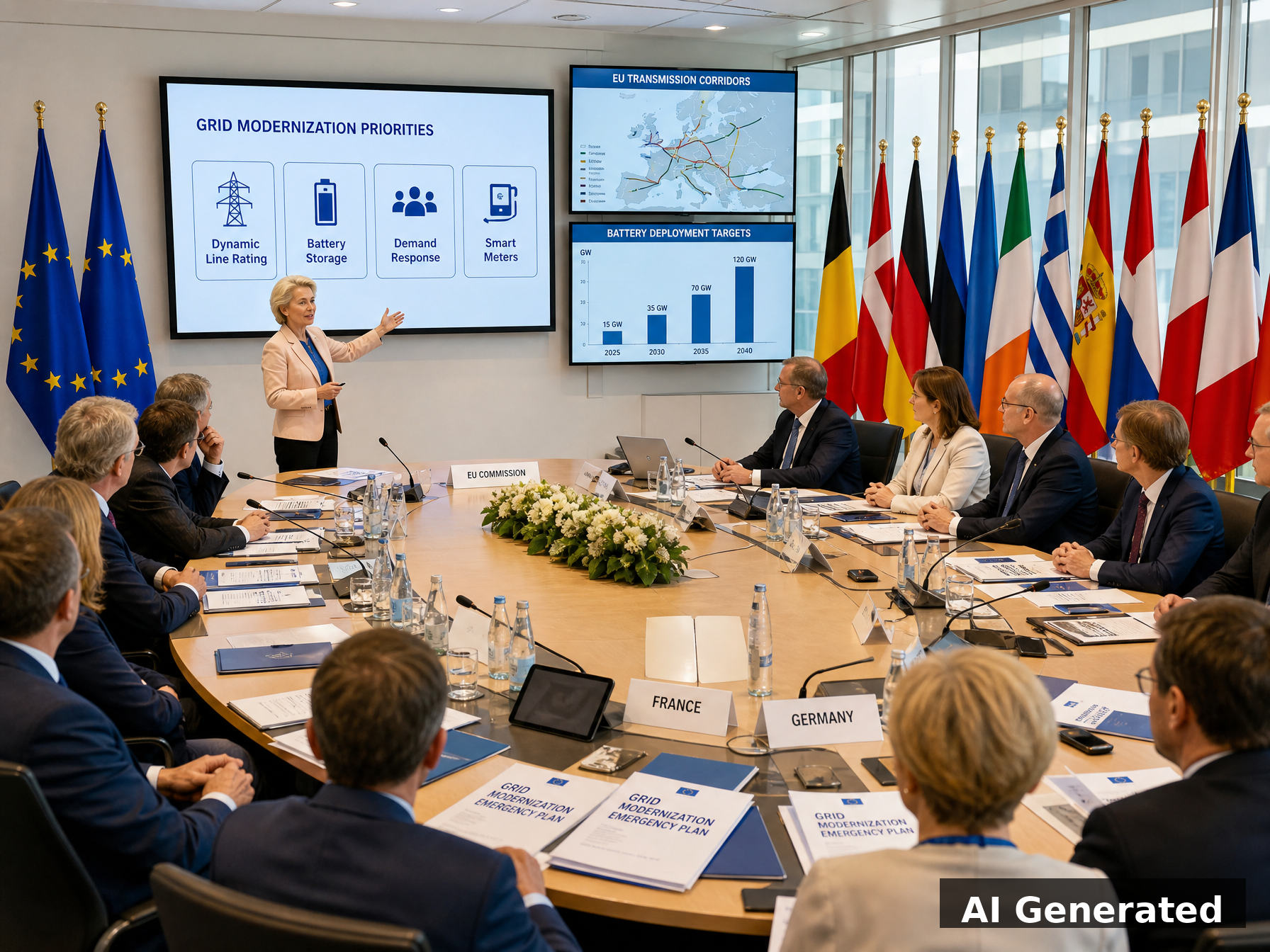
Batteries absorb midday solar excess and release it at evening peaks. Dynamic line ratings unlock hidden capacity on existing wires. Demand-side flexibility — shifting industrial consumption, enabling smart charging for electric vehicles, activating heat pumps as grid resources — turns millions of distributed devices into a system-wide shock absorber. Green hydrogen electrolysis at curtailment hotspots converts wasted electrons into industrial feedstock. Flexible connection agreements let new renewable projects connect now and firm up later, unclogging a 1,000 GW queue.
Each of these creates domestic jobs. Each lowers consumer electricity prices over time. Each displaces fossil generation and reduces emissions. Each strengthens European industrial competitiveness against rivals who are moving faster.
The choice before us is not technical. It is political.
Europe can treat grid modernisation as emergency industrial policy — mandatory dynamic line rating, emergency battery permitting, priority corridors designated as security infrastructure, cross-border flexibility procurement, and a smart meter rollout completed by 2028. Or Europe can continue paying €9 billion a year to waste clean energy while importing the components of its own transition from the country best positioned to weaponise that dependence.
Will you wait until the annual cost passes €100 billion — or act while the solutions are still cheaper than the waste?
Who is deciding the pace of your transition — you, your government, or the grid operator pressing the off switch on the clean energy you already paid for?
And when the bill arrives in full — in floods, in degrees, in stranded assets, in the slow strangulation of European industry — will we say we did not see the turbines spinning and the wires too thin to carry what they made?
AI Disclosure: This post was created with the assistance of artificial intelligence. The ideas, analysis, and opinions expressed are my own — AI was used to help compose, structure, and refine my personal notes and thoughts into the final written content. Images and video featured in this post were also generated using AI tools, based on my own creative prompts and direction.
