






In a revelation that should surprise absolutely no one who has been paying attention, the Civil Liberties Union for Europe dropped a report on March 30, 2026, naming and shaming five EU governments for consistently and methodically dismantling the rule of law. The findings land like a brick through the window of European unity, exposing a systemic rot in the very foundations the bloc was built upon. According to the union, these member states have engaged in sustained attacks on judicial independence, media freedom, and civil society, turning the EU’s much-vaunted values into little more than decorative wallpaper.
Background
The European Union was conceived as a peace project, underpinned by a shared commitment to democracy, human rights, and the rule of law. These principles are enshrined in Article 2 of the Treaty on European Union, acting as the glue for a club of 27 disparate nations. Yet, for over a decade, cracks have been showing. From Hungary’s constitutional tinkering under Viktor Orbán to Poland’s bruising battle over its judiciary, the EU has struggled to enforce its own standards. The introduction of the Rule of Law Conditionality Regulation in 2020, which links EU funding to respect for democratic norms, was meant to be a stern parent’s ultimatum. In practice, it has often been wielded with the force of a wet noodle, mired in political horse-trading and delayed enforcement.
The Civil Liberties Union for Europe, a network of human rights organizations, has been tracking these trends for years. Their latest report consolidates evidence from legal analyses, media monitoring, and civil society testimonies, painting a picture not of isolated incidents, but of a coordinated, if not always collusive, pattern of democratic backsliding. It serves as a timely, if grim, scorecard ahead of key EU budget negotiations and the 2027 European Parliament elections.
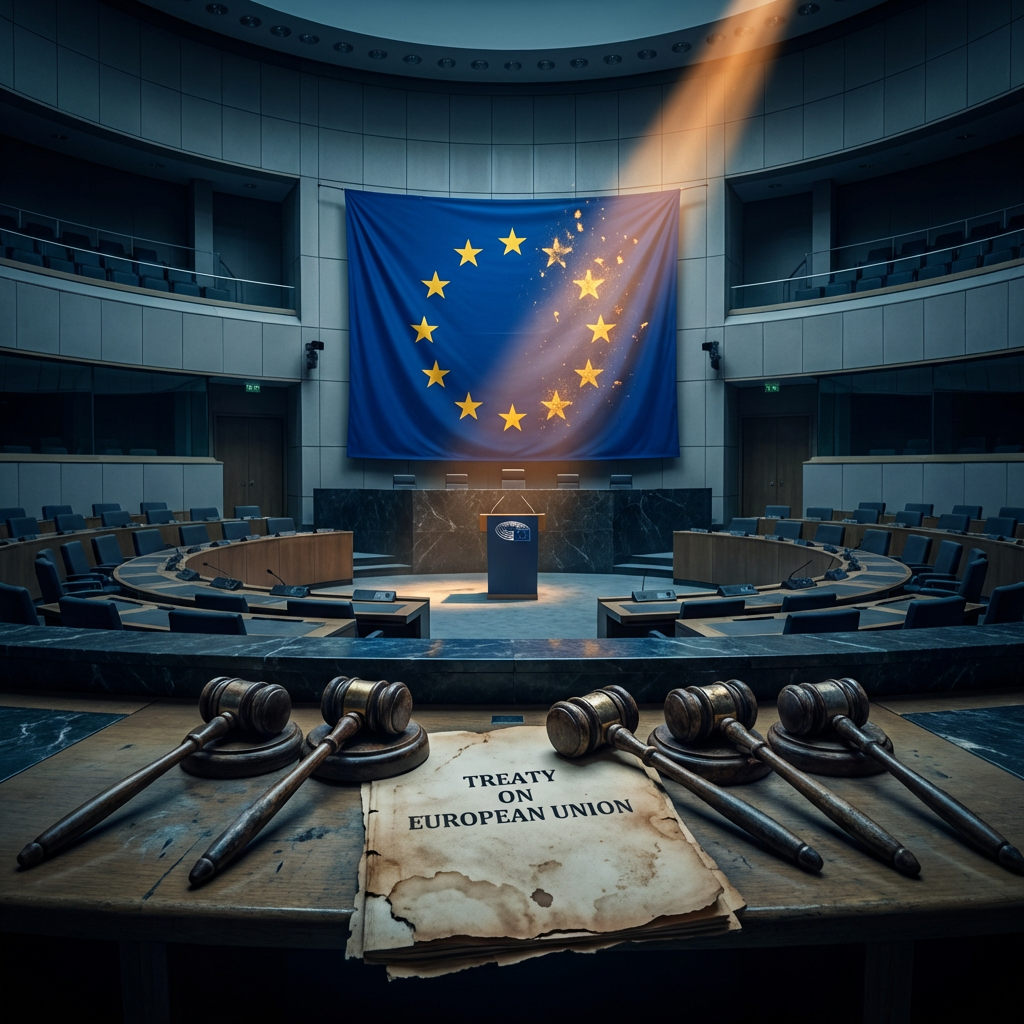
The Anatomy of Erosion: Political and Legal Mechanisms
The report identifies Hungary, Poland, Italy, Greece, and the Netherlands as the five primary offenders. Their methods vary, but the playbook is familiar. Hungary leads the pack, with the union citing the systematic packing of courts, the strangulation of independent media through ownership laws, and the criminalization of NGO work assisting migrants. Poland’s former ruling party, Law and Justice, is flagged for its legacy of disciplinary chambers for judges and overt politicization of public broadcasting, though the report notes the new government’s remedial actions are under close watch.
Italy and Greece are highlighted for more recent, yet alarming, trends. The report points to Italy’s controversial reforms aimed at curbing the powers of the judiciary and a proposed ‘differentiated autonomy’ law that risks fragmenting public service standards. Greece, meanwhile, faces scrutiny over pervasive surveillance of journalists and politicians, and a concerning lack of accountability for pushbacks of asylum seekers at its borders. The Netherlands, often seen as a bastion of liberalism, is cited for legislative proposals that would grant sweeping emergency powers and for documented cases of ethnic profiling by tax authorities, which devastated thousands of families in the childcare benefits scandal.
A common thread is the exploitation of crises—be it migration, the pandemic, or economic stress—to concentrate executive power and sideline checks and balances. As one EU diplomat, speaking anonymously, quipped, “The pandemic wasn’t just a health crisis; for some capitals, it was a golden opportunity to test-drive authoritarianism with a public health excuse.”
Geopolitical and Economic Repercussions
The internal corrosion of rule of law has tangible external consequences. Geopolitically, it weakens the EU’s hand on the global stage. How can Brussels credibly lecture Beijing on human rights or criticize Moscow’s suppression of dissent when its own members are jailing activists and wiretapping reporters? The report argues this hypocrisy undermines the EU’s soft power and its role as a normative force in international relations, particularly in its neighborhood policy towards aspiring members in the Western Balkans.
Economically, the erosion is a slow-acting poison for the single market. Predictable, non-corrupt legal systems are the bedrock of cross-border investment and business confidence. When courts are perceived as politicized, foreign direct investment gets spooked. Data from the European Bank for Reconstruction and Development consistently links weak rule of law to higher perceived risks and lower capital inflows. The report warns that this creates a vicious cycle: weakened institutions deter quality investment, leading to economic stagnation, which in turn fuels populist narratives that further attack democratic safeguards. It’s a race to the bottom that ultimately hurts businesses, workers, and consumers across the bloc.
What Analysts Are Saying
Expert reactions underscore the severity of the situation. Analysts at the European Council on Foreign Relations argue that “the report confirms the EU’s core dilemma: it is a values-based union with no effective army to defend those values internally. The political will to sanction peers remains fickle, often sacrificed for coalition-building on other issues like energy or defense.” They stress that the infringement process is too slow and politically charged to be a deterrent.
Contrastingly, economists from Bruegel, the Brussels-based think tank, focus on the fiscal implications. “The rule of law is not a soft, abstract ideal; it is hard economic infrastructure,” one senior fellow stated. “Every percentage point decline in judicial independence indices correlates with measurable increases in the cost of capital for businesses in those countries. Ultimately, this is a tax on innovation and growth, borne by the EU’s collective economic potential.” This view frames the issue squarely in the language of markets and competitiveness, arguing that defending democracy is also about defending prosperity.
The Real-World Impact
So, what does this bureaucratic-sounding report mean if you work for a living? It means your wallet and your rights are directly in the firing line. When courts are stacked, contracts aren’t enforced fairly, and corruption can flourish. This can translate to higher costs for public projects—think roads, schools, hospitals—as tender processes become less transparent, with the bill footed by taxpayers.
Your job security is at risk. Businesses avoid investing in countries with unstable legal environments, stifling job creation and wage growth. If you’re a young person in one of these nations, your prospects dim as the brain drain accelerates. Access to public services suffers when watchdogs and independent auditors are silenced; funds meant for healthcare or education can be diverted with less scrutiny. Perhaps most directly, your personal freedoms—the right to protest, to access information from a free press, to live without fear of state surveillance for speaking out—are being chipped away. This isn’t happening in a far-off land; it’s within the EU, affecting the daily lives of over 100 million citizens.
Political Accountability
Politically, the responses have been a study in deflection and delay. The implicated governments uniformly dismiss such reports as political attacks or infringements on national sovereignty. Hungary’s government has labeled the Civil Liberties Union an “agent of George Soros.” Italy’s leadership frames criticism as meddling in domestic reform. At the EU level, the Commission has launched infringement proceedings and withheld some funds, but progress is glacial. The Council, where national governments sit, remains the major bottleneck, with member states often reluctant to sanction one of their own, fearing reciprocal scrutiny.
The Standard They Should Be Held To
The editorial standard is clear and non-negotiable. Economic Growth: Governments must foster competitive markets and innovation, but not by creating a race to the bottom on legal protections. Strong, independent institutions are the best guarantor of long-term business confidence and sustainable growth. Social Investment: Universal access to quality healthcare, education, and social security is a baseline obligation. Eroding the rule of law to centralize power inevitably starves these systems of accountability and resources, betraying the public trust. Civil Liberties: Freedom of speech, press, assembly, and privacy are the oxygen of a free society. Any policy that suffocates these rights, regardless of the political banner it flies under, is an attack on the very idea of Europe. The gap between this standard and the actions of the five governments is not a policy difference; it is a chasm between democracy and its opposite.
The Precipice Ahead: Key Signals for Europe’s Future
The next twelve months are critical. Watch for the European Commission’s disbursement of recovery funds, where strict conditionality could be a real lever of change. The 2027 European Parliament election campaign will be a litmus test, where rule of law issues either take center stage or are once again swept under the rug of populist rhetoric. Finally, monitor the implementation of reforms in Poland; its success or failure will be the canary in the coal mine for whether backsliding can be reversed.
The EU now faces a defining choice: will it be a union of laws and values, or a mere trading bloc where democracy is optional? The report from the Civil Liberties Union is not just a warning; it is a mirror. What Europe sees in it will determine its soul—and its survival.
