



Binance’s Market Maker Red Flags: Unpacking the Technical Shift in Crypto Trading Surveillance

Explore Binance's new crypto trading surveillance: uncovering red flags for market makers and tackling wash trading plus manipulation.
Talking Crypto is the space where finance, politics, and technology collide. Here we unpack the headlines and hidden stories behind crypto’s biggest moves—ETFs, tokenization, regulations, and the entry of global institutions. We examine the politics shaping adoption, the economic ripples across markets, and the social consequences of digital money in everyday life. It’s not about charts and candles, but about the power struggles, innovations, and narratives redefining the future of finance. Expect sharp commentary, interviews, and analysis that reveal not just where crypto stands today, but what it means for society, governance, and the global economy tomorrow.
Explore Binance's new crypto trading surveillance: uncovering red flags for market makers and tackling wash trading plus manipulation.

Across Bitcoin, Ethereum, Solana, and Aave, the underlying backdrop is the same: people are tired and markets are in a fearful phase, but each community is dealing with it in its own way. Sentiment around BTC is the most openly negative – extreme fear indexes, talk of multi‑month drawdowns, and daily reminders that we’re far below the 2025 highs.

Across these four coins, the emotional map is pretty clear: Ethereum feels the most upbeat, Solana the most volatile, Bitcoin the most stoic, and AAVE the most political.
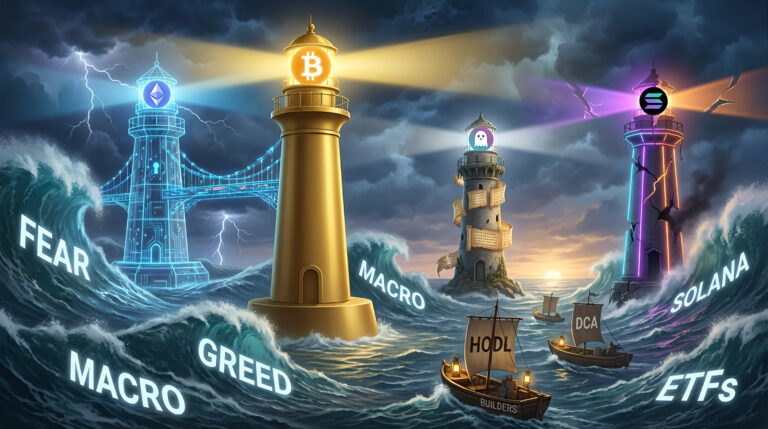
ate January 2026 crypto communities are living in a paradox: the Fear & Greed Index screams panic (sitting at 38, recovering from extreme fear at 19-20 earlier this month), but actual community discussions scream patience and accumulation

Looking across Bitcoin, Ethereum, Solana, and AAVE discussions right now, the overall mood feels like a group of veterans who have seen several cycles: hopeful enough to stay, bruised enough to complain, and still very online

Across these four communities, people seem exhausted by constant drama and volatility, yet each group copes differently, mixing resignation, dark humor, fragile optimism, stubborn long-term conviction, all under a roughly 27/100 “fear zone” sentiment reading.

Across these four communities, people seem exhausted by constant drama and volatility, yet each group copes differently, mixing resignation, dark humor, fragile optimism, stubborn long-term conviction, all under a roughly 27/100 “fear zone” sentiment reading.

Global regulatory frameworks for crypto-assets moved forward significantly in the mid‑2020s, with Europe and the United Kingdom setting out some of the most comprehensive models. The EU’s Markets in Crypto‑Assets Regulation (MiCA) and the UK’s planned regime both aim to bring crypto under rules comparable to traditional finance, especially around consumer protection, market integrity, and financial crime controls.
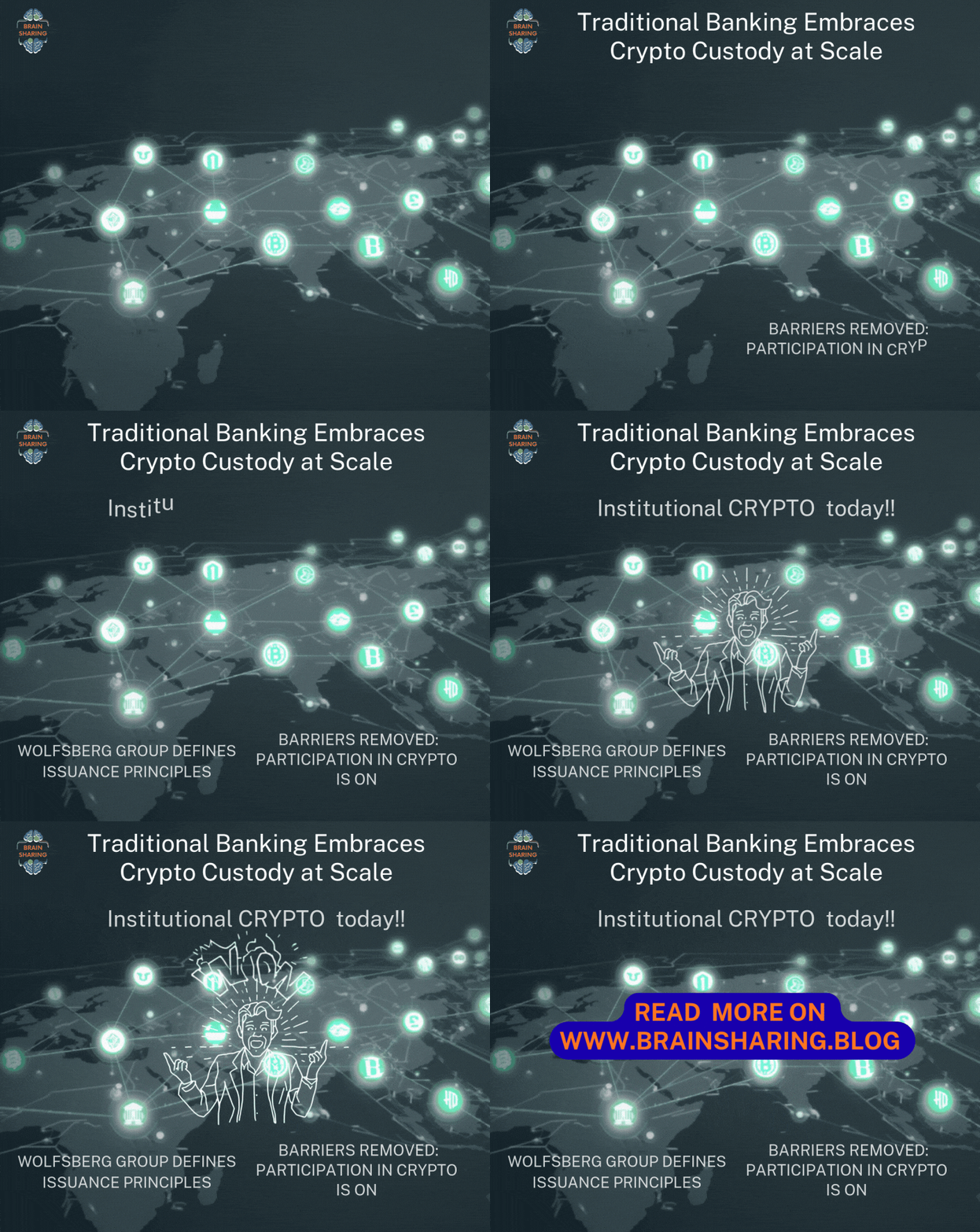
Traditional bank regulators have begun to explicitly allow banks to engage in crypto-asset safekeeping, and global banks are now receiving detailed guidance on how to bank stablecoin issuers, but this is not an unlimited “green light” and still comes with strict risk-management expectations

The crypto market is currently gripped by extreme fear, with the Fear & Greed Index sitting at just 17/100—a sharp retreat from the optimistic vibes that dominated much of 2025. What started as healthy corrections in November has evolved into genuine uncertainty, though the underlying community sentiment tells a more nuanced story than pure panic.