






Do you even know what winning looks like anymore? We bomb, we sanction, we posture, and then we call a fragile pause in the violence a strategic victory. The highest-level direct U.S.-Iran talks since the Islamic Revolution of 1979 have ended, not with a peace accord, but with a plea for a second date and a ceasefire that feels more like a collective gasp for air [1]. This isn’t diplomacy; it’s a timeout called by exhausted referees in a game where the players have forgotten the rules. And your gas bill, your pension fund, and the stability of the global economy are all on the field.
The Strategic Mirage: What Washington Thought It Bought
The strongest case for the Trump administration’s maximalist campaign is this: you cannot negotiate with a regime that chants “Death to America” while racing toward a nuclear threshold. The joint U.S.-Israeli strikes, as reported, significantly degraded the Islamic Revolutionary Guard Corps’ (IRGC) infrastructure, creating a window of coercive leverage [2]. The logic was brutal but simple: pummel the regime’s tools of external repression, and its internal contradictions will do the rest. Policy planners in the White House believed they were applying decisive force to a brittle structure. By many analysts’ reading, the strategy echoed the logic of pressure campaigns that have historically forced adversarial states to the negotiating table — the objective being not just a pause in hostilities, but a fundamental reordering of Iranian behavior, starting with the closure of its nuclear program and the severing of its regional proxy networks [3].
And yet, here we are. The ceasefire holds, but the fundamental architecture of the conflict remains untouched. The planners, in their focus on tactical strikes, failed to appreciate a core tenet of Iranian strategy: control of the Strait of Hormuz is not a secondary option, it is the primary deterrent. By demonstrating a credible threat to choke 20% of the world’s oil transit, Tehran exposed a catastrophic vulnerability in the global system that bombing campaigns cannot fix [4]. You cannot bomb a mining of a strait into submission. The war room’s map showed targets; it did not show the insurance markets in London or the futures traders in Singapore panicking over a blocked shipping lane.
The View from Tehran: Survival is Victory
From the perspective of Supreme Leader Khamenei and the IRGC, what does “winning” mean? It means surviving. It means proving that the United States, for all its firepower, cannot dictate terms to a civilization-state that has endured millennia of empires. Every day the Islamic Republic endures is a victory against what it portrays as imperial overreach [5]. The regime’s calculus is not about battlefield gains in a conventional sense; it is about imposing unbearable costs—politically, economically, and militarily—until the adversary’s will collapses. They watched the U.S. public’s war-weariness after Iraq and Afghanistan. They see the deep domestic divisions over this conflict. Their strategy is to outlast you, to make the price of “victory” so high that you settle for a managed draw. As one regional analyst noted, “Iran doesn’t need to win the war. It just needs to make sure America loses it” [6].
But here is what that narrative cannot fully explain: the internal fragility. The protest movements, though brutally suppressed, are a live wire. The economy, under decades of sanctions, is on life support. The regime’s legitimacy is threadbare. A truly confident power does not need to threaten global energy security to feel safe. The IRGC is weakened, but the state’s apparatus of repression remains intact, ready to turn inward with full force. The question for us is whether we are cynical enough to arm a popular uprising we may not be able to control, or whether we will once again prefer the stability of a familiar dictatorship to the chaos of popular will.
The Human Ledger: What This “Win” Costs You
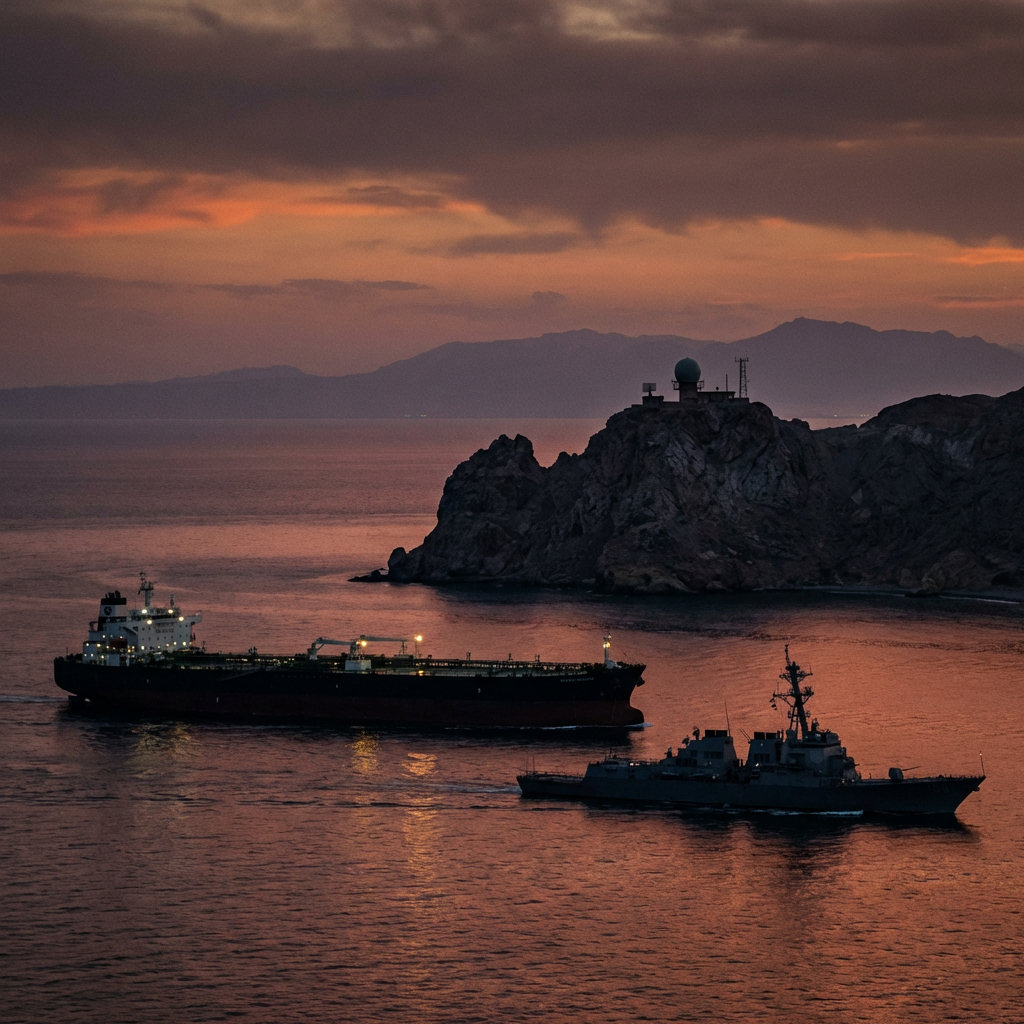
Let’s translate this from map-room abstractions to your kitchen table. When the Strait of Hormuz hiccups, the price of a barrel of Brent crude doesn’t just “increase”—it spikes, sending shockwaves through every supply chain on Earth. We are not talking about a 10-cent rise at the pump. We are talking about the potential for $150 oil, which would reignite inflation, force central banks to hike interest rates again, and could plunge a fragile global economy into recession [7]. This is the tangible cost of a strategy that failed to secure its primary economic objective first. Your heating bill, the price of bread, the interest rate on your mortgage—all are now held hostage by a geopolitical gamble that underestimated its own blowback.
Furthermore, the spectacle of a divided America and a fracturing NATO alliance is not a sideshow; it is the main event for Beijing and Moscow. Every public spat between Washington and Brussels, every moment of hesitation, is a data point for Xi Jinping and Vladimir Putin. They see a West that cannot agree on a common purpose — one whose allies openly accuse it of waging an illegal war and whose own Secretary-General has said some NATO members were “tested and failed” — exhausting its military and political capital in the Middle East [8]. This perceived weakness doesn’t deter them; it emboldens them. It tells them that the rules-based order is a paper tiger, and that now is the time to press their advantages elsewhere, from Taiwan to the Arctic. You are not just watching a regional war; you are watching the accelerated erosion of the global system that has underpinned Western prosperity for 75 years.
What Comes Next?
So, what does it take to “win the ceasefire”? It requires a humiliating admission: the initial strategy was flawed. It requires securing the Strait of Hormuz not as an afterthought, but as the non-negotiable precondition for all else [9]. It requires mending fences with allies not through charm offensives, but through a coherent, shared strategic vision that isn’t dictated by the next tweet or the next rally. It requires a clear-eyed, brutally honest conversation with Benjamin Netanyahu: Israel’s security cannot be bought with a perpetual American war. The forever-war model is a political asset for some Israeli leaders; it is a political death sentence for American ones [10].
The path forward is not a mystery. It is a series of difficult, unglamorous choices that prioritize long-term stability over short-term domestic political wins. It requires selling a vision of peace to the Iranian people that is better than the regime’s vision of permanent resistance. It requires a discipline this administration has not yet shown. The alternative is a managed chaos that serves no one’s long-term interest except those who profit from perpetual conflict.
Why are we still at war? Who benefits from the chaos? And what will it take before you decide enough is enough?
AI Disclosure: This post was created with the assistance of artificial intelligence. The ideas, analysis, and opinions expressed are my own — AI was used to help compose, structure, and refine my personal notes and thoughts into the final written content. Images, videos and music featured in this post were also generated using AI tools, based on my own creative prompts and direction.
— REFERENCES —
[1] Al Jazeera – US and Iran fail to reach a deal after marathon talks in Pakistan
[2] Reuters – US, Iran leave door open to dialogue after tense Islamabad talks
[3] The Conversation – The Islamabad talks were doomed to failure
[4] Deccan Herald / AFP – Iran’s 10-point plan: Strait of Hormuz and uranium enrichment
[5] Al Jazeera – Iran, US both claim victory — but did they actually concede ground?
[6] Times of Israel – US-Iran talks doomed as long as both sides insist they won the war
[7] Fitch Ratings – US-Iran Conflict: Credit Risks Remain Elevated Despite Ceasefire
[8] Reuters – NATO chief says some European allies were tested and failed in Iran war
[9] Politics Today – Europe Pushes Back on US Military Operations as Iran War Divides Allies
[10] Chatham House – US–Iran ceasefire: What it means for Trump, Tehran, Israel and US allies
