





Mainland Chinese technology firms are accelerating their push into Hong Kong at a pace not seen in years, transforming the territory into a critical launchpad for global ambitions. From artificial intelligence startups to established e-commerce giants, companies are opening offices, hiring international talent, and testing products in Hong Kong’s hybrid regulatory environment before scaling abroad.
The trend signals a strategic pivot: as geopolitical tensions tighten access to Western markets, Hong Kong’s unique position under the “one country, two systems” framework offers mainland firms a rare bridge between China’s domestic ecosystem and the global economy.
Background Context
Hong Kong has long served as a gateway between East and West, but its role for mainland tech firms has evolved dramatically since 2020. Following the implementation of the National Security Law and subsequent geopolitical friction with the United States, many Chinese companies found their traditional paths to international expansion increasingly constrained.
The territory’s common-law legal system, independent currency peg, and internationally recognised regulatory framework continue to distinguish it from mainland jurisdictions. For tech companies navigating data privacy laws, cross-border payments, and intellectual property protections, Hong Kong offers a regulatory sandbox that mirrors global standards far more closely than Shenzhen or Beijing.
According to data from Invest Hong Kong, the government department responsible for foreign direct investment, the number of mainland-origin companies establishing operations in the territory rose 18% year-on-year in 2024, with technology and innovation firms accounting for the largest share of new arrivals.
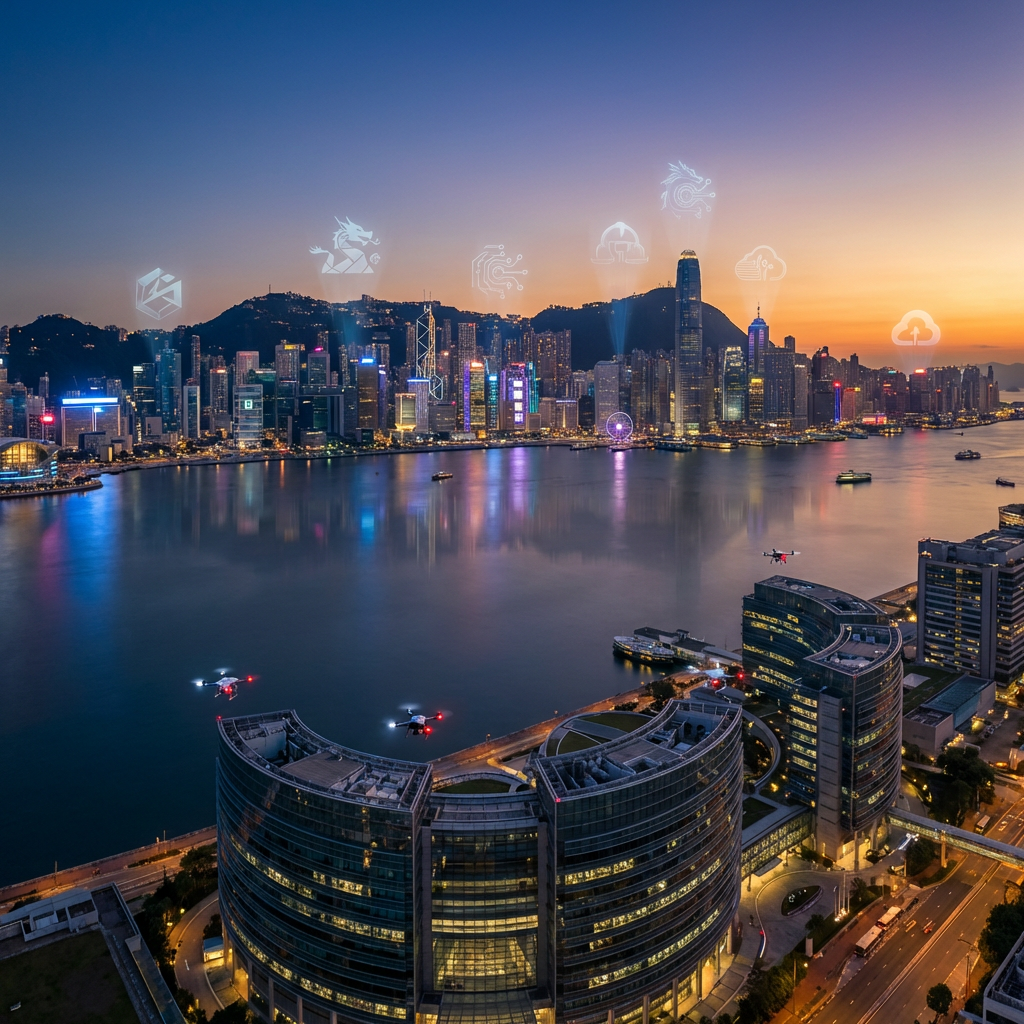
Detailed Coverage
The influx spans multiple sectors within the tech ecosystem. AI companies are setting up research labs to tap Hong Kong’s universities and attract bilingual engineers. Fintech firms are leveraging the Hong Kong Monetary Authority’s regulatory sandbox to pilot digital payment solutions. E-commerce platforms are using the territory as a testing ground for international logistics and customer acquisition strategies.
ByteDance, the parent company of TikTok, expanded its Hong Kong office significantly in late 2024, adding roles focused on international compliance and content moderation. Xiaomi deepened its presence by establishing a global partnerships division headquartered in the territory. Smaller firms are following suit: dozens of Shenzhen-based AI startups have opened satellite offices in Hong Kong’s Cyberport and Science Park districts over the past 18 months.
The Hong Kong government has actively courted these companies. Chief Executive John Lee’s 2023 Policy Address earmarked HK$30 billion for innovation and technology development, including subsidies for firms establishing R&D centres. The Top Talent Pass Scheme, launched in December 2022, has drawn over 100,000 applications — many from mainland tech professionals seeking to work in Hong Kong-based offices of domestic firms.
- 18% year-on-year increase in mainland tech firms setting up Hong Kong operations (Invest Hong Kong, 2024)
- HK$30 billion allocated for innovation and technology under the 2023 Policy Address
- Over 100,000 applications received under the Top Talent Pass Scheme since December 2022
- Cyberport and Science Park occupancy rates exceeding 90% as of Q1 2025
- Hong Kong ranked 3rd globally in the Global Financial Centres Index as of March 2025
Not all firms are arriving for the same reasons. Some use Hong Kong primarily as a talent magnet, drawn by the territory’s access to professionals fluent in both Mandarin and English with experience in international business practices. Others prioritise the regulatory environment, particularly in fintech and data governance, where Hong Kong’s frameworks align more closely with GDPR and international financial regulations than mainland equivalents.
A third cohort views Hong Kong as a capital markets staging ground. Several mainland AI firms are reportedly preparing Hong Kong IPOs, seeking to raise funds on the Hong Kong Stock Exchange as access to U.S. capital markets remains complicated by audit inspection disputes and potential delisting risks under the Holding Foreign Companies Accountable Act.
Expert Perspectives & Data
Stephen Phillips, Director-General of Investment Promotion at Invest Hong Kong, told the South China Morning Post in January 2025 that “mainland tech companies increasingly see Hong Kong not just as a listing venue, but as an operational base for internationalisation.” He noted that firms in AI, biotech, and advanced manufacturing represent the fastest-growing categories of new arrivals.
Zhang Wei, a technology policy researcher at the Chinese University of Hong Kong, argues that the trend reflects a structural shift rather than a temporary phenomenon. “The old model was: build in Shenzhen, list in New York,” Zhang said in a February 2025 interview with Caixin Global. “The new model is: build in Shenzhen, operationalize in Hong Kong, expand into Southeast Asia and the Middle East.” Zhang’s research found that 62% of mainland tech firms surveyed in 2024 identified Hong Kong as their preferred base for overseas expansion, up from 41% in 2021.
Financial data supports the narrative. Hong Kong Exchanges and Clearing reported that technology sector IPOs raised HK$48.6 billion in 2024, a 34% increase from the prior year. Mainland-origin firms accounted for approximately 70% of that total, according to exchange filings reviewed by Bloomberg.
Meanwhile, the territory’s artificial intelligence sector is growing rapidly. The Hong Kong Innovation and Technology Commission reported that AI-related employment in the territory grew 27% between 2023 and 2024, with mainland-backed firms driving the majority of new hires.
Implications
For the broader technology industry, this migration reshapes competitive dynamics across Asia-Pacific. Hong Kong’s emergence as a de facto international headquarters for mainland firms could challenge Singapore’s longstanding dominance as the region’s tech hub. The two cities increasingly compete for the same pool of mainland-origin companies, talent, and capital — a rivalry that will intensify as both governments pour resources into innovation ecosystems.
Geopolitically, the trend complicates the narrative around Hong Kong’s post-2020 trajectory. While Western governments have questioned the territory’s autonomy, mainland tech firms are voting with their feet — choosing Hong Kong precisely because its distinct regulatory and legal infrastructure remains functional enough to serve international business needs. Whether that distinction endures under deepening integration with the Greater Bay Area remains an open question.
For ordinary workers in Hong Kong, the influx brings both opportunity and pressure. Tech salaries in the territory rose an average of 12% in 2024, according to the Robert Walters Asia Salary Survey, driven by demand from mainland firms competing for talent. But rising rents in Cyberport, Science Park, and surrounding districts are squeezing small businesses and long-term residents. Housing affordability — already Hong Kong’s most persistent social issue — faces additional strain as well-paid mainland tech professionals enter the property market.
Consumers stand to benefit from increased competition in fintech and digital services. Mainland firms entering Hong Kong’s payments market, for example, are driving innovation in cross-border remittances and digital wallets — services that directly reduce costs for the hundreds of thousands of Hong Kong residents who regularly transact across the border.
The bottom line: Hong Kong is repositioning itself as mainland China’s international tech interface. For workers, this means more high-paying job options but higher living costs. For businesses, it means a more competitive operating environment. For consumers, it means better digital services — but watch the rent.
The critical question now is whether Hong Kong can maintain the regulatory independence that makes it attractive to these firms — or whether deeper integration with the mainland will gradually erode the very distinction that drew them there in the first place.
