





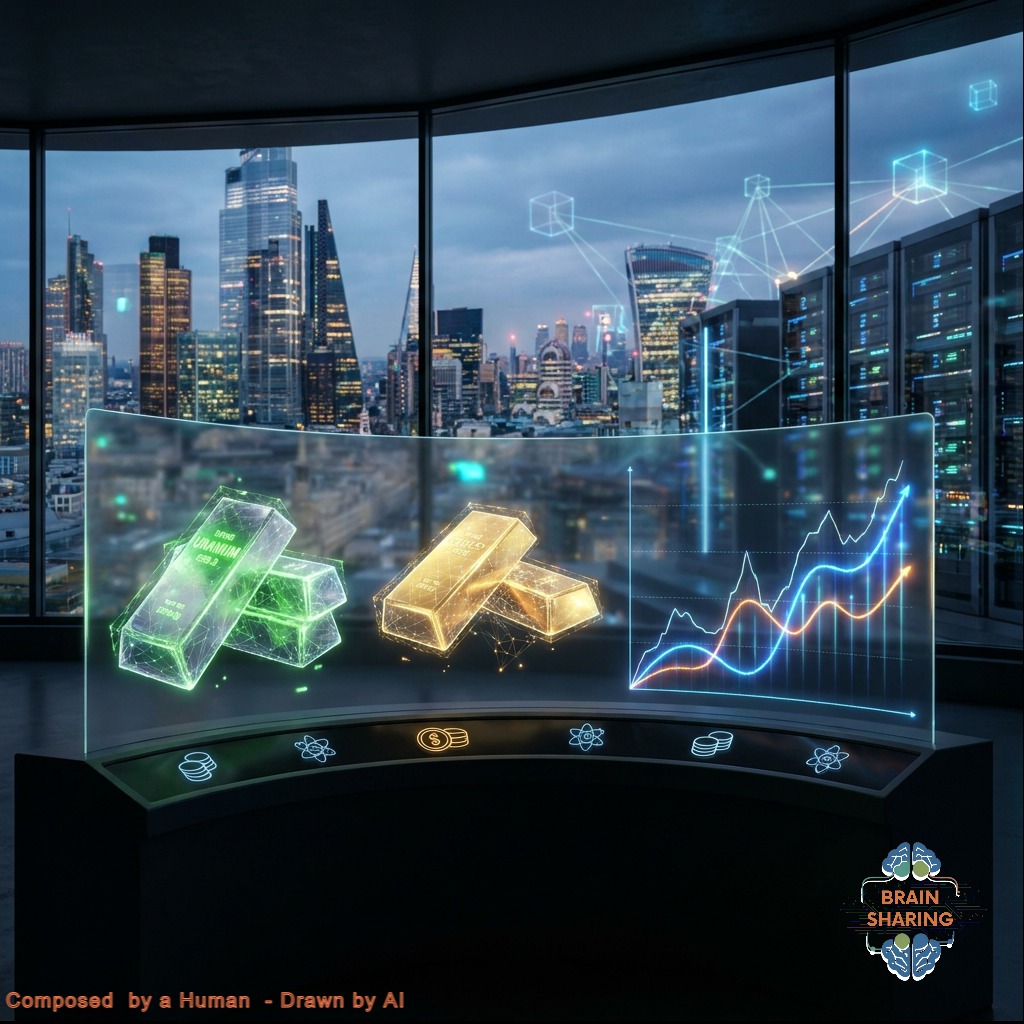
On March 30, 2026, Trilitech, a London-based development firm embedded within the Tezos ecosystem, launched Metals.io, a platform for trading tokenized commodities including uranium and gold. This move extends the company’s earlier venture, Uranium.io, a retail-focused uranium marketplace introduced in December 2024 on Etherlink—Tezos’ Ethereum Virtual Machine-compatible layer 2. Metals.io aims to further dismantle investment barriers in strategic materials critical for artificial intelligence development and industrial applications, but its implications warrant a nuanced examination beyond the promotional fanfare.
The Strategic Pivot: From Uranium.io to Metals.io
Uranium.io represented a significant shift by democratizing access to tokenized uranium, an asset class historically reserved for institutional players with minimum investments of approximately $4.2 million [1][2]. The platform’s xU3O8 token, backed by physical uranium, attracted approximately 9,000 retail investors, according to Trilitech’s head of commercial applications, Ben Elvidge [1]. Metals.io builds on this foundation by incorporating tokenized gold and Noemon Tech’s RARE token—a basket of strategic metals [1][3]—responding to investor interest in assets linked to AI infrastructure and energy security.
However, this expansion raises questions about whether tokenization truly mitigates the inherent complexities of commodity markets or merely repackages them for a broader audience.
Market Context: The Tokenized Commodities Surge
The launch aligns with a broader uptick in tokenized commodity markets, yet the data reveals volatility. RWA.xyz reports that cumulative market capitalization surged to $7.7 billion on March 6, 2026, before retracting to $7 billion by the announcement date [1][4]. Tokenized gold dominates, with Tether Gold (XAUT) holding 38% of the market share at $2.5 billion and Paxos Gold (PAXG) accounting for 34% at $2.2 billion [1].
Analysts like Julio Moreno, head of research at CryptoQuant, attribute this to tariff uncertainties, elevated interest rates, and safe-haven demand, noting that “crypto exchanges are becoming global venues for TradFi derivatives” [1][5]. This trend underscores a convergence, but it also highlights market fragility—tokenized assets remain susceptible to macroeconomic shifts and speculative pressures.
Accessibility Versus Risk: A Double-Edged Sword
Metals.io’s low entry barriers, such as the $10 minimum via Transak partnerships [1][6], promise inclusivity but introduce risks. Uranium trading is influenced by geopolitical factors, nuclear policy, and long-term energy trends—variables requiring sophisticated analysis that retail investors may lack. While tokenization fractionalizes ownership, it does not eliminate underlying commodity risks; price volatility, regulatory changes, and liquidity constraints persist. Critics argue that platforms like Metals.io could amplify exposure for inexperienced participants, potentially leading to market distortions or losses, especially in a niche sector like AI-driven infrastructure demand.
Industry Trends: Crypto’s Foray into Tokenized Assets
Trilitech’s initiative is part of a larger movement where crypto firms are aggressively entering tokenized markets. Bitpanda’s Vision Chain, an Ethereum Layer-2 for European banks under MiCA and MiFID II [1][7], and Coinbase’s stock perpetual futures for non-US users [1][8] exemplify this shift. Exchanges like Binance and Kraken have also launched tokenized perpetual futures, blurring lines between digital and traditional finance [1][9][10]. This expansion suggests a strategic pivot towards real-world asset integration, but it also invites regulatory scrutiny and operational challenges, such as ensuring interoperability and custody solutions—areas where Hex Trust’s integration with Etherlink in August 2025 provided some institutional backing [1][11].
Critical Assessment: Implications for AI and Beyond
From an analytical perspective, Metals.io’s focus on AI-related materials is astute, tapping into the energy demands of data centers and the scarcity of strategic metals. Yet, this positioning is not without pitfalls. The AI industry’s growth is unpredictable, and uranium’s role in nuclear power faces public and regulatory headwinds. Moreover, the platform’s reliance on Tezos’ Etherlink ecosystem raises scalability concerns compared to more established blockchains.
While tokenization offers efficiency and transparency, the lack of standardized global regulations for such commodities could hinder adoption, leaving investors in a gray area between innovation and uncertainty.
The Broader Ecosystem: Integration and Challenges
The success of Metals.io will depend on its ability to integrate with broader financial systems and address technological hurdles. The tokenized commodities market, though growing, remains a fraction of traditional commodities trading, suggesting room for expansion but also limited liquidity. Trilitech’s emphasis on leveling the playing field is commendable, but it must navigate competition from established crypto exchanges and traditional brokers entering the space. Furthermore, the environmental and ethical implications of uranium trading—often tied to nuclear energy debates—add layers of complexity that tokenization alone cannot resolve, requiring transparent disclosure and investor education.
Ultimately, Trilitech’s Metals.io epitomizes the ambitious fusion of blockchain technology with tangible industrial assets, offering a glimpse into a future where AI infrastructure and strategic commodities are accessible to all. Yet, this vision demands rigorous scrutiny; the democratization of finance must be tempered with an understanding of market intricacies, regulatory landscapes, the volatile interplay between innovation and risk.
As tokenization continues to reshape investment paradigms, the true test will lie in whether such platforms can sustainably bridge the gap between speculative digital markets and the physical realities driving global industries.
References:
[1] Vardai, Z. (2026). “Trilitech Debuts Tokenized Commodities Platform on Tezos.” Cointelegraph, March 30, 2026. https://cointelegraph.com/news/trilitech-tokenized-commodities-tezos
[2] Tezos. (2024). “Tezos-Powered Uranium.io Marketplace Goes Live — Empowering Access to the Uranium Market.” Tezos Media Center, December 2, 2024. https://tezos.com/media-center/uranium-io
[3] Noemon Tech / RareTech. “RARE Token — A Basket of Strategic Metals.” raretech.noemon.tech. (Note: Page was temporarily unavailable at time of verification; Cointelegraph confirms the token and issuer.)
[4] CryptoJobs. (2026). “Tokenized Commodities Market Reaches $7.7B, Creating New Opportunities.” CryptoJobs, March 6, 2026. https://crypto.jobs/news/tokenized-commodities-market-reaches-7-7b-creating-new-opportunities
[5] Moreno, J. (2026). “Tokenized Commodities Market Analysis.” CryptoQuant, March 5, 2026. (Cited in Cointelegraph and corroborated by Bitnewsbot, Crypto Economy, and edgen.tech.)
[6] Transak. (2025). “Transak Powers Uranium.io to Bring Tokenized Uranium to the Masses.” Transak Blog, January 23, 2025. https://transak.com/blog/transak-powers-uranium.io-to-bring-tokenized-uranium-to-the-masses
[7] Cointelegraph. (2026). “Bitpanda Targets Banks with Vision Chain Tokenization Platform.” Cointelegraph, March 25, 2026. https://cointelegraph.com/news/bitpanda-announces-vision-chain-europe
[8] Coinbase. (2026). “Coinbase Launches Stock Perpetual Futures.” Coinbase Blog, March 20, 2026. https://www.coinbase.com/blog/coinbase-launches-stock-perpetual-futures
[9] Binance. (2026). “Binance Futures Launches TradFi Perpetual Contracts.” Binance, January 8, 2026. https://www.binance.com/en/support/announcement/detail
[10] Kraken. (2026). “Announcing the World’s First Regulated, Tokenized-Equity Perpetual Futures.” Kraken Blog, February 24, 2026. https://blog.kraken.com/product/xstocks/tokenized-equity-perpetual-futures
[11] Hex Trust. (2025). “Hex Trust Integrates Etherlink and Enables Custody for Tokenised Uranium.” Hex Trust Press Release, August 12, 2025. https://www.hextrust.com/news/hex-trust-integrates-etherlink
AI Disclosure: This post was created with the assistance of artificial intelligence. The ideas, analysis, and opinions expressed are my own — AI was used to help compose, structure, and refine my personal notes and thoughts into the final written content. Images, videos and music featured in this post were also generated using AI tools, based on my own creative prompts and direction.
