






Table Of Contents

The Trump Administration’s Venezuelan Intervention: Legal Justifications, Resource Interests, and MAGA Politics
The article analyzes the Trump administration’s 2026 military raid on Caracas, “Absolute Resolve,” which abducted Venezuelan President Nicolás Maduro and his wife for narcotrafficking charges, and argues that the operation is best understood as a fusion of legal opportunism, resource ambition, and MAGA-aligned politics. Officially framed as a law enforcement action grounded in a U.S. narcoterrorism indictment, the raid relied on precedents like the Ker-Frisbie doctrine to claim that even an unlawful abduction abroad would not bar prosecution in U.S. courts.
Under international law, however, the article contends the operation blatantly violates the UN Charter’s ban on the use of force against another state’s territorial integrity and political independence, fails to meet the Article 51 self-defense standard, and ignores extradition mechanisms designed to preserve sovereignty. Legal scholars cited in the piece see no plausible international legal justification and warn that normalizing such actions invites similar interventions by powers like Russia or China under parallel pretexts.
The author then argues that resource interests—Venezuela’s vast oil reserves and mineral-rich Orinoco Mining Arc—are central drivers, highlighting Trump’s repeated focus on “oil,” U.S. control of Venezuelan crude sales, and plans to open petroleum and mining sectors to American firms while denying access to China. This amounts to de facto economic administration of Venezuela, with Washington controlling oil revenues and exerting veto power over interim authorities, which the article characterizes as a new form of resource imperialism.
Politically, the intervention solidifies a “MAGA political economy”: nationalist rhetoric combined with aggressive corporate extraction, backed by much of the Republican establishment and key MAGA influencers but questioned by some America First isolationists concerned about executive overreach. Secretary of State Marco Rubio emerges as a chief architect, linking Venezuela policy to a broader hemispheric strategy and hinting at possible pressure on Cuba. The piece concludes that Venezuela has become a test case for twenty-first-century resource-driven interventions that erode international law and expand unilateral U.S. executive power.
Introduction
On January 3, 2026, in a military operation code-named “Absolute Resolve,” the United States conducted a dramatic raid on Caracas, Venezuela, resulting in the forcible abduction of President Nicolás Maduro and his wife, Cilia Flores. The operation, involving 150 aircraft deployed from approximately 20 bases and conducted by U.S. special forces, marked the most aggressive military action of President Donald Trump’s tenure. According to U.S. officials, Maduro was transported aboard the USS Iwo Jima to New York to face federal criminal charges[1]. This intervention, justified by the Trump administration as a law enforcement operation targeting drug trafficking, has sparked intense international legal debate, congressional scrutiny, and questions about the true geopolitical and economic motivations underlying American involvement in Venezuela. This report examines the legal basis for Maduro’s capture, the resource interests driving U.S. policy, the political coalition supporting the intervention, and the broader implications for American foreign policy and international law.
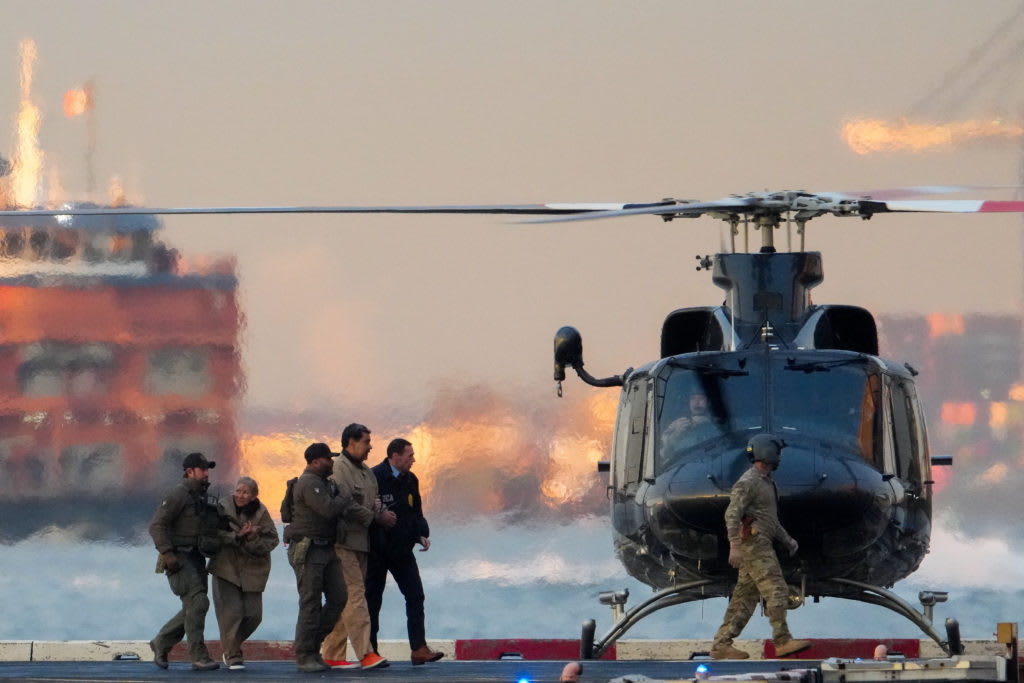
Figure 1: Nicolás Maduro is processed at Manhattan courthouse following his capture by U.S. military forces
Part I: The Military Operation and Initial Justifications
Operation Overview
The January 2 military operation was the culmination of months of escalating tensions between the Trump administration and the Maduro regime. Beginning in September 2025, the U.S. military had conducted over 20 operations in international waters targeting vessels suspected of drug trafficking, resulting in more than 80 fatalities[2]. These preliminary actions set the stage for the dramatic intervention that would follow.
General Dan Caine, chairman of the U.S. Joint Chiefs of Staff, outlined the scope of the operation. The raid mobilized 150 aircraft launching from approximately 20 land and sea bases, providing air cover for helicopter-borne special forces tasked with extracting Maduro and his wife from the presidential residence in Caracas. According to official reports, CIA operatives had been stationed in Venezuela since August, gathering intelligence on Maduro’s movements and security details. The operation commenced at 10:46 pm Washington time on January 2, 2026. American forces penetrated Caracas, exchanged gunfire with Venezuelan security personnel, secured Maduro and Flores, and extracted them without American casualties. By 3:29 am, both detainees were aboard the USS Iwo Jima, a U.S. assault ship positioned in the Caribbean[3].
The Drug Trafficking Indictment
The Trump administration’s legal justification for the operation centers on a 25-page federal indictment filed in U.S. District Court for the Southern District of New York. The indictment charges Maduro, his wife Flores, and other Venezuelan officials with conspiracy to distribute cocaine and heroin to the United States, weapons trafficking, and narcoterrorism[4]. According to prosecutors, Maduro used his position as president to directly facilitate drug trafficking operations, including:
- Selling diplomatic passports to drug traffickers to enable their travel under diplomatic cover
- Arranging transportation of drug proceeds through diplomatic channels using private aircraft
- Directing security forces to confiscate drug shipments seized by law enforcement and redistribute them to trafficking networks
- Ordering kidnappings, beatings, and murders against individuals who owed money or posed threats to drug operations
- Collaborating with the Cártel de los Soles, a criminal organization allegedly led by Maduro himself[5]
Attorney General Pam Bondi declared that the accused “will soon encounter the full force of American justice on American soil in American courts.”[6].
The Trump administration characterizes the operation not as regime change or military intervention, but as a law enforcement action conducted by federal agents with military support—a crucial distinction in the administration’s legal calculus.
Part II: The International Law Question—Can the U.S. Legally Charge Maduro?
The Constitutional Question vs. International Law
This is where the analysis bifurcates into two distinct legal frameworks. Within U.S. constitutional law, the answer appears straightforward: American courts possess jurisdiction over foreign nationals for certain crimes, and precedent suggests that unlawful abduction abroad will not prevent prosecution. In Ker v. Illinois (1886) and United States v. Alvarez-Machain (1992), the Supreme Court established the “Ker-Frisbie doctrine,” holding that unlawful abduction does not deprive a U.S. court of jurisdiction to try a defendant[7]. Even if Maduro’s arrest violated international law, American courts would likely proceed with his prosecution.
However, international law tells a different story entirely. Legal experts across major institutions have concluded that the operation violates fundamental principles of the UN Charter and customary international law. Rachel VanLandingham, professor of national security law at Southwestern Law School, states: “There is no legal foundation for extraterritorial law enforcement that infringes on another nation’s territorial integrity. That’s why extradition treaties exist; states must grant permission.”[8]
Violations of the UN Charter
The U.N. Charter, Article 2(4), explicitly prohibits member states from threatening or using force against the territorial integrity or political independence of any other state. The charter contains no exception for law enforcement operations, no matter how serious the alleged crimes[9]. International law scholar commentary from the Chatham House Institute notes:
“It is difficult to conceive of possible legal justifications for transporting Maduro to the US, or for the attacks. There is no UN Security Council mandate that might authorize force. Clearly, this was not an instance of a US act of self-defence triggered by a prior or ongoing armed attack by Venezuela.”[10]
The operation similarly violates the principle of non-intervention, a cornerstone of international relations established after World War II precisely to prevent powerful states from unilaterally imposing their will on weaker nations. By physically removing Maduro—a sitting head of state—from Venezuelan territory, the U.S. directly substituted external coercion for domestic Venezuelan authority[11]. This represents one of the starkest possible violations of state sovereignty.
The Problematic Self-Defense Argument
The Trump administration has advanced a self-defense rationale, alleging that drug trafficking organizations allegedly led by Maduro have harmed American citizens through the distribution of fentanyl and cocaine. However, self-defense under Article 51 of the UN Charter requires a “prior or ongoing armed attack” by the state in question[12]. No evidence suggests Venezuela, as a state entity, launched an armed attack against the United States. Criminal organizations operating within Venezuelan territory—even if tolerated by government officials—do not constitute armed attacks warranting military response by another state.
This argument would establish a dangerous precedent. If drug trafficking from Venezuela justifies unilateral military intervention, then numerous other states could justify interventions against countries harboring terrorist organizations, criminal enterprises, or organizations engaged in human trafficking. The precedent would render Article 2(4) meaningless.
The Jurisdiction-Enforcement Distinction
International law recognizes a critical distinction between jurisdiction to prescribe law and jurisdiction to enforce law. While the U.S. may assert jurisdiction over certain crimes committed abroad affecting American interests, that jurisdictional claim does not confer authority to enforce domestic law through coercive means on foreign territory without consent[13]. Extradition treaties, mutual legal assistance agreements, and international judicial mechanisms exist specifically to enable cross-border criminal cooperation while preserving state sovereignty. The Trump administration bypassed these mechanisms entirely.
Precedent Concerns
While the Trump administration has drawn comparisons to the 1989 Panama operation against General Manuel Noriega—another instance of forcible extraction of a foreign leader—legal scholars argue those precedents, however controversial, are distinguishable. In Panama, the U.S. claimed action was triggered by the killing of an American soldier by Panamanian forces, providing a more compelling self-defense argument[14]. In Venezuela, no comparable incident preceded the intervention.
Additionally, a 2022 case often cited by administration officials involved former Honduran President Juan Orlando Hernández being extradited to the U.S. on drug charges and receiving a 45-year sentence. Yet in December 2024, Trump granted Hernández a presidential pardon, undercutting the credibility of the administration’s commitment to pursuing drug-related charges against foreign leaders[15].
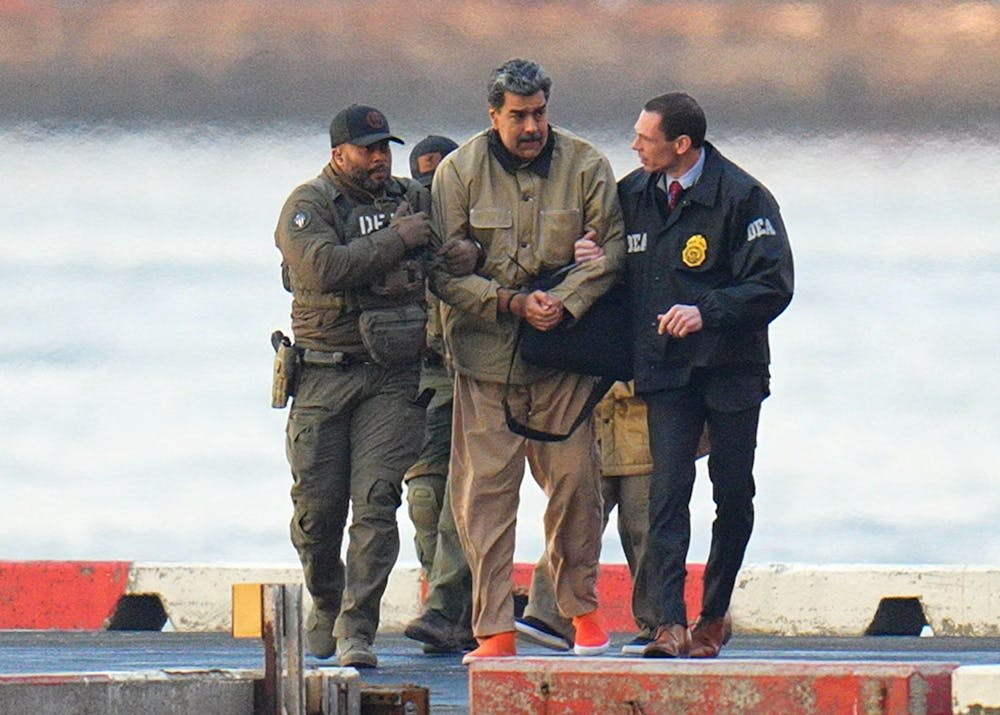
Figure 2: Critics question whether the stated drug-trafficking justification masks broader resource interests in Venezuela
Part III: The Resource Nexus—Oil, Minerals, and Economic Motivations
While the Trump administration emphasizes the drug trafficking rationale, a careful examination of Trump’s own statements and administration actions reveals far more substantial economic interests driving U.S. policy toward Venezuela.
Oil: The Primary Target
Venezuela possesses the world’s largest proven crude oil reserves, estimated at approximately 300 billion barrels[16]. During his press conference immediately following Maduro’s capture, Trump mentioned the word “oil” at least 20 times, according to Le Monde analysis.
- Trump stated: “We’re going to have our very large United States oil companies, the biggest anywhere in the world, go in, spend billions of dollars, fix the badly broken infrastructure, the oil infrastructure and start making money for the country.”[17]
The administration has already begun implementing an oil control strategy. Secretary of State Marco Rubio announced that the U.S. would initially seize and market 30 to 50 million barrels of already-sanctioned Venezuelan oil, valued at approximately $1.8 to $3 billion at current market prices around $60 per barrel[18].
Trump declared that proceeds from these sales would be “controlled by me, as President of the United States of America, to ensure it is used to benefit the people of Venezuela and the United States.”[19]
Rubio emphasized the control dimension: “U.S. sanctions on Venezuela oil provide ‘tremendous leverage,’ as the South American country’s interim leaders ‘cannot move any oil’ unless allowed by the Trump administration.”[20] Energy Secretary Chris Wright subsequently stated the U.S. would control Venezuelan oil sales “indefinitely,” suggesting permanent American management of Venezuela’s petroleum sector.
Minerals and Rare Earth Elements
However, petroleum is not the sole resource interest. One day after Maduro’s capture, Commerce Secretary Howard Lutnick publicly called for revitalizing Venezuela’s mining sector. The Orinoco Mining Arc—a 111,843-square-kilometer zone created by Maduro in 2016 in Venezuela’s southern jungles—contains:
| Mineral/Resource | Estimated Quantity |
| Gold | More than 7,000 metric tons (Maduro’s claim) |
| Diamonds | Substantial but unverified |
| Coltan | Significant deposits |
| Nickel | Approximately 408,000 metric tons |
| Bauxite | Large quantities |
| Coal | Approximately 3 billion metric tons |
| Rare Earth Elements | Potentially present but unmapped |
Table 1: Venezuela’s Mineral Resources in the Orinoco Mining Arc
These resources hold strategic importance for U.S. defense and technology sectors. Coltan, for instance, is essential for manufacturing electronics and military equipment. Rare earth elements are critical for renewable energy technology, defense systems, and advanced manufacturing[21]. Bram Ebus, an expert on Venezuela’s illicit economies, explained to Fox News: “Venezuela’s gold, critical mineral and rare earth potential is substantial, which makes mining resources very much on the menu for Trump.”[22]
The administration’s interest in preventing Chinese access to Venezuelan minerals adds a geopolitical dimension. By controlling Venezuela’s mineral resources, the U.S. can simultaneously secure critical inputs for its own technology and defense sectors while denying those resources to China, a major strategic competitor[23].
Economic Control Strategy
The Trump administration’s approach to Venezuela extends beyond simple resource extraction. Rather, U.S. officials are implementing what amounts to economic administration of Venezuelan affairs. Rubio outlined a “three-fold process” involving stabilization, recovery, and transition. Under this framework:
- The U.S. controls oil sales and marketing of Venezuelan petroleum in global markets
- Proceeds from oil sales are managed by U.S. government entities, not Venezuelan authorities
- American oil companies will be invited to invest billions in Venezuelan infrastructure
- U.S. officials exercise veto power over interim Venezuelan government decisions regarding resource distribution[24]
Trump announced this unprecedented arrangement without specifying its legal or constitutional basis. No treaty authorizes U.S. administration of Venezuelan affairs. No UN mandate exists. The arrangement represents de facto U.S. economic colonialism.
Part IV: Political Support and the MAGA Movement
Coalition Building
Surprisingly, Trump’s Venezuela intervention has generated qualified support from many quarters typically critical of military interventionism. This includes significant portions of his core MAGA base, Republican leadership, and even some Democrats focused on countering authoritarian regimes.
The Quinnipiac University poll conducted during escalating naval operations showed mixed public opinion: 63% of voters opposed military action in Venezuela, while only 25% supported it. However, support varied significantly by party: 52% of Republicans favored the operation, compared to just 19% of independents[25]. This party-based divide suggests the intervention has become tribally defined rather than assessed on its merits.
MAGA Influencer Support
Steve Bannon, the populist former chief strategist to Trump and host of the “War Room” podcast, labeled the operation “bold and brilliant.”[26] Candace Owens, a conservative podcaster with significant influence in MAGA circles, invoked conspiracy theories, stating the operation demonstrated that the “CIA has another hostile control of a country at the behest of globalist psychopaths.”[27]
However, traditional MAGA figures focused on “America First” isolationism expressed significant reservations. Representative Thomas Massie, a conservative Republican often critical of military interventionism, pointed out Trump’s own indictment—which made “no mention of entanyl or oil”—contradicting Trump’s public statements about the operation’s purpose[28].
Massie sarcastically noted: “Meanwhile, Trump announces he’s taken over the country and will manage it until he finds a suitable replacement. Added bonus: American oil executives will exploit it.”[29]
Senator Rand Paul of Kentucky, historically a vocal opponent of foreign military interventions, stated on social media that removal of Maduro was necessary, yet he co-sponsored legislation seeking to limit presidential war powers in Venezuela. Paul noted: “It’s essential to remember that our founders restricted the executive’s ability to declare war without Congressional approval—to mitigate the horrors of war and confine it to defensive actions.”[30]
Republican Establishment Support
Republican leadership broadly supported Trump’s Venezuela action. Senator Todd Young of Indiana requested “more answers” but indicated willingness to work with the administration. Nikki Haley, Trump’s former UN ambassador and a 2024 presidential contender, stated that “the Venezuelan people deserve freedom, and we should hope this moment signifies a new day for the Americas,” endorsing the intervention’s outcome if not necessarily its methods[31].
Even Adam Kinzinger, a Trump critic known for opposing Trump’s 2020 election challenges, characterized Maduro’s arrest as “the right call,” indicating that foreign policy decisions can transcend partisan divisions when they align with established U.S. interests[32].
Secretary of State Marco Rubio’s Role
Secretary of State Marco Rubio, who was born in Florida to a family of Cuban exiles opposed to communism, has emerged as a key architect and advocate for Trump’s Venezuela policy. During a briefing to senators, Rubio emphasized the need to prevent Russia and China from accessing Venezuelan resources and to rapidly stabilize the country through oil revenue[33]. His appointment as Secretary of State reflected Trump’s intent to pursue an aggressive hemispheric policy, and Venezuela has become the initial testing ground for this approach.
Notably, during his press conference, Trump issued barely veiled threats toward Cuba, with Rubio warning: “If I lived in Havana and I was in the government, I would be concerned, at least a little bit.”[34] This suggests Venezuela may be merely the first chapter in a broader Trump administration strategy toward Latin America.
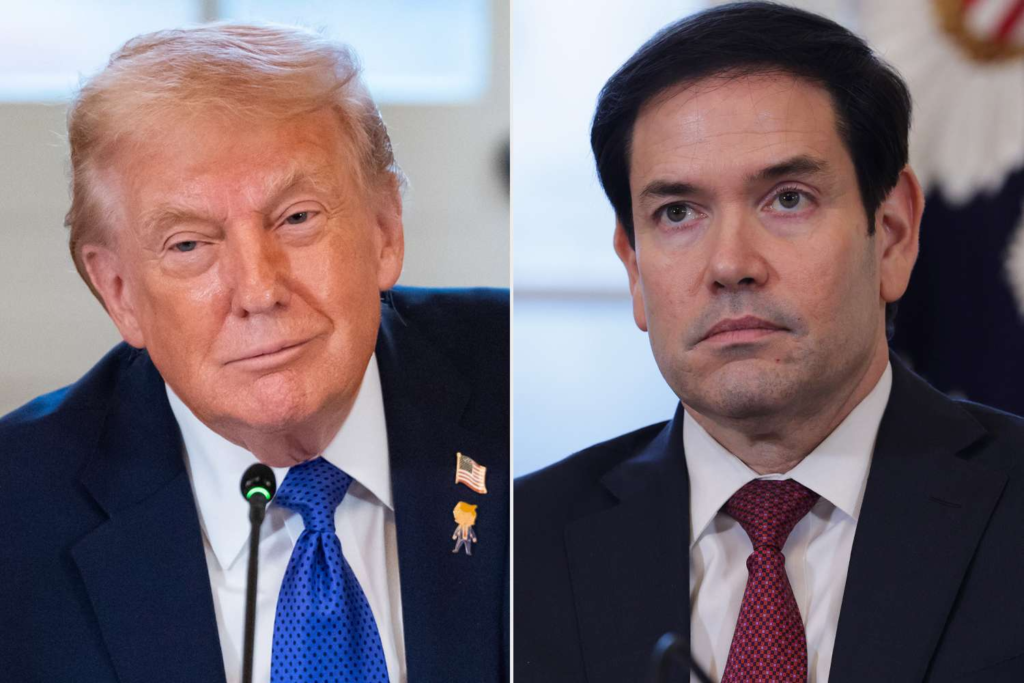
Figure 3: Secretary of State Marco Rubio has emerged as a primary architect of Trump’s Venezuela policy
Part V: Lobbying Interests and Corporate Alignment
Oil Industry Mobilization
Within days of Maduro’s capture, Trump convened oil executives to discuss Venezuela’s petroleum sector. According to CNN reporting, Trump administration officials outlined a provisional strategy for “indefinite control” of Venezuelan oil sales. Energy Secretary Chris Wright briefed energy executives, promising them access to Venezuelan resources[35].
However, oil companies have responded with skepticism rather than enthusiasm. Multiple executives expressed concern about the political and security risks involved in Venezuelan operations, despite promises of U.S. military support. One industry official told E&E News: “I think we’re in uncharted territory depending on what happens in the next two weeks.”[36]
Nevertheless, at least one company—Gold Reserve—has expressed eagerness to reclaim mining operations previously seized and operated by the Cártel de los Soles[37].
Mining Industry Interest
Commerce Secretary Howard Lutnick’s involvement signals administration commitment to mineral extraction alongside petroleum interests. The Trump administration has reportedly been working with private equity firms to develop critical mineral and gold projects in Venezuela with offtakes to the United States[38]. However, the severe security situation in Venezuelan mining zones—involving criminal gang control, systematic violence, forced labor, and extreme brutality—presents substantial obstacles even with U.S. military backing[39].
Leland Lazarus, CEO of Lazarus Consulting, a geopolitical risk firm advising Department of Defense officials on Venezuelan projects, stated:
“North American investments would certainly line up to do business in Venezuela. Oil might be on top of the menu, but we know there’s tacit interest in Venezuela’s mining deposits, which represent much more than just a side benefit—both to prevent China from obtaining critical minerals and rare earth elements, and to access prime deposits for American technological advancement.”[40]
The MAGA Political Economy
The Venezuela intervention exemplifies what scholars might term “MAGA political economy”—a fusion of nationalist rhetoric with corporate extraction. Trump frames U.S. control of Venezuelan resources as rectification of past American losses. During his press conference, Trump repeatedly asserted that American oil companies were “plundered” when Hugo Chavez nationalized Venezuelan oil in the early 2000s, and that the U.S. must reclaim these assets[41].
This narrative conflates U.S. corporate interests with American national interests. Oil company profits from Venezuelan petroleum extraction do not directly benefit ordinary American workers, yet Trump presents them as American national gains. Similarly, the administration claims oil revenues will “benefit the people of Venezuela,” while simultaneously reserving control of those revenues for American government officials and private companies[42].
Part VI: Implications for International Law and U.S. Foreign Policy
Establishing Precedent
The Trump administration’s actions in Venezuela establish dangerous precedents for international relations. By demonstrating that a militarily superior power can unilaterally extract a foreign leader without Security Council authorization or significant international consequences, the U.S. has signaled that the UN Charter’s protections for state sovereignty apply selectively[43].
Other nations may draw the logical inference that similar interventions are permissible when justified by internal security concerns, drug trafficking, or threats to national interests. Russia, for instance, could invoke comparable justifications for intervening in Ukraine, Georgia, or Moldovan territories on grounds of national security. China could justify intervention in Taiwan or South China Sea territories using analogous logic.
Democratic Legitimacy Questions
Ironically, the Trump administration has justified its Venezuela intervention partly on grounds that Maduro is an “illegitimate” ruler who stole the 2024 presidential election. Yet the administration has been notably silent on the legitimacy of Venezuela’s 2025 parliamentary elections, which most international observers assess as similarly fraudulent[44]. This selective concern with Venezuelan electoral legitimacy—invoked to justify military intervention but ignored when inconvenient—undermines claims of principled commitment to democracy.
Institutional Consequences
Congress has received minimal briefing on the Venezuela intervention. No formal war authorization has been sought. Trump characterized the operation as law enforcement rather than military action to avoid constitutional war powers requirements. This institutional circumvention establishes precedent for executive military actions of increasing scope conducted without legislative participation[45].
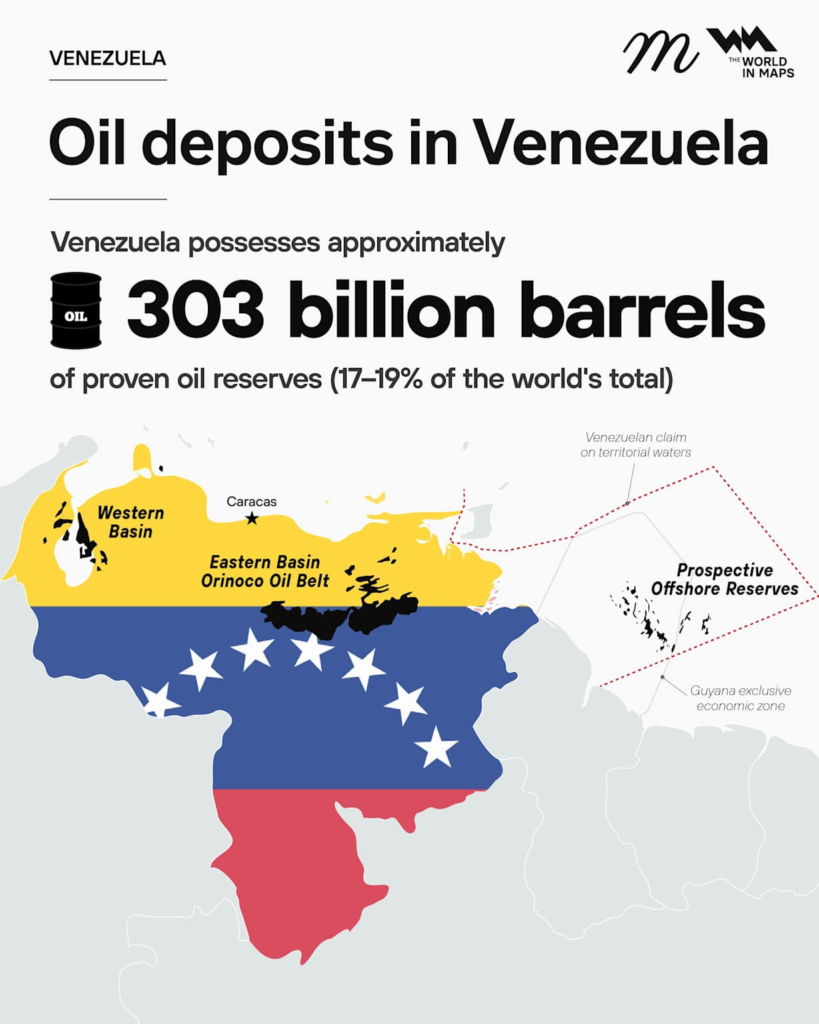
Figure 4: Venezuela’s vast oil reserves represent the world’s largest proven petroleum deposits, central to U.S. strategic interests
Conclusion
The Trump administration’s abduction of Nicolás Maduro and subsequent assertion of control over Venezuelan affairs represents a watershed moment in international relations and American foreign policy. While officially justified as a narcoterrorism law enforcement operation, the preponderance of evidence indicates that resource interests—particularly petroleum and critical minerals—constitute the primary motivation for U.S. intervention.
From a purely legal standpoint, the operation violates the UN Charter’s prohibition on the use of force against territorial integrity and political independence of states. No Security Council authorization existed. No clear self-defense trigger justified the intervention. The distinction between jurisdiction to prescribe law and jurisdiction to enforce law has been erased.
Domestically, the operation has generated qualified support from Trump’s MAGA coalition and Republican leadership, though not without reservations from isolationist-inclined Republicans concerned about deviations from America First principles. Oil executives have responded cautiously to opportunities in Venezuela, and mining interests eagerly anticipate access to critical mineral resources.
Politically, the intervention signals that the Trump administration will pursue nationalist economic policies combining resource extraction with assertion of American hemispheric dominance—a strategy with historical echoes to earlier eras of American imperialism. Secretary of State Marco Rubio has emerged as a key architect of this policy, with signals suggesting Cuba may be the next target of similar intervention.
The long-term consequences of this intervention will be substantial. Whether the precedent established by unilateral military extraction of foreign leaders becomes normalized or remains an anomaly depends on whether other nations successfully challenge American dominance. For now, the Trump administration has demonstrated both willingness and capability to violate international law when sufficiently motivated by resource interests and willing to absorb reputational costs. Venezuela has become a test case for twenty-first-century resource imperialism.
References
[1] Reuters. (2026, January 3). Was the US capture of Venezuela’s president legal? Retrieved from https://www.reuters.com/world/us/was-us-capture-venezuelas-president-legal-2026-01-03/
[2] BBC News. (2025, December 2). Why has Trump attacked Venezuela and taken Maduro? Retrieved from https://www.bbc.com/news/articles/c93n4nx5yqro
[3] Le Monde. (2026, January 3). With Maduro abduction, Trump flexes muscles and sends world a message. Retrieved from https://www.lemonde.fr/en/international/article/2026/01/04/with-maduro-abduction-trump-flexes-muscles-and-sends-world-a-message/
[4] Lawfare. (2026, January 7). Inside the Legal Battles Ahead for Nicolás Maduro. Retrieved from https://www.lawfaremedia.org/article/inside-the-legal-battles-ahead-for-nicolas-maduro
[5] Ibid.
[6] Reuters. (2026, January 3). Ibid.
[7] SCOTUS Blog. (2026, January 8). Maduro’s arrest places these Supreme Court rulings in the spotlight. Retrieved from https://www.scotusblog.com/2026/01/maduros-arrest-places-these-supreme-court-rulings-in-the-spotlight/
[8] The Hill. (2026, January 11). Legal basis for Maduro’s capture trailed by ‘grave concerns’. Retrieved from https://thehill.com/homenews/administration/5682340-trump-administration-maduro-venezuela-un-charter/
[9] Diplomacy and Law. (2026, January 3). Nicolas Maduro’s arrest: legality under International Law. Retrieved from https://www.diplomacyandlaw.com/post/nicolas-maduro-s-arrest-legality-under-international-law
[10] Chatham House. (2026, January 5). The US capture of President Nicolás Maduro – and attacks on Venezuela have no justification. Retrieved from https://www.chathamhouse.org/2026/01/us-capture-president-nicolas-maduro-and-attacks-venezuela-have-no-justification
[11] Diplomacy and Law. (2026, January 3). Ibid.
[12] Chatham House. (2026, January 5). Ibid.
[13] Diplomacy and Law. (2026, January 3). Ibid.
[14] Reuters. (2026, January 3). Ibid.
[15] Politico. (2026, January 4). Why Trump’s Venezuela Intervention Is Different. Retrieved from https://www.politico.com/news/magazine/2026/01/04/trump-venezuela-legal-fallout-column-00710331
[16] Le Monde. (2026, January 8). Trump, the symbol of a capitalism ever more voracious for oil and rare earth elements. Retrieved from https://www.lemonde.fr/en/economy/article/2026/01/09/trump-the-symbol-of-a-capitalism-ever-more-voracious-for-oil-and-rare-earth
[17] Ibid.
[18] CBS News. (2026, January 6). Rubio says U.S. has “tremendous leverage” over Venezuela, will control oil sales. Retrieved from https://www.cbsnews.com/news/venezuela-oil-rubio-us/
[19] Ibid.
[20] Ibid.
[21] E&E News. (2026, January 6). Trump wants Venezuela’s oil. What about minerals? Retrieved from https://www.eenews.net/articles/trump-wants-venezuelas-oil-what-about-minerals/
[22] Fox News. (2026, January 10). Trump admin eyes Venezuela minerals following Nicolás Maduro arrest. Retrieved from https://noticias.foxnews.com/us/expert-warns-extreme-violence-venezuelan-mining-trump-admin-eyes-mineral-reserves
[23] E&E News. (2026, January 6). Ibid.
[24] CBS News. (2026, January 6). Ibid.
[25] CNN. (2026, January 4). Trump’s MAGA allies mostly rally behind his Venezuela strike. Retrieved from https://www.cnn.com/2026/01/04/politics/trump-venezuela-maga-republicans-support
[26] Ibid.
[27] Ibid.
[28] Ibid.
[29] Ibid.
[30] Ibid.
[31] Ibid.
[32] Ibid.
[33] CBS News. (2026, January 6). Ibid.
[34] Le Monde. (2026, January 3). Ibid.
[35] CNN. (2026, January 7). Trump officials scramble to sell skeptical lawmakers, oil execs. Retrieved from https://www.cnn.com/2026/01/07/politics/trump-officials-venezuela-oil-plan
[36] E&E News. (2026, January 6). Ibid.
[37] Ibid.
[38] Ibid.
[39] Fox News. (2026, January 10). Ibid.
[40] E&E News. (2026, January 6). Ibid.
[41] Le Monde. (2026, January 3). Ibid.
[42] CBS News. (2026, January 6). Ibid.
[43] Chatham House. (2026, January 5). Ibid.
[44] Chatham House. (2026, January 5). Ibid.
[45] The Hill. (2026, January 11). Ibid.
