




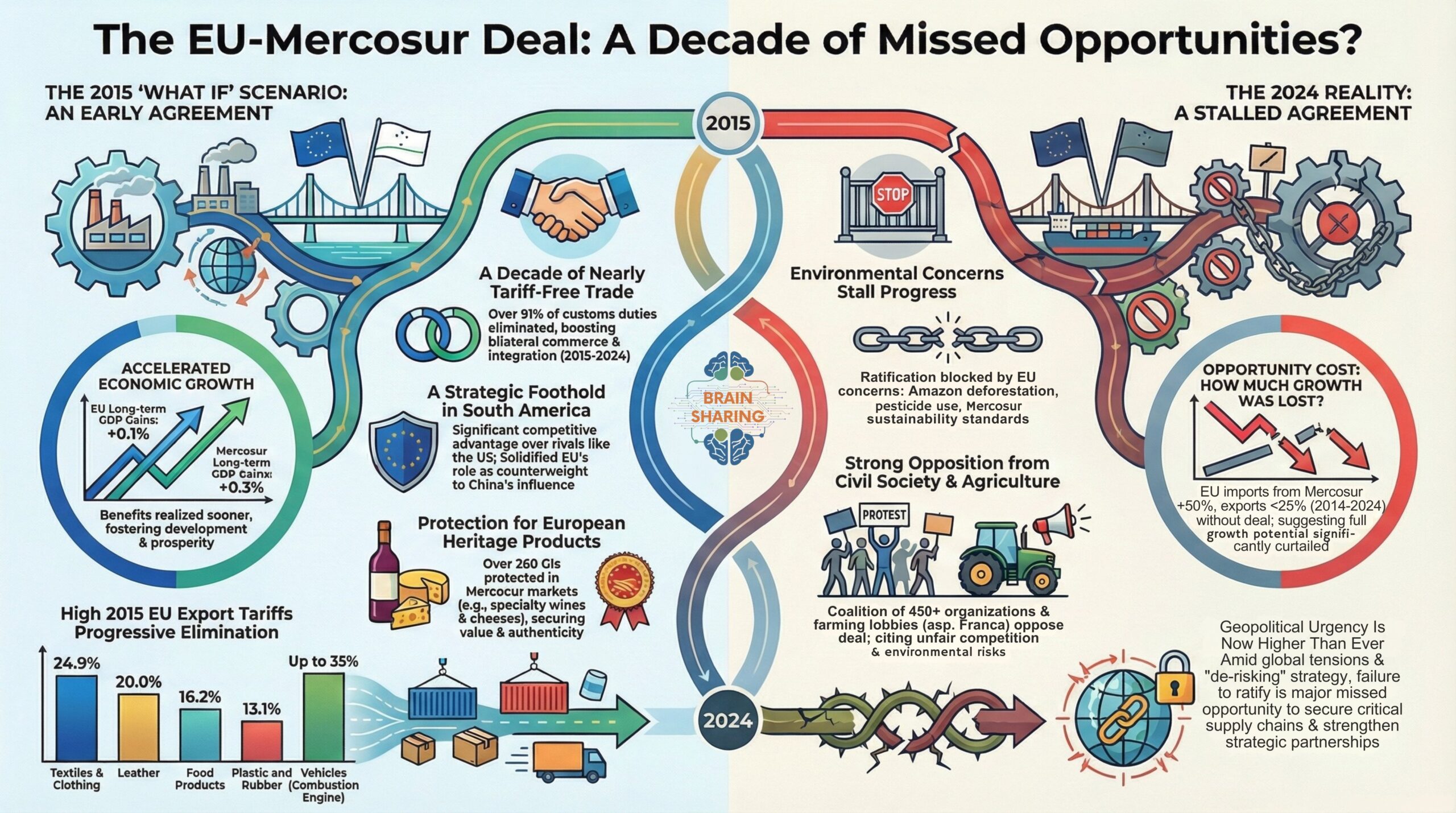

The infographic dramatizes how the EU‑Mercosur saga became a textbook case of “institutional quicksand,” turning what could have been a decade of accelerated growth into a lost opportunity for both sides. On the left, the 2015 “what if” path mirrors the article’s counterfactual scenario: a more federal, agile EU striking an early deal, locking in strategic primacy in South America, faster tariff elimination, and privileged access to critical raw materials long before China emerged as Mercosur’s dominant economic partner. The right side visualizes the actual 2024 reality described in the text: environmental disputes, vetoes driven by domestic agricultural politics, and a fragmented decision‑making system that lets a few member states paralyze a strategic agreement meant to diversify supply chains and bolster Europe’s strategic autonomy. By contrasting nearly tariff‑free trade and secure supply chains with chains of protest, red‑tape, and stalled ratification, the image encapsulates the article’s warning that Europe’s unanimity requirement and dispersed sovereignty do not just delay treaties; they carry a measurable opportunity cost in lost GDP, weakened geopolitical leverage, and ceding influence to more decisive global rivals in a world that will not wait.
