






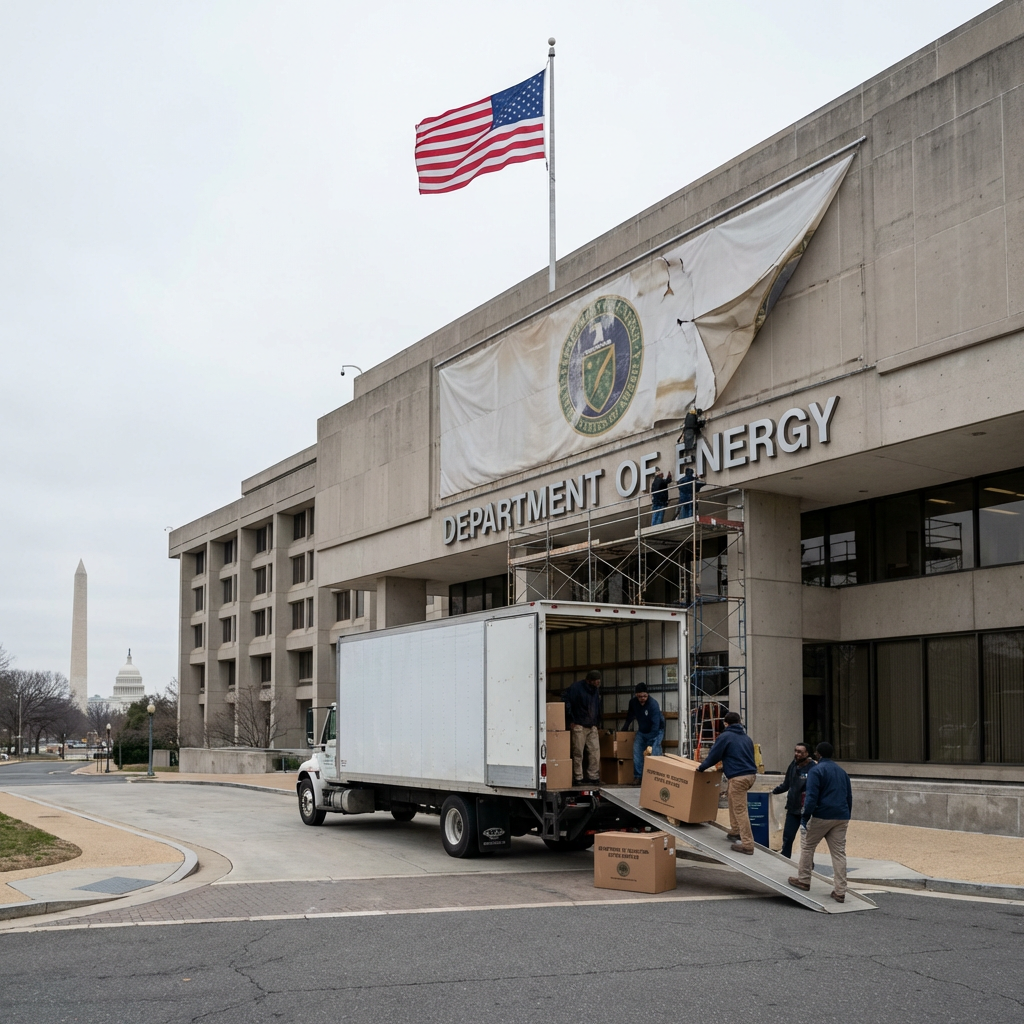
The U.S. Department of Education is being forced to vacate its longtime headquarters at the Lyndon B. Johnson building in Washington, D.C., this summer — a concrete, unmistakable step in the Trump administration’s campaign to dismantle the federal agency. Staff will be relocated to a significantly smaller office roughly one block away at 500 D Street SW, while the Department of Energy will inherit the LBJ building. The move comes after the administration slashed the department’s workforce by approximately half, leaving roughly 70 percent of the headquarters empty and creating a convenient justification for the transfer.
A Headquarters Handover That Speaks Volumes
On the surface, the relocation is a real estate transaction. The administration frames it as a cost-saving measure, claiming it will save several million dollars annually in rent and hundreds of millions in deferred maintenance by moving the Department of Energy out of its aging Forrestal complex. But the symbolism is impossible to ignore: an agency rooted in the Great Society and the civil-rights era is literally being displaced by an agency that manages nuclear weapons, fossil-fuel policy, and critical industrial infrastructure.
The LBJ building is not just office space. It is historically associated with federal civil-rights-oriented education policy — Title I funding for low-income students, protections for students with disabilities, and the broader promise that the federal government would serve as a guarantor of equitable access to education. Abandoning it is a deliberate signal, critics argue, that Washington is stepping back from those commitments entirely.
The Ideological Engine Behind the Move
Trump’s assault on the Department of Education is not primarily a budget story, though budget arguments are deployed as political cover. It is, at its core, an ideological project decades in the making. American conservatives have long argued that the Department of Education represents unconstitutional federal overreach and that education should be returned entirely to the states. Trump campaigned explicitly on closing the department and signed an executive order in 2025 directing his team to facilitate its closure.
The intellectual framework for this dismantling comes from well-established conservative blueprints. Heritage Foundation’s Project 2025 laid out a detailed roadmap: starve the central agency, redistribute its programs and funding to other departments and to the states, then argue the department is no longer necessary. Elon Musk’s Department of Government Efficiency, or DOGE, provided the bureaucratic muscle to execute mass layoffs and program eliminations at speed.
Education Secretary Linda McMahon has been the operational executor of this vision. Under her leadership, the department’s workforce has been cut from roughly 4,600 employees to approximately 2,300. She has signed multiple interagency agreements to transfer responsibilities — much of federal student loan oversight is being shifted to the Treasury Department, while K-12 and higher-education program administration is being distributed to agencies including the Department of Labor.
What the Administration Says vs. What Critics See
The official rationale is efficiency. Administration officials point to the half-empty building and argue that maintaining a massive headquarters for a shrunken agency is wasteful. Moving the Department of Energy into the LBJ building, they say, consolidates a critical national-security agency into modern facilities while saving taxpayer money on the decaying Forrestal complex.
Democrats and education advocates reject this framing entirely. They see the headquarters transfer as the latest and most visible move in a coordinated strategy to hollow out the department functionally — cutting staff, gutting programs, outsourcing responsibilities — so that it becomes a shell incapable of fulfilling its statutory mission. Since only Congress can formally abolish the Department of Education, the administration is pursuing what critics call a de facto abolition through attrition.
“This is not about real estate,” said one senior congressional aide familiar with education policy. “This is about making the federal role in education so small and so weak that it effectively ceases to exist, without ever having to pass a law through Congress.”
The “Oil Boys” Take Priority
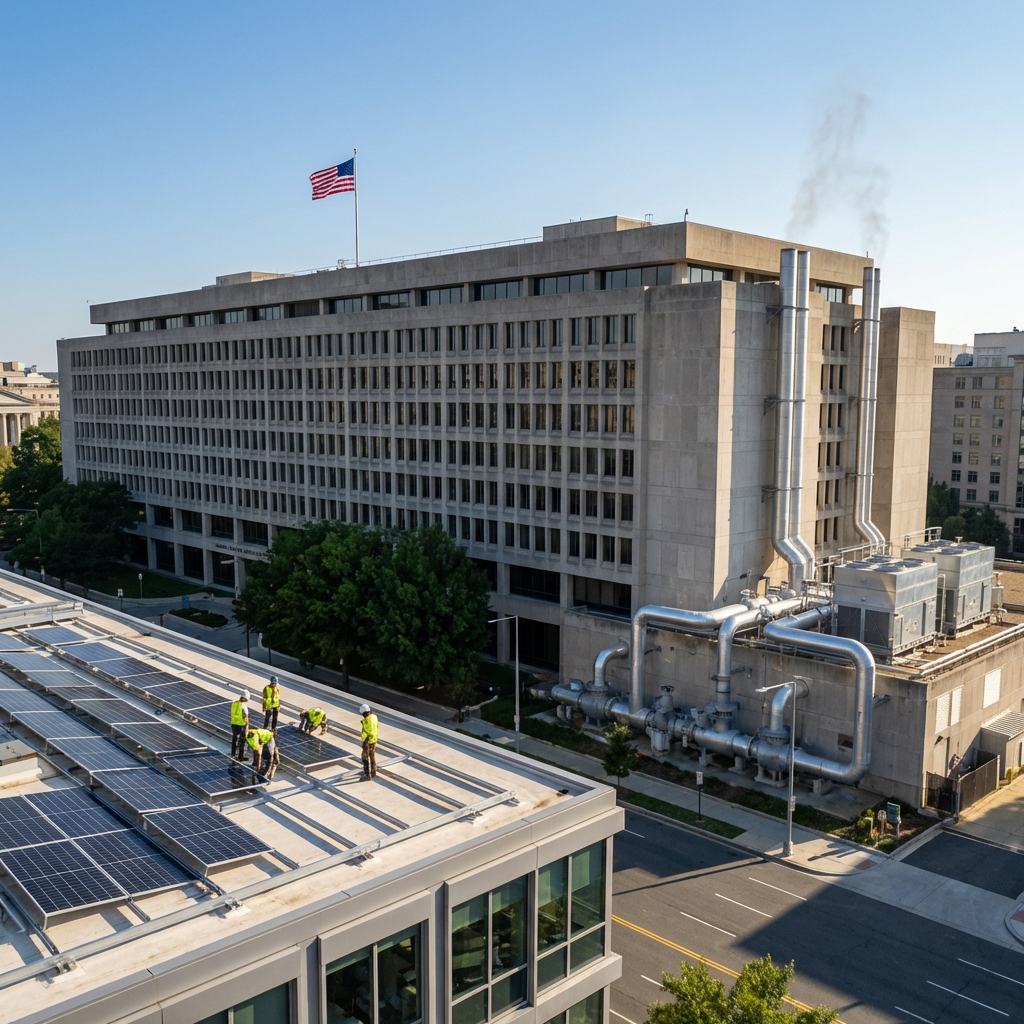
The decision to hand the LBJ building to the Department of Energy is revealing in ways that extend beyond education policy. The Department of Energy oversees U.S. nuclear weapons management, fossil-fuel policy, and the energy transition — sectors where corporate and geopolitical stakes dwarf those of education grants. Under Trump, fossil-fuel interests and industrial deregulation have been clear winners: expanded drilling approvals, aggressive deregulatory rollbacks, and deep skepticism toward climate measures.
Giving Energy a prestigious, modernized headquarters while pushing Education into a rented satellite office makes the administration’s hierarchy of priorities visible in concrete form. National security, energy, and extractive industries come first. Social-policy agencies that enforce civil rights, collect data on educational disparities, and channel funding to vulnerable populations are treated as expendable.
This prioritization is not accidental. It reflects a structural preference within the current administration for agencies that manage hard power — military, energy, industrial policy — over those that manage social rights and redistribution. The real estate transfer is simply the most tangible expression of that preference.
The Enforcement Pivot
Beyond budget cuts and physical relocation, the administration is fundamentally reorienting what remains of the department’s enforcement authority. Rather than aggressively enforcing civil-rights protections related to race, disability, gender identity, and Title IX, the diminished agency is being repurposed to target diversity, equity, and inclusion programs and inclusive school policies. Oversight that once protected marginalized students is being systematically withdrawn.
This pivot has concrete consequences. Federal data collection on educational disparities — the foundation of evidence-based policy at both the federal and state levels — is being curtailed. Without robust data, it becomes harder to identify where students are being underserved and harder to hold institutions accountable. The long-term effects on educational equity could be profound, particularly for low-income students, students of color, students with disabilities, and LGBTQ+ students who have historically relied on federal protections.
The Fiscal Argument Is a Smokescreen
The administration touts savings from dismantling the department, but the numbers are marginal in the context of the federal budget. The Education Department’s annual discretionary budget is roughly $80 billion — less than two percent of total federal spending. The purported savings of several million dollars in rent and even hundreds of millions in deferred maintenance are rounding errors in a government running annual deficits exceeding $1.5 trillion.
The fiscal argument matters not because it is economically significant but because it is politically useful. It provides a narrative — “cutting wasteful woke bureaucracy” — that resonates with a base skeptical of federal spending and hostile to what they perceive as progressive ideological capture of public institutions. The real stakes are not fiscal; they are about the permanent redistribution of power away from federal civil-rights and equity enforcement in education.
What Happens Next
Several developments will determine whether the dismantling accelerates or stalls. Congress remains the only body with the legal authority to formally abolish the Department of Education, and while Republican majorities in both chambers are broadly sympathetic to shrinking the agency, full abolition remains politically difficult. Many Republican members represent districts that depend on federal education funding — particularly Title I grants for high-poverty schools — and would face constituent backlash if those dollars disappeared.
State-level impacts are already emerging. As federal oversight weakens, states with strong public-education constituencies are beginning to explore how to fill the gap, while states ideologically aligned with the administration are moving to reduce their own education bureaucracies. The result could be a widening patchwork of educational quality and access across the country, with significant implications for human-capital formation, workforce readiness, and long-term economic competitiveness.
For investors and policymakers watching from the outside, the student-loan market and higher-education finance sector deserve close attention. The transfer of loan oversight to the Treasury Department introduces new bureaucratic uncertainty at a time when the federal student-loan portfolio exceeds $1.6 trillion. Changes in enforcement priorities, data collection, and grant administration will ripple through the edtech sector, university endowments, and state education budgets for years to come.
The eviction of the Department of Education from the LBJ building is not the end of a story. It is a milestone in a longer, deliberate campaign to reshape the federal government’s relationship with public education — and a visible declaration of which institutions this administration values and which it is willing to discard.
