





The Path to Environmental Recovery is a comprehensive series examining the urgent transformation needed to address the climate crisis and restore ecological balance. This exploration delves into why current environmental policies require fundamental reform, moving beyond incremental change to embrace transformative solutions that match the scale and pace of environmental challenges. The series investigates critical government actions—from carbon regulation and emissions caps to renewable energy incentives and circular economy mandates—that can drive meaningful progress. It examines individual and collective responsibilities in accelerating this transition, while analyzing which green technologies hold the greatest promise for decarbonization. From carbon capture and AI-enhanced energy systems to nature-based solutions, the series evaluates adoption timelines, investment requirements, and implementation strategies. Through evidence-based analysis, it charts a practical roadmap toward environmental recovery that balances technological innovation, policy transformation, and behavioral change.

-

Emissions Unfiltered: The Relentless Rise of Global Carbon and the Political Blocking of Climate Action.
Despite decades of international agreements, national commitments, climate conferences spanning three decades, and increasing climate consciousness among populations worldwide, global emissions continue to rise year after year, and the gap between what we promise and what we actually implement has…
-

The Layered Anatomy of CO₂ Emissions.
We often talk about “global warming” or “net zero by 2050” without seeing that different sectors of society — energy, transport, food, manufacturing, and even the military — interact in subtle and surprising ways. Dissecting these pieces helps us find…
-
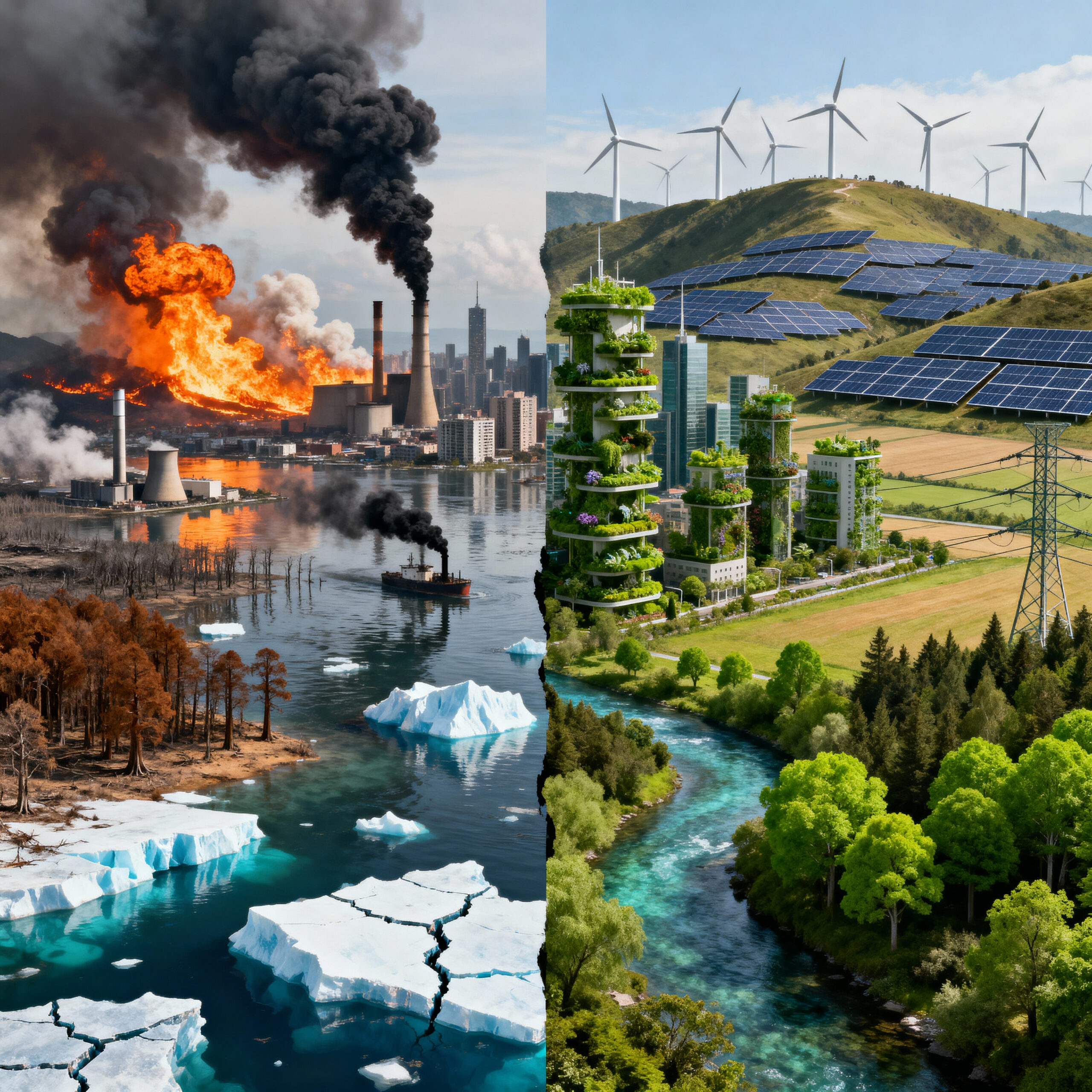
Our Planet’s Final Warning: Understanding the Climate Crisis Through CO₂ Emissions
Quick Read×Quick Read2024 marked the warmest year on record, with global temperatures reaching 1.55°C above pre-industrial levels and the crossing of a crucial climate tipping point—the widespread die-off of tropical coral reefs.Global fossil CO₂ emissions have increased by 74.9% since…