





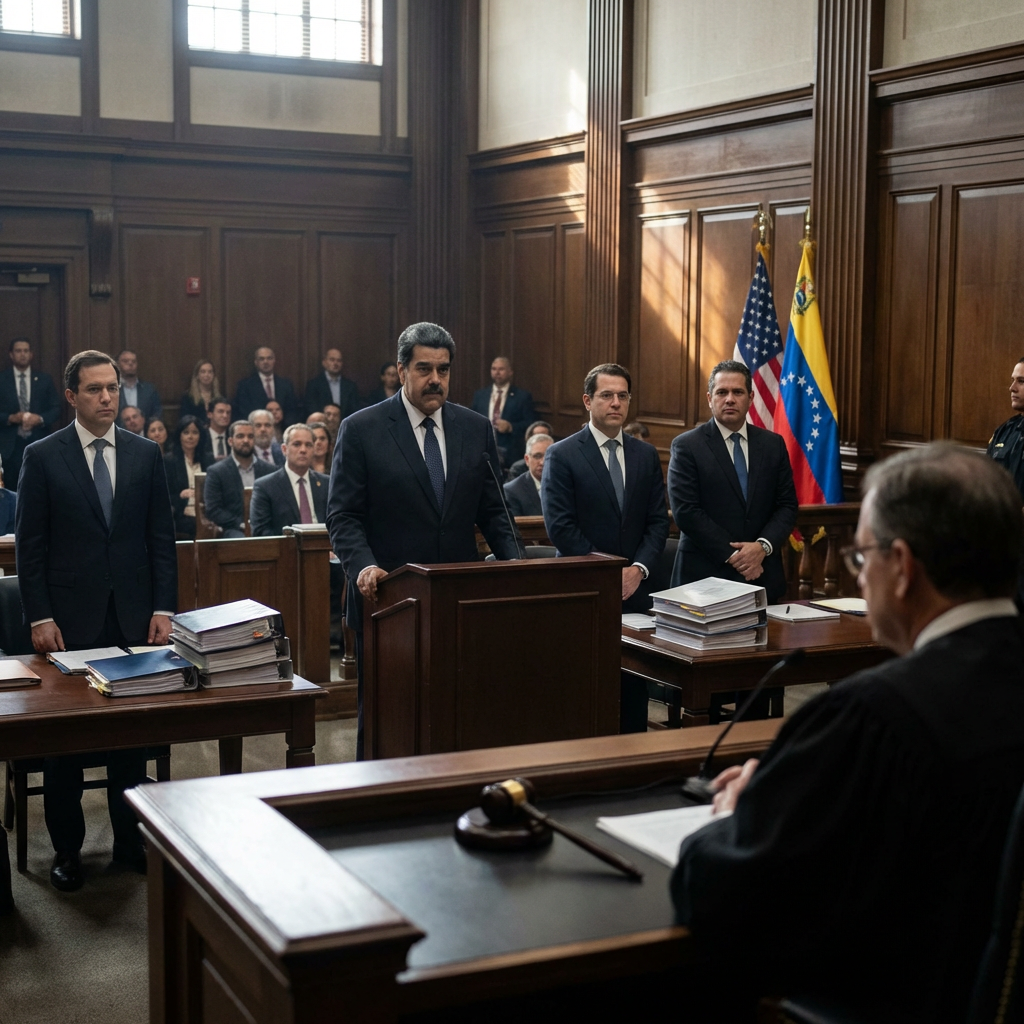
On March 26, 2026, Venezuelan President Nicolás Maduro is set to appear in a US federal court to face charges of narcoterrorism and corruption, marking a pivotal moment in international legal proceedings against a sitting head of state.
Background
The US Department of Justice indicted Maduro in 2020 on charges related to drug trafficking and corruption, alleging he led a cartel that flooded the US with cocaine. Venezuela rejects these charges as politically motivated, citing sovereignty concerns.
This court appearance follows previous legal skirmishes, including a 2023 hearing where Maduro’s lawyers challenged jurisdiction. Tensions between the US and Venezuela have escalated since 2019, with the US recognizing opposition leader Juan Guaidó as interim president.
The Legal Proceedings
Maduro’s case centers on accusations that he collaborated with Colombian rebels to traffic cocaine into the US, according to unsealed indictments. Prosecutors present evidence such as intercepted communications and witness testimonies.
The defense argues that Maduro enjoys head-of-state immunity under international law, a claim the US court has previously dismissed. Legal filings indicate motions to suppress evidence, citing alleged violations of due process.
Strength of the Case
Prosecutors assert a strong case backed by multiple cooperating witnesses, including former Venezuelan officials. Data from the US Drug Enforcement Administration shows a rise in cocaine seizures linked to Venezuelan networks during Maduro’s tenure.
However, critics point to gaps in evidence, such as the lack of direct financial trails to Maduro. Jurisdictional challenges persist, with experts noting that prosecuting a foreign leader sets a complex precedent in international law.
Expert Perspectives
Legal analysts like Dr. Elena Rodriguez from the International Law Institute argue that the case hinges on witness credibility. “The US must prove Maduro’s direct involvement beyond reasonable doubt, which is daunting given diplomatic barriers,” she states.
Political scientists, such as Professor James Carter from Georgetown University, emphasize geopolitical implications. “This trial could strain US-Latin America relations, as many regional states oppose unilateral US legal actions,” Carter notes.
Implications
A conviction could lead to sanctions escalation and further isolate Venezuela economically, impacting global oil markets. Conversely, an acquittal might embolden other leaders to resist US legal pressures.
For readers, this case underscores the tension between national sovereignty and international justice. It may influence how democracies handle cross-border crimes involving state actors.
Watch for upcoming court dates, including rulings on immunity claims and evidence admissibility. Political reactions from Venezuela and allied nations could signal shifts in diplomatic strategies, while US policy may adapt based on trial outcomes.
