




The Quantum Threat: From Sci-Fi to Immediate Technical Debt
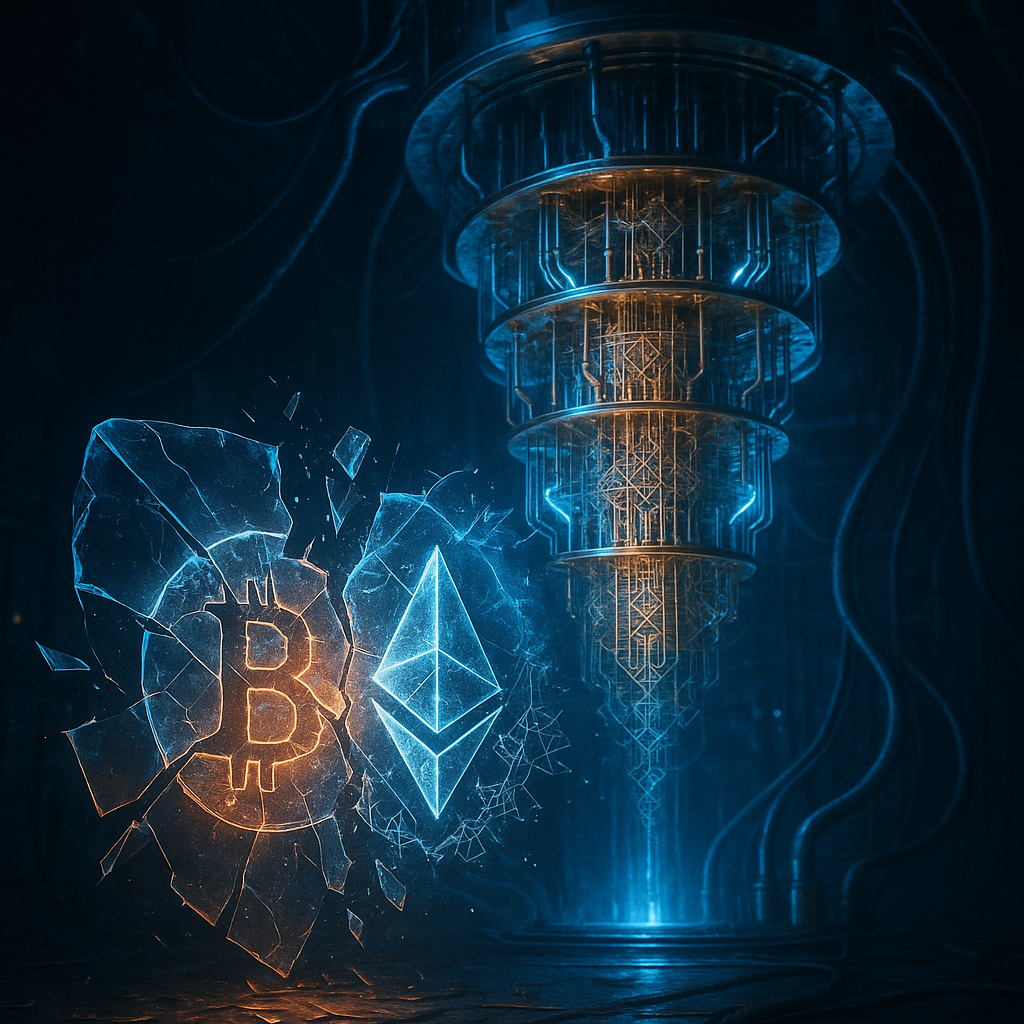
For the uninitiated, the threat stems from quantum computers’ theoretical ability to break the asymmetric cryptographic algorithms (like ECDSA and RSA) that secure everything from your private keys to the consensus mechanism of Bitcoin and Ethereum. A sufficiently powerful quantum computer could derive a private key from a public address, effectively draining wallets and compromising chain integrity. While full-scale, fault-tolerant quantum computers (“Q-Day”) remain years away, the cryptographic migration required is monumental. Google’s move confirms the timeline for viable quantum advantage in relevant computations is collapsing. The on-chain data shows a stark lack of preparedness: over 98% of all value locked in DeFi and held in user wallets is secured by quantum-vulnerable algorithms.
Lattice-Based Cryptography: The New Frontier
The post-quantum cryptographic (PQC) standards being finalized by NIST, such as CRYSTALS-Kyber (for key establishment) and CRYSTALS-Dilithium (for signatures), are primarily based on lattice problems. These are mathematical structures believed to be resistant to both classical and quantum attacks. For blockchain developers, integrating these isn’t a simple patch; it’s a foundational layer-1 overhaul. Signature schemes need replacement, impacting transaction size, verification speed, and ultimately gas costs. The comparison with previous hard forks (like Ethereum’s Merge) is apt, but the stakes are higher—a failed or delayed migration could render entire chains cryptographically obsolete.
Protocol Preparedness: A Tale of Three Chains
Analyzing the ecosystem’s response reveals a dangerous divergence in strategic foresight.
Ethereum: The Proactive Contender
Ethereum’s research community, led by the Ethereum Foundation, has been the most proactive. Vitalik Buterin has publicly outlined a multi-stage migration plan, potentially involving account abstraction (ERC-4337) to allow users to rotate to quantum-resistant signature schemes without a hard fork. The roadmap explicitly includes “cleanup” forks for post-quantum security. This proactive research is reflected in developer sentiment and is a long-term bullish fundamental for ETH as a durable, adaptable settlement layer.
Bitcoin: The Conservative Behemoth
Bitcoin’s conservative governance model, while a strength for stability, becomes a critical vulnerability here. Any change to its cryptographic primitives requires a near-unanimous hard fork—a politically fraught process. The likely path is a soft-fork approach using a hybrid signature scheme or a sidechain/Drivechain solution. However, the lack of a clear, public roadmap from Bitcoin Core developers is a significant red flag for long-term holders. The game theory is brutal: early movers may face complexity, but late movers risk catastrophic value destruction.
The L1/L2 Landscape: Solana, Cosmos, and the Rest
Chains like Solana, with its emphasis on high throughput and frequent upgrades, may have an easier technical path but face governance centralization risks in mandating a migration. Cosmos app-chains, with their sovereignty model, could see a “quantum fork” where some chains upgrade and others don’t, creating a fragmented and risky inter-Blockchain Communication (IBC) ecosystem. Layer 2 rollups inherit the security of their L1; if Ethereum migrates, Optimistic and ZK-rollups must follow suit, adding another layer of coordination complexity.
Practical Applications & Advanced Strategies for the Savvy Participant
This is not a passive “hold and hope” scenario. Active risk management is now required.
- For Traders & Investors: Begin treating PQC readiness as a core metric in fundamental analysis. Monitor GitHub repositories for PQC-related commits and research papers. Consider hedging long-term holdings in protocols with no visible migration plan. The narrative rotation to “quantum-resistant” tokens (like QANplatform, though evaluate their tech critically) will be a volatile, high-risk sector.
- For DeFi Developers & Protocols: Initiate R&D on hybrid cryptographic schemes now. Start designing with larger key and signature sizes in mind, factoring in future gas cost implications. Engage with formal verification firms to audit novel PQC implementations. The first major DeFi protocol to offer a quantum-resistant vault or lending market will capture a significant “security premium” in TVL.
- Custody & Wallet Risk Frameworks: Institutional custodians must demand PQC migration plans from their underlying blockchain partners. Self-custody users should prioritize wallets (like those supporting social recovery or future account abstraction) that will allow seamless key rotation. The risk of legacy “dormant” Bitcoin addresses (like Satoshi’s coins) being drained on Q-Day is a real market overhang.
Future Implications: The Macro-Crypto Convergence
The quantum threat accelerates several emerging narratives. The push for zero-knowledge (ZK) proofs is synergistic, as many ZK-friendly cryptographic assumptions (like those over prime-order fields) are also believed to be quantum-resistant. Real-World Asset (RWA) tokenization will hit a wall if the underlying blockchain cannot provide legally defensible, long-term cryptographic security. Furthermore, expect a regulatory catalyst: governments, particularly in the EU and US, will soon mandate PQC compliance for financial infrastructure. Blockchains that lag will be fenced out of regulated institutional flows, creating a massive liquidity bifurcation.
The Finality Test: Our Cryptographic Immune System
Google’s 2029 timeline forces a brutal but necessary stress test. It separates protocols with genuine, adaptive security from those resting on brittle, legacy assumptions. The chains that survive and thrive will be those that treat cryptography not as a static set-it-and-forget-it layer, but as a dynamic, upgradeable immune system. The ultimate question for every builder, investor, and user in this space is no longer *if* a quantum threat will materialize, but whether the protocol your value depends on is evolving faster than the computational power seeking to break it. In this race, complacency is synonymous with insolvency.
