




Publicness is the condition of being open, visible, and shared within a social space, where words and actions are offered before others rather than kept in isolation. It involves not only being seen, but being answerable: ideas, claims, and commitments are exposed to dialogue, critique, and recognition. In such a space, communication carries a sense of responsibility, because what is expressed can influence common life, shape expectations, and invite response. Publicness turns private thought into social presence, asking individuals to consider how their perspectives contribute to or challenge shared norms, values, and practices. It is therefore both a risk and a gift, as one steps into relation with others rather than remaining self-enclosed.
κοινωνία (koinonía) deepens this picture by naming the quality of fellowship, participation, and communion that arises when people share in something greater than themselves. Grounded in the idea of the “common,” it describes more than simple association or cooperation; it points to a lived unity sustained by mutual giving and receiving. Koinonía can be spiritual, social, or civic, but in every case it implies that individuals are bound together through shared purpose, trust, and care. It resists purely transactional or instrumental relationships, emphasizing instead an enduring sense of belonging and co-responsibility. When publicness and koinonía intertwine, a community emerges in which people do not merely appear before one another, but actively participate in creating a shared world of meaning, obligation, and hope.
Sub-Categories
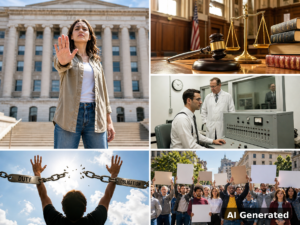
No One Tells Me Who My Enemies Are: The Right to Choose Our Own Enemies
No one has the right to assign you your enemies. Not your government. Not your…
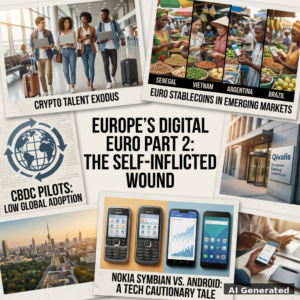
Europe’s Digital Euro: The Self-Inflicted Wound (Part 2)
Europe’s digital euro is a centralised CBDC arriving in 2029 — three years after stablecoin…
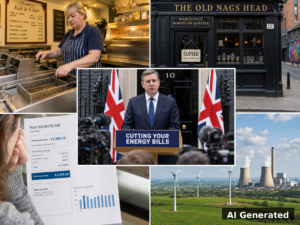
Forty-Five Pounds and a Press Conference
The new PM cut VAT on household electricity bills by £45 a year. In the…
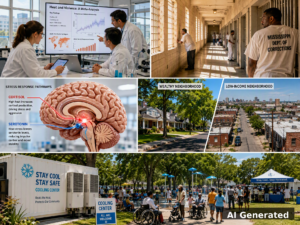
When the Heat Rises, So Do We — Against Each Other
For every 1°C increase in temperature, violent crime rises. A prison study in Mississippi proved…

The Persuasion Hidden in Plain Sight
You ask an AI for advice. You get an answer. What you don’t get is…

The Siemens Scandal: A Report on Systemic Corruption in Greece
In the annals of modern European political economy, few cases of corporate malfeasance have resonated…

The Blank Cheque: How Germany Rewrote Its Constitution, Committed a Trillion Euros, and Remained an American Client.
On March 18, 2025, the German Bundestag voted 517 to 207 to amend the Grundgesetz…

Brussels’ Democratic Decay: Five EU States Caught Red-Handed Eroding Rule of Law.
The rule of law is of paramount importance and is the foundation of economic growth,…
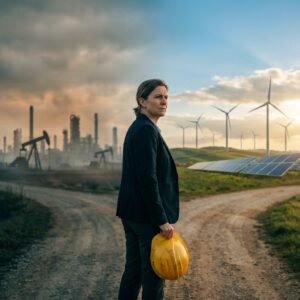
As Oil Majors Roll Back Climate Promises, Workers Confront a Crisis of Conscience.
The bottom line for anyone watching this story: the energy transition is not just a…
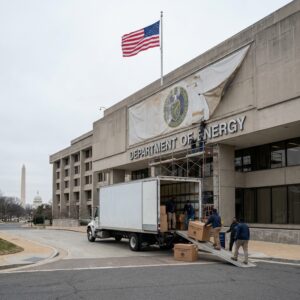
The Department of Education Is Being Evicted From Its Own Headquarters — And the Oil Clan Is Moving In.
The eviction of the Department of Education from the LBJ building is not the end…

The Digital Agora: Streaming’s Triple Revolution in Consumption, Politics, and Mental Health
#Live #Twitch #Streamer #Streaming #Livestream #Livestreaming. /// Briefly, streaming platforms like Twitch, YouTube Live, and…
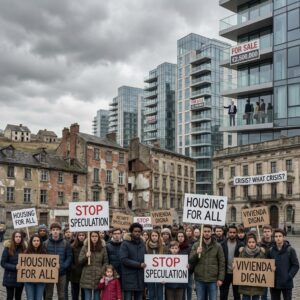
Europe’s Housing Crisis: When Shrinking Populations Inflate Prices.
Explore the perplexing paradox of Europe’s housing crisis: soaring prices despite a shrinking population, impacting…

Corruption in Greece: Not Just History, But Present – And Very Likely the Future
Greece does not suffer from “isolated scandals.” It lives inside a permanent system where corruption,…